Russian National Anthem: Lyrics, Meaning and Story
Russian national anthem lyrics in Russian and English with transliteration, line by line, and how the Soviet anthem's melody returned in 2000.
 Learn RussianFree app with audio, quizzes and real books
The national anthem of Russia is called Государственный гимн Российской Федерации (State Anthem of the Russian Federation). It begins Россия, священная наша держава, "Russia, our sacred state". The music is the melody Alexander Alexandrov wrote for the Soviet anthem, first heard in 1944, and the words are by the poet Sergey Mikhalkov. The melody was made the anthem by a federal constitutional law of 25 December 2000, and Mikhalkov's text was approved by presidential decree on 30 December 2000. The text has three stanzas, each followed by the same refrain. At sports events and many ceremonies you'll usually hear a shorter version: the first stanza and the refrain.
The lyrics in Russian and English
This is the official text as published by the Kremlin, with a Latin transliteration under each Russian line and our translation on the right. The refrain is sung after every stanza.
Stanza 1
| Russian | Meaning |
|---|---|
| Россия, священная наша держава, Rossiya, svyashchennaya nasha derzhava, |
Russia, our sacred state, |
| Россия, любимая наша страна. Rossiya, lyubimaya nasha strana. |
Russia, our beloved country. |
| Могучая воля, великая слава, Moguchaya volya, velikaya slava, |
A mighty will, great glory |
| Твоё достоянье на все времена! Tvoyo dostoyanye na vse vremena! |
are your heritage for all time! |
Refrain
| Russian | Meaning |
|---|---|
| Славься, Отечество наше свободное, Slavsya, Otechestvo nashe svobodnoye, |
Be glorified, our free Fatherland, |
| Братских народов союз вековой, Bratskikh narodov soyuz vekovoy, |
age-old union of brotherly peoples, |
| Предками данная мудрость народная! Predkami dannaya mudrost narodnaya! |
wisdom of the people, handed down by our ancestors! |
| Славься, страна! Мы гордимся тобой! Slavsya, strana! My gordimsya toboy! |
Be glorified, our country! We are proud of you! |
Stanza 2
| Russian | Meaning |
|---|---|
| От южных морей до полярного края Ot yuzhnykh morey do polyarnogo kraya |
From the southern seas to the polar lands |
| Раскинулись наши леса и поля. Raskinulis nashi lesa i polya. |
our forests and fields stretch wide. |
| Одна ты на свете! Одна ты такая, Odna ty na svete! Odna ty takaya, |
You are unique in all the world! There is none like you, |
| Хранимая Богом родная земля! Khranimaya Bogom rodnaya zemlya! |
native land, kept safe by God! |
Stanza 3
| Russian | Meaning |
|---|---|
| Широкий простор для мечты и для жизни Shirokiy prostor dlya mechty i dlya zhizni |
Wide open spaces for dreams and for life |
| Грядущие нам открывают года. Gryadushchiye nam otkryvayut goda. |
the years to come open up before us. |
| Нам силу даёт наша верность Отчизне. Nam silu dayot nasha vernost Otchizne. |
Our loyalty to the Fatherland gives us strength. |
| Так было, так есть и так будет всегда! Tak bylo, tak yest i tak budet vsegda! |
So it was, so it is, and so it will always be! |
The three stanzas move from the country itself to its land and then to its future. The first speaks of Russia as a state with a long history, the second follows the map from the southern seas to the Arctic, and the third looks ahead, closing with a line that covers past, present and future in eight words. The refrain is the same each time: a free Fatherland, a union of many peoples, and the wisdom passed down by earlier generations.
The story behind the anthem
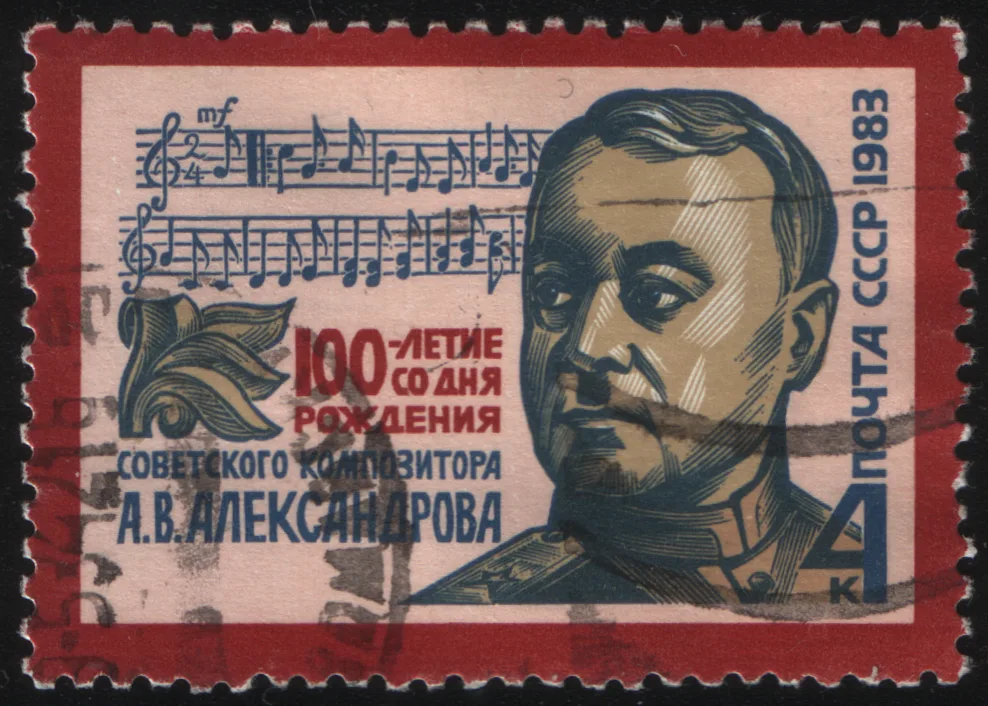
The melody is older than the words. Alexander Alexandrov, a composer and the leader of the Red Army's song and dance ensemble, wrote it for the anthem of the Soviet Union. The Soviet text was written by Sergey Mikhalkov together with the journalist Gabriel El-Registan, approved in December 1943, and first broadcast on the radio on the night of 1 January 1944.
Mikhalkov returned to the anthem more than once. In 1977 a revised Soviet text he had written was approved, and it no longer mentioned Stalin by name. Most Russians, though, knew Mikhalkov first as a children's poet: generations grew up with his verses, above all Дядя Стёпа (Uncle Styopa), the kind giant of a policeman.
After the collapse of the Soviet Union, Russia chose a different anthem. A decree of 11 December 1993 made a melody based on Mikhail Glinka's Patriotic Song the state anthem. It never had official words, so in stadiums and at ceremonies people could only listen.
In December 2000 the State Duma and the Federation Council passed a federal constitutional law on the anthem, signed on 25 December 2000, and Alexandrov's melody came back. A working group gathered proposals for the words, and on 30 December 2000 a presidential decree approved Mikhalkov's new text. The same day the new anthem was performed officially for the first time, at a state reception in the Great Kremlin Palace. In March 2001 the text was also written into the law itself.
The law also sets out how the anthem is used. People stand while it plays, and men take off their hats. State television and radio play it at the start and end of each broadcasting day, and on New Year's night it follows the chimes of the clock on the Kremlin's Spasskaya Tower at midnight.
Words worth learning
держава: state, power. A solemn word for a strong country; великая держава is "a great power". In everyday speech Russians say страна (country) or государство (the state).
любимый: beloved, favourite. You'll use it every day: мой любимый фильм (my favourite film). It comes from любить, to love.
воля: will. Сила воли means willpower. In older Russian, воля also meant freedom, and you still hear that sense in songs and poems.
слава: glory, fame. Слава богу! (Thank God!) is an everyday phrase, and Слава is also the short form of names like Вячеслав and Ярослав.
достоянье: heritage, possession. The standard form is достояние; poems often shorten -ие to -ье to fit the rhythm, just as счастье sits beside the poetic счастие. Национальное достояние means national heritage.
славься: be glorified, be praised. An imperative of славиться with the reflexive -ся. Glinka's opera A Life for the Tsar ends with a famous chorus that begins with the same word.
Отечество, Отчизна: Fatherland. Both come from отец (father). They are formal words; the holiday on 23 February is called День защитника Отечества, Defender of the Fatherland Day.
народ, народный: people, of the people. Братских народов is genitive plural, "of brotherly peoples". Народная песня is a folk song.
предками данная: given by ancestors. Данная is a past passive participle of дать (to give), and предками is in the instrumental case, which names who did the action. This pattern is common in written Russian: книга, написанная Пушкиным, a book written by Pushkin.
от ... до ...: from ... to. Both prepositions take the genitive: от южных морей до полярного края. You'll say it daily: от дома до работы, from home to work.
на свете: in the world. Свет means both "light" and "world". Одна ты на свете puts ты after одна for emphasis, something Russian word order allows freely.
родная земля: native land. Родной means native, one's own, dear: родной язык is your mother tongue, родной город your hometown.
мечта: dream, in the sense of a wish or hope. A dream you have while asleep is сон. Это моя мечта: it's my dream.
так было, так есть и так будет: so it was, so it is and so it will be. Three tenses of быть (to be) in one line. In normal speech Russian drops the present tense есть; here it's kept on purpose, so the line can name all three times.
Keep going with Russian
The anthem's sixteen lines already show the genitive, the instrumental, a passive participle and three tenses of one verb. To build on them, try our free Russian word lists with audio, no account needed. If you're wondering how long the language takes, read How long does it take to learn Russian?
Our Learn Russian app takes you from the alphabet and your first words through graded reading to Pushkin, Chekhov and Dostoevsky, with a translation under every line. It's free to download, though some books and extra content need diamonds you earn while learning, or Premium.