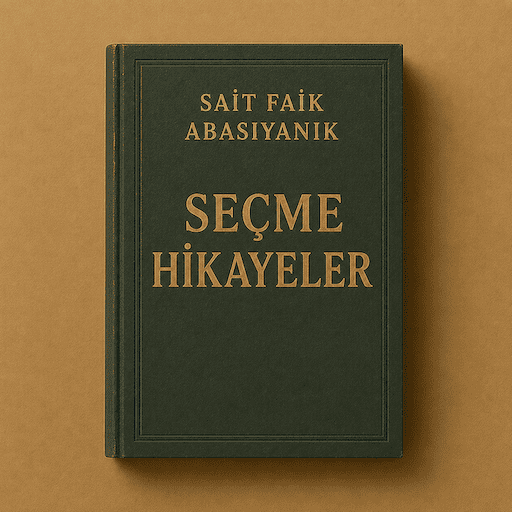
Seçme Hikâyeler
Seçme Hikayeler
Sait Faik Abasıyanık · 1936
A collection of selected short stories reflecting everyday life and humanity.
Read the opening
The original text, each line followed by its translation.
SEMAVER (1936)
THE SAMOVAR (1936)
“Sabah ezanı okundu. Kalk yavrum, işe geç kalacaksın.”
“The morning call to prayer has been recited. Wake up, my son, you'll be late for work.”
Ali nihayet iş bulmuştu. Bir haftadır fabrikaya gidiyordu.
Ali had finally found a job. He had been going to the factory for a week.
Anası memnundu. Namazını kılmış, duasını yapmıştı.
His mother was pleased. She had performed her prayer and said her supplication.
İçindeki Cenabı Hak’la beraber oğlunun odasına girince uzun boyu, geniş vücudu ve çok genç çehresiyle rüyasında makineler, elektrik pilleri, ampuller gören, makine yağları sürünen ve bir dizel motoru homurtusu işiten oğlunu evvela uyandırmaya kıyamadı.
When she entered her son's room with God in her heart, she could not bring herself to wake him at once. With his tall stature, broad frame, and youthful face, he was dreaming of machines, electric batteries, light bulbs, covered in machine oil, and hearing the rumble of a diesel engine.
Ali işten çıkmış gibi terli ve pembeydi.
Ali looked as though he had just returned from work, sweaty and rosy.
Halıcıoğlu’ndaki fabrikanın bacası kafasını kaldırmış, bir horoz vekarıyla sabaha, Kâğıthane sırtlarında beliren fecri-kâzibe bakıyordu.
The chimney of the factory in Halıcıoğlu had raised its head and, with the dignity of a rooster, gazed at the false dawn appearing over the hills of Kâğıthane.
Neredeyse ötecekti.
It seemed ready to crow at any moment.
Ali nihayet uyandı. Anasını kucakladı.
Ali finally woke up. He embraced his mother.
Her sabah yaptığı gibi yorganı kafasına büsbütün çekti.
As he did every morning, he pulled the quilt completely over his head.
Anası yorgandan dışarıda kalan ayaklarını gıdıkladı.
His mother tickled the feet that remained outside the blanket.
Yataktan bir hamlede fırlayan oğluyla beraber tekrar yatağa düştükleri zaman bir genç kız kahkahasıyla gülen kadın, mesut sayılabilirdi.
When they both tumbled back onto the bed after he leaped out of it in one swift motion, the woman laughed like a young girl. She could indeed be called happy.
Mesutları çok az bir mahallenin çocukları değil miydiler?
Were they not among the fortunate few in their neighborhood?
Anasının çocuğundan, çocuğun anasından başka gelirleri var mıydı?
Did the mother have any wealth other than her son, or the son anything besides his mother?
Yemek odasına kucak kucağa geçtiler.
They walked to the dining room arm in arm.
Odanın içini kızarmış bir ekmek kokusu doldurmuştu.
The room was filled with the smell of toasted bread.
Semaver, ne güzel kaynardı.
How beautifully the samovar boiled.
Ali semaveri, içinde ne ıstırap, ne grev, ne de kaza olan bir fabrikaya benzetirdi.
Ali imagined the samovar as a factory where there was neither suffering, nor strikes, nor accidents.
Ondan yalnız koku, buhar ve sabahın saadeti istihsal edilirdi.
It produced nothing but fragrance, steam, and the happiness of morning.
Sabahleyin Ali’nin bir semaver, bir de fabrikanın önünde bekleyen salep güğümü hoşuna giderdi.
In the mornings, besides the samovar, Ali also loved the salep urn waiting in front of the factory.
Sonra sesler. Halıcıoğlu’ndaki askeri mektebin borazanı, fabrikanın uzun ve bütün Haliç’i çınlatan düdüğü, onda arzular uyandırır, arzular söndürürdü.
Then there were the sounds. The bugle of the military school in Halıcıoğlu and the long whistle of the factory echoing across the entire Golden Horn stirred desires within him and then quieted them again.
Demek ki Alimiz biraz şairceydi.
It seemed our Ali had a poetic soul.
Büyük değirmende bir elektrik amelesi için hassasiyet, Haliç’e büyük transatlantikler sokmaya benzerse de biz, Ali, Mehmet, Hasan biraz böyleyizdir.
If sensitivity in an electrical worker at the great mill is as unlikely as bringing giant ocean liners into the Golden Horn, then Ali, Mehmet, Hasan, and the rest of us are just like that.
Hepimizin gönlünde bir aslan yatar.
Each of us has a lion sleeping in our hearts.
Ali annesinin elini öptü.
Ali kissed his mother's hand.
Sonra şekerli bir şey yemiş gibi dudaklarını yaladı.
Then he licked his lips as though he had eaten something sweet.
Annesi gülüyordu.
His mother smiled.
O annesini her öpüşte, böyle bir defa yalanmayı âdet etmişti.
Every time he kissed his mother, he had made it a habit to lick his lips once afterward.
Evin küçük bahçesindeki saksıların içinde fesleğenler vardı.
There were pots of basil growing in the little garden of the house.
Ali birkaç fesleğen yaprağını parmaklarıyla ezerek avuçlarını koklaya koklaya uzaklaştı.
Crushing a few basil leaves between his fingers, Ali walked away, inhaling their scent from his palms.
Sabah serin, Haliç sisliydi. Arkadaşlarını sandal iskelesinde buldu; hepsi de dinç delikanlılardı.
The morning was cool, and the Golden Horn was covered in mist. He found his friends at the boat pier; they were all vigorous young men.
Beş kişi Halıcıoğlu’na geçtiler.
The five of them crossed over to Halıcıoğlu.
Ali bütün gün zevkle, hırsla, iştiyakla çalışacak.
Ali would work all day with pleasure, determination, and enthusiasm.
Fakat arkadaşlarından üstün görünmek istemeden.
But without trying to appear better than his friends.
Onun için dürüst, gösterişsiz işleyecek.
For that reason, he worked honestly and without showing off.
Yoksa işinin fiyakasını da öğrenmiştir.
Otherwise, he had already learned all the tricks of his trade.
Onun ustası İstanbul’da bir tek elektrikçiydi. Bir Alman’dı.
His master was the finest electrician in all of Istanbul. He was a German.
Ali’yi çok severdi, işinin dalaveresini, numarasını da öğretmişti.
He was very fond of Ali and had also taught him the little secrets and techniques of the profession.
Kendi kadar usta ve becerikli olanlardan daha üstün görünmenin esrarı çeviklikte, acelede, aşağı yukarı sporda yani gençlikteydi.
The secret to appearing superior even to those just as skilled and capable as oneself lay in agility, speed, a touch of athleticism—in short, in youth.
Akşama, arkadaşlarına yeni bir dost, yeni bir kafadar, ustalarına sağlam bir işçi kazandırdığına emin ve memnun evine döndü.
That evening, convinced and pleased that he had earned his friends a new companion and his masters a reliable worker, he returned home.
Anasını kucakladıktan sonra karşı kahveye, arkadaşlarının yanına koştu.
After embracing his mother, he hurried across to the coffeehouse where his friends were waiting.
Bir pastra oynadılar. Bir heyecanlı tavla partisi seyretti.
They played a game of pastra. He watched an exciting game of backgammon.
Sonra evinin yolunu tuttu. Anası yatsı namazını kılıyordu.
Then he headed home. His mother was performing the night prayer.
Her zaman yaptığı gibi anacığının önüne çömeldi.
As he always did, he knelt in front of his dear mother.
Seccadenin üzerinde taklalar attı. Dilini çıkardı.
He tumbled about on the prayer rug. He stuck out his tongue.
Nihayet kadını güldürmeye muvaffak olduğu zaman, kadıncağız selam vermek üzereydi.
At last, when he succeeded in making the woman laugh, she was just about to finish her prayer.
Anası: “Ali be, günah be yavrum” dedi. “Günah yavrucuğum, yapma!”
His mother said, “Oh Ali, my son, it's a sin.” “A sin, my dear child. Don't do that!”
Ali: “Allah affeder ana” dedi.
Ali replied, “God forgives, Mother.”
Sonra saf, masum sordu:
Then he asked innocently:
“Allah hiç gülmez mi?”
“Does God never laugh?”
Yemekten sonra Ali, bir Natpinkerton romanı okumaya daldı.
After dinner, Ali became absorbed in reading a Nick Carter novel.
Anası ona bir kazak örüyordu.
His mother was knitting him a sweater.
Sonra yükün içinden lavanta çiçeği kokan şilteler serip yattılar.
Later they spread out the lavender-scented mattresses from the bedding chest and went to sleep.
Anası sabah namazı okunurken Ali’yi uyandırdı.
His mother woke Ali at the morning call to prayer.
Kızarmış ekmek kokan odada semaver ne güzel kaynardı.
In the room fragrant with toasted bread, the samovar boiled so beautifully.
Ali semaveri, içinde ne ıstırap, ne grev, ne de patron olan bir fabrikaya benzetirdi.
Ali compared the samovar to a factory where there was neither suffering, nor strikes, nor bosses.
Onda yalnız koku, buhar ve sabahın saadeti istihsal edilirdi.
It produced nothing but fragrance, steam, and the happiness of morning.
Ali’nin annesine ölüm, bir misafir, bir başörtülü, namazında niyazında bir komşu hanım gelir gibi geldi.
To Ali's mother, death came like a visitor, like a neighbor woman wearing a headscarf and devoted to her prayers.
Sabahları oğlunun çayını, akşamları iki kap yemeğini hazırlaya hazırlaya akşamı ediyordu.
She passed her days preparing tea for her son every morning and two dishes for supper every evening.
Fakat yüreğinin kenarında bir sızı hissediyor; buruşuk ve tülbent kokan vücudunda akşamüstleri merdivenleri hızlı hızlı çıktığı zaman bir kesiklik, bir ter, bir yumuşaklık duyuyordu.
Yet she felt an ache at the edge of her heart; in her wrinkled body smelling of headscarf cloth, she felt weakness, perspiration, and a strange softness whenever she hurried up the stairs in the evenings.
Bir sabah, daha Ali uyanmadan, semaverin başında üzerine bir fenalık gelmiş, yakın sandalyeye çöküvermişti. Çöküş, o çöküş.
One morning, before Ali had awakened, she was standing by the samovar when she suddenly felt faint and collapsed into the nearby chair. She never rose again.
Ali annesinin kendisini bu sabah niçin uyandırmadığına hayret etmekle beraber uzun zaman vaktin geciktiğini anlayamamıştı.
Although Ali wondered why his mother had not awakened him that morning, it took him a long while to realize how late it had become.
Fabrikanın düdüğü, camların içinden tizliğini, can koparıcılığını terk etmiş ve bir sünger içinden geçmiş gibi yumuşak, kulaklarına geldi. Fırladı.
The factory whistle reached his ears through the windows, softened as though passing through a sponge, stripped of its shrillness and its power to tear at one's soul. He jumped up.
Yemek odasının kapısında durdu.
He stopped in the doorway of the dining room.
Masaya elleri dayalı uyuklar gibi vaziyetteki ölüyü seyretti.
He looked at the dead woman sitting motionless with her hands resting on the table.
Onu uyuyor sanıyordu. Ağır ağır yürüdü.
He thought she was asleep. Slowly he walked toward her.
Omuzlarından tuttu. Dudaklarını soğumaya başlamış yanaklara sürdüğü zaman ürperdi.
When he held her by the shoulders and pressed his lips against her cheeks, which had already begun to grow cold, he shuddered.
Ölümün karşısında, ne yapsak, muvaffak olmuş bir aktörden farkımız olmayacak. O kadar, muvaffak olmuş bir aktör.
In the face of death, whatever we do, we can hardly seem different from a successful actor. Just that—a successful actor.
Sarıldı. Onu kendi yatağına götürdü.
He embraced her. He carried her to his own bed.
Yorganı üstlerine çekti; soğumaya başlayan vücudu ısıtmaya çalıştı.
He pulled the quilt over them both and tried to warm her cooling body.
Vücudunu, hayatiyetini bu soğuk insana aşılamaya uğraştı.
He struggled to breathe his own vitality into that cold body.
Sonra, âciz, onu köşe minderinin üzerine attı.
Then, helpless, he laid her upon the corner cushions.
Bütün arzusuna rağmen o gün ağlayamadı.
Despite all his longing, he could not cry that day.
Gözleri yandı, yandı, bir damla yaş çıkarmadı.
His eyes burned and burned, yet not a single tear fell.
Aynaya baktı.
He looked into the mirror.
En büyük kederin karşısında, bir gece uykusuz kalmış insan çehresinden başka bir çehre almak kabil olmayacak mıydı?
Was it impossible, even before the greatest sorrow, to wear any face other than that of someone who had merely gone a night without sleep?
Ali birdenbire zayıflamak, birdenbire saçlarını ağarmış görmek, birdenbire belinde müthiş bir ağrıyla iki kat oluvermek, hemen yüz yaşına girmiş kadar ihtiyarlamak istiyordu.
Ali wanted to become thin all at once, to see his hair suddenly turn white, to double over with unbearable pain in his back, to age as though he had instantly become a hundred years old.
Sonra ölüye bir daha baktı. Hiç de korkunç değildi.
Then he looked once more at the dead woman. She was not frightening at all.
Bilakis çehre eskisi kadar müşfik, eskisi kadar mülayimdi.
On the contrary, her face was as gentle and as kind as ever.
Ölünün yarı kapalı gözlerini metin bir elle kapadı. Sokağa fırladı.
With a steady hand he closed her half-open eyes. Then he ran into the street.
Komşu ihtiyar hanıma haber verdi.
He informed the elderly neighbor woman.
Komşular koşa koşa eve geldiler.
The neighbors came rushing into the house.
O fabrikaya yollandı.
He himself headed for the factory.
Yolda kayıkla giderken, ölüme alışmış gibiydi.
As he crossed the water by boat, it was as though he had already grown accustomed to death.
Yan yana, kucak kucağa, aynı yorganın içinde yatmışlardı.
They had slept side by side, wrapped in one another's arms beneath the same quilt.
Ölüm munis, anasına girdiği gibi onun bütün hassasiyetini, şefkatini, yumuşaklığını almıştı.
Death was gentle. Just as it had entered his mother, it had taken all of her tenderness, compassion, and gentleness.
Yalnız biraz soğuktu. Ölüm bildiğimiz kadar korkunç bir şey değildi. Yalnız biraz soğuktu o kadar...
It was only a little cold. Death was not as terrifying as we imagined. Only a little cold—that was all...
Ali, günlerce evin boş odalarında gezindi.
For days Ali wandered through the empty rooms of the house.
Gece ışık yakmadan oturdu.
At night he sat without lighting a lamp.
Geceyi dinledi. Anasını düşündü. Fakat ağlayamadı.
He listened to the night. He thought of his mother. But he could not cry.
Bir sabah yemek odasında karşı karşıya geldiler.
One morning they faced each other in the dining room.
O, yemek masasının muşambası üzerinde sakin ve parlaktı.
It stood there, calm and shining upon the oilcloth-covered table.
Güneş sarı pirinç maddenin üzerinde donakalmıştı.
The sunlight had frozen upon the yellow brass.
Onu kulplarından tutarak gözlerinin göremeyeceği bir yere koydu.
Holding it by its handles, he carried it somewhere his eyes would never have to see.
Kendisi bir sandalyeye çöktü.
Then he sank into a chair.
Bol bol, sessiz bir yağmur gibi ağladı.
He wept freely, silently, like gentle rain.
Ve o evde o, bir daha kaynamadı.
And in that house, it never boiled again.
Bundan sonra Ali’nin hayatına bir salep güğümü girer.
From then on, a salep urn entered Ali's life.
Kış Haliç etrafında İstanbul’dakinden daha sert, daha sisli olur.
Winter around the Golden Horn was harsher and foggier than in the rest of Istanbul.
Bozuk kaldırımların üzerinde buz tutmuş çamur parçalarını kırarak erkenden işe gidenler, mektep hocaları, celepler ve kasaplar fabrikanın önünde bir müddet dinlenirler, kocaman bir duvara sırtlarını vererek üstüne zencefil ve tarçın serpilmiş salep içerlerdi.
Breaking the frozen clods of mud on the broken pavements, those who went early to work—schoolteachers, livestock dealers, and butchers—would stop for a while in front of the factory, lean against its great wall, and drink salep sprinkled with ginger and cinnamon.
Yün eldivenlerin içinde saklı kıymettar elleri salep fincanını kucaklayan, burunları nezleli, kafaları grevli, ıstıraplı pirinç bir semaver gibi tüten sarışın ameleler, mektep hocaları, celepler, kasaplar ve bazen fakir mektep talebeleri kocaman fabrika duvarına sırtlarını verirler; üstüne rüyalarının mabadi serpilmiş salepten yudum yudum içerlerdi.
Blond workers, schoolteachers, livestock dealers, butchers, and sometimes poor schoolchildren, their precious hands hidden inside woolen gloves, embracing cups of salep, their noses running with colds, their minds burdened with strikes and suffering, steaming like brass samovars, would lean against the great factory wall and sip, little by little, the salep sprinkled with the afterglow of their dreams.
Read the whole book in the app, with audio and tap-to-translate.