Reading Gibran's The Broken Wings in Arabic
Al-Ajniha al-Mutakassira, Gibran's 1912 novel of first love in Beirut: the story, the characters, how hard its Arabic really is, and its opening lines with a translation.
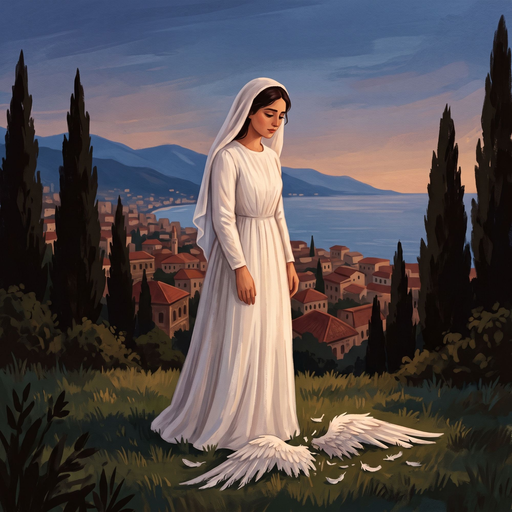
The Broken Wings (الأجنحة المتكسرة, al-Ajniḥa al-Mutakassira) is a short novel by Kahlil Gibran, first published in Arabic in New York in 1912, years before The Prophet made him famous in English. A young man in Beirut falls in love with Salma Karama, and money, a bishop's ambition and an arranged marriage tear them apart. It's the shortest of the Arabic classics in our library and the one we suggest learners read first.
The story
The narrator is eighteen and living in Beirut when a friend takes him to the house of Faris Effendi Karama, a wealthy, kind old man. There he meets Faris's daughter, Salma, and falls in love with her. She loves him too.
Then Bishop Bulos Ghalib summons her father. The bishop wants Salma, and her father's fortune, for his nephew, Mansour Bey Ghalib, and Faris can't refuse him. Salma is married to a man who wants her money.
Spoiler warning: the rest of this section reveals the ending.
The two lovers keep meeting in secret, once a month, at an old temple outside the city, until they're found out and Salma can no longer leave her husband's house. In the fifth year of her marriage she gives birth, and both she and her baby die. In the last pages, the narrator stands alone at her grave, where the gravedigger tells him that father, daughter and child now lie in the same earth.
Where the title comes from
Salma says it herself. As they say goodbye, she whispers a prayer that comes back again later in the book:
أشفق يا رب وشدد جميع الأجنحة المتكسرة.
Have pity, Lord, and strengthen all the broken wings.
The broken wings are hers, the narrator's, and anyone's whose love is crushed by those with power.
How it opens
The first lines set the tone for the whole book:
كنت في الثامنة عشرة عندما فتح الحب عيني بأشعته السحرية، ولمس نفسي لأول مرة بأصابعه النارية.
I was eighteen when love opened my eyes with its magic rays, and touched my soul for the first time with its fiery fingers.
وكانت سلمى كرامة المرأة الأولى التي أيقظت روحي بمحاسنها، ومشت أمامي إلى جنة العواطف العلوية، حيث تمر الأيام كالأحلام وتنقضي الليالي كالأعراس.
And Salma Karama was the first woman who woke my spirit with her beauty and walked before me into the garden of lofty feelings, where days pass like dreams and nights go by like weddings.
A few pages later, Gibran turns his own story into everyone's:
لكل فتى سلمى تظهر على حين غفلة في ربيع حياته، وتجعل لانفراده معنى شعريا، وتبدل وحشة أيامه بالأنس، وسكينة لياليه بالأنغام.
Every young man has a Salma who appears without warning in the spring of his life, gives his solitude a poetic meaning, and turns the loneliness of his days into company and the stillness of his nights into music.
What those lines teach
| Arabic | Transliteration | Meaning | Note |
|---|---|---|---|
| كنت | kuntu | I was | Past of كَانَ, see kana and its sisters |
| في الثامنة عشرة | fī th-thāmina ʿashra | at eighteen | Ages use the feminine ordinal; see numbers |
| عندما | ʿindamā | when | Used for "when" in the past and present |
| كالأحلام | kal-aḥlām | like dreams | كَـ (ka-, like) is joined to the word |
| لكل فتى | li-kulli fatan | every young man has | "To every young man", the Arabic way to say "has" |
That last one is worth noticing: Arabic has no verb "to have". It uses لِـ (li-, for, to) or عِنْدَ (ʿinda, at) instead.
How hard is its Arabic?
Easier than it looks. It's the shortest of the six classics in our app, at about 16,200 words, and it's written in Modern Standard Arabic of the early 20th century, so most of its grammar is the grammar you learn today. The vocabulary circles around a small world: love, the soul, nature, night, tears, the house and the family. You'll meet those words again and again.
Harder than a modern novel. Gibran writes in long, musical sentences full of similes and pairs, like "days like dreams, nights like weddings". Some words are literary rather than everyday: محاسن (maḥāsin, charms, beauties) or العلوية (al-ʿulwiyya, lofty, heavenly). And like almost every Arabic book, it's printed without vowel marks.
We'd suggest it from about an intermediate level, with a translation beside the text. If you can read a simple graded story without vowel marks, you're ready to try it with help.
Read it in Arabic
You can read the opening of The Broken Wings free on our site, in Arabic with a translation under every line and no account needed. For what to read after it, see the best books to learn Arabic, or try the fables of Kalila and Dimna.
Our Learn Arabic app has The Broken Wings in the original with a translation, along with Gibran's A Tear and a Smile, four more classics, and the grammar and vocabulary to get you to them. It launches on 1 December: join the waitlist and Salma's story can be your first Arabic book.
Learn Arabic arrives on 1 December
The app is almost ready: the Arabic alphabet from scratch, grammar, over 2,500 words with audio and classics such as Gibran's The Broken Wings in the original. Leave your email and we'll let you know the day it's out.
One email when the app is out. Nothing else.