Italian National Anthem: Fratelli d'Italia Lyrics, Meaning
Fratelli d'Italia lyrics in Italian and English: the stanza and chorus sung today, line by line, and the story of Mameli and Novaro's 1847 anthem.
 Learn ItalianFree app with audio, quizzes and real books
The Italian national anthem is Il Canto degli Italiani ("The Song of the Italians"), known to everyone by its first words, Fratelli d'Italia ("Brothers of Italy"), or simply as l'Inno di Mameli. Goffredo Mameli, a 20-year-old student from Genoa, wrote the words in 1847, and the Genoese composer Michele Novaro set them to music the same year. The young Republic adopted it as a provisional anthem on 12 October 1946, and a law of 4 December 2017 made it official. The part that is sung is the first stanza and the chorus.
The lyrics in Italian and English
This is the official text published by the Italian government. At state ceremonies the first stanza is sung twice, then the chorus twice.
| Italian | Meaning |
|---|---|
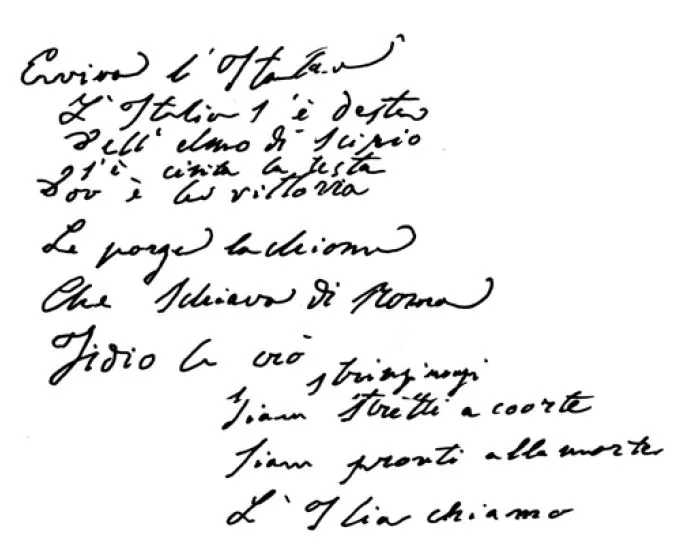
| Fratelli d’Italia, l’Italia s’è desta; | Brothers of Italy, Italy has awoken; |
| dell’elmo di Scipio s’è cinta la testa. | she has put on the helmet of Scipio. |
| Dov’è la vittoria? Le porga la chioma | Where is Victory? Let her offer Italy her hair, |
| ché schiava di Roma Iddio la creò. | for God created her as the slave of Rome. |
| Italian | Meaning |
|---|---|
| Stringiamci a coorte! | Let us close ranks like a cohort! |
| Siam pronti alla morte; | We are ready to die; |
| Siam pronti alla morte; | We are ready to die; |
| Italia chiamò. | Italy has called. |
The stanza is full of ancient Rome. Scipio is Scipio Africanus, the general who defeated Hannibal, and Italy, newly awake, puts on his helmet. Victory, the winged goddess of the Romans, was created to serve Rome, so now she must come and bow to Italy, Rome's heir. The chorus then turns to the singers themselves: the cohort was a unit of the Roman legion, and they promise to stand together as one.
And the "Sì!" at the end?
Many people finish the chorus with a loud Sì! ("Yes!"). The word is not in Mameli's text. A presidential decree of 14 March 2025 sets out how the anthem is to be performed at ceremonies attended by the President or where a military flag is present, and on national holidays: without the instrumental introduction, the first stanza twice and the chorus twice, following Mameli's text and Novaro's original score. At those ceremonies the Sì is left out. For sports events and other public occasions the decree allows more freedom, up to the full text.
The complete poem has five stanzas, each followed by the same chorus. The other four speak of Italians divided and mocked for centuries, of union and love, and of famous moments when Italians stood up to foreign rulers; the last one ends with the Austrian eagle losing its feathers.
The story behind the anthem
In 1847 there was no Italy on the map. The peninsula was split between the Kingdom of Sardinia, the Papal States, the Kingdom of the Two Sicilies and several duchies, and Austria ruled Lombardy and Venice. Mameli, a fervent follower of Giuseppe Mazzini, put the problem into one line of his second stanza: perché non siam popolo, perché siam divisi, "because we are not one people, because we are divided". According to the government's ceremonial office, he wrote the poem on 10 September 1847.
He sent the text to Turin, where Novaro, also from Genoa, worked as a tenor and chorus master at the city's theatres. Novaro set it to music on 24 November 1847. The song was first performed in public in Genoa on 10 December 1847, in front of the sanctuary of Nostra Signora di Loreto in the Oregina district, at a commemoration of the city's old revolt against the Habsburg occupiers. The police soon banned it, but after the uprisings of 1848 military bands and soldiers leaving for the war in Lombardy played and sang it, and it quickly became the best-loved song of the Risorgimento. Novaro, a modest man, never made any money from his most famous piece.
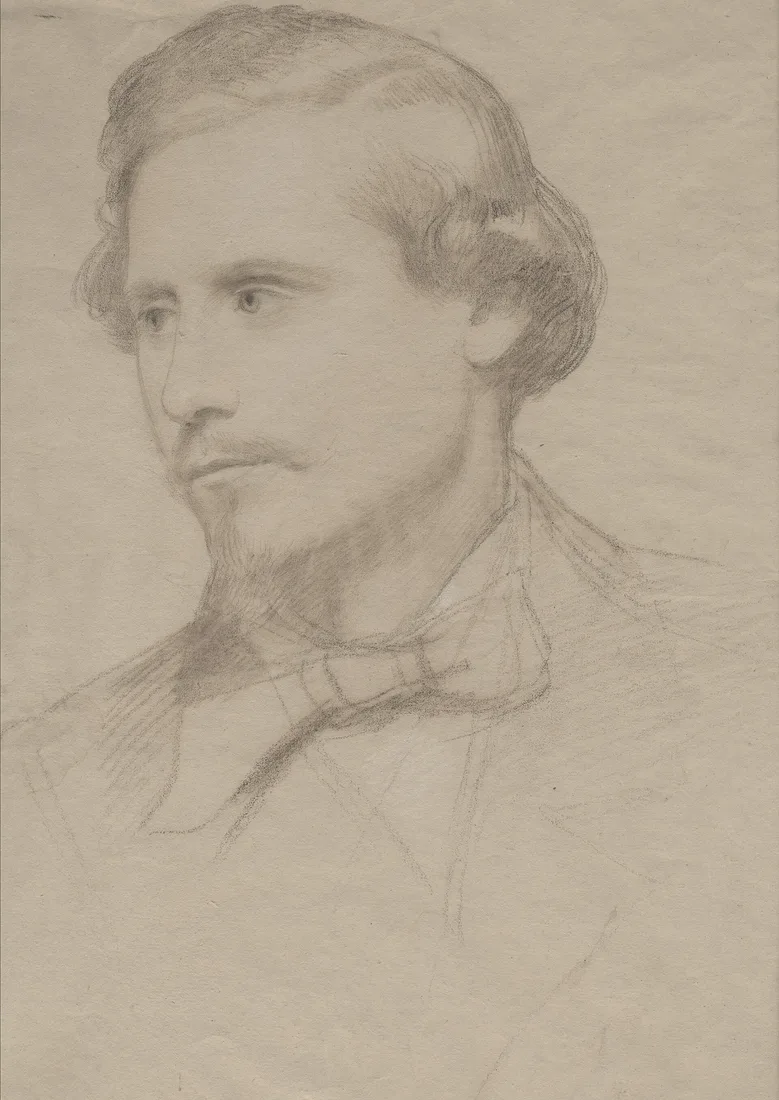
Mameli lived by the words he wrote. In March 1848 he led 300 volunteers to Milan to fight the Austrians, and in 1849 he joined Giuseppe Garibaldi in defending the Roman Republic against the French army. On 3 June he was wounded in the left leg, which had to be amputated. He died of the resulting infection on 6 July 1849, aged just 21. He is buried in the Mausoleo Ossario on the Janiculum hill in Rome.
When Italy was unified in 1861, the new kingdom chose the Marcia Reale, the royal march, as its anthem. Mameli's song, with its republican spirit, stayed popular all the same. In 1862 Giuseppe Verdi chose it to stand for Italy in a piece he wrote for the International Exhibition in London.
After the Second World War Italy became a republic. On 12 October 1946 the Council of Ministers, led by Alcide De Gasperi, decided that the armed forces would swear their oath to the Republic on 4 November and that, provvisoriamente, Mameli's anthem would be the national anthem. It stayed "provisional" for 71 years. Law no. 181 of 4 December 2017 finally recognised Mameli's text and Novaro's original score as the anthem of the Republic.
Words worth learning
i fratelli: brothers. In the plural it also means "brothers and sisters", so Ho due fratelli can mean two brothers or a brother and a sister. One sister is una sorella.
s'è desta: has woken up. S'è is si è with the vowel dropped, and desta is a literary adjective, "awake". In everyday Italian you'd say L'Italia si è svegliata, from svegliarsi, the verb you use every morning: Mi sveglio alle sette.
l'elmo: the helmet. Scipio is a poetic short form of Scipione: poets often cut the last vowel or syllable to fit the rhythm.
s'è cinta la testa: has wrapped her head (with the helmet). The verb is cingere, to encircle. Its family is very much alive: la cintura is a belt, and in a car you'll hear Allacciate le cinture (Fasten your seatbelts).
la vittoria: victory. You'll meet it in every sports headline. In the anthem it's the goddess, which is why she has hair.
le porga: let her hold out (to her). Porgere means to hold out or offer; le means "to her", here Italy. It survives in polite phrases like porgere le scuse (to offer apologies) and at the end of formal letters.
la chioma: a head of hair, long hair. A poetic word; in daily life it's i capelli, always plural.
ché: because. A short, literary form of perché, with its accent. Today you'd write perché or poiché.
schiava di Roma: the slave of Rome. Schiavo has a famous descendant: the Venetian greeting s'ciavo, "(I am) your servant", turned into ciao.
Iddio la creò: God created her. Iddio is an old, emphatic form of Dio. Creò is the passato remoto, the past tense of stories and history books, as is chiamò in the chorus. In everyday speech you mostly hear ha creato, ha chiamato.
stringiamci a coorte: let us close ranks into a cohort. Stringiamci is stringiamoci (let's draw together) squeezed by one syllable; the official text itself spells it in full once, in the fourth stanza. The verb is stringere, to squeeze: stringere la mano means to shake hands.
siam pronti: we are ready. Siam is siamo without its final vowel, a cut you'll still hear in songs. Pronto is a word you'll use daily: Sei pronto? (Are you ready?), and Pronto? is how Italians answer the phone.
Italia chiamò: Italy called. In ordinary prose a country takes the article, as in l'Italia s'è desta in the first line; poetry can drop it, as it does here.
Keep going with Italian
The anthem's eight lines already show elision, the passato remoto, a pronoun attached to a verb and two poetic short forms. To build on them, try our free Italian word lists with audio, no account needed. If you're wondering how much work the language takes, read Is Italian hard to learn?.
Our Learn Italian app takes you from your first words through grammar and graded reading to Italian classics. It's free to download, though some books and extra content need diamonds you earn while learning, or Premium.