The Best Books to Learn Turkish, Level by Level
Turkish course books, graded readers and real novels for each level, chosen with a native speaker's eye, plus our own data on which classics are easiest.
Start with one course book and a set of graded stories, then move to short Turkish stories before you try a novel. FluenTech's founder is a native Turkish speaker, and we have no deal with any publisher here. We've also measured the Turkish classics in our own library, so you can see which one to open first.
Beginner (A1 to A2)
Pick one course book and stay with it. Switching between them costs more time than any of them will save you.
- Yedi İklim, Yunus Emre Enstitüsü. A full course from the institute behind the TYS exam, which makes it a natural choice if you plan to take that test. It has plenty of dialogues and is built for classes, so it's harder to use alone.
- Yeni Hitit, Ankara University TÖMER. A good fit if you're aiming to study at a Turkish university.
- Turkish Short Stories for Beginners, Yusuf Buz and Umit Can Umut. Stories written for A1 learners, with audio. Use them alongside a course book as soon as you can.
Intermediate (A2 to B1)
This is where reading starts to pay off, because you'll see the same suffixes again and again until you stop taking words apart in your head.
- Short Stories in Turkish for Beginners, Olly Richards. Eight stories for learners at about A2 to B1. Despite the title, it's not for your first week.
- Intermediate Turkish Short Stories, Yusuf Buz. The B1 step in the same series as the A1 book above.
- Turkish: A Comprehensive Grammar, Aslı Göksel and Celia Kerslake. A reference, not a course. Look things up in it when a sentence puzzles you, and don't try to read it from cover to cover.
Upper intermediate and beyond: the classics
Long sentences are especially tiring in Turkish, because the verb usually comes last and you have to hold everything in your head until you reach it. So we measured the openings of the Turkish classics in our library.
| Book | Author | Words measured | Average words per sentence |
|---|---|---|---|
| Seçme Hikâyeler | Sait Faik Abasıyanık | 1,000 | 8 |
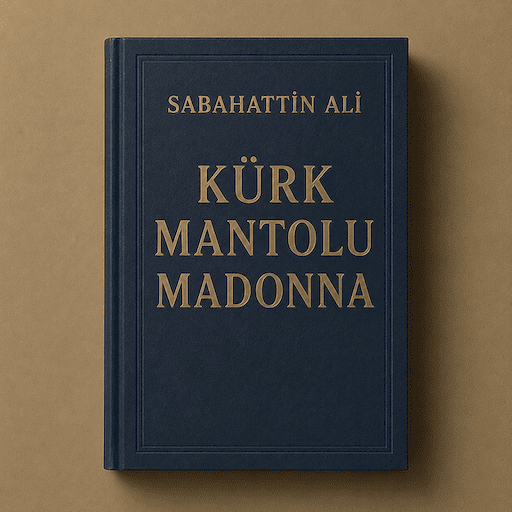
| Kürk Mantolu Madonna | Sabahattin Ali | 1,300 | 11 |
| Nutuk | Mustafa Kemal Atatürk | 350 | 13 |
| Araba Sevdası | Recaizade Mahmut Ekrem | 600 | 19 |
Treat this as a rough guide. It covers only the openings, the count is automatic, and the Nutuk sample is small. Short sentences don't always mean easy words, either: Nutuk is a political speech, so it's full of the vocabulary of government and war.
Our suggestions:
- Start with Sait Faik. The stories are short and full of dialogue, so you can finish one in a sitting.
- Then read Kürk Mantolu Madonna. It's one of the novels Turkish readers love most, and its story pulls you along. Expect some older words: its opening uses tesir where most people today would say etki (effect).
- Save Araba Sevdası for later. It has the longest sentences we measured, and it's a satire of its time, so the jokes need some background.
- Read Nutuk for its history. It matters enormously in Turkey, but it won't teach you everyday Turkish.
How to choose
Read the first page before you commit. If you can follow what's happening, the book is a good fit. Older Turkish books also come in different editions, some updated and some not, and the same novel can read very differently from one to the next. So check the first page of the edition you're buying, not just the title.
Every book in the table links to its opening pages for free, with a translation under every line and no account needed. If the grammar slows you down, our free Turkish grammar lessons cover cases, verbals and more. You can also see how reading helps, and how long Turkish takes overall.
Our Learn Turkish app has these four books in full with a translation one tap away, along with vocabulary, grammar and graded reading to get you there. It's free to download, though some books and extra content need diamonds you earn while learning, or Premium.