The Grand Inquisitor Explained: Summary and Meaning
A clear guide to Ivan's poem in The Brothers Karamazov: the three temptations, freedom against bread, the silent kiss, and what "everything is permitted" means.
 Learn RussianFree app with audio, quizzes and real books
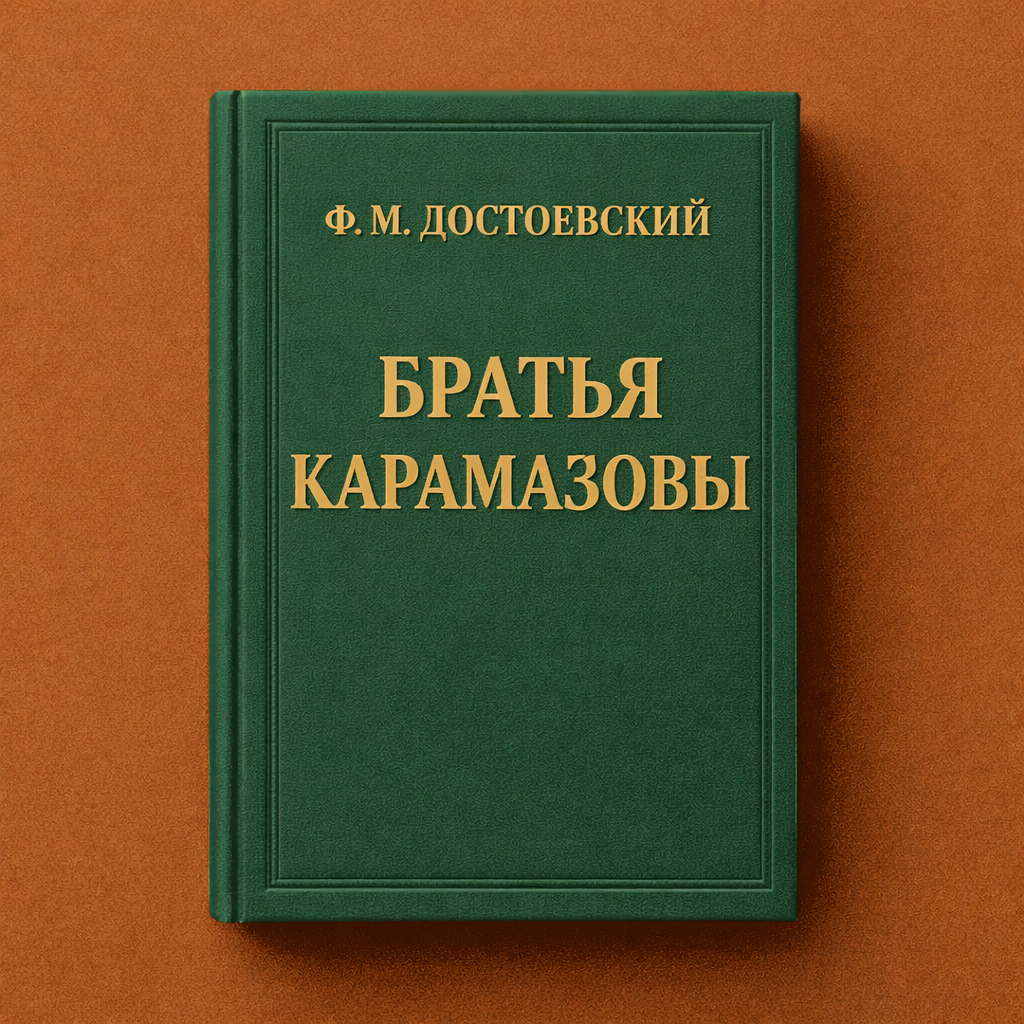
"The Grand Inquisitor" is a story inside The Brothers Karamazov. Ivan Karamazov tells it to his younger brother Alyosha in a tavern, in Book 5, "Pro and Contra" (Pro и contra). Christ returns to Earth in 16th-century Seville, and the head of the Inquisition arrests him. Then, in a long speech in a prison cell, the old cardinal explains why the Church has had to correct Christ's work.
It's only one chapter, but it's the most famous thing Dostoevsky wrote. Ivan introduces it modestly:
— Поэма моя называется «Великий инквизитор», вещь нелепая, но мне хочется ее тебе сообщить.
"My poem is called 'The Grand Inquisitor'. It's an absurd thing, but I want to tell it to you."
He calls it a поэма, a poem, though it's told in prose. Ivan has never written a line of verse.
Where it sits in the novel
The chapter just before it, "Rebellion" (Бунт), sets it up. Ivan tells Alyosha stories of cruelty to children and says he can't accept a world built on their suffering, even if it all ends in harmony. He's "returning his ticket". The Grand Inquisitor is the next step of his argument: if people are this weak, perhaps the kind thing is to take their freedom away.
The story, step by step
Christ returns. The day after a great автодафе (auto-da-fé), where almost a hundred heretics were burned, he appears quietly in Seville. Everyone recognises him. He heals a blind man and raises a dead seven-year-old girl from her coffin on the cathedral steps.
The arrest. The Grand Inquisitor, a cardinal of almost ninety, sees the miracle. He points a finger, and the crowd, used to obeying him, parts for the guards.
The prison. That night the old man comes to the cell alone with a lamp. His first words:
«Это ты? ты? — Но, не получая ответа, быстро прибавляет: — Не отвечай, молчи.
"Is it you? You?" But, getting no answer, he quickly adds: "Don't answer. Be silent."
He tells his prisoner he will burn him tomorrow, and that the same people who kissed his feet today will rake the coals for the fire. Then he speaks, and the prisoner never says a word.
The three temptations
The Inquisitor builds his speech on the three temptations of Christ in the desert from the Gospels. The "terrible and wise spirit" offered three things, and Christ refused all three. The Inquisitor says all three refusals were mistakes.
| Temptation | What Christ refused | What the Inquisitor says it would have given |
|---|---|---|
| Turn stones into bread | Earthly bread | Obedience: people follow whoever feeds them |
| Throw yourself down from the temple | A miracle | Faith that doesn't need to be chosen |
| Take the kingdoms of the world | Caesar's sword | Unity: one rule for the whole human race |
The first is the heart of it:
Обрати их в хлебы, и за тобой побежит человечество как стадо, благодарное и послушное...
Turn them into bread, and mankind will run after you like a flock, grateful and obedient...
Christ refused because "what freedom is it, if obedience is bought with bread?" The Inquisitor's answer is that freedom is exactly what people can't bear. He sums up what Christ rejected in three words:
...эти силы: чудо, тайна и авторитет.
...these powers are miracle, mystery and authority.
Learn those three nouns: чудо (miracle), тайна (mystery, secret), авторитет (authority). The whole speech turns on them.
Freedom or bread
The Inquisitor's argument is simple and frightening. Christ wanted people to follow him freely, out of love. But most people are weak. They want bread, someone to bow down to, and someone to take the burden of choosing good and evil off them. A free conscience is, for him, a torment:
Нет ничего обольстительнее для человека, как свобода его совести, но нет ничего и мучительнее.
Nothing is more seductive for man than the freedom of his conscience, and nothing is more of a torment.
So the Church has "corrected" Christ's work. People will lay their freedom at its feet and say "Enslave us, but feed us". Then he reveals his secret: "We are not with you, but with him". For eight centuries, he says, the Church has served the spirit of the desert, not Christ. The Inquisitor and his few will lie, and suffer for lying, so that millions can be happy children.
What makes the speech so powerful is that he isn't a hypocrite. He once lived in the desert on roots and locusts himself. He believes he loves humanity more than Christ did, because he has pity on its weakness.
The kiss
When the Inquisitor stops, he waits for an answer. He'd prefer anything, even something bitter. Instead:
Но он вдруг молча приближается к старику и тихо целует его в его бескровные девяностолетние уста.
But suddenly he goes up to the old man in silence and gently kisses him on his bloodless, ninety-year-old lips.
The old man shudders, opens the door and says "Go, and don't come back... ever". Christ leaves into the dark streets. And the Inquisitor?
— Поцелуй горит на его сердце, но старик остается в прежней идее.
"The kiss glows in his heart, but the old man keeps to his idea."
The kiss answers nothing in words. It's forgiveness given to the man who has just condemned him, and the Inquisitor can't argue with it.
Alyosha's echo
Alyosha is shaken. "Your poem is praise of Jesus, not blame," he tells Ivan, and asks whether Ivan is with the old man. Ivan laughs, says it's just a student's silly poem, and asks if Alyosha will turn away from him now. Alyosha's answer is the same as Christ's:
Алеша встал, подошел к нему и молча тихо поцеловал его в губы.
Alyosha stood up, went over to him, and silently, gently kissed him on the lips.
Ivan's reaction is delighted:
— Литературное воровство! — вскричал Иван, переходя вдруг в какой-то восторг, — это ты украл из моей поэмы! Спасибо, однако.
"Literary theft!" cried Ivan, suddenly overjoyed. "You stole that from my poem! Thank you, though."
The brothers part as friends. Ivan hasn't changed his mind, but he has been answered, and not with an argument.
"Everything is permitted"
The phrase всё позволено (everything is permitted) is often quoted as "If God does not exist, everything is permitted". That exact sentence doesn't appear in the novel. What you find is Ivan's theory as others report it. In Book 2, Ivan agrees at the monastery that нет добродетели, если нет бессмертия, there is no virtue without immortality. Afterwards Rakitin mocks it:
«Нет бессмертия души, так нет и добродетели, значит, всё позволено».
"There's no immortality of the soul, so there's no virtue, which means everything is permitted."
At the end of the Grand Inquisitor chapter, Ivan takes the formula as his own:
От формулы «всё позволено» я не отрекусь, ну и что же, за это ты от меня отречешься, да, да?
I won't renounce the formula "everything is permitted". So what, will you renounce me for it? Will you?
That question is what Alyosha answers with the kiss. The verb worth learning here is отрекаться / отречься (to renounce, to disown), used twice in one sentence with two different objects.
Why it matters for the novel
The Grand Inquisitor is Ivan's strongest case against God's world, and Dostoevsky made it very strong on purpose. He didn't answer it with a counter-argument. His answer comes in the next book, Book 6, "The Russian Monk", the life and teaching of Father Zosima: active love, and the belief that each of us is guilty before everyone, for everyone.
The idea also has consequences in the plot. Spoiler warning: the next paragraph reveals who kills Fyodor Karamazov.
Smerdyakov, the servant, takes Ivan's formula literally. He murders Fyodor, and in their last meeting he tells Ivan that he dreamed of a new life with the stolen money "because everything is permitted". Ivan, he says, was the one who taught him that. Ivan's poem was "absurd", but his idea isn't harmless.
If the names are confusing, our guide to the Karamazov characters sorts them out.
Read it in Russian
The Grand Inquisitor is hard Russian: long periods, Church Slavonic echoes such as сии камни (these stones) and хлебы (an old plural of хлеб, loaves), and a speaker who argues with himself. It's also one of the most rewarding passages in the language to work through slowly. The chapter is in Book 5 of The Brothers Karamazov, and our tips on reading Dostoevsky in Russian and participles and gerunds will help.
Ivan's poem is best heard in his own voice, line by line in Russian. Our Learn Russian app has The Brothers Karamazov in full, with a translation under every line, along with the vocabulary and grammar to get you there. It's free to download, though some books and extra content need diamonds you earn while learning, or Premium.