The Brothers Karamazov Characters: A Guide to the Family
Who's who in The Brothers Karamazov: Fyodor, Dmitri, Ivan, Alyosha, Smerdyakov, Grushenka, Katerina and Zosima, with their Russian names and nicknames.
 Learn RussianFree app with audio, quizzes and real books
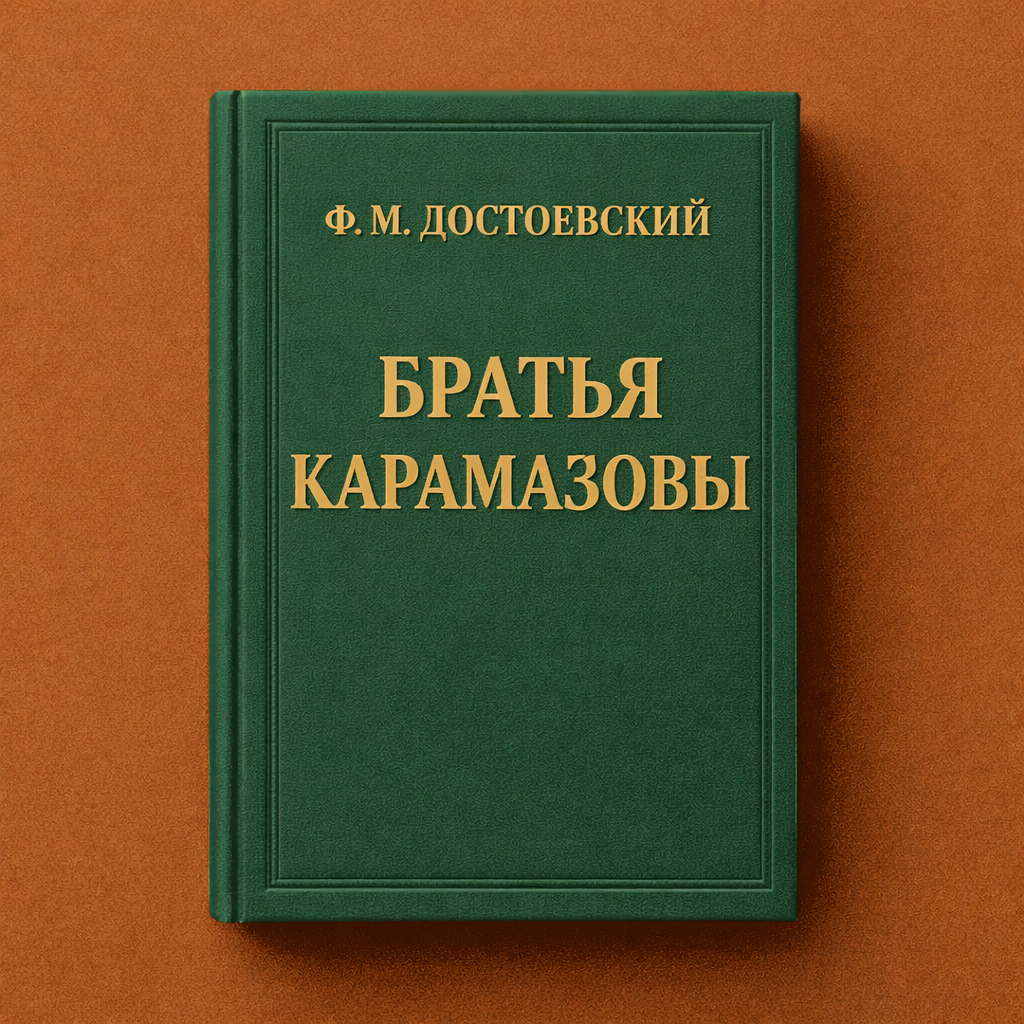
The Brothers Karamazov is the story of a father, his three sons and a fourth who may also be his son. It was Dostoevsky's last novel, serialised in 1879–80, and he died a few months after it was finished. The plot turns on a murder, but the book is really about what each brother believes and how he lives with it.
The cast is large and every character has several names. Here is the family first, then the people around them.
The names at a glance
| Character | Full name in Russian | What people call them |
|---|---|---|
| The father | Фёдор Павлович Карамазов | Фёдор Павлович |
| Eldest son | Дмитрий Фёдорович | Митя, Митенька, Митька |
| Middle son | Иван Фёдорович | Ваня, Ванечка |
| Youngest son | Алексей Фёдорович | Алёша, Алёшка, Алёшечка |
| The servant | Павел Фёдорович Смердяков | Смердяков |
| Dmitri's rival love | Аграфена Александровна Светлова | Грушенька |
| Dmitri's fiancée | Катерина Ивановна Верховцева | Катя |
| The elder | старец Зосима | Father Zosima |
Two tips before you start. Our edition prints ё as plain е, so you'll see Федор and Алеша: read them as Fyodor and Alyosha. And the sons share a patronymic, Фёдорович (son of Fyodor), so the narrator often uses it to tell you who's speaking: Иван Фёдорович is Ivan, formally.
Fyodor Pavlovich Karamazov
The father is a landowner, a drunk and a clown who made his money by marrying it. He neglects all his children. The first chapter introduces him through his youngest son, and tells you at once how he will end:
Алексей Федорович Карамазов был третьим сыном помещика нашего уезда Федора Павловича Карамазова, столь известного в свое время (да и теперь еще у нас припоминаемого) по трагической и темной кончине своей...
Alexei Fyodorovich Karamazov was the third son of a landowner in our district, Fyodor Pavlovich Karamazov, well known in his day (and still remembered here) for his dark and tragic death...
What he wants: pleasure, money and an audience. His psychology: he humiliates himself before others can humiliate him. In the monastery he announces Я шут коренной, "I'm a born buffoon". The word people use for him is сладострастник, a sensualist, and his sons fear they have inherited it.
Dmitri (Mitya)
The eldest son is a retired army officer, generous, violent and always short of money. He is engaged to Katerina Ivanovna but has fallen for Grushenka, the same woman his father wants. A dispute over three thousand roubles sets the plot moving.
What he wants: Grushenka, his money and, under it all, to be a decent man. His psychology: he feels both his worst and best impulses at full strength. His confession to Alyosha holds his most quoted line:
Тут дьявол с богом борется, а поле битвы — сердца людей.
Here the devil is fighting God, and the battlefield is the human heart.
A few lines earlier he says широк человек, слишком даже широк, я бы сузил: man is broad, too broad, he'd make him narrower. Широкий (broad) is a word for the Russian soul you'll meet again and again in literature.
Ivan
The middle son is an intellectual who writes for the journals. He is cold where Dmitri is hot, and the family can't read him. Dmitri says it best:
Но Иван — могила.
But Ivan keeps his mouth shut.
Literally, "Ivan is a grave": he tells no one anything. Alyosha later calls him загадка, a riddle.
What he wants: an answer to suffering, above all the suffering of children, that he can accept with his mind. His psychology: he can't accept a world where children suffer, so he refuses his place in it, while still loving life. His argument with Alyosha in Book 5 builds to the line about returning his ticket:
Не бога я не принимаю, Алеша, я только билет ему почтительнейше возвращаю.
It isn't God I don't accept, Alyosha. I'm just most respectfully returning him the ticket.
He then tells Alyosha his poem, The Grand Inquisitor. His idea that without immortality "everything is permitted" is picked up by someone else, with terrible results.
Alyosha (Alexei)
The youngest son, and the narrator's hero, is a novice at the local monastery under Father Zosima. Everyone trusts him, even his father. The narrator's description is simple:
Заранее скажу мое полное мнение: был он просто ранний человеколюбец...
Let me give my full opinion now: he was simply someone who loved people from an early age...
What he wants: to help his brothers and to live by Zosima's teaching. His psychology: he listens more than he talks, and his faith is tested when Zosima dies. The dead elder's body begins to smell (тлетворный дух, the odour of decay), which the town takes as a sign against him, and Alyosha's crisis follows. Zosima tells him to leave the monastery and live "in the world as a monk".
His name has the most forms: Алексей formally, Алёша from family, Алёшка when someone is teasing him, and Алёшечка or Лешечка when someone is tender.
Smerdyakov
The servant and cook in Fyodor's house is the son of Lizaveta Smerdyashchaya, a holy fool of the town. Rumour says Fyodor is his father. Fyodor named him after his mother's nickname, Смердящая (the stinking one), from смердеть, to stink. His first name and patronymic, Pavel Fyodorovich, appear only rarely.
What he wants: money, respect and a life abroad. His psychology: he is resentful, proud and clever in a narrow way. He hates where he came from:
Я всю Россию ненавижу, Марья Кондратьевна.
I hate the whole of Russia, Marya Kondratyevna.
He admires Ivan, and Ivan's ideas are what interest him. Notice his habit of adding -с to words (вы-с, нечего-с). It was a servant's way of being polite, short for сударь (sir), and it marks every line he speaks.
Grushenka
Agrafena Alexandrovna Svetlova, known by the diminutive Грушенька, is a young woman kept by an old merchant. Both Fyodor and Dmitri want her. She is proud, mocking and wounded: a man left her at seventeen, and she is waiting for him to return.
What she wants: to stop being humiliated, and to be loved without being bought. Her psychology: she can be cruel and generous within the same hour. She tells a folk tale about a wicked woman saved by a single onion she once gave away, and applies it to herself:
Только вот что, Ракитка, я хоть и злая, а все-таки я луковку подала.
But you know what, Rakitka, I may be wicked, but I did give away an onion.
Луковка is a diminutive of лук, onion. Russian makes things small to make them tender, and Grushenka does it constantly.
Katerina Ivanovna
Dmitri's fiancée is an officer's daughter, beautiful and very proud. Dmitri once rescued her father from disgrace by giving her money, and she bowed to the ground before him. She has never got over owing him. Her love for Dmitri is half gratitude and half pride:
Я буду богом его, которому он будет молиться...
I will be his god, and he will pray to me...
What she wants: to be the noble one who saves him. Her psychology: she loves through sacrifice and can't bear to be pitied. Watch how she and Ivan circle each other: their feelings are the novel's quietest love story. In the epilogue the narrator calls her simply Катя.
Father Zosima
The elder (старец) of the monastery is the spiritual centre of the book. At the first family meeting he does something no one understands: he bows to the ground before Dmitri, as if he sees the suffering ahead of him. His teaching, written down by Alyosha in Book 6, is the novel's answer to Ivan:
...знай, что воистину всякий пред всеми за всех и за всё виноват.
...know that truly each of us is guilty before everyone, for everyone and for everything.
This line is spoken by Zosima's dying brother, Markel, and Zosima makes it his own. Elsewhere he asks Что есть ад?, "What is hell?", and answers: "the suffering of no longer being able to love".
Rakitin and Kolya Krasotkin
Rakitin (Михаил, called Миша by Alyosha and Ракитка by Grushenka) is a seminarian with an eye on a career. He gossips, sneers at the monks and plans to go to Petersburg and write for a "thick journal". He is Grushenka's relative and is happy to take her money. Dostoevsky made him the cynic who believes in nothing but getting on.
Kolya Krasotkin is a schoolboy who leads the boys of the town and calls himself неисправимый социалист, "an incorrigible socialist", mostly to impress Alyosha. He is clever, vain and kind underneath. His story with the sick boy Ilyusha is the subplot that gives the novel its last scene, and his cry, taken up by all the boys, ends the book:
— Ура Карамазову! — восторженно провозгласил Коля.
"Hurrah for Karamazov!" Kolya cried, overjoyed.
Who killed Fyodor Pavlovich?
Spoiler warning: this section reveals the end of the novel.
Dmitri is arrested and convicted of killing his father. He didn't do it. Smerdyakov did, and in their last meeting he tells Ivan that the real murderer is the man who taught him that everything is permitted:
Вы убили, вы главный убивец и есть, а я только вашим приспешником был...
You killed him. You're the real murderer, and I was only your accomplice...
Smerdyakov hangs himself before the trial. Ivan tries to confess in court but collapses into fever. Katerina produces a letter that damns Dmitri, and he is sentenced to Siberia. The novel ends not with the brothers but with Alyosha and the boys at Ilyusha's funeral.
Read it in Russian
The Brothers Karamazov is long, around 302,000 words in our edition, and it's not a first Russian novel. If it's your goal, start with White Nights and see which Russian classic to read first. Our tips for reading Dostoevsky in Russian will help too.
You can read the opening pages of The Brothers Karamazov free on our site, with a translation under every line. The narrator's voice is chatty and full of asides, and the dialogue is often easier than the narration. Review participles and gerunds first: Dostoevsky's long sentences are built on them.
Keeping the names straight is half the work of reading this novel in Russian, and the other half is a pleasure. Our Learn Russian app has The Brothers Karamazov in full, with a translation under every line, along with the vocabulary and grammar to get you there. It's free to download, though some books and extra content need diamonds you earn while learning, or Premium.