Crime and Punishment in Russian: Characters, Names and Plan
Reading Crime and Punishment in Russian? The level you need, how long it takes, every character's names and nicknames, key words and a part-by-part plan.
 Learn RussianFree app with audio, quizzes and real books
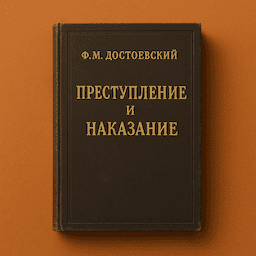
Crime and Punishment (Преступление и наказание, 1866) is a realistic goal for an intermediate learner who reads with a translation nearby. It's about 176,000 words of Russian, in six parts and an epilogue, and most learners will need two to five months at half an hour a day.
The two things that slow people down most are the names and the setting. This guide covers both, along with the words that keep coming back and a plan for each part. For general advice on Dostoevsky's style, see our tips on how to read Dostoevsky in Russian.
What level do you need?
There's no official level for a novel, but here's a fair guide:
- With a translation under every line: a solid intermediate level (around B1) is enough to start. You'll check the English often at first, and less as you go.
- With a dictionary only: upper intermediate (B2) or above, and you'll still look things up on every page.
- Without help: advanced. The narration is dense 19th-century prose with long sentences.
What you need most is the grammar of written Russian: all six cases, verb aspects and the participles and gerunds that fill Dostoevsky's long sentences. Dialogue is the easy part. Much of the book is people talking, and their speech is quicker and simpler than the narration.
How long is it?
Here is the length of each part in our app's text.
| Part | Chapters | Words (approx.) |
|---|---|---|
| Part 1 | 7 | 28,400 |
| Part 2 | 7 | 33,200 |
| Part 3 | 6 | 26,600 |
| Part 4 | 6 | 25,300 |
| Part 5 | 5 | 25,300 |
| Part 6 | 8 | 31,400 |
| Epilogue | 2 | 5,600 |
| Total | 41 | 176,000 |
A learner who reads in Russian and checks a translation now and then might manage 40 to 80 words a minute. At 60 words a minute, the whole novel takes about 50 hours. Half an hour a day gets you through in a little over three months. Slower is fine. A chapter is usually 3,000 to 5,000 words, so one chapter every two or three days is a steady pace.
Character names and nicknames
Russians use a first name with a patronymic (Родион Романович, "Rodion, son of Roman") for polite address, and short or pet forms for family and friends. One person can appear under three or four names on a single page. Keep this list nearby.
| Character | Full name in Russian | Also called | Who they are |
|---|---|---|---|
| Raskolnikov | Родион Романович Раскольников | Родя (Rodya), Родька (Rodka), Родион Романыч | Former student, 23, the murderer |
| Sonya | Софья Семеновна Мармеладова | Соня, Сонечка (Sonechka) | Marmeladov's daughter |
| Dunya | Авдотья Романовна Раскольникова | Дуня, Дунечка (Dunechka) | Raskolnikov's sister |
| His mother | Пульхерия Александровна Раскольникова | маменька, мамаша | Widow in the provinces |
| Razumikhin | Дмитрий Прокофьич Разумихин | Вразумихин (his joke) | Raskolnikov's loyal friend |
| Porfiry | Порфирий Петрович | The investigating magistrate | |
| Svidrigailov | Аркадий Иванович Свидригайлов | Dunya's former employer | |
| Marmeladov | Семен Захарович Мармеладов | Drunk former clerk, Sonya's father | |
| Katerina Ivanovna | Катерина Ивановна Мармеладова | Marmeladov's wife, Sonya's stepmother | |
| Luzhin | Петр Петрович Лужин | Dunya's fiancé, a self-made lawyer | |
| Alyona Ivanovna | Алена Ивановна | старуха, старушонка, процентщица | The old pawnbroker |
| Lizaveta | Лизавета Ивановна | Alyona's younger sister | |
| Nastasya | Настасья | Настасьюшка | The landlady's servant |
| Ilya Petrovich | Илья Петрович | Порох ("Gunpowder") | Hot-tempered police officer |
Three tips for the names:
- Rodya is family, Rodka is a friend. His mother and sister say Родя. Razumikhin shouts Родька, which is rough and affectionate. Porfiry uses Родион Романыч, the spoken form of the patronymic.
- Watch the case endings. Names decline like any noun: Соня, Сони, Соне, Соню, Соней. If a name looks strange, find the nominative.
- Some names mean something. Раскол is "split". Разумихин comes from разум, "reason". Лужин sounds like лужа, "puddle". Мармелад is "jelly sweets".
The St Petersburg setting
The novel takes place in the poorest part of central Petersburg, around the Haymarket, in a hot, stuffy July. The opening line sets the scene:
В начале июля, в чрезвычайно жаркое время, под вечер, один молодой человек вышел из своей каморки, которую нанимал от жильцов в С — м переулке, на улицу и медленно, как бы в нерешимости, отправился к К — ну мосту.
At the beginning of July, in a spell of extremely hot weather, towards evening, a young man came out of the tiny room he rented from tenants in S. Lane, and slowly, as if he couldn't make up his mind, set off towards K. Bridge.
Dostoevsky hides the real names (Stolyarny Lane, Kokushkin Bridge) behind initials and dashes, as was common at the time. Here are the setting words you'll meet again and again.
| Russian | Meaning | Note |
|---|---|---|
| Сенная (площадь) | the Haymarket | The square at the heart of the novel |
| канава | canal | Literally "ditch", Petersburg slang for the Catherine Canal |
| Нева | the Neva | The city's river |
| мост | bridge | Raskolnikov crosses many of them |
| переулок | lane, side street | |
| каморка | tiny room, cubbyhole | Raskolnikov's room, which his mother says looks like a coffin |
| квартира | flat, lodgings | |
| лестница | staircase | Dark stairwells matter in the plot |
| дворник | caretaker, yard keeper | Every building has one, and they notice things |
| хозяйка | landlady | Raskolnikov owes his rent |
| распивочная | drinking den | Where he meets Marmeladov |
| трактир | tavern | |
| контора | (police) office | Where he is summoned in Part 2 |
| жара, духота | heat, stuffiness | The weather is almost a character |
Words that keep coming back
Some words appear so often that learning them early pays off at once.
- вдруг (suddenly): about 560 times in the novel. Dostoevsky's characters are always doing things вдруг.
- совершенно (completely) and чрезвычайно (extremely): his favourite intensifiers.
- будто, как бы (as if): the narrator is rarely sure of anything.
- бред, лихорадка (delirium, fever): Raskolnikov is ill for much of the book.
- топор (axe), заклад (pledge, pawned item), закладывать (to pawn).
- преступление (crime), наказание (punishment), убийца (murderer), убить (to kill).
- страдание (suffering), тоска (anguish, longing): the book's emotional vocabulary.
- дескать (so to say): marks someone else's words in speech.
- -с at the end of a word, as in да-с, убили-с: a polite particle from сударь (sir). Porfiry uses it constantly.
A reading plan, part by part
Spoiler warning: this section describes what happens in each part, including the end.
Part 1 (7 chapters). The rehearsal visit to the pawnbroker, the meeting with Marmeladov, a long letter from his mother, the dream of the horse and the murder. It's the most gripping part. Chapter 3 is mostly the mother's letter, a good change of pace with clear, everyday language.
Part 2 (7 chapters). The longest part. Raskolnikov hides the stolen things, falls into a fever, meets Luzhin and sees Marmeladov die in the street. Expect lots of dialogue and police-office vocabulary. Push through: the pace picks up at the end.
Part 3 (6 chapters). His mother and sister are now in town, and Razumikhin falls for Dunya. Chapter 5 has the first meeting with Porfiry and the theory of the "extraordinary man". It's the most demanding chapter of the book, so read it slowly.
Part 4 (6 chapters). Svidrigailov's first visit, the evening with Luzhin, Raskolnikov's visit to Sonya and the reading of Lazarus, then the second round with Porfiry. A good part to reread later.
Part 5 (5 chapters). The shortest part, and the biggest scenes: Luzhin's scandal at the memorial meal, the confession to Sonya and the death of Katerina Ivanovna.
Part 6 (8 chapters). Porfiry's last talk with Raskolnikov, Svidrigailov's night and his meeting with Dunya, and the walk to the police station. The chapters are shorter, which helps after a long book.
Epilogue (2 chapters). Siberia. Only 5,600 words, and it reads quickly. Save it for a day when you can finish it in one sitting.
Read it in Russian
You can read the opening pages of Crime and Punishment free on our site, with a translation under every line. To know the hero better before you start, read our Raskolnikov character analysis, and our Crime and Punishment quotes give you 14 famous lines with grammar notes. If you haven't decided where to begin, see which Russian classic to read first.
With the names sorted and the key words learned, Crime and Punishment is one of the most rewarding books you can read in Russian. Our Learn Russian app has Crime and Punishment in full, with a translation under every line, along with the vocabulary and grammar to get you there. It's free to download, though some books and extra content need diamonds you earn while learning, or Premium.