Reading Pushkin in Russian: Where Learners Should Start
Why Pushkin matters so much to Russians, why his prose suits learners, the older words to expect, and famous Pushkin quotes in Russian with translations.
 Learn RussianFree app with audio, quizzes and real books
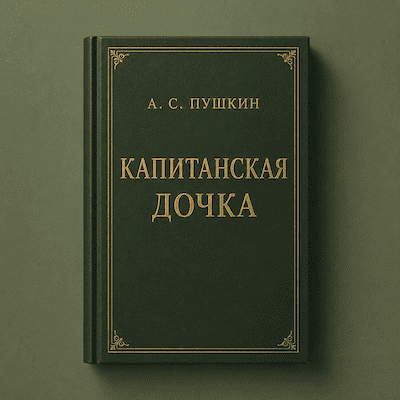
Start with Pushkin's fairy tales in verse if you're near the beginning, then read his novel The Captain's Daughter. His poetry is the reason Russians love him, but his prose is the easiest way into his work for a learner: short sentences, a strong plot and very little padding.
Who Pushkin is for Russians
Alexander Pushkin (1799–1837) holds a place in Russian culture that no single writer quite holds in English. Russians learn his poems at school, quote him in everyday speech and name streets, squares and towns after him. A well-known saying puts it simply: «Пушкин — наше всё», "Pushkin is our everything".
He's often called the founder of the modern Russian literary language. Before him, written Russian was split between a heavy, Church Slavonic-flavoured high style and the plain language people actually spoke. Pushkin brought them together. He wrote serious literature in a clear, natural Russian, and later writers built on it. That's a big part of why a learner can read him today: his Russian is close to the Russian you're learning.
His most famous works are in verse. Eugene Onegin (Евгений Онегин) is a whole novel in verse, and The Bronze Horseman (Медный всадник) is a long poem about St Petersburg and the great flood of 1824. Both are wonderful, and both are hard: poetry bends word order to fit the rhythm and the rhyme. Leave them for later.
Why his prose is clear and short
Pushkin's prose is famously plain. He doesn't stack clauses or stop the story to describe a room for a page. When we measured the openings of seven Russian classics, The Captain's Daughter averaged 13 words a sentence. Anna Karenina averaged 21.
You can see the style in the snowstorm scene. Each sentence does one job:
Ветер завыл; сделалась метель. В одно мгновение темное небо смешалось со снежным морем. Все исчезло.
The wind howled; a blizzard had started. In an instant the dark sky merged with a sea of snow. Everything vanished.
There are no participles here, no long subordinate clauses, and the verbs are all simple past forms. That makes Pushkin ideal practice for the past tense and verb aspect.
Older words and forms to expect
The Captain's Daughter came out in 1836, and the narrator is an old man remembering the 1770s, so some words have changed. None of them are hard once you know them. These all come from the novel's text:
| In the book | Modern Russian | Meaning |
|---|---|---|
| сей, сия, сие | этот, эта, это | this |
| коли | если | if |
| покамест | пока | for now, meanwhile |
| осьмнадцать | восемнадцать | eighteen |
| воротиться | вернуться | to come back |
| счастие | счастье | happiness |
| моею женою | моей женой | as my wife (instrumental) |
Сей turns up mostly in fixed phrases. Pugachev says сей же час, "this very hour", and Russians still say до сих пор (until now) and сейчас (now), which both come from the same old word.
Коли is common in speech. Savelich frets: Что скажет барыня, коли дитя занеможет? "What will the mistress say if the child falls ill?"
The -ою / -ею endings are just a longer form of the feminine instrumental case. When Grinyov proposes, he says будь моею женою, "be my wife". Today it would be моей женой. You'll still see the long forms in poetry.
You'll also meet words for a world that's gone: кибитка (a covered sledge or wagon), крепость (a fortress), барин (the master, a landowner). And батюшка doesn't always mean "father". Servants and older people use it as a warm way to address a man, rather like "sir" or "my dear fellow".
Pushkin quotes in Russian, from The Captain's Daughter
Here are seven lines from the novel, each with a natural English translation.
The epigraph. The novel's motto, about honour:
Береги честь смолоду.
Guard your honour while you're young.
The hero's lazy childhood. Недоросль is an old word for a young nobleman who hasn't yet entered service, with a hint of "good-for-nothing":
Я жил недорослем, гоняя голубей и играя в чехарду с дворовыми мальчишками.
I lived as an idle young lad, chasing pigeons and playing leapfrog with the servants' boys.
Notice the two gerunds, гоняя and играя: "chasing", "playing". Our page on participles and gerunds covers the form.
The storm. Two words that end the snowstorm description:
Все исчезло.
Everything vanished.
The captain's defiance. Captain Mironov's last words to Pugachev:
Ты мне не государь, ты вор и самозванец, слышь ты!
You're no sovereign of mine, you're a thief and an impostor, do you hear!
Pugachev's rule. Казнить is "to execute", жаловать "to reward" or "to grant favour":
Казнить так казнить, жаловать так жаловать: таков мой обычай.
If I execute, I execute, and if I reward, I reward: that's my way.
The eagle and the raven. Pugachev tells Grinyov a folk tale about a raven who lives three hundred years on carrion, and an eagle who lives only thirty-three. The eagle's answer explains Pugachev himself:
…нет, брат ворон; чем триста лет питаться падалью, лучше раз напиться живой кровью, а там что бог даст!
No, brother raven: rather than feed on carrion for three hundred years, better to drink living blood just once, and then whatever God gives!
The line every Russian knows. The old narrator's verdict on the rebellion:
Не приведи бог видеть русский бунт, бессмысленный и беспощадный!
God forbid that we should see a Russian revolt, senseless and merciless!
A reading path for Pushkin
1. A fairy tale in verse. The Tale of the Fisherman and the Fish (Сказка о рыбаке и рыбке) is the classic first choice. It's short, it repeats itself like a folk tale, and Russian children know it by heart. The Tale of Tsar Saltan (Сказка о царе Салтане) is a longer step up. Verse is harder than prose in general, but these tales use simple words and the repetition carries you.
2. The Captain's Daughter. This is the real goal for most learners. It's about 33,800 words in our app, so it's a novel you can actually finish. For the plot and characters before you begin, see our summary of The Captain's Daughter.
3. Then onwards. After Pushkin, Dostoevsky's White Nights is a natural next step (what it's about), and our guide to reading Dostoevsky in Russian covers what changes. Eugene Onegin can wait until you're comfortable with poetry.
Read it in Russian
The opening pages of The Captain's Daughter are free on our site, with the Russian text and an English translation under every line. You can also browse all our Russian books.
Reading Pushkin in his own words is the moment Russian literature stops being a list of famous names and starts being something you can hear. Our Learn Russian app has The Captain's Daughter in full, with a translation under every line, along with the vocabulary and grammar to get you there. It's free to download, though some books and extra content need diamonds you earn while learning, or Premium.