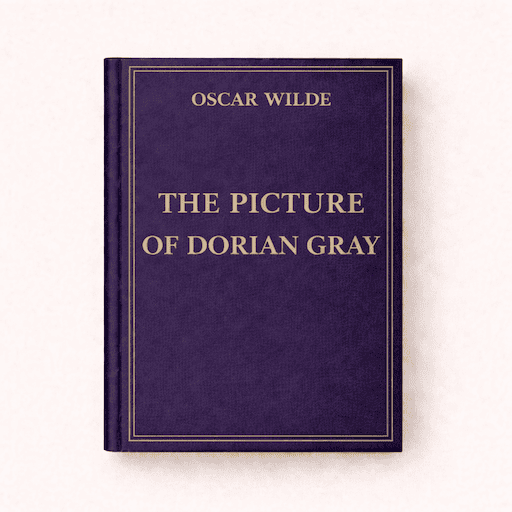
The Picture of Dorian Gray
Het Portret van Dorian Gray
Oscar Wilde · 1890
Een gotische roman die schoonheid, jeugd en morele corruptie onderzoekt via Dorian Gray.
Lees het begin
De originele tekst, elke regel gevolgd door de vertaling.
The artist is the creator of beautiful things. To reveal art and conceal the artist is art’s aim. The critic is he who can translate into another manner or a new material his impression of beautiful things.
De kunstenaar is de schepper van mooie dingen. Kunst onthullen en de kunstenaar verbergen, dat is het doel van de kunst. De criticus is degene die zijn indruk van mooie dingen in een andere vorm of een nieuw materiaal kan vertalen.
The highest as the lowest form of criticism is a mode of autobiography. Those who find ugly meanings in beautiful things are corrupt without being charming. This is a fault.
De hoogste en laagste vorm van kritiek is een vorm van autobiografie. Zij die lelijke betekenissen vinden in mooie dingen zijn verdorven zonder charmant te zijn. Dat is een fout.
Those who find beautiful meanings in beautiful things are the cultivated. For these there is hope. They are the elect to whom beautiful things mean only beauty.
Zij die in mooie dingen een betekenisvolle schoonheid vinden, zijn de gecultiveerden. Voor hen is er hoop. Zij zijn de uitverkorenen voor wie mooie dingen alleen maar schoonheid betekenen.
There is no such thing as a moral or an immoral book. Books are well written, or badly written. That is all.
Er bestaan geen morele of immorele boeken. Boeken zijn goed geschreven of slecht geschreven. Dat is alles.
The nineteenth century dislike of realism is the rage of Caliban seeing his own face in a glass.
De afkeer van het realisme in de negentiende eeuw is vergelijkbaar met de woede van Caliban die zijn eigen gezicht in een spiegel ziet.
The nineteenth century dislike of romanticism is the rage of Caliban not seeing his own face in a glass. The moral life of man forms part of the subject-matter of the artist, but the morality of art consists in the perfect use of an imperfect medium.
De negentiende-eeuwse afkeer van de romantiek is de woede van Caliban die zijn eigen gezicht niet in een spiegel ziet. Het morele leven van de mens vormt een deel van het onderwerp van de kunstenaar, maar de moraliteit van de kunst schuilt in het perfecte gebruik van een imperfect medium.
No artist desires to prove anything. Even things that are true can be proved. No artist has ethical sympathies. An ethical sympathy in an artist is an unpardonable mannerism of style. No artist is ever morbid. The artist can express everything.
Geen enkele kunstenaar wil iets bewijzen. Zelfs waarheden kunnen bewezen worden. Geen enkele kunstenaar heeft ethische gevoelens. Een ethisch gevoel bij een kunstenaar is een onvergeeflijke stijlfiguur. Geen enkele kunstenaar is morbide. De kunstenaar kan alles uitdrukken.
Thought and language are to the artist instruments of an art. Vice and virtue are to the artist materials for an art. From the point of view of form, the type of all the arts is the art of the musician.
Gedachte en taal zijn voor de kunstenaar instrumenten van een kunst. Ondeugd en deugd zijn voor de kunstenaar materialen voor een kunst. Vanuit het oogpunt van vorm is de kunst van de musicus het type van alle kunsten.
From the point of view of feeling, the actor’s craft is the type. All art is at once surface and symbol. Those who go beneath the surface do so at their peril. Those who read the symbol do so at their peril.
Vanuit gevoelsmatig oogpunt is het acteervak een type. Alle kunst is tegelijkertijd oppervlak en symbool. Wie onder het oppervlak kijkt, doet dat op eigen risico. Wie het symbool probeert te ontcijferen, doet dat eveneens op eigen risico.
It is the spectator, and not life, that art really mirrors. Diversity of opinion about a work of art shows that the work is new, complex, and vital. When critics disagree, the artist is in accord with himself.
Het is de toeschouwer, en niet het leven zelf, die de kunst werkelijk weerspiegelt. Verschillen van mening over een kunstwerk tonen aan dat het werk nieuw, complex en vitaal is. Wanneer critici het oneens zijn, is de kunstenaar het met zichzelf eens.
We can forgive a man for making a useful thing as long as he does not admire it. The only excuse for making a useless thing is that one admires it intensely.
We kunnen een man vergeven dat hij iets nuttigs maakt, zolang hij het maar niet bewondert. De enige rechtvaardiging voor het maken van iets nutteloos is dat men het intens bewondert.
All art is quite useless.
Alle kunst is volkomen nutteloos.
OSCAR WILDE
OSCAR WILDE
Lees het hele boek in de app, met audio en vertaling met één tik.