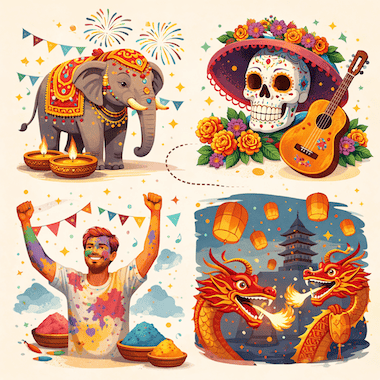
Festivals Around the Globe
世界各地的节日
 Learn English免费应用:发音、测验和原版书
重点词汇
- festival节日
- ceremony仪式
- procession游行队伍
- ritual仪式
- pilgrim朝圣者
- heritage遗产
- solstice至日
- altar祭坛
- harvest丰收
- costume服装
- sacred神圣的
- deity神灵
全部词汇(30)
- reenactment重现
- offering供品
- bonfire篝火
- spectator观众
- indigenous土著的
- communal集体的
- myth神话
- fertility丰饶
- mourning哀悼
- torch火炬
- baptism洗礼
- archery射箭
- lantern灯笼
- preservation保护
- empathy共情
- exuberant热情洋溢的
- feast盛宴
- conquest征服
Every culture on Earth has its festivals. From the snowy north of Scandinavia to the deserts of Africa, people have always set aside special days to honor their gods, welcome a new season, remember the dead or simply have a good time together.
地球上每一种文化都有自己的节日。从白雪覆盖的斯堪的纳维亚北部到非洲的沙漠,人们一直会留出一些特别的日子,用来敬奉神明、迎接新的季节、纪念逝者,或者只是聚在一起开心一下。
Some celebrations, like New Year's Eve, are known almost everywhere. Thousands of others are hardly known outside their own region. Here are a few of them, from Ethiopia to Mongolia, and what people actually do on those days.
有些节日,比如跨年夜,几乎无人不知。还有成千上万的节日,出了本地就很少有人听说过。下面介绍其中几个,从埃塞俄比亚到蒙古,看看人们在这些日子里究竟做些什么。
Timkat: Epiphany in Ethiopia
提姆卡特节:埃塞俄比亚的主显节
Timkat is the Ethiopian Orthodox celebration of Epiphany, the day that remembers the baptism of Jesus in the Jordan River. It falls on January 19, or January 20 in leap years. On the eve of the feast, priests carry the tabots out of the churches. A tabot is a tablet that stands for the Ark of the Covenant, and it is so holy that it is always wrapped in rich cloth and kept out of sight.
提姆卡特节是埃塞俄比亚正教会的主显节,纪念耶稣在约旦河受洗。节日在1月19日,闰年则在1月20日。节日前夜,神父们把塔博特从教堂里抬出来。塔博特是一块象征约柜的石板或木板,被视为极其神圣,总是用华丽的布包裹起来,不让人看见。
Crowds dressed in white follow the procession to a pool or river, where they spend the night singing and praying. At dawn the priests bless the water, and many people jump in or get splashed to renew their baptism. One of the biggest celebrations takes place in Gondar, where people leap into the pool of Fasilides' Bath, built in the 17th century. UNESCO added Timkat to its list of Intangible Cultural Heritage in 2019.
身穿白衣的人群跟着游行队伍来到水池或河边,在那里唱诗、祈祷,度过整夜。黎明时分,神父为水祝福,许多人跳进水里或让人把水泼在身上,以此重温自己的洗礼。规模最大的庆典之一在贡德尔举行,人们跳进建于17世纪的法西利达斯浴池。2019年,联合国教科文组织将提姆卡特节列入人类非物质文化遗产名录。
Up Helly Aa: Fire in the Scottish Winter
火之节:苏格兰冬日里的烈火
On the last Tuesday of January, about a thousand people with burning torches march through the dark streets of Lerwick, the main town of Scotland's Shetland Islands. This is Up Helly Aa, one of the largest fire festivals in Europe. At the front marches the Jarl Squad, dressed as Vikings with helmets, shields and axes.
每年1月的最后一个星期二,大约一千人手持燃烧的火把,走过苏格兰设得兰群岛主要城镇勒威克漆黑的街道。这就是火之节,欧洲规模最大的火节之一。走在最前面的是“雅尔队”,他们扮成维京人,戴着头盔,拿着盾牌和斧头。
The march ends at a wooden Viking ship, or galley, built for the occasion. The costumed marchers, called guizers, throw their torches into it and watch it burn. The festival is younger than it looks: the Victorians invented the Viking theme in the 1880s, and the first galley was burned in 1889. After the fire, the guizers visit local halls, where music and dancing go on until morning. Since 2023, women and girls can march in the procession too.
游行的终点是一艘专门为节日建造的木制维京船。被称为“盖泽”的化装游行者把火把扔进船里,看着它燃烧殆尽。这个节日其实没有看上去那么古老:维京主题是维多利亚时代的人在19世纪80年代创造的,第一艘船在1889年被烧。烧船之后,盖泽们会去当地的各个会堂,音乐和舞蹈一直持续到天亮。自2023年起,妇女和女孩也可以参加游行了。
Songkran: Thailand's Water Festival
宋干节:泰国的泼水节
Songkran is the Thai New Year, officially celebrated from April 13 to 15. It falls in the hottest part of the year, just before the rainy season. The tradition began quietly: people poured scented water over statues of the Buddha and over the hands of older relatives to show respect and ask for their blessing.
宋干节是泰国的新年,官方庆祝日期为4月13日至15日。它正值一年中最炎热的时节,雨季即将到来。这个传统最初很安静:人们把香水洒在佛像上,也洒在年长亲人的手上,以表示尊敬并求得他们的祝福。
Today the whole country seems to turn into one huge water fight. In Bangkok and Chiang Mai, the streets fill with people carrying water guns, buckets and hoses, and nobody stays dry. Many people still visit temples, give food to monks and build small piles of sand in the temple grounds. The water has a meaning too: it washes away the bad luck of the old year. In 2023, UNESCO added Songkran to its Intangible Cultural Heritage list.
如今,整个国家仿佛变成了一场巨大的水仗。在曼谷和清迈,街上挤满了拿着水枪、水桶和水管的人,谁也别想保持干爽。不过,很多人仍会去寺庙,向僧人布施食物,并在寺院里堆起小沙堆。水也有它的寓意:冲走过去一年的厄运。2023年,联合国教科文组织将宋干节列入非物质文化遗产名录。
Día de los Muertos: Celebrating the Departed
亡灵节:怀念逝去的亲人
Mexico's Day of the Dead is celebrated on November 1 and 2. Outsiders often imagine a sad or gloomy holiday, but it is closer to a family reunion. People believe that on these days the souls of the dead come back to visit the living, and they prepare a warm welcome for them.
墨西哥的亡灵节在11月1日和2日。外人常常以为这是一个悲伤或阴森的节日,其实它更像一次家庭团聚。人们相信,在这几天里,逝者的灵魂会回来探望活着的人,于是大家热情地准备迎接他们。
Families build altars called ofrendas and decorate them with orange marigolds, candles, photos and the favorite food and drinks of the people they have lost. In many towns, families spend the night in the cemetery, eating, playing music and telling stories about the dead. Skulls, or calaveras, are everywhere, often made of sugar and painted in bright colors. The festival mixes the traditions of the Aztecs and other indigenous peoples with the Catholic feasts of All Saints and All Souls, and UNESCO recognized it in 2008.
家家户户搭起名为“奥弗伦达”的祭坛,用橙色的万寿菊、蜡烛、照片,以及已故亲人生前最爱的食物和饮料来装饰。在许多城镇,一家人会在墓地里过夜,吃东西、奏乐,讲述逝者的故事。骷髅,也就是“卡拉维拉”,随处可见,常常用糖做成,涂上鲜艳的颜色。这个节日融合了阿兹特克人和其他原住民的传统,以及天主教的诸圣节和万灵节。2008年,联合国教科文组织认可了这一节日。
Holi: The Festival of Colors
洒红节:色彩的节日
Holi is one of the best-known Hindu festivals. It is celebrated in India and Nepal and by South Asian communities around the world. It takes place at the full moon in late February or March, marks the end of winter and the victory of good over evil, and is famous for its clouds of colored powder.
洒红节是最著名的印度教节日之一。印度和尼泊尔都过这个节,世界各地的南亚社区也会庆祝。它在2月底或3月的满月时举行,标志着冬天结束、善战胜恶,最出名的就是漫天飞扬的彩粉。
It starts the night before with Holika Dahan, when people light bonfires. They remember the legend of the demoness Holika, who burned in a fire while the boy Prahlad, a devoted follower of Vishnu, walked out unharmed. The next morning, people of all ages go out and throw colored powder and water at friends, neighbors and strangers alike. For one day, many of the usual barriers between rich and poor, old and young are relaxed. The colors also recall the god Krishna, who, according to legend, playfully covered Radha and her friends in color.
节日在前一天晚上以“焚烧霍丽卡”拉开序幕,人们点起篝火。大家借此回忆一个传说:女魔霍丽卡在火中被烧死,而虔诚信奉毗湿奴的男孩钵罗诃罗陀却毫发无伤地走了出来。第二天早上,男女老少走上街头,把彩粉和水泼向朋友、邻居,甚至陌生人。在这一天里,贫富之间、老少之间许多平日的隔阂都放松了。这些色彩也让人想起黑天神克里希纳,传说他曾开玩笑地把彩色涂在拉达和她的女伴们身上。
Inti Raymi: Festival of the Sun
因蒂拉伊米:太阳节
Every year on June 24, the Inca Festival of the Sun comes back to life in Cusco, Peru. In Quechua, Inti Raymi means 'Festival of the Sun'. It was one of the most important ceremonies of the Inca Empire, held around the winter solstice in the Southern Hemisphere to honor the sun god Inti.
每年6月24日,印加人的太阳节都会在秘鲁库斯科重现。在克丘亚语中,“因蒂拉伊米”的意思就是“太阳节”。这曾是印加帝国最重要的仪式之一,在南半球冬至前后举行,用来祭拜太阳神因蒂。
After the conquest, the Spanish colonial authorities banned the festival in the 16th century. It was brought back in 1944 as a staged performance. Today, hundreds of actors in rich costumes play the Sapa Inca, the emperor, and his court at Sacsayhuamán, the old Inca fortress above the city. Tens of thousands of people come to watch. For many Quechua speakers, the festival is more than a show: it is a way to take pride in their language and history.
征服之后,西班牙殖民当局在16世纪禁止了这个节日。1944年,它以舞台表演的形式得到恢复。如今,数百名身穿华丽服装的演员在城市上方古老的印加要塞萨克塞华曼,扮演萨帕印加(即皇帝)和他的朝廷。数万人前来观看。对许多讲克丘亚语的人来说,这个节日不只是一场表演,更是为自己的语言和历史感到自豪的一种方式。
Onam: Kerala's Harvest Festival
欧南节:喀拉拉邦的丰收节
Onam is the harvest festival of Kerala, in southern India. It lasts ten days and falls in August or September, in the Malayalam month of Chingam. People of all religions in Kerala celebrate it. According to legend, Onam marks the yearly visit of Mahabali, a kind and generous king who ruled the land long ago and comes back once a year to see his people.
欧南节是印度南部喀拉拉邦的丰收节。节日持续十天,在8月或9月,即马拉雅拉姆历的钦加姆月。在喀拉拉邦,各种宗教信仰的人都过这个节。传说中,欧南节是为了纪念马哈巴利每年一次的探访。他是一位仁慈慷慨的国王,很久以前统治这片土地,每年都会回来看望他的子民。
Families make flower carpets called pookalam in front of their homes and add more flowers each day, so the designs grow bigger and more detailed. The high point is the Onam Sadya, a vegetarian feast of more than twenty dishes served on a banana leaf. In the same season, villages hold races of long snake boats, known as Vallam Kali, with about a hundred rowers in each boat, while huge crowds cheer from the riverbanks.
家家户户在门前用鲜花铺成名为“普卡拉姆”的花毯,每天再添上新的花,图案因此越来越大、越来越精细。节日的高潮是“欧南盛宴”,这是一顿摆在芭蕉叶上、有二十多道菜的素食大餐。同一时期,各个村庄会举行名为“瓦拉姆卡利”的长蛇船比赛,每条船上大约有一百名桨手,河岸上人山人海,欢呼声不断。
Naadam: Mongolia's Festival of Three Games
那达慕:蒙古的“男儿三艺”节
Every July, Mongolia celebrates Naadam, a national festival built around three traditional sports: wrestling, horse racing and archery. The biggest Naadam opens in the capital, Ulaanbaatar, on July 11. The games go back many centuries, to a time when nomad armies used them to keep their warriors fit.
每年7月,蒙古都会庆祝那达慕。这个全国性的节日围绕三项传统运动展开:摔跤、赛马和射箭。规模最大的那达慕于7月11日在首都乌兰巴托开幕。这些比赛有好几百年的历史,可以追溯到游牧军队用它们来让战士保持体魄的时代。
The horse races are the most surprising part: the riders are children, some only five years old, and they race across the open steppe for 15 to 30 kilometers, depending on the age of the horses. The wrestlers wear tight open vests and pointed boots, and a match ends only when one of them touches the ground with his back, knee or elbow. Archers shoot at rows of small leather targets from up to 75 meters away. UNESCO added Naadam to its Intangible Cultural Heritage list in 2010.
最令人惊讶的是赛马:骑手都是孩子,有的只有五岁,他们在开阔的草原上奔驰15到30公里,距离视马的年龄而定。摔跤手穿着紧身的敞胸短坎肩和尖头靴,只有当一方的背、膝盖或手肘着地时,比赛才算结束。弓箭手则在最远75米外,射向一排排小小的皮制靶子。2010年,联合国教科文组织将那达慕列入非物质文化遗产名录。
Festival Facts from Around the World
世界节日小知识
At La Tomatina in Buñol, Spain, about 20,000 people throw more than 100 tons of tomatoes at each other in one hour every August.
每年8月,在西班牙布尼奥尔的番茄节上,约两万人在一小时内互相投掷100多吨番茄。
At Japan's Hadaka Matsuri, or Naked Festival, thousands of men in loincloths fight to grab sacred sticks that are said to bring a year of good luck.
在日本的裸祭上,数千名只系兜裆布的男子争抢据说能带来一整年好运的神木。
The Carnival of Oruro in Bolivia is famous for its devil dancers, and its main parade can last around 20 hours.
玻利维亚的奥鲁罗狂欢节以魔鬼舞者闻名,主游行可以持续约20个小时。
Burning Man brings about 70,000 people to Nevada's Black Rock Desert, where they build a temporary city, burn a giant wooden figure and then remove every trace.
火人节把约七万人吸引到美国内华达州的黑石沙漠,他们在那里建起一座临时城市,烧掉一个巨大的木头人像,然后清除所有痕迹。
Finland's Wife Carrying World Championship goes back to a legend about a 19th-century robber who stole women from nearby villages.
芬兰的背妻世界锦标赛源于一个传说:19世纪有个强盗,常从附近的村子里抢走女人。
During Taiwan's Lantern Festival, thousands of paper sky lanterns carrying people's written wishes rise into the night over the town of Pingxi.
在台湾的元宵节期间,成千上万盏写着人们心愿的纸制天灯在平溪小镇的夜空中冉冉升起。
Why Festivals Matter
节日为何重要
Festivals are more than entertainment. Researchers have found that celebrating together brings people closer, gives them a clearer sense of who they are and offers a break from the stress of daily life. Dancing, singing or eating with hundreds of others gives people a strong feeling of belonging.
节日不只是娱乐。研究人员发现,一起庆祝能拉近人与人之间的距离,让人们更清楚地认识自己是谁,也能让人从日常生活的压力中喘口气。和成百上千的人一起跳舞、唱歌或吃饭,会让人产生强烈的归属感。
Local festivals also keep old things alive. Songs, dances, crafts, recipes and sometimes whole languages survive because people need them for one special day each year. And for visitors, a festival is often the easiest way to understand how other people see the world.
地方节日还能让古老的东西流传下去。歌曲、舞蹈、手艺、食谱,有时甚至整种语言之所以能留存下来,是因为人们每年都要在那个特别的日子里用到它们。对游客来说,参加一个节日往往是了解别人如何看待世界的最简单的方法。
Conclusion
结语
From burning Viking ships in Shetland to flower carpets in Kerala, from naked men at a Japanese temple to paper lanterns over Taiwan, festivals show how differently people celebrate. Each one tells you something about the place where it began.
从设得兰燃烧的维京船到喀拉拉的花毯,从日本寺庙里的赤身男子到台湾上空的纸灯,节日让我们看到人们的庆祝方式多么不同。每个节日都能告诉你一些关于它诞生之地的故事。
Some are solemn and some are silly. Some are hundreds of years old, while others, like Burning Man, started only a few decades ago. But all of them bring people together: with their neighbors, with nature, with the past and with something bigger than themselves.
有的节日庄严肃穆,有的轻松滑稽。有的已有几百年历史,有的,比如火人节,几十年前才出现。但它们都把人们联系在一起:与邻居,与自然,与过去,也与某种比自己更宏大的东西。
在免费应用里可以听这篇文章的朗读,点一下任意单词就能看到释义。