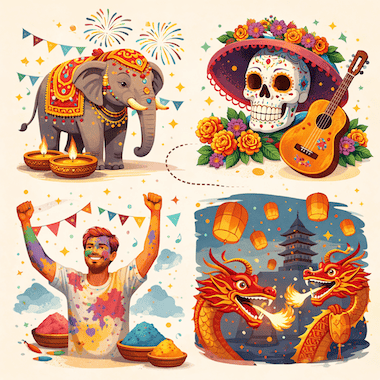
Festivals Around the Globe
مهرجانات من حول العالم
 Learn Englishتطبيق مجاني فيه نطق صوتي واختبارات وكتب حقيقية
كلمات مهمة
- festivalمهرجان
- ceremonyاحتفال
- processionموكب
- ritualطقس
- pilgrimحاج
- heritageالتراث
- solsticeالانقلاب الشمسي
- altarمذبح
- harvestالحصاد
- costumeزي تنكري
- sacredمقدس
- deityإله
كل الكلمات (30)
- reenactmentإعادة تمثيل
- offeringقربان
- bonfireنار المهرجان
- spectatorمتفرج
- indigenousأصلي
- communalمجتمعي
- mythأسطورة
- fertilityالخصوبة
- mourningالحداد
- torchشعلة
- baptismالمعمودية
- archeryالرماية بالقوس
- lanternفانوس
- preservationالحفاظ
- empathyالتعاطف
- exuberantمتحمس
- feastوليمة
- conquestالفتح
Every culture on Earth has its festivals. From the snowy north of Scandinavia to the deserts of Africa, people have always set aside special days to honor their gods, welcome a new season, remember the dead or simply have a good time together.
لكل ثقافة على وجه الأرض أعيادها ومهرجاناتها. فمن شمال إسكندنافيا المكسو بالثلوج إلى صحارى أفريقيا، خصّص الناس دائمًا أيامًا مميزة لتكريم آلهتهم، أو استقبال فصل جديد، أو تذكّر موتاهم، أو لمجرد قضاء وقت ممتع معًا.
Some celebrations, like New Year's Eve, are known almost everywhere. Thousands of others are hardly known outside their own region. Here are a few of them, from Ethiopia to Mongolia, and what people actually do on those days.
بعض الاحتفالات، مثل ليلة رأس السنة، معروفة في كل مكان تقريبًا. أما آلاف غيرها فلا يكاد يعرفها أحد خارج منطقتها. إليك بعضًا منها، من إثيوبيا إلى منغوليا، وما يفعله الناس فعلًا في تلك الأيام.
Timkat: Epiphany in Ethiopia
تيمكات: عيد الغطاس في إثيوبيا
Timkat is the Ethiopian Orthodox celebration of Epiphany, the day that remembers the baptism of Jesus in the Jordan River. It falls on January 19, or January 20 in leap years. On the eve of the feast, priests carry the tabots out of the churches. A tabot is a tablet that stands for the Ark of the Covenant, and it is so holy that it is always wrapped in rich cloth and kept out of sight.
تيمكات هو عيد الغطاس لدى الكنيسة الأرثوذكسية الإثيوبية، ويُحيي ذكرى معمودية يسوع في نهر الأردن. يقع في 19 يناير، أو في 20 يناير في السنوات الكبيسة. وفي ليلة العيد يحمل الكهنة ألواح التابوت إلى خارج الكنائس. والتابوت لوح يرمز إلى تابوت العهد، وهو مقدّس إلى حدّ أنه يُلفّ دائمًا بأقمشة فاخرة ويُخفى عن الأنظار.
Crowds dressed in white follow the procession to a pool or river, where they spend the night singing and praying. At dawn the priests bless the water, and many people jump in or get splashed to renew their baptism. One of the biggest celebrations takes place in Gondar, where people leap into the pool of Fasilides' Bath, built in the 17th century. UNESCO added Timkat to its list of Intangible Cultural Heritage in 2019.
تتبع حشود يرتدي أفرادها الثياب البيضاء الموكب حتى بركة أو نهر، فيقضون الليل هناك في الترانيم والصلاة. وعند الفجر يبارك الكهنة الماء، فيقفز فيه كثيرون أو يُرشّ عليهم لتجديد معموديتهم. ومن أكبر الاحتفالات ما يجري في غوندار، حيث يقفز الناس في بركة حمّام فاسيليدس الذي بُني في القرن السابع عشر. وقد أدرجت اليونسكو تيمكات في قائمة التراث الثقافي غير المادي عام 2019.
Up Helly Aa: Fire in the Scottish Winter
أب هيلي آ: نار في شتاء اسكتلندا
On the last Tuesday of January, about a thousand people with burning torches march through the dark streets of Lerwick, the main town of Scotland's Shetland Islands. This is Up Helly Aa, one of the largest fire festivals in Europe. At the front marches the Jarl Squad, dressed as Vikings with helmets, shields and axes.
في آخر يوم ثلاثاء من شهر يناير، يسير نحو ألف شخص يحملون مشاعل مشتعلة في شوارع ليرويك المظلمة، وهي البلدة الرئيسية في جزر شتلاند الاسكتلندية. هذا هو مهرجان أب هيلي آ، أحد أكبر مهرجانات النار في أوروبا. وفي مقدمة الموكب تسير فرقة الجارل متنكّرة في زيّ الفايكنغ بالخوذات والدروع والفؤوس.
The march ends at a wooden Viking ship, or galley, built for the occasion. The costumed marchers, called guizers, throw their torches into it and watch it burn. The festival is younger than it looks: the Victorians invented the Viking theme in the 1880s, and the first galley was burned in 1889. After the fire, the guizers visit local halls, where music and dancing go on until morning. Since 2023, women and girls can march in the procession too.
ينتهي الموكب عند سفينة فايكنغ خشبية تُسمّى الغالي، تُبنى خصيصًا لهذه المناسبة. فيرمي المشاركون المتنكّرون، ويُسمّون الغايزرز، مشاعلهم فيها ويشاهدونها تحترق. والمهرجان أحدث عهدًا مما يبدو: فقد ابتكر الفيكتوريون طابع الفايكنغ في ثمانينيات القرن التاسع عشر، وأُحرقت أول سفينة عام 1889. وبعد الحريق يتنقّل الغايزرز بين القاعات المحلية، حيث تستمر الموسيقى والرقص حتى الصباح. ومنذ عام 2023 صار بإمكان النساء والفتيات أيضًا السير في الموكب.
Songkran: Thailand's Water Festival
سونغكران: مهرجان الماء في تايلاند
Songkran is the Thai New Year, officially celebrated from April 13 to 15. It falls in the hottest part of the year, just before the rainy season. The tradition began quietly: people poured scented water over statues of the Buddha and over the hands of older relatives to show respect and ask for their blessing.
سونغكران هو رأس السنة التايلاندية، ويُحتفل به رسميًا من 13 إلى 15 أبريل. ويأتي في أشدّ أوقات السنة حرارة، قبيل موسم الأمطار. وقد بدأ هذا التقليد هادئًا: كان الناس يصبّون الماء المعطّر على تماثيل بوذا وعلى أيدي كبار السن من الأقارب تعبيرًا عن الاحترام وطلبًا لبركتهم.
Today the whole country seems to turn into one huge water fight. In Bangkok and Chiang Mai, the streets fill with people carrying water guns, buckets and hoses, and nobody stays dry. Many people still visit temples, give food to monks and build small piles of sand in the temple grounds. The water has a meaning too: it washes away the bad luck of the old year. In 2023, UNESCO added Songkran to its Intangible Cultural Heritage list.
أما اليوم فتبدو البلاد كلها وكأنها تتحول إلى معركة مائية هائلة. ففي بانكوك وتشيانغ ماي تمتلئ الشوارع بأناس يحملون مسدسات الماء والدلاء والخراطيم، ولا يبقى أحد جافًا. ومع ذلك لا يزال كثيرون يزورون المعابد ويقدّمون الطعام للرهبان ويبنون أكوامًا صغيرة من الرمل في ساحات المعابد. وللماء معنى أيضًا، فهو يغسل سوء حظ العام المنصرم. وفي عام 2023 أضافت اليونسكو سونغكران إلى قائمة التراث الثقافي غير المادي.
Día de los Muertos: Celebrating the Departed
يوم الموتى: احتفال بالراحلين
Mexico's Day of the Dead is celebrated on November 1 and 2. Outsiders often imagine a sad or gloomy holiday, but it is closer to a family reunion. People believe that on these days the souls of the dead come back to visit the living, and they prepare a warm welcome for them.
يُحتفل بيوم الموتى في المكسيك يومي 1 و2 نوفمبر. وكثيرًا ما يتخيّله الغرباء عيدًا حزينًا أو كئيبًا، لكنه أقرب إلى لمّ شمل عائلي. إذ يعتقد الناس أن أرواح الموتى تعود في هذه الأيام لزيارة الأحياء، فيستعدّون لاستقبالها استقبالًا حارًا.
Families build altars called ofrendas and decorate them with orange marigolds, candles, photos and the favorite food and drinks of the people they have lost. In many towns, families spend the night in the cemetery, eating, playing music and telling stories about the dead. Skulls, or calaveras, are everywhere, often made of sugar and painted in bright colors. The festival mixes the traditions of the Aztecs and other indigenous peoples with the Catholic feasts of All Saints and All Souls, and UNESCO recognized it in 2008.
تقيم العائلات مذابح تُسمّى أوفريندا، وتزيّنها بزهور القطيفة البرتقالية والشموع والصور، وبالأطعمة والمشروبات المفضّلة لأحبّائها الراحلين. وفي بلدات كثيرة تقضي العائلات الليل في المقبرة، فتأكل وتعزف الموسيقى وتروي الحكايات عن الموتى. وتنتشر الجماجم، أو الكالافيرا، في كل مكان، وغالبًا ما تُصنع من السكر وتُلوَّن بألوان زاهية. ويمزج هذا العيد تقاليد الأزتيك وغيرهم من الشعوب الأصلية بعيدَي جميع القديسين وتذكار الموتى الكاثوليكيين، وقد اعترفت به اليونسكو عام 2008.
Holi: The Festival of Colors
هولي: مهرجان الألوان
Holi is one of the best-known Hindu festivals. It is celebrated in India and Nepal and by South Asian communities around the world. It takes place at the full moon in late February or March, marks the end of winter and the victory of good over evil, and is famous for its clouds of colored powder.
هولي من أشهر الأعياد الهندوسية. يُحتفل به في الهند ونيبال ولدى مجتمعات جنوب آسيا في أنحاء العالم. ويقام عند اكتمال القمر في أواخر فبراير أو في مارس، معلنًا نهاية الشتاء وانتصار الخير على الشر، ويشتهر بسحب المساحيق الملوّنة.
It starts the night before with Holika Dahan, when people light bonfires. They remember the legend of the demoness Holika, who burned in a fire while the boy Prahlad, a devoted follower of Vishnu, walked out unharmed. The next morning, people of all ages go out and throw colored powder and water at friends, neighbors and strangers alike. For one day, many of the usual barriers between rich and poor, old and young are relaxed. The colors also recall the god Krishna, who, according to legend, playfully covered Radha and her friends in color.
يبدأ في الليلة السابقة بطقس هوليكا داهان، حين يُشعل الناس النيران الكبيرة. ويستعيدون أسطورة الشيطانة هوليكا التي احترقت في النار، بينما خرج منها الصبي براهلاد، المخلص في عبادة فيشنو، سالمًا. وفي صباح اليوم التالي يخرج الناس من كل الأعمار ويرشقون الأصدقاء والجيران وحتى الغرباء بالمساحيق الملوّنة والماء. وليوم واحد تلين كثير من الحواجز المعتادة بين الغني والفقير، والكبير والصغير. كما تذكّر الألوان بالإله كريشنا الذي كان، كما تقول الأسطورة، يلطّخ رادها وصديقاتها بالألوان مازحًا.
Inti Raymi: Festival of the Sun
إنتي رايمي: عيد الشمس
Every year on June 24, the Inca Festival of the Sun comes back to life in Cusco, Peru. In Quechua, Inti Raymi means 'Festival of the Sun'. It was one of the most important ceremonies of the Inca Empire, held around the winter solstice in the Southern Hemisphere to honor the sun god Inti.
في 24 يونيو من كل عام يعود عيد الشمس لدى الإنكا إلى الحياة في مدينة كوسكو في البيرو. ومعنى إنتي رايمي بلغة الكيتشوا هو عيد الشمس. وكان من أهم الطقوس في إمبراطورية الإنكا، ويُقام في وقت الانقلاب الشتوي في نصف الكرة الجنوبي تكريمًا لإله الشمس إنتي.
After the conquest, the Spanish colonial authorities banned the festival in the 16th century. It was brought back in 1944 as a staged performance. Today, hundreds of actors in rich costumes play the Sapa Inca, the emperor, and his court at Sacsayhuamán, the old Inca fortress above the city. Tens of thousands of people come to watch. For many Quechua speakers, the festival is more than a show: it is a way to take pride in their language and history.
بعد الغزو منعت السلطات الاستعمارية الإسبانية هذا العيد في القرن السادس عشر. ثم أُعيد إحياؤه عام 1944 في صورة عرض مسرحي. واليوم يؤدي مئات الممثلين بأزياء فاخرة دور السابا إنكا، أي الإمبراطور، وحاشيته في ساكسايوامان، قلعة الإنكا القديمة المطلّة على المدينة. ويأتي عشرات الآلاف لمشاهدة العرض. وبالنسبة لكثير من الناطقين بالكيتشوا، فإن العيد أكثر من مجرد عرض، إنه طريقة للاعتزاز بلغتهم وتاريخهم.
Onam: Kerala's Harvest Festival
أونام: عيد الحصاد في كيرالا
Onam is the harvest festival of Kerala, in southern India. It lasts ten days and falls in August or September, in the Malayalam month of Chingam. People of all religions in Kerala celebrate it. According to legend, Onam marks the yearly visit of Mahabali, a kind and generous king who ruled the land long ago and comes back once a year to see his people.
أونام هو عيد الحصاد في ولاية كيرالا جنوب الهند. يستمر عشرة أيام ويقع في أغسطس أو سبتمبر، في شهر تشينغام من التقويم المالايالامي. ويحتفل به في كيرالا أناس من جميع الأديان. وتقول الأسطورة إن أونام يحيي ذكرى الزيارة السنوية للملك ماهابالي، الملك الطيب الكريم الذي حكم تلك الأرض منذ زمن بعيد، ويعود مرة كل عام ليرى شعبه.
Families make flower carpets called pookalam in front of their homes and add more flowers each day, so the designs grow bigger and more detailed. The high point is the Onam Sadya, a vegetarian feast of more than twenty dishes served on a banana leaf. In the same season, villages hold races of long snake boats, known as Vallam Kali, with about a hundred rowers in each boat, while huge crowds cheer from the riverbanks.
تصنع العائلات أمام بيوتها سجادًا من الزهور يُسمّى بوكالام، وتضيف إليه زهورًا جديدة كل يوم، فتكبر النقوش وتزداد دقة. وذروة العيد هي أونام سادْيا، وهي وليمة نباتية من أكثر من عشرين طبقًا تُقدَّم على ورقة موز. وفي الموسم نفسه تقيم القرى سباقات للقوارب الأفعوانية الطويلة، تُعرف باسم فالام كالي، في كل قارب منها نحو مئة مجدّف، بينما تهتف لهم حشود ضخمة على ضفاف الأنهار.
Naadam: Mongolia's Festival of Three Games
نادام: مهرجان الألعاب الثلاث في منغوليا
Every July, Mongolia celebrates Naadam, a national festival built around three traditional sports: wrestling, horse racing and archery. The biggest Naadam opens in the capital, Ulaanbaatar, on July 11. The games go back many centuries, to a time when nomad armies used them to keep their warriors fit.
تحتفل منغوليا في يوليو من كل عام بمهرجان نادام، وهو عيد وطني يدور حول ثلاث رياضات تقليدية: المصارعة وسباق الخيل والرماية بالقوس. ويُفتتح أكبر نادام في 11 يوليو في العاصمة أولان باتور. وتعود هذه الألعاب إلى قرون طويلة مضت، إلى زمن كانت فيه جيوش البدو الرحّل تستعين بها للحفاظ على لياقة محاربيها.
The horse races are the most surprising part: the riders are children, some only five years old, and they race across the open steppe for 15 to 30 kilometers, depending on the age of the horses. The wrestlers wear tight open vests and pointed boots, and a match ends only when one of them touches the ground with his back, knee or elbow. Archers shoot at rows of small leather targets from up to 75 meters away. UNESCO added Naadam to its Intangible Cultural Heritage list in 2010.
سباقات الخيل هي أكثر ما يدهش: فالفرسان أطفال، بعضهم لا يتجاوز الخامسة من العمر، ويقطعون في السهوب المفتوحة ما بين 15 و30 كيلومترًا بحسب أعمار الخيول. ويرتدي المصارعون صدريات ضيقة مفتوحة من الأمام وأحذية طويلة ذات مقدمة مرفوعة، ولا تنتهي المباراة إلا حين يلمس أحدهما الأرض بظهره أو ركبته أو مرفقه. ويرمي الرماة أهدافًا جلدية صغيرة مصفوفة من مسافة تصل إلى 75 مترًا. وقد أدرجت اليونسكو نادام في قائمة التراث الثقافي غير المادي عام 2010.
Festival Facts from Around the World
حقائق عن مهرجانات العالم
At La Tomatina in Buñol, Spain, about 20,000 people throw more than 100 tons of tomatoes at each other in one hour every August.
في مهرجان لا توماتينا في بلدة بونيول الإسبانية، يتراشق نحو 20 ألف شخص بأكثر من 100 طن من الطماطم خلال ساعة واحدة في شهر أغسطس من كل عام.
At Japan's Hadaka Matsuri, or Naked Festival, thousands of men in loincloths fight to grab sacred sticks that are said to bring a year of good luck.
في مهرجان هاداكا ماتسوري الياباني، أي مهرجان العراة، يتصارع آلاف الرجال الذين لا يرتدون سوى المآزر للظفر بعصيّ مقدّسة يُقال إنها تجلب الحظ عامًا كاملًا.
The Carnival of Oruro in Bolivia is famous for its devil dancers, and its main parade can last around 20 hours.
يشتهر كرنفال أورورو في بوليفيا براقصيه المتنكّرين في زيّ الشياطين، وقد يستمر موكبه الرئيسي نحو 20 ساعة.
Burning Man brings about 70,000 people to Nevada's Black Rock Desert, where they build a temporary city, burn a giant wooden figure and then remove every trace.
يجمع مهرجان بيرنينغ مان نحو 70 ألف شخص في صحراء بلاك روك بولاية نيفادا، حيث يبنون مدينة مؤقتة ويحرقون تمثالًا خشبيًا ضخمًا ثم يزيلون كل أثر لهم.
Finland's Wife Carrying World Championship goes back to a legend about a 19th-century robber who stole women from nearby villages.
تعود بطولة العالم لحمل الزوجات في فنلندا إلى أسطورة عن لصّ من القرن التاسع عشر كان يخطف النساء من القرى المجاورة.
During Taiwan's Lantern Festival, thousands of paper sky lanterns carrying people's written wishes rise into the night over the town of Pingxi.
خلال مهرجان الفوانيس في تايوان ترتفع في سماء الليل فوق بلدة بينغشي آلاف الفوانيس الورقية الطائرة التي كتب عليها الناس أمنياتهم.
Why Festivals Matter
لماذا تهمّ المهرجانات
Festivals are more than entertainment. Researchers have found that celebrating together brings people closer, gives them a clearer sense of who they are and offers a break from the stress of daily life. Dancing, singing or eating with hundreds of others gives people a strong feeling of belonging.
المهرجانات أكثر من مجرد تسلية. فقد وجد الباحثون أن الاحتفال الجماعي يقرّب الناس بعضهم من بعض، ويمنحهم فهمًا أوضح لهويتهم، ويتيح لهم استراحة من ضغوط الحياة اليومية. فالرقص أو الغناء أو تناول الطعام مع مئات الآخرين يمنح الناس شعورًا قويًا بالانتماء.
Local festivals also keep old things alive. Songs, dances, crafts, recipes and sometimes whole languages survive because people need them for one special day each year. And for visitors, a festival is often the easiest way to understand how other people see the world.
كما تحافظ المهرجانات المحلية على ما هو قديم. فالأغاني والرقصات والحرف والوصفات، وأحيانًا لغات بأكملها، تبقى حيّة لأن الناس يحتاجون إليها في يوم مميز كل عام. وبالنسبة للزوار، كثيرًا ما يكون المهرجان أسهل طريقة لفهم نظرة الآخرين إلى العالم.
Conclusion
خاتمة
From burning Viking ships in Shetland to flower carpets in Kerala, from naked men at a Japanese temple to paper lanterns over Taiwan, festivals show how differently people celebrate. Each one tells you something about the place where it began.
من سفن الفايكنغ المحترقة في شتلاند إلى سجاجيد الزهور في كيرالا، ومن الرجال العراة في معبد ياباني إلى الفوانيس الورقية فوق تايوان، تُظهر المهرجانات كم تختلف طرق الناس في الاحتفال. وكل مهرجان يخبرك بشيء عن المكان الذي نشأ فيه.
Some are solemn and some are silly. Some are hundreds of years old, while others, like Burning Man, started only a few decades ago. But all of them bring people together: with their neighbors, with nature, with the past and with something bigger than themselves.
بعضها وقور وبعضها مضحك. بعضها عمره مئات السنين، وبعضها الآخر، مثل بيرنينغ مان، لم يبدأ إلا قبل بضعة عقود. لكنها جميعًا تجمع الناس: بجيرانهم، وبالطبيعة، وبالماضي، وبشيء أكبر منهم.
في التطبيق المجاني يمكنك الاستماع إلى هذا النص والضغط على أي كلمة لمعرفة معناها.