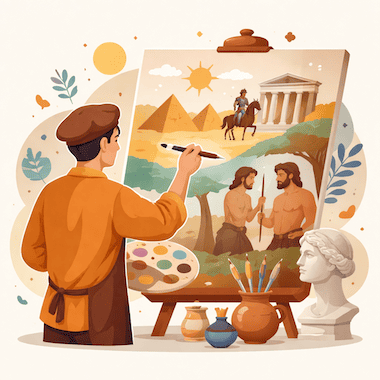
Storytelling Through Art
سرد الحكايات بالفن
 Learn Englishتطبيق مجاني فيه نطق صوتي واختبارات وكتب حقيقية
كلمات مهمة
- compositionتركيبة
- perspectiveمنظور
- pigmentصبغة
- portraitصورة
- frescoجداريات
- etchingحفر
- realismالواقعية
- abstractionالتجريد
- woodblock printطباعة الخشب
- symbolismالرمزية
- anatomyعلم التشريح
- muralجداريات
كل الكلمات (30)
- self-portraitصورة ذاتية
- pietyتقوى
- atrocityفظاعة
- shadingالتظليل
- legitimacyالشرعية
- antiquityالعصور القديمة
- meditationتأمل
- ritualطقوس
- anguishكرب
- testimonyشهادة
- auctionمزاد
- genealogyعلم الأنساب
- stencilقالب
- tombمقبرة
- carvingنقش
- infraredالأشعة تحت الحمراء
- photographyالتصوير الفوتوغرافي
- existentialوجودي
Long before people could write, they told stories with pictures. The cave paintings of Lascaux in southwestern France, found by four teenagers in 1940, are about 17,000 years old, and they are not random marks. Bulls, horses and deer are painted with care and skill, and some scenes may show hunts or rituals.
قبل أن يعرف البشر الكتابة بزمن طويل، كانوا يروون الحكايات بالصور. فرسوم كهف لاسكو في جنوب غرب فرنسا، الذي اكتشفه أربعة مراهقين عام 1940، يبلغ عمرها نحو 17 ألف سنة، وهي ليست خطوطًا عشوائية. فالثيران والخيول والأيائل مرسومة بعناية ومهارة، وربما تصوّر بعض المشاهد رحلات صيد أو طقوسًا.
Paintings can do something that words can't: they let you see a moment from centuries ago as if you were standing in the room. A painting shows how people dressed, what they valued, how they saw themselves and what their world looked like. If you learn to read paintings as historical sources, you get a view of the past that no written text can give you.
تستطيع اللوحات أن تفعل ما لا تقدر عليه الكلمات: فهي تتيح لك أن ترى لحظة مضت عليها قرون كأنك واقف في الغرفة نفسها. فاللوحة تُظهر كيف كان الناس يلبسون، وما الذي كانوا يقدّرونه، وكيف كانوا يرون أنفسهم، وكيف كان عالمهم يبدو. ومن يتعلّم قراءة اللوحات بوصفها مصادر تاريخية ينظر إلى الماضي من زاوية لا يقدّمها أي نص مكتوب.
Cave Art: The First Stories
فن الكهوف: الحكايات الأولى
The Chauvet Cave in southern France holds some of the oldest paintings in Europe, made about 36,000 years ago. Its horses, lions, mammoths and rhinoceroses are drawn with real skill. The artists used shading and the natural shape of the rock to make the animals look solid, and they drew some legs and heads several times, as if the animals were moving. Even older cave art has been found on the Indonesian island of Sulawesi, where a painted scene of human figures and a wild pig is at least 51,000 years old.
يضم كهف شوفيه في جنوب فرنسا بعضًا من أقدم الرسوم في أوروبا، وقد رُسمت قبل نحو 36 ألف سنة. وفيه خيول وأسود وماموثات ووحيد قرن مرسومة بمهارة حقيقية. فقد استخدم الفنانون التظليل والشكل الطبيعي للصخر ليبدو الحيوان مجسّمًا، ورسموا بعض الأرجل والرؤوس أكثر من مرة كأن الحيوانات تتحرك. وقد عُثر على فن صخري أقدم من ذلك في جزيرة سولاويسي الإندونيسية، حيث يعود مشهد مرسوم لأشكال بشرية وخنزير بري إلى 51 ألف سنة على الأقل.
Hand stencils are found in caves all over the world. People pressed a hand against the wall and blew paint around it, leaving its outline on the rock. Some on Sulawesi are around 40,000 years old, and the Cave of the Hands in Argentina has hundreds of them, some made about 9,000 years ago. No one knows exactly what they meant. Perhaps the message was the simplest one possible: I was here.
توجد طبعات الأيدي في كهوف حول العالم كله. كان الإنسان يضع يده على الجدار وينفخ الصبغة حولها، فيبقى محيطها مرسومًا على الصخر. ويبلغ عمر بعضها في سولاويسي نحو 40 ألف سنة، وفي كهف الأيدي في الأرجنتين مئات منها، صُنع بعضها قبل نحو 9 آلاف سنة. ولا أحد يعرف بالضبط ماذا كانت تعني. وربما كانت الرسالة أبسط ما يمكن: كنتُ هنا.
Egyptian Art: Order and Eternity
الفن المصري: النظام والخلود
Ancient Egyptian art followed strict rules that changed very little in 3,000 years. A figure usually has its head and legs in profile, while the eye and the shoulders face the viewer. To modern eyes this looks strange, but Egyptian artists were not clumsy. They chose this style on purpose, because of what their art was for.
اتّبع فن مصر القديمة قواعد صارمة لم تتغير إلا قليلًا على مدى 3 آلاف سنة. فالرأس والساقان يُرسمان عادةً من الجانب، أما العين والكتفان فيواجهان الناظر. يبدو هذا غريبًا في أعيننا اليوم، لكن الفنانين المصريين لم يكونوا عاجزين، بل اختاروا هذا الأسلوب عن قصد بسبب الغاية التي وُجد فنّهم من أجلها.
An Egyptian painting was not meant to show what one person sees from one spot. It showed each part of the body in its clearest and most complete form, so that the whole person was recorded. A pharaoh was painted larger than the people around him because he was more important, not because the artist didn't understand proportions. The scenes on tomb walls had a practical job, too: Egyptians believed that the food, servants and pleasures painted there would serve the dead person in the afterlife. Art was meant to make things happen.
لم يكن الرسم المصري يهدف إلى إظهار ما يراه شخص واحد من مكان واحد، بل كان يُظهر كل جزء من الجسم في أوضح صوره وأكملها، حتى يُسجَّل الإنسان كاملًا. وكان الفرعون يُرسم أكبر من المحيطين به لأنه أهم منهم، لا لأن الفنان يجهل النِّسَب. وكانت لمشاهد جدران المقابر وظيفة عملية أيضًا: فقد اعتقد المصريون أن ما يُرسم عليها من طعام وخدم ومُتع سيخدم الميت في الحياة الأخرى. كان الفن يهدف إلى أن يجعل الأشياء تحدث.
Renaissance Art: Rediscovering the Human
فن عصر النهضة: إعادة اكتشاف الإنسان
The European Renaissance, which lasted roughly from the 14th to the 16th century, changed what art was for. Medieval painting mostly served the Church. Its figures were flat and stylized, and their size and position showed religious importance, not how things really looked. Renaissance artists turned their attention to the human body, the natural world and the art of ancient Greece and Rome.
غيّرت النهضة الأوروبية، التي امتدت تقريبًا من القرن الرابع عشر إلى القرن السادس عشر، الغاية من الفن. فقد كان رسم العصور الوسطى في خدمة الكنيسة أساسًا، وكانت شخوصه مسطّحة ومحوّرة، يدل حجمها وموقعها على أهميتها الدينية لا على مظهر الأشياء الحقيقي. أما فنانو النهضة فوجّهوا اهتمامهم إلى جسم الإنسان والطبيعة وفن اليونان والرومان القدماء.
Leonardo da Vinci dissected human bodies to understand muscles and bones. Michelangelo painted the ceiling of the Sistine Chapel between 1508 and 1512, and Raphael filled The School of Athens with lifelike figures of ancient thinkers. Renaissance art was also a tool of power. A portrait of a ruler or a rich merchant was carefully planned to show wealth, faith and the right to rule. The pose, the clothes, the objects and the background of such a portrait can tell you as much about 15th-century Italian politics as a written document.
شرّح ليوناردو دافنشي أجساد البشر ليفهم العضلات والعظام. ورسم مايكل أنجلو سقف كنيسة سيستينا بين عامَي 1508 و1512، وملأ رافائيل لوحة «مدرسة أثينا» بشخصيات نابضة بالحياة لمفكرين قدماء. وكان فن النهضة أيضًا أداة للسلطة، فصورة الحاكم أو التاجر الثري كانت تُخطَّط بعناية لتُظهر الثروة والتقوى والحق في الحكم. ويمكن لوضعية الجسد والثياب والأشياء والخلفية في صورة كهذه أن تخبرك عن سياسة إيطاليا في القرن الخامس عشر بقدر ما تخبرك وثيقة مكتوبة.
Hidden Stories in Famous Paintings
حكايات خفية في لوحات شهيرة
Many famous paintings hide meanings that most viewers miss. Jan van Eyck's Arnolfini Portrait (1434), in the National Gallery in London, is full of symbols: a single candle burning in daylight, a small dog often read as a sign of loyalty, and a round mirror that reflects two more people in the doorway. Above the mirror, van Eyck wrote in Latin: "Jan van Eyck was here." A famous theory says the painting records a marriage, with the artist as a witness, but many experts now doubt it.
تخفي لوحات شهيرة كثيرة معاني تفوت معظم الناظرين. فلوحة «بورتريه أرنولفيني» (1434) ليان فان آيك، المحفوظة في المعرض الوطني في لندن، مليئة بالرموز: شمعة واحدة مشتعلة في وضح النهار، وكلب صغير يُفهم غالبًا رمزًا للوفاء، ومرآة مستديرة تعكس شخصين آخرين عند الباب. وفوق المرآة كتب فان آيك باللاتينية: «كان يان فان آيك هنا». وتقول نظرية شهيرة إن اللوحة توثّق عقد زواج شهده الرسام بنفسه، لكن كثيرًا من الخبراء اليوم يشكّون في ذلك.
Diego Velázquez's Las Meninas (1656), in the Prado Museum in Madrid, plays a clever game with the viewer. Velázquez painted himself at work on a huge canvas, next to the young princess Margarita and her maids of honor. A mirror on the back wall shows King Philip IV and Queen Mariana, who seem to be standing exactly where we stand. The painting leaves it unclear who is really being painted and who is watching, and critics have argued about it for more than 350 years.
أما لوحة «وصيفات الشرف» (لاس منيناس، 1656) لدييغو فيلاسكيث، المحفوظة في متحف برادو في مدريد، فتمارس لعبة ذكية مع المشاهد. فقد رسم فيلاسكيث نفسه وهو يعمل على قماشة ضخمة، إلى جانب الأميرة الصغيرة مارغريتا ووصيفاتها. وتُظهر مرآة على الجدار الخلفي الملك فيليب الرابع والملكة ماريانا، وكأنهما يقفان في المكان الذي نقف فيه نحن تمامًا. وتترك اللوحة غامضًا مَن الذي يُرسم حقًا ومَن الذي ينظر، وما زال النقاد يتجادلون في ذلك منذ أكثر من 350 عامًا.
Art as Protest and Revolution
الفن احتجاجًا وثورة
Artists have often used their work to criticize power and to record cruelty. Between 1810 and 1820, Francisco Goya made a series of more than 80 prints called The Disasters of War about the fighting that followed Napoleon's invasion of Spain. They show executions, hunger and mutilated bodies, and they make no one a hero. The series was so harsh that it was not published until 1863, 35 years after Goya's death, and it is still hard to look at today.
كثيرًا ما استخدم الفنانون أعمالهم لانتقاد السلطة وتوثيق القسوة. فبين عامَي 1810 و1820 أنجز فرانسيسكو غويا سلسلة من أكثر من 80 نقشًا بعنوان «كوارث الحرب» عن القتال الذي أعقب غزو نابليون لإسبانيا. وهي تُظهر الإعدامات والجوع والأجساد المشوّهة، ولا تجعل من أحد بطلًا. وكانت السلسلة قاسية إلى حدّ أنها لم تُنشر إلا عام 1863، بعد 35 عامًا من وفاة غويا، وما زال النظر إليها صعبًا حتى اليوم.
Pablo Picasso painted Guernica in 1937, after German and Italian planes supporting Franco bombed the Basque town of Guernica during the Spanish Civil War. Its broken, screaming figures show the terror of an attack on ordinary people. The painting traveled to exhibitions in Europe and the United States and made the bombing known around the world. Picasso did not want it to go to Spain until democracy returned, so it stayed at the Museum of Modern Art in New York until 1981. Today it hangs in the Museo Reina Sofía in Madrid.
رسم بابلو بيكاسو لوحة «غرنيكا» عام 1937، بعد أن قصفت طائرات ألمانية وإيطالية داعمة لفرانكو بلدة غرنيكا الباسكية خلال الحرب الأهلية الإسبانية. وتُظهر شخوصها المحطّمة الصارخة رعب هجوم على أناس عاديين. وقد عُرضت اللوحة في أوروبا والولايات المتحدة، فعرّفت العالم كله بذلك القصف. ولم يرد بيكاسو أن تذهب إلى إسبانيا قبل عودة الديمقراطية، فبقيت في متحف الفن الحديث في نيويورك حتى عام 1981. وهي معروضة اليوم في متحف الملكة صوفيا في مدريد.
Non-Western Art Traditions
تقاليد فنية غير غربية
The history of art is much wider than the European tradition that fills most textbooks. Chinese landscape painting, called shan shui ("mountain and water"), reached a high point between the 10th and 14th centuries, with works such as Fan Kuan's Travelers among Mountains and Streams from around 1000. These painters did not try to copy a real view. They wanted to capture the spirit, or qi, of a landscape, and they usually worked indoors, combining memories of many walks into one ideal scene.
تاريخ الفن أوسع بكثير من التقليد الأوروبي الذي يملأ معظم الكتب المدرسية. فقد بلغ رسم المناظر الطبيعية الصيني، المسمّى «شان شوي» أي «الجبل والماء»، ذروته بين القرنين العاشر والرابع عشر، ومن أعماله لوحة «مسافرون بين الجبال والجداول» لفان كوان، التي رُسمت نحو عام 1000. لم يحاول هؤلاء الرسامون نسخ منظر حقيقي، بل أرادوا التقاط روح المكان أو «التشي»، وكانوا يعملون غالبًا داخل البيوت، فيجمعون ذكريات نزهات كثيرة في مشهد مثالي واحد.
In Japan, ukiyo-e woodblock prints of the 17th to 19th centuries showed everyday life: kabuki actors, sumo wrestlers, famous views and the pleasure districts of Edo, known as the "floating world." Their bold lines and flat colors influenced Van Gogh, Monet and Toulouse-Lautrec. In Ghana, kente cloth is woven in bright geometric patterns, and many of the patterns have names that come from proverbs, historical events or famous people. Every culture has found its own way to tell stories with images.
وفي اليابان، صوّرت مطبوعات «أوكييو-إي» الخشبية بين القرنين السابع عشر والتاسع عشر الحياة اليومية: ممثلي الكابوكي، ومصارعي السومو، والمناظر الشهيرة، وأحياء اللهو في إيدو، التي عُرفت باسم «العالم العائم». وقد أثّرت خطوطها الجريئة وألوانها المسطّحة في فان غوخ ومونيه وتولوز لوتريك. وفي غانا يُنسج قماش الكينتي بزخارف هندسية زاهية، ولكثير من هذه الزخارف أسماء مأخوذة من أمثال شعبية أو أحداث تاريخية أو شخصيات مشهورة. لقد وجدت كل ثقافة طريقتها الخاصة في رواية الحكايات بالصور.
Modern Art: When Painting Became Personal
الفن الحديث: حين صار الرسم شخصيًا
When photography became public in 1839, painters no longer had to record exactly how things looked. If a camera could do that, painting could show how things felt and what they meant. In the decades that followed, artists experimented more than ever before, and the idea of what art could be changed completely.
حين أُعلن عن التصوير الفوتوغرافي للجمهور عام 1839، لم يعد الرسامون مضطرين إلى تسجيل مظهر الأشياء بدقة. فإذا كانت الكاميرا قادرة على ذلك، صار بإمكان الرسم أن يُظهر ما يشعر به الإنسان وما تعنيه الأشياء. وفي العقود التالية جرّب الفنانون أكثر من أي وقت مضى، وتغيّرت تمامًا فكرة ما يمكن أن يكون عليه الفن.
Vincent van Gogh painted The Starry Night in 1889 at a mental hospital in Saint-Rémy in southern France. Its swirling sky is not what the night really looked like; it shows what the night felt like to him. Edvard Munch painted The Scream in 1893. He wrote that the idea came to him on an evening walk, when he felt a great scream passing through nature. So the figure is less a person screaming than a picture of fear itself. Works like these led the way to abstract art, in which color and shape express feelings without showing real objects at all.
رسم فنسنت فان غوخ لوحة «ليلة النجوم» عام 1889 في مصحّة نفسية في سان ريمي جنوب فرنسا. وسماؤها الدوّامة لا تُظهر كيف كان الليل حقًا، بل ما كان يشعر به هو تجاهه. ورسم إدفارد مونك لوحة «الصرخة» عام 1893. وكتب أن الفكرة جاءته في نزهة مسائية حين شعر بصرخة عظيمة تسري في الطبيعة. لذلك فالشخص في اللوحة ليس إنسانًا يصرخ بقدر ما هو صورة للخوف نفسه. ومهّدت أعمال كهذه الطريق إلى الفن التجريدي، الذي يعبّر فيه اللون والشكل عن المشاعر دون أن يصوّرا أي شيء حقيقي على الإطلاق.
Surprising Facts About Art
حقائق مدهشة عن الفن
X-rays and infrared scans often reveal different pictures under the paint of Renaissance masterpieces, because artists painted over earlier work or changed their minds.
كثيرًا ما تكشف الأشعة السينية والفحص بالأشعة تحت الحمراء صورًا مختلفة تحت طلاء روائع عصر النهضة، لأن الفنانين كانوا يرسمون فوق أعمال سابقة أو يغيّرون رأيهم.
The Mona Lisa became world famous only after an Italian worker, Vincenzo Peruggia, stole it from the Louvre in 1911. It was missing for more than two years.
لم تصبح «الموناليزا» شهيرة عالميًا إلا بعد أن سرقها عامل إيطالي يُدعى فينتشنزو بيروجيا من متحف اللوفر عام 1911. وظلّت مفقودة أكثر من عامين.
A popular story says Thomas Gainsborough painted The Blue Boy (around 1770) to prove Joshua Reynolds wrong about the color blue, but Reynolds made his famous remark in 1778, years later.
تقول قصة شائعة إن توماس غينزبورو رسم «الفتى الأزرق» (نحو عام 1770) ليثبت خطأ رأي جوشوا رينولدز في اللون الأزرق، لكن رينولدز أبدى ملاحظته الشهيرة عام 1778، أي بعد ذلك بسنوات.
Leonardo da Vinci began the Mona Lisa around 1503 and was still working on it more than ten years later. He took it with him to France, where he died in 1519.
بدأ ليوناردو دافنشي رسم «الموناليزا» نحو عام 1503، وكان لا يزال يعمل عليها بعد أكثر من عشر سنوات. وقد أخذها معه إلى فرنسا، حيث توفي عام 1519.
The most expensive painting ever sold at auction is Salvator Mundi, attributed to Leonardo da Vinci. It sold for $450 million in 2017.
أغلى لوحة بيعت في مزاد على الإطلاق هي «سالفاتور موندي» المنسوبة إلى ليوناردو دافنشي، وقد بيعت عام 2017 بمبلغ 450 مليون دولار.
About 55 of Frida Kahlo's roughly 140 paintings are self-portraits. She said she painted herself because she was often alone and was "the subject I know best."
نحو 55 من لوحات فريدا كاهلو البالغ عددها قرابة 140 لوحة هي صور ذاتية. وقد قالت إنها ترسم نفسها لأنها كثيرًا ما تكون وحيدة، ولأنها «الموضوع الذي أعرفه أفضل من غيره».
Learning to Look
تعلّم النظر
From cave walls to museum galleries, painting is one of the oldest ways people have recorded their lives. Every painting was made by someone who wanted to say something, show something or keep something from being forgotten. When you look carefully at a painting, you meet the mind of a person from a very different world.
من جدران الكهوف إلى قاعات المتاحف، يبقى الرسم واحدًا من أقدم الطرق التي سجّل بها الناس حياتهم. فكل لوحة صنعها شخص أراد أن يقول شيئًا، أو يُظهر شيئًا، أو يحفظ شيئًا من النسيان. وحين تنظر إلى لوحة بانتباه، فإنك تلتقي بعقل إنسان عاش في عالم مختلف تمامًا.
Art history is more than a list of techniques and styles. It also tells us what people feared, worshipped, celebrated, mourned and fought for. A great painting is one person's vision and, at the same time, a record of its age. Seen this way, a visit to a museum is also a lesson in history.
تاريخ الفن أكثر من قائمة بالتقنيات والأساليب. فهو يخبرنا أيضًا بما خافه الناس وعبدوه واحتفلوا به وبكوه، وبما ناضلوا من أجله. واللوحة العظيمة هي رؤية شخص واحد، وفي الوقت نفسه سجلّ لعصرها. ومن هذا المنظور تصبح زيارة المتحف درسًا في التاريخ أيضًا.
في التطبيق المجاني يمكنك الاستماع إلى هذا النص والضغط على أي كلمة لمعرفة معناها.