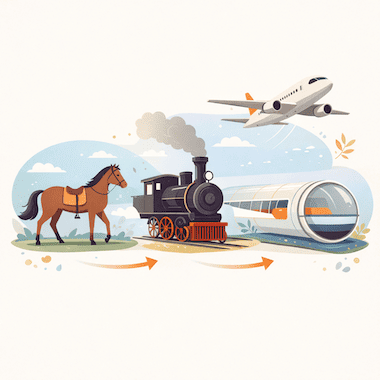
Evolution of Transportation
تطور وسائل النقل
 Learn Englishتطبيق مجاني فيه نطق صوتي واختبارات وكتب حقيقية
كلمات مهمة
- transportationالنقل
- civilizationالحضارة
- domesticationالترويض
- inventionالاختراع
- navigationالملاحة
- locomotiveالقاطرة
- empireالإمبراطورية
- vesselسفينة
- infrastructureالبنية التحتية
- combustionالاحتراق
- autonomousذاتي القيادة
- colonizationالاستعمار
كل الكلمات (30)
- industrializationالتصنيع
- emissionالانبعاثات
- levitationالرفع المغناطيسي
- geopoliticsالجيوسياسة
- suburbالضاحية
- trade routeطريق التجارة
- assembly lineخط التجميع
- propulsionالدفع
- transcontinentalعابر القارات
- perishableقابل للتلف
- spacecraftمركبة فضائية
- sustainableمستدام
- canalقناة
- nomadicرحّال
- electrificationالكهربة
- commuteالتنقل اليومي
- supply chainسلسلة التوريد
- fatalityوفاة
Around 1750, a stagecoach from London to Edinburgh took ten days. Today the train does it in about four and a half hours. Changes like this run through the whole history of transportation: every faster way of moving people, goods and ideas has changed how people earn a living, what they eat and how their cities look.
في حوالي عام 1750 كانت عربة البريد تستغرق عشرة أيام للسفر من لندن إلى إدنبرة. أما اليوم فيقطع القطار المسافة نفسها في نحو أربع ساعات ونصف. وتتكرر مثل هذه القفزات عبر تاريخ النقل كله، فكل وسيلة أسرع لنقل الناس والبضائع والأفكار غيّرت طريقة كسب الناس لعيشهم، وما يأكلونه، وشكل مدنهم.
The story begins thousands of years ago with the first tamed horses and the first wooden wheels. It continues through sailing ships, steam trains, cars and jet planes, and today engineers are working on electric and self-driving vehicles. Again and again, new ways of traveling have not simply followed changes in society. They have helped cause them.
تبدأ القصة قبل آلاف السنين مع أول خيول مروّضة وأول عجلات خشبية. ثم تمر بالسفن الشراعية والقطارات البخارية والسيارات والطائرات النفاثة، واليوم يعمل المهندسون على مركبات كهربائية وذاتية القيادة. ومرة بعد مرة، لم تكتفِ وسائل السفر الجديدة باللحاق بالتغيرات في المجتمع، بل ساعدت هي نفسها على إحداثها.
The Wheel: An Old Idea with a Slow Start
العجلة: فكرة قديمة بدأت ببطء
The wheel is often called humanity's greatest invention, but it is younger than many people think. The oldest evidence of wheeled vehicles dates from around 3500 BCE, at about the same time as the first writing. Pictures and remains of early carts and wagons have been found in Mesopotamia, Central Europe and the steppes north of the Black Sea, and archaeologists still debate where the idea appeared first.
كثيرًا ما توصف العجلة بأنها أعظم اختراع في تاريخ البشر، لكنها أحدث مما يظن كثيرون. فأقدم الأدلة على المركبات ذات العجلات تعود إلى نحو عام 3500 قبل الميلاد، أي إلى زمن قريب من ظهور الكتابة الأولى. وقد عُثر على رسوم وبقايا لعربات قديمة في بلاد الرافدين ووسط أوروبا والسهوب الواقعة شمال البحر الأسود، ولا يزال علماء الآثار يتجادلون حول المكان الذي ظهرت فيه الفكرة أولًا.
The first wheels may not have been used for travel at all. Potters in Mesopotamia were already turning clay on slow wheels at about the same time, possibly even earlier. And many great civilizations did without wheeled transport. The Inca built a road network of about 40,000 kilometers across the Andes, but goods traveled on the backs of people and llamas. In ancient Mexico, wheels appear only on small clay animal figures. The builders of Egypt's pyramids moved huge stones on wooden sleds. The wheel was a good solution, but not the only one.
وربما لم تُستخدم العجلات الأولى في السفر أصلًا. ففي الفترة نفسها، أو ربما قبلها، كان الخزّافون في بلاد الرافدين يشكّلون الطين على عجلات تدور ببطء. كما استغنت حضارات عظيمة كثيرة عن النقل بالعجلات. فقد شقّ الإنكا شبكة طرق يبلغ طولها نحو 40 ألف كيلومتر عبر جبال الأنديز، لكن البضائع كانت تُنقل على ظهور الناس وحيوانات اللاما. وفي المكسيك القديمة لا تظهر العجلات إلا في تماثيل صغيرة لحيوانات مصنوعة من الطين. أما بناة أهرام مصر فقد نقلوا الحجارة الضخمة على زلاجات خشبية. كانت العجلة حلًا جيدًا، لكنها لم تكن الحل الوحيد.
Horses: Speed for the Ancient World
الخيول: السرعة في العالم القديم
The taming of the horse was probably the most important change in transportation before the age of steam. It happened on the grasslands of Eurasia, and by about 2000 BCE horses were pulling light war chariots with spoked wheels. Horses gave people something new: speed. A rider could cover in one day a distance that took several days on foot, and that changed warfare, trade and the way rulers controlled large territories.
ربما كان ترويض الحصان أهم تغيير في النقل قبل عصر البخار. وقد حدث ذلك في المراعي الواسعة لأوراسيا، وبحلول نحو عام 2000 قبل الميلاد كانت الخيول تجرّ عربات حربية خفيفة ذات عجلات بأسلاك. منحت الخيول الناس شيئًا جديدًا هو السرعة. فالفارس كان يقطع في يوم واحد مسافة تحتاج إلى عدة أيام سيرًا على الأقدام، وهذا غيّر الحرب والتجارة وطريقة سيطرة الحكام على الأراضي الواسعة.
The horse changed some parts of the world more than others. The Mongol Empire of the 13th century, the largest connected land empire in history, was built on horseback. Its relay system, the Yam, had stations where messengers could change horses, so urgent news could travel a few hundred kilometers in a single day. Horses had died out in the Americas thousands of years earlier, and the Spanish brought them back from 1493. On the Great Plains of North America, peoples such as the Lakota and the Comanche built their whole way of life around the horse and became some of the strongest military powers on the continent.
غيّر الحصان بعض أجزاء العالم أكثر من غيرها. فالإمبراطورية المغولية في القرن الثالث عشر، وهي أكبر إمبراطورية برية متصلة في التاريخ، قامت على ظهور الخيل. وكان لنظام البريد فيها، المعروف باسم اليام، محطات يبدّل فيها الرسل خيولهم، فكانت الأخبار العاجلة تقطع بضع مئات من الكيلومترات في يوم واحد. وكانت الخيول قد انقرضت في الأمريكتين قبل ذلك بآلاف السنين، فأعادها الإسبان إليها ابتداءً من عام 1493. وفي السهول الكبرى بأمريكا الشمالية، بنت شعوب مثل اللاكوتا والكومانشي أسلوب حياتها كله حول الحصان، وأصبحت من أقوى القوى العسكرية في القارة.
Sailing Ships: Roads Across the Ocean
السفن الشراعية: طرق عبر المحيط
For most of history, water was the easiest road. Before railways, the cheapest and fastest way to move heavy goods over long distances was by boat. Phoenician traders sailed across the Mediterranean, Arab dhows linked India, East Africa and the Persian Gulf for more than a thousand years, and Chinese junks carried silk and porcelain across Asian seas. The sea did not separate people. It connected them.
طوال معظم التاريخ كان الماء أسهل طريق. فقبل السكك الحديدية كان القارب أرخص وأسرع وسيلة لنقل البضائع الثقيلة لمسافات طويلة. أبحر التجار الفينيقيون عبر البحر المتوسط، وربطت المراكب العربية الهند وشرق أفريقيا والخليج العربي أكثر من ألف عام، وحملت السفن الصينية الحرير والخزف عبر بحار آسيا. لم يكن البحر يفصل بين الناس، بل كان يصل بينهم.
In the 15th century, Portuguese and Spanish sailors began to cross the open ocean. Their caravels and carracks combined square sails with triangular lateen sails, and navigators found their position with the compass, the quadrant and the astrolabe. Vasco da Gama reached India by sea in 1498, and from the 1560s Spanish galleons sailed regularly between Mexico and Manila. For the first time, Europe, Africa, the Americas and Asia were linked in one trading system. It brought great wealth to some and terrible suffering to others, above all through the Atlantic slave trade and colonial rule.
في القرن الخامس عشر بدأ البحارة البرتغاليون والإسبان يعبرون المحيط المفتوح. وكانت سفنهم من نوع الكارافيل والكاراك تجمع بين الأشرعة المربعة والأشرعة المثلثة اللاتينية، وكان الملاحون يحددون مواقعهم بالبوصلة والربعية والأسطرلاب. وصل فاسكو دا غاما إلى الهند بحرًا عام 1498، ومنذ ستينيات القرن السادس عشر صارت السفن الإسبانية الكبيرة المعروفة بالغليون تبحر بانتظام بين المكسيك ومانيلا. ولأول مرة ارتبطت أوروبا وأفريقيا والأمريكتان وآسيا في نظام تجاري واحد. وقد جلب هذا النظام ثروة هائلة لبعضهم ومعاناة رهيبة لآخرين، ولا سيما من خلال تجارة الرقيق عبر الأطلسي والحكم الاستعماري.
The Age of Steam
عصر البخار
In the early 19th century, the steam engine moved onto wheels and changed the meaning of distance. In 1829, George Stephenson's locomotive Rocket won a competition called the Rainhill Trials, reaching about 48 kilometers per hour. A year later the Liverpool and Manchester Railway opened, the first line to link two cities with steam trains only. Within a few decades, railways had spread across Britain, then Europe, and then the rest of the world.
في أوائل القرن التاسع عشر وُضع المحرك البخاري على عجلات، فتغيّر معنى المسافة نفسه. ففي عام 1829 فازت قاطرة «روكيت» التي صنعها جورج ستيفنسون في مسابقة تُعرف باختبارات رينهيل، وبلغت سرعتها نحو 48 كيلومترًا في الساعة. وبعد عام افتُتح خط ليفربول ومانشستر، وهو أول خط يربط بين مدينتين بالقطارات البخارية وحدها. وخلال بضعة عقود انتشرت السكك الحديدية في بريطانيا، ثم في أوروبا، ثم في بقية العالم.
The railway changed far more than travel times. Fresh milk, fish and vegetables could reach city markets, letters and newspapers arrived the next day, and workers could live outside the city and come in each morning. Trains also needed fixed timetables, so Britain adopted one standard time in the 1840s, and American railroads introduced time zones in 1883. When the first transcontinental railroad in the United States was completed in 1869, a trip from New York to California fell from months to about a week. At sea, steamships replaced sailing ships, and by the end of the century the Atlantic crossing took about a week instead of a month or more.
غيّرت السكك الحديدية أكثر بكثير من مدة السفر. فقد صار بإمكان الحليب والسمك والخضراوات الطازجة أن تصل إلى أسواق المدن، وصارت الرسائل والصحف تصل في اليوم التالي، وأصبح العمال قادرين على السكن خارج المدينة والقدوم إليها كل صباح. كما احتاجت القطارات إلى جداول مواعيد ثابتة، لذلك اعتمدت بريطانيا توقيتًا موحدًا في أربعينيات القرن التاسع عشر، وأدخلت السكك الحديدية الأمريكية المناطق الزمنية عام 1883. وعندما اكتمل أول خط حديدي عابر للقارة في الولايات المتحدة عام 1869، انخفضت مدة الرحلة من نيويورك إلى كاليفورنيا من عدة أشهر إلى نحو أسبوع. وفي البحر حلّت السفن البخارية محل السفن الشراعية، وبحلول نهاية القرن صار عبور الأطلسي يستغرق نحو أسبوع بدلًا من شهر أو أكثر.
The Car: Freedom at a Price
السيارة: حرية لها ثمن
Karl Benz's Patent-Motorwagen, patented in 1886, is usually seen as the first real automobile. But cars only became an everyday product after Henry Ford introduced the moving assembly line in 1913. Building a Model T suddenly took about an hour and a half instead of more than twelve hours, and its price kept falling until ordinary workers could buy one. This changed how people traveled, and before long it changed where they lived and worked too.
تُعدّ سيارة «باتنت موتورفاغن» التي سجّل كارل بنز براءة اختراعها عام 1886 عادةً أول سيارة حقيقية. لكن السيارة لم تصبح منتجًا يوميًا إلا بعد أن أدخل هنري فورد خط التجميع المتحرك عام 1913. فقد أصبح تجميع سيارة «موديل تي» يستغرق فجأة نحو ساعة ونصف بدلًا من أكثر من اثنتي عشرة ساعة، وظل سعرها ينخفض حتى صار العمال العاديون قادرين على شرائها. غيّر ذلك طريقة سفر الناس، وسرعان ما غيّر أيضًا أماكن سكنهم وعملهم.
In the 20th century, the car reshaped towns and cities. People moved out to the suburbs and drove to work, and shopping centers and offices grew up along the new highways. Oil became one of the most important goods in world politics. The car also brought heavy costs: polluted air, greenhouse gases that heat the planet, more than a million deaths on the roads every year, and cities planned for cars rather than for people. Few inventions have given people so much freedom and done so much damage at the same time.
في القرن العشرين أعادت السيارة تشكيل البلدات والمدن. فانتقل الناس إلى الضواحي وصاروا يذهبون إلى العمل بالسيارة، ونشأت مراكز التسوق والمكاتب على امتداد الطرق السريعة الجديدة. وأصبح النفط من أهم السلع في السياسة العالمية. لكن السيارة جلبت أيضًا تكاليف باهظة: هواء ملوث، وغازات دفيئة ترفع حرارة الكوكب، وأكثر من مليون قتيل على الطرق كل عام، ومدنًا صُممت للسيارات لا للناس. قليلة هي الاختراعات التي منحت الناس هذا القدر من الحرية وألحقت في الوقت نفسه هذا القدر من الضرر.
Into the Air
إلى السماء
On December 17, 1903, near Kitty Hawk, North Carolina, Orville and Wilbur Wright made the first controlled, powered flight in an airplane. Their longest flight that day lasted 59 seconds and covered about 260 meters. Just 66 years later, in 1969, two astronauts walked on the Moon. Few technologies have developed so quickly.
في 17 ديسمبر 1903، قرب كيتي هوك في ولاية كارولاينا الشمالية، قام أورفيل وويلبر رايت بأول طيران متحكم فيه بطائرة ذات محرك. واستمرت أطول رحلة لهما في ذلك اليوم 59 ثانية، وقطعت نحو 260 مترًا. وبعد 66 عامًا فقط، في عام 1969، مشى رائدا فضاء على سطح القمر. قليلة هي التقنيات التي تطورت بهذه السرعة.
Passenger jets came into regular service in the 1950s, and the Boeing 707, which started flying passengers in 1958, made long-distance flights common. A trip from London to New York that could take six weeks by sailing ship now takes about seven or eight hours. Cheap flights made mass tourism possible and helped companies build supply chains around the world. Today there are around 100,000 flights every day, carrying more than 12 million passengers.
دخلت طائرات الركاب النفاثة الخدمة المنتظمة في خمسينيات القرن العشرين، وجعلت طائرة بوينغ 707، التي بدأت تنقل الركاب عام 1958، الرحلات الطويلة أمرًا مألوفًا. فالرحلة من لندن إلى نيويورك التي قد تستغرق ستة أسابيع على متن سفينة شراعية تستغرق اليوم نحو سبع أو ثماني ساعات. وقد جعلت الرحلات الرخيصة السياحة الجماعية ممكنة، وساعدت الشركات على بناء سلاسل إمداد حول العالم. واليوم تُسيَّر نحو 100 ألف رحلة جوية كل يوم، تنقل أكثر من 12 مليون راكب.
The Future: Electric and Self-Driving
المستقبل: كهربائي وذاتي القيادة
Transportation is going through its biggest change since the age of steam. Electric cars are replacing petrol and diesel cars faster every year. In Norway, nearly all new cars sold are now electric, and China sells more electric cars than the rest of the world combined. Many governments have set targets to end or sharply cut sales of new petrol and diesel cars. Better batteries, more charging stations and lower prices make electric cars practical for more and more people.
يمر النقل اليوم بأكبر تغيير منذ عصر البخار. فالسيارات الكهربائية تحل محل سيارات البنزين والديزل بسرعة تزداد كل عام. وفي النرويج أصبحت كل السيارات الجديدة المبيعة تقريبًا كهربائية، والصين تبيع من السيارات الكهربائية أكثر مما يبيعه بقية العالم مجتمعًا. وقد وضعت حكومات كثيرة أهدافًا لإنهاء بيع سيارات البنزين والديزل الجديدة أو لتقليصه بشدة. والبطاريات الأفضل ومحطات الشحن الأكثر والأسعار المنخفضة تجعل السيارة الكهربائية عملية لعدد متزايد من الناس.
Self-driving cars and trucks are moving from tests to real streets: robotaxis with no one at the wheel already carry paying passengers in several American and Chinese cities. Supporters say they could prevent many crashes, because human mistakes are involved in the great majority of them. High-speed rail keeps growing in Europe and Asia, and China alone has more than 45,000 kilometers of it, a lower-emission alternative to short flights. The hyperloop, an idea for capsules racing through low-pressure tubes, has been tested, but some of the best-known companies working on it have closed. SpaceX even suggests that rockets could one day carry passengers between cities on Earth, linking almost any two places in under an hour.
تنتقل السيارات والشاحنات ذاتية القيادة من مرحلة التجارب إلى الشوارع الحقيقية، فسيارات الأجرة الآلية التي لا يجلس أحد خلف مقودها تنقل بالفعل ركابًا يدفعون الأجرة في عدة مدن أمريكية وصينية. ويقول مؤيدوها إنها قد تمنع كثيرًا من الحوادث، لأن الخطأ البشري حاضر في الغالبية العظمى منها. ولا تزال القطارات فائقة السرعة تتوسع في أوروبا وآسيا، وفي الصين وحدها أكثر من 45 ألف كيلومتر منها، وهي بديل أقل انبعاثات للرحلات الجوية القصيرة. أما الهايبرلوب، وهو فكرة كبسولات تنطلق بسرعة كبيرة داخل أنابيب منخفضة الضغط، فقد جرى اختباره، لكن بعض أشهر الشركات العاملة عليه أغلقت أبوابها. بل إن شركة سبيس إكس تقترح أن الصواريخ قد تنقل الركاب يومًا ما بين المدن على الأرض، فتصل بين أي مكانين تقريبًا في أقل من ساعة.
A Few Surprising Facts
بعض الحقائق المدهشة
The first speeding fine was given in 1896 to Walter Arnold in Kent, England. He was driving at 8 mph (about 13 km/h), four times the limit of 2 mph.
فُرضت أول مخالفة للسرعة في التاريخ عام 1896 على والتر أرنولد في مقاطعة كنت بإنجلترا. كان يقود بسرعة 8 أميال في الساعة (نحو 13 كم/س)، أي أربعة أضعاف الحد المسموح به وهو ميلان.
Japan's Shinkansen bullet trains have carried more than 10 billion passengers since 1964, and no passenger has ever died in a derailment or collision.
نقلت قطارات شينكانسن اليابانية فائقة السرعة أكثر من 10 مليارات راكب منذ عام 1964، ولم يمت أي راكب قط في حادث خروج عن القضبان أو تصادم.
The London Underground, opened in 1863, is the oldest metro in the world. Its first trains ran on steam, so the tunnels were full of smoke.
مترو لندن الذي افتُتح عام 1863 هو أقدم مترو في العالم. وكانت قطاراته الأولى تعمل بالبخار، فكانت الأنفاق مليئة بالدخان.
The Panama Canal, opened in 1914, cut the sea route from New York to San Francisco from about 22,500 kilometers around Cape Horn to about 9,500.
قلّصت قناة بنما التي افتُتحت عام 1914 الطريق البحري بين نيويورك وسان فرانسيسكو من نحو 22500 كيلومتر حول رأس هورن إلى نحو 9500 كيلومتر.
For every kilometer, a person on a bicycle uses less energy than any other traveler, even someone walking.
الشخص الذي يركب الدراجة يستهلك لكل كيلومتر طاقة أقل من أي مسافر آخر، حتى من الماشي.
Voyager 1, launched in 1977, is the most distant object people have ever built. It is now more than 25 billion kilometers from Earth.
المسبار فوياجر 1، الذي أُطلق عام 1977، هو أبعد جسم صنعه الإنسان على الإطلاق. ويبعد اليوم عن الأرض أكثر من 25 مليار كيلومتر.
How Transportation Shapes Society
كيف يشكّل النقل المجتمع
Each big change in transportation has changed the way societies are organized. The horse made nomadic empires possible. Sailing ships created world trade and colonial empires. Railways drove industry and helped hold together large countries such as the United States. The car created suburbs and economies that depend on oil, and the airplane made global tourism and worldwide supply chains possible. Each new technology gave people new freedoms, and each one also created new dependencies.
كل تغيير كبير في النقل غيّر أيضًا طريقة تنظيم المجتمعات. فالحصان جعل إمبراطوريات البدو الرحّل ممكنة. والسفن الشراعية أوجدت التجارة العالمية والإمبراطوريات الاستعمارية. والسكك الحديدية دفعت الصناعة إلى الأمام وساعدت على تماسك بلدان كبيرة مثل الولايات المتحدة. والسيارة أوجدت الضواحي واقتصادات تعتمد على النفط، والطائرة جعلت السياحة العالمية وسلاسل الإمداد الدولية ممكنة. لقد منحت كل تقنية جديدة الناس حريات جديدة، وخلقت كل واحدة منها أيضًا أشكالًا جديدة من الاعتماد.
The next change, driven by electric motors and automation, may be just as large. Cities that were planned around cars could be redesigned for people on foot and on bicycles. If self-driving vehicles work as promised, they could bring down the number of road deaths, which is now about 1.2 million around the world each year. Knowing how earlier changes played out can help us make better choices about the next one.
قد يكون التغيير القادم، الذي تقوده المحركات الكهربائية والأتمتة، بالحجم نفسه. فالمدن التي خُططت حول السيارة قد يُعاد تصميمها للمشاة وراكبي الدراجات. وإذا عملت المركبات ذاتية القيادة كما يُوعد، فقد تخفض عدد قتلى الطرق، الذي يبلغ اليوم نحو 1.2 مليون شخص سنويًا في أنحاء العالم. ومعرفة كيف جرت التغيرات السابقة يمكن أن تساعدنا على اتخاذ قرارات أفضل بشأن التغيير القادم.
Conclusion
الخاتمة
From the first carts rolling through Mesopotamia to a spacecraft traveling far beyond the planets, transportation shows the same pattern again and again. Each generation has found ways to travel farther, faster and more cheaply than the one before.
من أولى العربات التي سارت في بلاد الرافدين إلى مسبار فضائي يسافر بعيدًا خلف الكواكب، يُظهر تاريخ النقل النمط نفسه مرة بعد مرة. فقد وجد كل جيل طرقًا للسفر أبعد وأسرع وبكلفة أقل من الجيل الذي سبقه.
But transportation has never been only about getting from one place to another. It also decides who can travel, what it costs, and what it does to the places around us. The challenge now is not mainly to go faster. It is to travel in ways that are cleaner, fairer and safer for the people who will live on this planet after us.
لكن النقل لم يكن يومًا مجرد انتقال من مكان إلى آخر. فهو يحدد أيضًا من يستطيع السفر، وكم يكلّف ذلك، وما أثره في الأماكن من حولنا. والتحدي اليوم ليس في المقام الأول أن نسير أسرع، بل أن نتنقل بطرق أنظف وأعدل وأكثر أمانًا للناس الذين سيعيشون على هذا الكوكب من بعدنا.
في التطبيق المجاني يمكنك الاستماع إلى هذا النص والضغط على أي كلمة لمعرفة معناها.