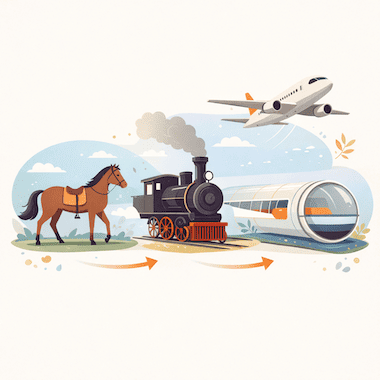
Evolution of Transportation
交通の歩み
 Learn English音声・クイズ・本が使える無料アプリ
重要単語
- transportation輸送
- civilization文明
- domestication家畜化
- invention発明
- navigation航海
- locomotive機関車
- empire帝国
- vessel船舶
- infrastructureインフラ
- combustion燃焼
- autonomous自律的な
- colonization植民地化
すべての単語(30)
- industrialization工業化
- emission排出
- levitation浮上
- geopolitics地政学
- suburb郊外
- trade route交易路
- assembly line組立ライン
- propulsion推進
- transcontinental大陸横断の
- perishable腐りやすい
- spacecraft宇宙船
- sustainable持続可能な
- canal運河
- nomadic遊牧の
- electrification電化
- commute通勤
- supply chainサプライチェーン
- fatality死亡事故
Around 1750, a stagecoach from London to Edinburgh took ten days. Today the train does it in about four and a half hours. Changes like this run through the whole history of transportation: every faster way of moving people, goods and ideas has changed how people earn a living, what they eat and how their cities look.
1750年ごろ、ロンドンからエディンバラまで駅馬車で十日かかった。今では列車がおよそ4時間半で同じ道のりを走る。交通の歴史はこうした飛躍の連続である。人や物や考えをより速く運ぶ手段が生まれるたびに、人々の暮らしの立て方や食べるもの、そして街の姿が変わってきた。
The story begins thousands of years ago with the first tamed horses and the first wooden wheels. It continues through sailing ships, steam trains, cars and jet planes, and today engineers are working on electric and self-driving vehicles. Again and again, new ways of traveling have not simply followed changes in society. They have helped cause them.
物語は数千年前、最初に飼いならされた馬と最初の木の車輪から始まる。その後、帆船、蒸気機関車、自動車、ジェット機と続き、今日では技術者たちが電気自動車や自動運転車の開発に取り組んでいる。新しい移動手段は、社会の変化にただついていったのではない。何度も、その変化を引き起こす力にもなってきた。
The Wheel: An Old Idea with a Slow Start
車輪:ゆっくり広まった古いアイデア
The wheel is often called humanity's greatest invention, but it is younger than many people think. The oldest evidence of wheeled vehicles dates from around 3500 BCE, at about the same time as the first writing. Pictures and remains of early carts and wagons have been found in Mesopotamia, Central Europe and the steppes north of the Black Sea, and archaeologists still debate where the idea appeared first.
車輪は人類最大の発明とよく言われるが、多くの人が思うほど古いものではない。車輪のついた乗り物の最古の証拠は紀元前3500年ごろのもので、最初の文字が生まれたのとほぼ同じ時期である。初期の荷車や馬車の絵や遺物は、メソポタミア、中央ヨーロッパ、黒海の北の草原で見つかっており、このアイデアが最初にどこで生まれたのか、考古学者の間では今も議論が続いている。
The first wheels may not have been used for travel at all. Potters in Mesopotamia were already turning clay on slow wheels at about the same time, possibly even earlier. And many great civilizations did without wheeled transport. The Inca built a road network of about 40,000 kilometers across the Andes, but goods traveled on the backs of people and llamas. In ancient Mexico, wheels appear only on small clay animal figures. The builders of Egypt's pyramids moved huge stones on wooden sleds. The wheel was a good solution, but not the only one.
最初の車輪は、そもそも移動のためのものではなかったかもしれない。メソポタミアの陶工たちは、ほぼ同じ時期か、あるいはそれより前から、ゆっくり回るろくろで粘土を成形していた。また、多くの偉大な文明が車輪を使った輸送なしでやってきた。インカの人々はアンデス山脈に全長約4万キロの道路網を築いたが、荷物は人やリャマの背で運ばれた。古代メキシコでは、車輪は小さな土製の動物の像にしか見られない。エジプトのピラミッドを建てた人々は、巨大な石を木のそりで運んだ。車輪はよい解決策だったが、唯一の解決策ではなかった。
Horses: Speed for the Ancient World
馬:古代世界にもたらされたスピード
The taming of the horse was probably the most important change in transportation before the age of steam. It happened on the grasslands of Eurasia, and by about 2000 BCE horses were pulling light war chariots with spoked wheels. Horses gave people something new: speed. A rider could cover in one day a distance that took several days on foot, and that changed warfare, trade and the way rulers controlled large territories.
馬の家畜化は、蒸気の時代以前の交通において、おそらく最も重要な変化だった。それはユーラシアの草原で起こり、紀元前2000年ごろには、馬がスポーク付きの車輪を持つ軽い戦車を引いていた。馬は人間に新しいものを与えた。それはスピードである。騎手は、歩けば何日もかかる距離を一日で進むことができた。これにより、戦争や交易、そして支配者が広い領土を治める方法が変わった。
The horse changed some parts of the world more than others. The Mongol Empire of the 13th century, the largest connected land empire in history, was built on horseback. Its relay system, the Yam, had stations where messengers could change horses, so urgent news could travel a few hundred kilometers in a single day. Horses had died out in the Americas thousands of years earlier, and the Spanish brought them back from 1493. On the Great Plains of North America, peoples such as the Lakota and the Comanche built their whole way of life around the horse and became some of the strongest military powers on the continent.
馬が世界に与えた影響は地域によって異なる。13世紀のモンゴル帝国は、陸続きの帝国としては史上最大で、馬の背の上に築かれた。ジャムチと呼ばれる駅伝制度には使者が馬を乗り換える駅があり、急ぎの知らせは一日で数百キロも伝わった。南北アメリカでは馬は数千年前に絶滅していたが、1493年以降、スペイン人が再び持ち込んだ。北アメリカのグレートプレーンズでは、ラコタ族やコマンチ族などの人々が馬を中心に暮らし全体を作り上げ、大陸でも屈指の軍事力を持つようになった。
Sailing Ships: Roads Across the Ocean
帆船:海を越える道
For most of history, water was the easiest road. Before railways, the cheapest and fastest way to move heavy goods over long distances was by boat. Phoenician traders sailed across the Mediterranean, Arab dhows linked India, East Africa and the Persian Gulf for more than a thousand years, and Chinese junks carried silk and porcelain across Asian seas. The sea did not separate people. It connected them.
歴史の大部分において、水上は最も楽な道だった。鉄道ができる前は、重い荷物を遠くへ運ぶ最も安くて速い方法は船だった。フェニキアの商人は地中海を渡り、アラブのダウ船は千年以上にわたってインド、東アフリカ、ペルシャ湾を結び、中国のジャンク船は絹や陶磁器を積んでアジアの海を行き来した。海は人々を隔てるものではなく、結びつけるものだった。
In the 15th century, Portuguese and Spanish sailors began to cross the open ocean. Their caravels and carracks combined square sails with triangular lateen sails, and navigators found their position with the compass, the quadrant and the astrolabe. Vasco da Gama reached India by sea in 1498, and from the 1560s Spanish galleons sailed regularly between Mexico and Manila. For the first time, Europe, Africa, the Americas and Asia were linked in one trading system. It brought great wealth to some and terrible suffering to others, above all through the Atlantic slave trade and colonial rule.
15世紀、ポルトガルとスペインの船乗りたちは外洋を渡り始めた。彼らのキャラベル船やキャラック船は、四角い横帆と三角形のラテンセイルを組み合わせており、航海士は羅針盤や四分儀、アストロラーベを使って位置を割り出した。1498年にはヴァスコ・ダ・ガマが海路でインドに到達し、1560年代からはスペインのガレオン船がメキシコとマニラの間を定期的に行き来した。こうしてヨーロッパ、アフリカ、南北アメリカ、アジアが初めて一つの交易の仕組みで結ばれた。それはある人々に莫大な富をもたらし、別の人々にはひどい苦しみをもたらした。特に大西洋奴隷貿易と植民地支配による苦しみは深かった。
The Age of Steam
蒸気の時代
In the early 19th century, the steam engine moved onto wheels and changed the meaning of distance. In 1829, George Stephenson's locomotive Rocket won a competition called the Rainhill Trials, reaching about 48 kilometers per hour. A year later the Liverpool and Manchester Railway opened, the first line to link two cities with steam trains only. Within a few decades, railways had spread across Britain, then Europe, and then the rest of the world.
19世紀の初め、蒸気機関が車輪の上に載り、距離というものの意味が変わった。1829年、ジョージ・スティーブンソンの機関車「ロケット号」が、レインヒル・トライアルと呼ばれる競技会で時速約48キロを出して優勝した。その翌年にはリバプール・アンド・マンチェスター鉄道が開業した。蒸気機関車だけで二つの都市を結んだ最初の路線である。数十年のうちに鉄道はイギリス全土に広がり、次にヨーロッパへ、そして世界のほかの地域へと広まっていった。
The railway changed far more than travel times. Fresh milk, fish and vegetables could reach city markets, letters and newspapers arrived the next day, and workers could live outside the city and come in each morning. Trains also needed fixed timetables, so Britain adopted one standard time in the 1840s, and American railroads introduced time zones in 1883. When the first transcontinental railroad in the United States was completed in 1869, a trip from New York to California fell from months to about a week. At sea, steamships replaced sailing ships, and by the end of the century the Atlantic crossing took about a week instead of a month or more.
鉄道が変えたのは移動時間だけではなかった。新鮮な牛乳や魚、野菜が都市の市場に届くようになり、手紙や新聞は翌日には着くようになった。労働者は郊外に住んで毎朝街へ通えるようになった。また、列車には決まった時刻表が必要だったため、イギリスは1840年代に標準時を統一し、アメリカの鉄道会社は1883年に時間帯を導入した。1869年にアメリカ初の大陸横断鉄道が完成すると、ニューヨークからカリフォルニアまでの旅は数か月から約1週間に縮まった。海では蒸気船が帆船に取って代わり、19世紀末には大西洋横断が1か月以上ではなく約1週間で済むようになった。
The Car: Freedom at a Price
自動車:代償をともなう自由
Karl Benz's Patent-Motorwagen, patented in 1886, is usually seen as the first real automobile. But cars only became an everyday product after Henry Ford introduced the moving assembly line in 1913. Building a Model T suddenly took about an hour and a half instead of more than twelve hours, and its price kept falling until ordinary workers could buy one. This changed how people traveled, and before long it changed where they lived and worked too.
1886年にカール・ベンツが特許を取った「パテント・モトールヴァーゲン」は、一般に最初の本格的な自動車とされている。しかし自動車が日常的な製品になったのは、1913年にヘンリー・フォードが移動式の組み立てラインを導入してからだった。T型フォード1台の組み立て時間は、12時間以上から一気に約1時間半に縮まり、価格も下がり続けて、ついには普通の労働者でも買えるようになった。これは人々の移動の仕方を変え、まもなく住む場所や働く場所も変えた。
In the 20th century, the car reshaped towns and cities. People moved out to the suburbs and drove to work, and shopping centers and offices grew up along the new highways. Oil became one of the most important goods in world politics. The car also brought heavy costs: polluted air, greenhouse gases that heat the planet, more than a million deaths on the roads every year, and cities planned for cars rather than for people. Few inventions have given people so much freedom and done so much damage at the same time.
20世紀、自動車は町や都市の姿を作り変えた。人々は郊外に移り住んで車で通勤するようになり、新しい幹線道路沿いにはショッピングセンターやオフィスが次々にできた。石油は世界政治の中で最も重要な商品の一つになった。一方で、自動車は大きな代償ももたらした。汚れた空気、地球を温める温室効果ガス、毎年100万人を超える交通事故の死者、そして人ではなく車のために設計された都市である。これほど多くの自由を人々に与えながら、同時にこれほど大きな害をもたらした発明はほとんどない。
Into the Air
空へ
On December 17, 1903, near Kitty Hawk, North Carolina, Orville and Wilbur Wright made the first controlled, powered flight in an airplane. Their longest flight that day lasted 59 seconds and covered about 260 meters. Just 66 years later, in 1969, two astronauts walked on the Moon. Few technologies have developed so quickly.
1903年12月17日、ノースカロライナ州キティホークの近くで、オーヴィル・ライトとウィルバー・ライトの兄弟が、動力付きの飛行機による初めての操縦飛行に成功した。その日の最も長い飛行は59秒間で、約260メートルを飛んだ。それからわずか66年後の1969年、2人の宇宙飛行士が月面を歩いた。これほど急速に発展した技術はほとんどない。
Passenger jets came into regular service in the 1950s, and the Boeing 707, which started flying passengers in 1958, made long-distance flights common. A trip from London to New York that could take six weeks by sailing ship now takes about seven or eight hours. Cheap flights made mass tourism possible and helped companies build supply chains around the world. Today there are around 100,000 flights every day, carrying more than 12 million passengers.
ジェット旅客機は1950年代に定期便として就航し、1958年に旅客輸送を始めたボーイング707によって長距離飛行は当たり前のものになった。ロンドンからニューヨークまで、帆船なら6週間かかることもあった旅が、今では7、8時間ほどで済む。安い航空便は大衆観光を可能にし、企業が世界中にサプライチェーンを築くのを助けた。今日では毎日およそ10万便が飛び、1200万人を超える乗客を運んでいる。
The Future: Electric and Self-Driving
未来:電気と自動運転
Transportation is going through its biggest change since the age of steam. Electric cars are replacing petrol and diesel cars faster every year. In Norway, nearly all new cars sold are now electric, and China sells more electric cars than the rest of the world combined. Many governments have set targets to end or sharply cut sales of new petrol and diesel cars. Better batteries, more charging stations and lower prices make electric cars practical for more and more people.
交通は今、蒸気の時代以来最大の変化のさなかにある。電気自動車がガソリン車やディーゼル車に取って代わるスピードは、年々速まっている。ノルウェーでは新車販売のほぼすべてがすでに電気自動車であり、中国は世界のほかの国々を合わせたよりも多くの電気自動車を販売している。多くの国の政府が、ガソリン車やディーゼル車の新車販売をやめるか大幅に減らす目標を掲げている。電池の性能向上、充電スタンドの増加、価格の低下によって、電気自動車はますます多くの人にとって実用的なものになっている。
Self-driving cars and trucks are moving from tests to real streets: robotaxis with no one at the wheel already carry paying passengers in several American and Chinese cities. Supporters say they could prevent many crashes, because human mistakes are involved in the great majority of them. High-speed rail keeps growing in Europe and Asia, and China alone has more than 45,000 kilometers of it, a lower-emission alternative to short flights. The hyperloop, an idea for capsules racing through low-pressure tubes, has been tested, but some of the best-known companies working on it have closed. SpaceX even suggests that rockets could one day carry passengers between cities on Earth, linking almost any two places in under an hour.
自動運転の乗用車やトラックは、試験の段階から実際の街へと移りつつある。運転席に誰もいないロボタクシーが、すでにアメリカと中国のいくつかの都市で有料の乗客を運んでいる。推進する人々は、事故の大多数には人間のミスが関わっているので、自動運転によって多くの事故を防げると言う。高速鉄道はヨーロッパとアジアで広がり続けており、中国だけでも4万5000キロを超える。これは短距離の航空便に代わる、排出量の少ない手段である。低圧のチューブの中をカプセルが高速で走るハイパーループという構想は試験が行われたが、この分野で最も有名な企業のいくつかはすでに閉鎖した。スペースXは、いつかロケットで地球上の都市間に乗客を運び、ほぼどんな2地点の間も1時間以内で結べるようになるとさえ述べている。
A Few Surprising Facts
いくつかの意外な事実
The first speeding fine was given in 1896 to Walter Arnold in Kent, England. He was driving at 8 mph (about 13 km/h), four times the limit of 2 mph.
史上初のスピード違反の罰金は、1896年にイングランドのケント州でウォルター・アーノルドに科された。彼は時速8マイル(約13キロ)で走っており、制限速度の時速2マイルの4倍だった。
Japan's Shinkansen bullet trains have carried more than 10 billion passengers since 1964, and no passenger has ever died in a derailment or collision.
日本の新幹線は1964年以来100億人を超える乗客を運んできたが、脱線や衝突で亡くなった乗客は一人もいない。
The London Underground, opened in 1863, is the oldest metro in the world. Its first trains ran on steam, so the tunnels were full of smoke.
1863年に開業したロンドンの地下鉄は、世界で最も古い地下鉄である。最初の列車は蒸気で走っていたため、トンネルは煙でいっぱいだった。
The Panama Canal, opened in 1914, cut the sea route from New York to San Francisco from about 22,500 kilometers around Cape Horn to about 9,500.
1914年に開通したパナマ運河により、ニューヨークからサンフランシスコまでの航路は、ホーン岬を回る約2万2500キロから約9500キロに短縮された。
For every kilometer, a person on a bicycle uses less energy than any other traveler, even someone walking.
1キロあたりで比べると、自転車に乗る人はほかのどんな移動者よりも、歩く人よりさえも少ないエネルギーしか使わない。
Voyager 1, launched in 1977, is the most distant object people have ever built. It is now more than 25 billion kilometers from Earth.
1977年に打ち上げられたボイジャー1号は、人類がこれまでに作った中で最も遠くにある物体である。現在、地球から250億キロ以上離れている。
How Transportation Shapes Society
交通が社会の形を決める
Each big change in transportation has changed the way societies are organized. The horse made nomadic empires possible. Sailing ships created world trade and colonial empires. Railways drove industry and helped hold together large countries such as the United States. The car created suburbs and economies that depend on oil, and the airplane made global tourism and worldwide supply chains possible. Each new technology gave people new freedoms, and each one also created new dependencies.
交通の大きな変化は、そのたびに社会の仕組みも変えてきた。馬は遊牧民の帝国を可能にした。帆船は世界貿易と植民地帝国を生んだ。鉄道は産業を推し進め、アメリカのような大きな国のまとまりを支えた。自動車は郊外と石油に頼る経済を生み、飛行機は世界規模の観光とサプライチェーンを可能にした。新しい技術はどれも人々に新しい自由を与え、同時にどれも新しい依存を生み出した。
The next change, driven by electric motors and automation, may be just as large. Cities that were planned around cars could be redesigned for people on foot and on bicycles. If self-driving vehicles work as promised, they could bring down the number of road deaths, which is now about 1.2 million around the world each year. Knowing how earlier changes played out can help us make better choices about the next one.
電気モーターと自動化が推し進める次の変化も、同じくらい大きなものになるかもしれない。車を中心に計画された都市は、歩く人や自転車に乗る人のために作り直されるかもしれない。自動運転車が約束どおりに機能すれば、現在世界で年間約120万人にのぼる交通事故の死者を減らせる可能性がある。これまでの変化がどのように進んだかを知ることは、次の変化についてよりよい選択をする助けになる。
Conclusion
おわりに
From the first carts rolling through Mesopotamia to a spacecraft traveling far beyond the planets, transportation shows the same pattern again and again. Each generation has found ways to travel farther, faster and more cheaply than the one before.
メソポタミアを転がった最初の荷車から、惑星のはるか彼方を進む宇宙探査機まで、交通の歴史には同じパターンが繰り返し現れる。どの世代も、前の世代より遠くへ、速く、安く移動する方法を見つけてきた。
But transportation has never been only about getting from one place to another. It also decides who can travel, what it costs, and what it does to the places around us. The challenge now is not mainly to go faster. It is to travel in ways that are cleaner, fairer and safer for the people who will live on this planet after us.
しかし交通は、ある場所から別の場所へ移動するだけのものだったことは一度もない。誰が移動できるのか、それにどれだけの費用がかかるのか、そして周りの場所にどんな影響を与えるのかも決めている。今の課題は、何よりも速く進むことではない。私たちの後にこの惑星で暮らす人々のために、よりクリーンで、より公平で、より安全な方法で移動することである。
無料アプリなら、この文章の音声を聞いたり、単語をタップして意味を確かめたりできます。