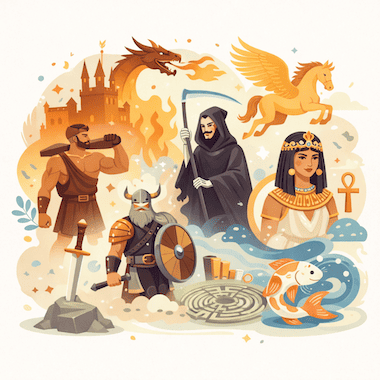
Famous Myths and Legends
有名な神話と伝説
 Learn English音声・クイズ・本が使える無料アプリ
重要単語
- myth神話
- legend伝説
- immortality不死
- deity神
- underworld冥界
- archetype元型
- flood洪水
- tricksterトリックスター
- quest探求
- mortal死すべき
- allegory寓話
- serpent蛇
すべての単語(30)
- epic叙事詩
- prophecy予言
- demigod半神
- vengeance復讐
- creation創造
- tragedy悲劇
- rebirth再生
- grief悲しみ
- wisdom知恵
- cyclical循環的な
- chivalry騎士道
- psyche心
- narrative物語
- monster怪物
- heroic英雄的な
- eclipse日食
- cunningずる賢さ
- mortality死すべき運命
Long before anyone wrote down laws or history, people told stories. Every culture we know of has its myths and legends: tales about how the world began, why people suffer and die, and where the first fire or the first rain came from. These stories entertained, but they also held communities together, passed on rules and beliefs, and gave people a shared picture of the world.
誰かが法律や歴史を書き記すよりずっと前から、人々は物語を語ってきました。私たちが知るどの文化にも、それぞれの神話や伝説があります。世界がどのように始まったのか、人はなぜ苦しみ、死ぬのか、最初の火や最初の雨はどこから来たのかを語る物語です。こうした物語は娯楽であると同時に、共同体を結びつけ、決まりや信仰を伝え、人々に世界についての共通のイメージを与えてきました。
Myths say a lot about the people who told them. They deal with questions that every generation asks again: Where did the world come from? Why do we suffer? What happens after death? How should we treat each other? Myths are not failed attempts at science. They are serious, often clever ways of making sense of human life, and reading the myths of other cultures is one of the best ways to understand those cultures.
神話は、それを語った人々について多くのことを教えてくれます。神話が扱うのは、どの世代も改めて問いかける疑問です。世界はどこから来たのか。私たちはなぜ苦しむのか。死んだらどうなるのか。互いにどう接するべきか。神話は科学の失敗した試みではありません。人間の生を理解するための真剣な、そしてしばしば巧みな方法です。ほかの文化の神話を読むことは、その文化を理解するための最良の方法の一つです。
The Epic of Gilgamesh: One of the Oldest Stories
ギルガメシュ叙事詩:最古の物語の一つ
The first poems about Gilgamesh were written in Sumerian on clay tablets in Mesopotamia around 2100 BCE, which makes them some of the oldest literature we have. The best-known version, in the Akkadian language, dates from about 1200 BCE. Gilgamesh, king of the city of Uruk, is two-thirds god and one-third human. When his closest friend Enkidu dies, Gilgamesh is overwhelmed by grief and by fear of his own death, and he sets out to find the secret of eternal life.
ギルガメシュを歌った最初の詩は、紀元前2100年ごろのメソポタミアで、シュメール語で粘土板に書かれました。そのため、現存する最古の文学の一つに数えられます。最もよく知られた版はアッカド語で書かれ、紀元前1200年ごろのものです。都市ウルクの王ギルガメシュは、3分の2が神で3分の1が人間です。親友エンキドゥが死ぬと、ギルガメシュは悲しみと自分自身の死への恐怖に打ちのめされ、永遠の命の秘密を求めて旅に出ます。
His journey takes him to the edge of the world, to Utnapishtim, a man the gods made immortal after he survived a great flood. The flood story is so close to the later Biblical account of Noah that scholars believe the two are related. Utnapishtim cannot give Gilgamesh eternal life, but he tells him about a plant at the bottom of the sea that makes old people young again. Gilgamesh dives down and gets it, but on the way home he stops to bathe in a pool, and a snake carries the plant away. He returns to Uruk with nothing. The epic ends with Gilgamesh showing a companion the great walls of his city, the work that will outlast him. Storytellers have returned to the search for immortality, and its failure, ever since.
旅の果てに、彼は世界の端に住むウトナピシュティムのもとにたどり着きます。大洪水を生き延びた後、神々から不死を与えられた男です。この洪水の物語は、後の聖書のノアの話とよく似ているため、学者たちは両者につながりがあると考えています。ウトナピシュティムはギルガメシュに永遠の命を与えることはできませんが、海の底に老人を若返らせる草があると教えます。ギルガメシュは海に潜ってそれを手に入れますが、帰り道に泉で水浴びをしている間に、蛇が草を持ち去ってしまいます。彼は何も持たずにウルクへ帰ります。叙事詩は、ギルガメシュが仲間に自分の都市の大きな城壁を見せる場面で終わります。それは彼の死後も残る仕事です。それ以来、語り手たちは不死の探求とその挫折というテーマに何度も立ち返ってきました。
Greek Mythology: Gods Who Behave Like Humans
ギリシャ神話:人間のように振る舞う神々
What sets Greek mythology apart is how human its gods are. The gods of Mount Olympus were not perfectly good or all-knowing. They were jealous, vain and quick to take revenge, and they could be cruel as well as generous and loving. Zeus was constantly unfaithful to his wife, Hera, and Hera often punished the women he seduced instead of Zeus himself. The heroes were no better: in the Iliad, Achilles refuses to fight for the Greeks because King Agamemnon has taken away a woman he had won. These are ordinary human faults on a huge scale.
ギリシャ神話の特徴は、神々がとても人間らしいことです。オリュンポス山の神々は、完全に善良なわけでも、何でも知っているわけでもありませんでした。嫉妬深く、見栄っ張りで、すぐに復讐し、気前がよく愛情深い一方で、残酷にもなりました。ゼウスは妻ヘラを絶えず裏切り、ヘラはゼウス本人ではなく、彼が誘惑した女性たちを罰することがよくありました。英雄たちも同じようなものでした。『イリアス』では、アキレウスが戦利品として得た女性をアガメムノン王に奪われたため、ギリシャ軍のために戦うことを拒みます。これらは、ごく普通の人間の欠点を巨大な規模にしたものです。
Because of this, Greek myths are full of psychology and moral questions. Sigmund Freud used the story of Oedipus, who unknowingly kills his father and marries his mother, to describe what he called the Oedipus complex. The beautiful young Narcissus, who fell in love with his own reflection, gave us the word “narcissism.” Prometheus stole fire from the gods and gave it to humans. As punishment, Zeus had him chained to a rock, where an eagle ate his liver every day, until the hero Heracles finally set him free. In Western art and literature, Prometheus became the classic image of the rebel who defies power to help others.
そのため、ギリシャ神話は心理や道徳の問いに満ちています。ジークムント・フロイトは、知らずに父を殺し母と結婚するオイディプスの物語を使って、自ら「エディプス・コンプレックス」と名づけたものを説明しました。水面に映る自分の姿に恋をした美しい若者ナルキッソスからは、「ナルシシズム」という言葉が生まれました。プロメテウスは神々から火を盗み、人間に与えました。罰として、ゼウスは彼を岩に鎖でつながせ、毎日鷲に肝臓をついばませましたが、最後には英雄ヘラクレスが彼を解放しました。西洋の芸術と文学において、プロメテウスは他者を助けるために権力に逆らう反逆者の典型的なイメージとなりました。
Norse Mythology: A World Built to End
北欧神話:終わるために作られた世界
Norse mythology was the religion of Scandinavia in the Viking Age. Most of what we know about it comes from Icelandic texts written down in the 13th century, about two hundred years after Iceland became Christian. Its most unusual feature is that the gods know they are going to lose. At Ragnarök, the “fate of the gods,” the world tree Yggdrasil will shake, monsters will break free, and the gods will die in a final battle. Odin will be swallowed by the giant wolf Fenrir. Thor will kill the world serpent Jörmungandr, take nine steps, and fall dead from its poison.
北欧神話は、ヴァイキング時代のスカンディナヴィアの宗教でした。私たちが知っていることの大半は、アイスランドがキリスト教に改宗してから約200年後の13世紀に書き記されたアイスランドの文献に由来します。最も変わった特徴は、神々が自分たちは負けると知っていることです。「神々の運命」を意味するラグナロクには、世界樹ユグドラシルが揺れ、怪物たちが解き放たれ、神々は最後の戦いで死にます。オーディンは巨大な狼フェンリルに飲み込まれます。トールは世界蛇ヨルムンガンドを倒しますが、九歩歩いたところでその毒によって倒れて死にます。
Knowing the end does not make the Norse gods give up. They prepare for the battle anyway, and Odin gathers the bravest dead warriors in his hall, Valhalla, to fight beside him on the last day. The myths do not end in complete darkness either: after Ragnarök a new, green earth rises from the sea, and a few gods and two humans survive to begin again. The same Germanic gods, under their Old English names, gave English four days of the week: Tuesday is named after Tiw (the Norse Tyr), Wednesday after Woden (Odin), Thursday after Thunor (Thor), and Friday after Frig (Frigg).
終わりを知っていても、北欧の神々はあきらめません。それでも戦いに備え、オーディンは最後の日に自分の隣で戦わせるため、最も勇敢な戦死者たちを館ヴァルハラに集めます。神話は完全な闇で終わるわけでもありません。ラグナロクの後、海から新しい緑の大地が現れ、何人かの神と二人の人間が生き残って、もう一度やり直します。同じゲルマンの神々は、古英語の名前で英語の曜日のうち四つに名を残しています。Tuesday(火曜日)はティウ(北欧のテュール)、Wednesday(水曜日)はウォーデン(オーディン)、Thursday(木曜日)はスノール(トール)、Friday(金曜日)はフリッグにちなむ名前です。
The Legend of King Arthur: History or Myth?
アーサー王伝説:歴史か神話か
Few legends have lasted in the Western world as long as the story of King Arthur: the boy who pulled a sword from a stone, gathered the Knights of the Round Table, sent them in search of the Holy Grail, and ruled at Camelot until his kingdom fell apart. The legend has been told for more than a thousand years, and every age has retold it in its own way.
西洋世界で、アーサー王の物語ほど長く語り継がれてきた伝説はほとんどありません。石から剣を引き抜いた少年が、円卓の騎士たちを集め、彼らを聖杯探索に送り出し、王国が崩壊するまでキャメロットを治めたという物語です。この伝説は千年以上にわたって語られ、どの時代もそれぞれのやり方で語り直してきました。
Whether a real Arthur ever lived is still debated. A Latin history from the 9th century and some early Welsh poems mention a war leader called Arthur who fought against Saxon invaders of Britain around the year 500. Most of the famous legend, however, came later. In about 1136, Geoffrey of Monmouth wrote a “history” of the kings of Britain that gave Arthur his sword, his queen Guinevere and the wizard Merlin. The French poet Chrétien de Troyes added Lancelot and the Grail in the late 12th century, and in 1485 the English writer Thomas Malory collected the stories in Le Morte d'Arthur. Arthur is less a historical person than a picture onto which each generation paints its own idea of a good king.
実在のアーサーがいたかどうかは、今も議論が続いています。9世紀のラテン語の歴史書といくつかの初期のウェールズの詩には、西暦500年ごろにブリテン島に侵入したサクソン人と戦った、アーサーという名の戦士の指導者が登場します。しかし、有名な伝説の大部分は後の時代に生まれました。1136年ごろ、ジェフリー・オブ・モンマスがブリテン王の「歴史」を書き、アーサーに剣と王妃グィネヴィア、そして魔術師マーリンを与えました。フランスの詩人クレティアン・ド・トロワが12世紀後半にランスロットと聖杯を加え、1485年にはイギリスの作家トマス・マロリーが物語を『アーサー王の死』にまとめました。アーサーは歴史上の人物というより、各世代が理想の王の姿を描き込むキャンバスなのです。
Myths from the Americas: The Popol Vuh
アメリカ大陸の神話:『ポポル・ヴフ』
The Popol Vuh is the sacred book of the K'iche' Maya of Guatemala. It was written down in the K'iche' language with Latin letters in the 16th century, a few decades after the Spanish conquest, and the copy that survives was made by a Spanish priest around 1701. It tells how the gods tried several times to make beings who could speak and honor them. The animals could only screech and howl. People made of mud fell apart, and people made of wood had no hearts or minds. Only the fourth attempt worked: humans made from maize dough. For the Maya, maize was not just food; it was what people themselves were made of.
『ポポル・ヴフ』は、グアテマラのキチェ・マヤの人々の聖なる書物です。スペインによる征服から数十年後の16世紀に、ラテン文字を使ってキチェ語で書き記されました。現存する写本は、1701年ごろにスペイン人の神父が書き写したものです。この書物は、神々が言葉を話し、自分たちを敬うことのできる存在を作ろうと何度も試みた様子を語ります。動物たちは金切り声を上げ、吠えることしかできませんでした。泥で作った人間は崩れ落ち、木で作った人間には心も知恵もありませんでした。四度目の試みでようやく成功します。トウモロコシの生地で作られた人間です。マヤの人々にとって、トウモロコシは単なる食べ物ではなく、人間そのものを作る素材でした。
The Popol Vuh also tells the story of the Hero Twins, Hunahpu and Xbalanque. They go down into Xibalba, the underworld, play a dangerous ball game against its lords of death, and defeat them with tricks rather than strength. At one point they even let themselves be killed and then come back to life. In the end, the twins rise into the sky and become the Sun and the Moon. The story is about death and rebirth and about cleverness beating brute force, ideas that appear in myths all over the world.
『ポポル・ヴフ』には、英雄の双子フンアフプーとイシュバランケの物語もあります。二人は冥界シバルバーに下り、死の王たちと危険な球技で対戦し、力ではなく策略で彼らを打ち負かします。一度は自分たちを殺させ、そこから生き返ることさえします。最後に双子は天に昇り、太陽と月になります。この物語は死と再生、そして知恵が力ずくに勝つことを描いており、これらは世界中の神話に見られる考えです。
African Mythology: Anansi the Spider
アフリカの神話:蜘蛛のアナンシ
Anansi, a trickster in the shape of a spider, is one of the best-known characters in West African folklore. His stories come from the Akan people of present-day Ghana. In one famous tale, all the stories in the world belong to the sky god Nyame. Anansi asks to buy them, and Nyame sets a price that seems impossible: Anansi must bring him a python, a leopard, a swarm of hornets and a fairy. Using only tricks, Anansi captures all four, and since then the stories have been called Anansi's stories.
アナンシは蜘蛛の姿をしたトリックスターで、西アフリカの民話で最もよく知られた登場人物の一人です。その物語は、現在のガーナに住むアカン人に由来します。有名な話の一つでは、世界中のすべての物語は天の神ニャメのものです。アナンシがそれを買いたいと申し出ると、ニャメは不可能に思える値段をつけます。ニシキヘビ、ヒョウ、スズメバチの群れ、そして妖精を連れてくることです。アナンシは策略だけで四つすべてを捕まえ、それ以来、物語は「アナンシの物語」と呼ばれるようになりました。
Enslaved Africans carried the Anansi stories across the Atlantic. They took root in Jamaica and other parts of the Caribbean and in the American South, where the spider sometimes became “Aunt Nancy.” The tales changed over time, but Anansi stayed the same: a small, weak creature who beats the powerful by using his head. For people who had no power and no rights, his victories were more than entertainment. Today Anansi also appears in modern fiction, for example in Neil Gaiman's novel Anansi Boys (2005).
奴隷にされたアフリカの人々は、アナンシの物語を大西洋の向こうへ運びました。物語はジャマイカをはじめとするカリブ海の各地や、アメリカ南部に根づき、アメリカ南部では蜘蛛が「アント・ナンシー」(ナンシーおばさん)になることもありました。物語は時代とともに変わりましたが、アナンシは変わりませんでした。頭を使って強い者を打ち負かす、小さく弱い生き物です。権力も権利もない人々にとって、彼の勝利は単なる娯楽以上のものでした。今日、アナンシは現代の小説にも登場します。たとえばニール・ゲイマンの小説『アナンシの血脈』(2005年)です。
Shared Themes in World Myths
世界の神話に共通するテーマ
Scholars who compare myths have found that many themes appear in cultures far apart from each other. Flood stories are a good example. The Mesopotamian flood of Utnapishtim and the Biblical flood of Noah are probably related, but similar tales exist in India, where the god Vishnu warns the first man, Manu; in Greece, where Deucalion and his wife survive in a wooden chest; and in Aztec Mexico. Trickster figures appear on almost every continent too: clever troublemakers like Anansi, the Norse Loki or Coyote in many Native American tales, who break the rules and make fun of the powerful.
神話を比較する研究者たちは、遠く離れた文化に多くの同じテーマが現れることに気づきました。洪水の物語はその良い例です。メソポタミアのウトナピシュティムの洪水と聖書のノアの洪水はおそらく関連していますが、似た物語はインドにも、ギリシャにも、アステカ時代のメキシコにもあります。インドではヴィシュヌ神が最初の人間マヌに警告し、ギリシャではデウカリオンとその妻が木の箱に乗って生き延びます。トリックスターもほぼすべての大陸に登場します。アナンシや北欧のロキ、北米先住民の多くの物語に出てくるコヨーテのような賢いいたずら者で、規則を破り、権力者をからかいます。
The psychologist Carl Jung explained these repeated patterns with his idea of archetypes: basic images and types of story that, he believed, all humans share deep in the unconscious mind. Many scholars today doubt Jung's theory and point to trade, migration and common human experience instead. Whatever the reason, people separated by oceans and thousands of years have told similar stories about floods, heroes, creation and death, perhaps because they all faced the same things: love, loss, fear and the wish to understand their place in the world.
心理学者カール・ユングは、こうした繰り返し現れるパターンを「元型」という考えで説明しました。元型とは、すべての人間が無意識の奥深くで共有していると彼が考えた、基本的なイメージや物語の型のことです。今日では多くの研究者がユングの理論に疑問を持ち、代わりに交易や移住、共通する人間の経験を挙げます。理由が何であれ、海と何千年もの時間に隔てられた人々が、洪水、英雄、天地創造、死について似た物語を語ってきました。おそらく、誰もが同じものに向き合っていたからでしょう。愛、喪失、恐れ、そして世界の中で自分の居場所を知りたいという願いです。
Quick Facts About Myths
神話の豆知識
The word “mythology” comes from the Greek mythos (story) and logos (word, study). In Greek it meant “telling stories”; today it also means the study of myths.
「神話学(mythology)」という言葉は、ギリシャ語のミュトス(物語)とロゴス(言葉、学問)から来ています。ギリシャ語では「物語を語ること」を意味しましたが、今日では神話の研究も意味します。
The ancient Olympic Games were held at Olympia in honor of Zeus. The modern Games, first held in Athens in 1896, were inspired by them.
古代オリンピックは、ゼウスをたたえてオリンピアで開かれていました。1896年にアテネで初めて開かれた近代オリンピックは、これに着想を得たものです。
Atlantis first appears in two dialogues by the Greek philosopher Plato, written around 360 BCE. Most scholars believe Plato made it up to illustrate his ideas.
アトランティスが初めて登場するのは、ギリシャの哲学者プラトンが紀元前360年ごろに書いた二つの対話篇です。多くの研究者は、プラトンが自分の考えを説明するために作り出したものだと考えています。
In the Japanese myth of Amaterasu, the sun goddess hides in a cave and the world goes dark. Some scholars think the story may remember a real solar eclipse.
日本のアマテラスの神話では、太陽の女神が岩屋に隠れ、世界が暗闇に包まれます。この話は実際の日食の記憶なのかもしれないと考える研究者もいます。
The Polynesian trickster Maui is said to have pulled islands out of the sea with a magic fishhook. In Māori tradition, New Zealand's North Island is the fish he caught.
ポリネシアのトリックスター、マウイは、魔法の釣り針で海から島々を釣り上げたと言われています。マオリの伝承では、ニュージーランドの北島は彼が釣り上げた魚だとされています。
Folklorists have recorded hundreds of versions of the Cinderella story around the world. One of the oldest is the Chinese tale of Ye Xian, written down in the 9th century.
民俗学者たちは、世界中でシンデレラの物語の何百もの版を記録してきました。最も古いものの一つは、9世紀に書き記された中国の葉限(イエ・シエン)の物語です。
Why Myths Last
神話が残り続ける理由
Myths and legends have outlived empires, burned libraries and even the religions that first told them. They survive because they deal with things that do not change: who we are, where we came from and how we should live.
神話や伝説は、帝国や焼かれた図書館、さらにはそれを最初に語った宗教よりも長く生き延びてきました。生き残るのは、変わることのないものを扱っているからです。私たちは何者で、どこから来て、どう生きるべきかということです。
Gilgamesh still grieves for his friend, Prometheus still steals fire, Anansi still tricks the sky god, and the Hero Twins still outwit the lords of the underworld. These stories are not true as history, and they do not need to be. People keep retelling them because they still recognize themselves in them.
ギルガメシュは今も友の死を嘆き、プロメテウスは今も火を盗み、アナンシは今も天の神をだまし、英雄の双子は今も冥界の王たちを出し抜いています。これらの物語は歴史として真実ではありませんし、真実である必要もありません。人々が語り継ぐのは、今もそこに自分自身の姿を見いだすからです。
無料アプリなら、この文章の音声を聞いたり、単語をタップして意味を確かめたりできます。