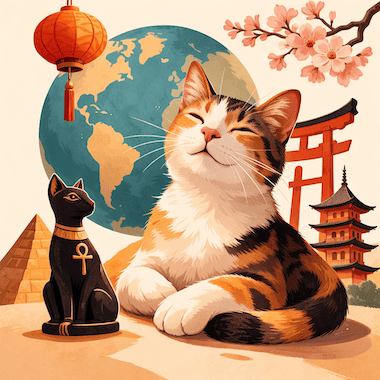
Cats and Humans
猫と人間
 Learn English音声・クイズ・本が使える無料アプリ
重要単語
- domesticated飼い慣らされた
- fascination魅了
- affectionate愛情のこもった
- mysterious神秘的な
- rodentげっ歯類
- descend由来する
- revere崇める
- fertility多産
- mourning哀悼
- witchcraft魔法
- persecution迫害
- plague疫病
すべての単語(30)
- consequence結果
- charmお守り
- folklore民俗
- supernatural超自然的な
- philosophical哲学的な
- companion仲間
- frequency周波数
- phenomenon現象
- anxiety不安
- behavior行動
- vocalization発声
- endearing愛らしい
- reflex反射
- approximatelyおよそ
- clowder猫の集まり
- kitten子猫
- enduring永続的な
- domesticity家庭性
Cats share our homes, our sofas and quite often our beds. They can be independent one minute and affectionate the next, and even after thousands of years at our side they still seem a little wild. Hundreds of millions of cats live as pets around the world, and online they are everywhere, starring in an endless stream of videos and memes.
猫は私たちと家やソファを分け合い、ベッドまで共にすることも珍しくありません。ついさっきまでそっけなかったのに、次の瞬間には甘えてくる。何千年も人間のそばで暮らしてきたのに、今でもどこか野生を残しています。世界ではペットとして暮らす猫が数億匹にのぼり、ネットの世界でも猫はいたるところにいて、次々と生まれる動画やミームの主役を務めています。
How did a small desert hunter end up in so many human homes? The story runs from the first farming villages to Egyptian temples, medieval festivals and Japanese shops, and finally to our phones. Along the way, it says a lot about what people want from the animals they live with.
砂漠の小さなハンターは、どのようにしてこれほど多くの人間の家に入り込んだのでしょうか。その物語は最初の農村から始まり、エジプトの神殿、中世ヨーロッパの祭り、日本の商店を経て、最後は私たちのスマートフォンにたどり着きます。そしてその過程で、人が共に暮らす動物に何を求めているのかも見えてきます。
Where Domestic Cats Came From
家猫のルーツ
Dogs were shaped by humans for jobs like hunting and herding. Cats, most scientists believe, largely domesticated themselves. About 10,000 years ago, people in the Middle East began farming and storing grain, and the grain attracted mice and rats. The mice, in turn, attracted wild cats.
犬は狩りや牧畜といった仕事のために、人間の手で改良されてきました。一方、多くの科学者によれば、猫はほとんど自分で自分を家畜化したといいます。約1万年前、中東の人々は農耕を始め、穀物を蓄えるようになりました。穀物はネズミを呼び寄せ、そのネズミが今度は野生の猫を呼び寄せたのです。
Farmers were happy to let the cats stay, since they kept pests down. Over many generations, the cats that were less afraid of people did better in the villages, and slowly they became tamer. Genetic studies show that all domestic cats descend from the Near Eastern wildcat, Felis silvestris lybica. Neither side was really in charge: both simply gained from the arrangement.
猫は害獣を減らしてくれるので、農民は喜んで猫を住まわせました。何世代もかけて、人をあまり怖がらない猫ほど村でうまく生き延び、少しずつおとなしくなっていきました。遺伝子の研究から、すべての家猫は近東のリビアヤマネコ(Felis silvestris lybica)の子孫であることがわかっています。どちらか一方が支配していたわけではなく、双方がこの関係から得をしていただけなのです。
Sacred Cats in Ancient Egypt
古代エジプトの聖なる猫
Few ancient peoples loved cats as much as the Egyptians. Cats lived in Egyptian homes from early times, hunting mice and snakes, and over the centuries they became linked with the gods. The goddess Bastet, who protected homes, mothers and children, was first shown as a lioness. From around 1000 BCE she usually appeared as a cat or as a woman with a cat's head, and her temple at Bubastis became the center of a huge cat cult.
古代の民族のなかで、エジプト人ほど猫を愛した人々はまずいません。猫は早くからエジプトの家で暮らし、ネズミやヘビを捕っていました。そして何世紀もかけて神々と結びつけられていきます。家庭と母と子を守る女神バステトは、もともと雌ライオンの姿で表されていました。紀元前1000年ごろからは猫や猫の頭をもつ女性の姿で描かれることが多くなり、ブバスティスにある彼女の神殿は大規模な猫信仰の中心地となりました。
Greek writers who visited Egypt reported that killing a cat, even by accident, could cost a person their life, and that when a family cat died, everyone in the house shaved their eyebrows in mourning. Cats were mummified and buried in special cemeteries. In 1888 a farmer at Beni Hasan found one that held hundreds of thousands of cat mummies. Many tons of them were shipped to England and ground into fertilizer.
エジプトを訪れたギリシャの著述家たちは、たとえ誤ってでも猫を殺せば命で償うことになりかねず、飼い猫が死ぬと家族全員が喪に服して眉を剃った、と書き残しています。猫はミイラにされ、専用の墓地に葬られました。1888年、ベニ・ハサンの農民が、数十万体もの猫のミイラが眠るそうした墓地を見つけました。そのうち何トンものミイラがイギリスへ運ばれ、砕かれて肥料にされました。
Cats in Europe: From Helpers to Suspects
ヨーロッパの猫:助っ人から容疑者へ
In medieval Europe, cats were valued for catching mice, but many people also saw them as creatures of the night, linked with witches and the devil. Black cats had the worst reputation. In some towns, killing cats even became part of public festivals: in Paris, cats were burned in the Midsummer bonfire, and in Ypres, in Flanders, live cats were thrown from a tower until 1817.
中世ヨーロッパでは、猫はネズミを捕るので重宝されましたが、一方で魔女や悪魔と結びついた夜の生き物と見る人も多くいました。とりわけ評判が悪かったのは黒猫です。町によっては、猫を殺すことが祭りの一部にさえなっていました。パリでは夏至の聖ヨハネの火で猫が焼かれ、フランドル地方のイーペルでは1817年まで生きた猫が塔から投げ落とされていたのです。
A popular story says that Europeans killed so many cats that rats took over and spread the Black Death in the 14th century. Historians find little evidence for this. The plague reached Europe in 1347, while the great witch hunts came much later, mostly between about 1450 and 1750. Cats can also catch the plague themselves.
よく知られた話によると、ヨーロッパの人々が猫を殺しすぎたためにネズミが増え、14世紀に黒死病を広めたといいます。しかし、歴史家はこの説を裏づける証拠をほとんど見つけていません。ペストがヨーロッパに到達したのは1347年で、大規模な魔女狩りはそれよりずっと後、主に1450年ごろから1750年ごろにかけて起きました。そもそも猫自身もペストにかかることがあります。
Cats in Japan and China
日本と中国の猫
In Japan, cats have a much happier reputation. The maneki-neko, or 'beckoning cat', is a small figure of a cat with one paw raised, as if waving customers inside. It sits by the door of many shops and restaurants to bring good business, and it has become a familiar symbol of Japan around the world.
日本では、猫ははるかに良いイメージをもたれています。招き猫は片方の前足を上げた小さな猫の置物で、まるでお客を店に招き入れているかのようです。商売繁盛を願って多くの店や飲食店の入り口に置かれ、今では世界中で日本のシンボルとして親しまれています。
Japanese folklore also has darker cats. The bakeneko is a cat that can change its shape, often into a person, and the nekomata is a cat demon with a tail split in two. In China, cats appear in paintings as wishes for a long life. The word for cat, mao, sounds like the first half of maodie, an old word for very old age, so a picture of a cat with a butterfly (die) means 'may you live to a great age'.
日本の民間伝承には、もっと不気味な猫も登場します。化け猫は姿を変えることができ、しばしば人間に化けます。猫又は尻尾が二つに分かれた猫の妖怪です。中国では、猫は長寿を願う絵に描かれます。猫を意味する「マオ(猫)」が、高齢を表す古い言葉「マオディエ(耄耋)」の前半と同じような音だからです。そのため、猫と蝶(ディエ)を描いた絵は「長生きしますように」という意味になります。
Cats in Literature and Art
文学と美術のなかの猫
Writers have loved cats for a long time. Lewis Carroll created the grinning Cheshire Cat in Alice's Adventures in Wonderland (1865), a cat that slowly disappears until only its smile is left. In 1939 T. S. Eliot published Old Possum's Book of Practical Cats, a collection of funny poems that Andrew Lloyd Webber turned into the hit musical Cats in 1981.
作家たちは昔から猫を愛してきました。ルイス・キャロルは『不思議の国のアリス』(1865年)で、にやにや笑うチェシャ猫を生み出しました。少しずつ消えていき、最後には笑いだけが残るという猫です。1939年にはT・S・エリオットがユーモラスな詩集『キャッツ ポッサムおじさんの猫とつき合う法』を出版し、1981年にアンドリュー・ロイド・ウェバーがこれをヒットミュージカル『キャッツ』に仕立てました。
Artists have been just as keen. A cat hunts birds in a wall painting from the tomb of Nebamun in Egypt, and the Japanese artist Utagawa Kuniyoshi filled his woodblock prints with cats. In Paris, Édouard Manet put a black cat at the foot of the bed in his painting Olympia, and Pierre Bonnard painted cats in many of his quiet scenes of home life.
画家たちも負けてはいません。エジプトのネバムンの墓の壁画には鳥を狩る猫が描かれ、日本の浮世絵師、歌川国芳は自分の木版画を猫でいっぱいにしました。パリではエドゥアール・マネが代表作『オランピア』のベッドの足元に黒猫を描き、ピエール・ボナールも穏やかな家庭の情景の多くに猫を描き込みました。
The Psychology of Cat Ownership
猫を飼う心理
Psychologists have long asked why so many people feel close to their cats. Research suggests that living with a pet can lower stress and blood pressure. One large American study published in 2008 found that people who had owned a cat were less likely to die of a heart attack, although it could not prove that the cats were the reason. Some researchers have also suggested that the low sound of a purr, at about 25 to 150 Hz, helps with healing, but this has not been proven.
なぜこれほど多くの人が猫に強い親しみを感じるのか、心理学者は長く問い続けてきました。研究によれば、ペットと暮らすことでストレスが減り、血圧が下がる可能性があります。2008年に発表されたアメリカの大規模な研究では、猫を飼ったことのある人は心臓発作で亡くなる割合が低いという結果が出ましたが、その理由が猫にあるとまでは証明できませんでした。また、およそ25~150ヘルツという猫の低いゴロゴロ音が治癒を助けると唱える研究者もいますが、これはまだ証明されていません。
Cats also give people company without needing constant attention the way dogs do. They don't need walks, and they cope well in small apartments, which suits people with busy lives. Some psychologists add that a cat's affection feels special because it has to be earned: when a cat chooses your lap, it feels like a compliment.
さらに猫は、犬のように常にかまってもらう必要がなく、人に寄り添ってくれます。散歩はいりませんし、狭いアパートにもよくなじむので、忙しい人にはぴったりです。猫の愛情は勝ち取らなければならないからこそ特別に感じられる、と付け加える心理学者もいます。猫が自分のひざを選んでくれると、ほめられたような気持ちになるのです。
Cats and the Internet
猫とインターネット
Cats found a new stage on the internet. Early hits like Keyboard Cat, a cat that seems to play an electric keyboard, spread across YouTube in the late 2000s. In the 2010s Grumpy Cat and Lil Bub became celebrities, with millions of fans, books and even films of their own.
猫はインターネットという新しい舞台を見つけました。電子キーボードを弾いているように見える「キーボード・キャット」などの初期のヒット動画は、2000年代の終わりにYouTubeで広まりました。2010年代にはグランピー・キャットやリル・バブが有名になり、何百万人ものファンを抱え、本が出版され、自分の映画まで作られました。
In 2015 a researcher at Indiana University asked nearly 7,000 people about watching cat videos. Most said the videos gave them more energy and made them feel happier and less anxious. Seen this way, internet cats are just the newest chapter of a very old friendship: people once kept cats in temples, and now they keep them on their phones.
2015年、インディアナ大学の研究者が、猫の動画を見たときの気持ちについて約7000人に尋ねました。ほとんどの人が、動画を見ると元気が出て、幸せな気分になり、不安が和らぐと答えました。そう考えると、ネットの猫は、とても古い友情の最新の一章にすぎません。かつて人は猫を神殿で飼い、今はスマートフォンの中で飼っているのです。
The Science of Cat Behavior
猫の行動の科学
Scientists still have a lot to learn about how cats behave. With each other, cats communicate mostly through body language and scent, along with hisses, growls and purrs. Adult cats rarely meow at other cats. Kittens meow to their mothers, but grown cats seem to keep the meow mainly for talking to humans.
猫の行動について、科学者にはまだわからないことがたくさんあります。猫どうしは主にボディランゲージとにおいで、さらにシャーという威嚇やうなり声、ゴロゴロ音でやりとりをします。大人の猫がほかの猫に向かってニャーと鳴くことはめったにありません。子猫は母猫に鳴きかけますが、大人の猫は「ニャー」を主に人間と話すためにとってあるようです。
Other habits are harder to explain: knocking things off tables, squeezing into boxes that are far too small, bringing dead mice to their owners as 'gifts', or racing around the house in the middle of the night. Some of these may come from hunting instincts or a need for safe, tight spaces, but many questions are still open.
もっと説明しにくい習性もあります。テーブルから物を落とす、明らかに小さすぎる箱に体を押し込む、死んだネズミを飼い主への「プレゼント」として持ってくる、真夜中に家じゅうを走り回る、といったものです。狩りの本能や、安全で狭い場所を求める気持ちから来ているものもあるかもしれませんが、多くの疑問はまだ解けていません。
Quick Facts About Cats
猫のミニ知識
Cats sleep about 12 to 16 hours a day.
猫は1日に12~16時間ほど眠ります。
A group of cats is called a 'clowder', and a group of kittens is called a 'kindle'.
英語では、猫の群れを「clowder」、子猫の群れを「kindle」と呼びます。
The oldest known burial of a cat with a human, about 9,500 years old, was found in Cyprus.
猫が人と一緒に埋葬された最古の例は約9500年前のもので、キプロスで見つかりました。
Cats can twist in the air to land on their feet, a skill called the 'righting reflex', but they don't always land safely.
猫は空中で体をひねって足から着地することができ、これを「立ち直り反射」といいますが、いつも無事に着地できるとは限りません。
The loudest purr on record belongs to Merlin, a cat from England, whose purr measured 67.8 decibels.
記録に残る最も大きなゴロゴロ音の持ち主は、イギリスのマーリンという猫で、その音は67.8デシベルに達しました。
There are more than 500 million domestic cats in the world, including strays.
世界には野良猫も含めて5億匹以上の家猫がいます。
Ten Thousand Years Together
共に歩んだ一万年
From Egyptian temples to today's living rooms and social media feeds, cats have lived alongside people for about 10,000 years. They have been worshipped and feared, burned at festivals and turned into lucky charms, but people have never stopped keeping them.
エジプトの神殿から今日のリビングやSNSのタイムラインまで、猫は約1万年にわたって人間のそばで暮らしてきました。崇められては恐れられ、祭りで焼かれては縁起物の置物にもなりましたが、人々が猫を飼うのをやめたことは一度もありません。
Unlike most domestic animals, the cat still does much as it pleases. It hunts, sleeps and chooses its friends, and it stays with us because it wants to. After ten thousand years, people still seem to like it that way.
ほとんどの家畜と違い、猫は今でもおおむね好きなように生きています。狩りをし、眠り、友だちを自分で選び、そばにいたいから私たちのもとにいるのです。1万年がたった今も、人はそんな猫の生き方を気に入っているようです。
無料アプリなら、この文章の音声を聞いたり、単語をタップして意味を確かめたりできます。