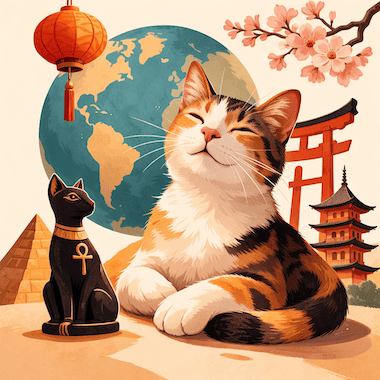
Cats and Humans
고양이와 인간
 Learn English음성, 퀴즈, 원서까지 담은 무료 앱
핵심 단어
- domesticated길들여진
- fascination매혹
- affectionate애정 어린
- mysterious신비로운
- rodent설치류
- descend유래하다
- revere숭배하다
- fertility비옥
- mourning애도
- witchcraft마법
- persecution박해
- plague전염병
단어 전체 보기 (30)
- consequence결과
- charm부적
- folklore민속
- supernatural초자연적인
- philosophical철학적인
- companion동반자
- frequency주파수
- phenomenon현상
- anxiety불안
- behavior행동
- vocalization발성
- endearing사랑스러운
- reflex반사
- approximately대략
- clowder고양이 무리
- kitten새끼 고양이
- enduring지속적인
- domesticity가정성
Cats share our homes, our sofas and quite often our beds. They can be independent one minute and affectionate the next, and even after thousands of years at our side they still seem a little wild. Hundreds of millions of cats live as pets around the world, and online they are everywhere, starring in an endless stream of videos and memes.
고양이는 우리와 집과 소파를 함께 쓰고, 꽤 자주 침대까지 함께 씁니다. 한순간 무심하다가도 다음 순간 다정하게 굴고, 수천 년을 우리 곁에서 살아왔는데도 여전히 조금은 야생의 기운을 품고 있습니다. 전 세계에서 수억 마리의 고양이가 반려동물로 살고 있으며, 온라인에서도 고양이는 어디에나 있어 끝없이 쏟아지는 영상과 밈의 주인공이 되고 있습니다.
How did a small desert hunter end up in so many human homes? The story runs from the first farming villages to Egyptian temples, medieval festivals and Japanese shops, and finally to our phones. Along the way, it says a lot about what people want from the animals they live with.
사막의 작은 사냥꾼은 어떻게 이토록 많은 사람의 집에 자리를 잡게 되었을까요? 이 이야기는 최초의 농경 마을에서 시작해 이집트의 신전, 중세의 축제, 일본의 가게를 거쳐 마침내 우리의 휴대폰에 이릅니다. 그 과정에서 사람들이 함께 사는 동물에게 무엇을 바라는지도 많이 드러납니다.
Where Domestic Cats Came From
집고양이는 어디에서 왔을까
Dogs were shaped by humans for jobs like hunting and herding. Cats, most scientists believe, largely domesticated themselves. About 10,000 years ago, people in the Middle East began farming and storing grain, and the grain attracted mice and rats. The mice, in turn, attracted wild cats.
개는 사냥이나 가축 몰이 같은 일을 위해 사람이 길러 낸 동물입니다. 반면 대부분의 과학자들은 고양이가 상당 부분 스스로 가축화되었다고 봅니다. 약 1만 년 전 중동 사람들이 농사를 짓고 곡식을 저장하기 시작하자, 곡식이 생쥐와 쥐를 불러들였습니다. 그리고 그 쥐들이 다시 야생 고양이를 불러들였습니다.
Farmers were happy to let the cats stay, since they kept pests down. Over many generations, the cats that were less afraid of people did better in the villages, and slowly they became tamer. Genetic studies show that all domestic cats descend from the Near Eastern wildcat, Felis silvestris lybica. Neither side was really in charge: both simply gained from the arrangement.
고양이가 해로운 동물을 줄여 주었기 때문에 농부들은 기꺼이 고양이를 머물게 했습니다. 여러 세대에 걸쳐 사람을 덜 무서워하는 고양이가 마을에서 더 잘 살아남았고, 고양이는 점점 온순해졌습니다. 유전자 연구에 따르면 모든 집고양이는 근동의 야생 고양이인 리비아살쾡이(Felis silvestris lybica)의 후손입니다. 어느 한쪽이 주도권을 쥔 것이 아니라, 양쪽 모두 이 관계에서 이득을 보았을 뿐입니다.
Sacred Cats in Ancient Egypt
고대 이집트의 신성한 고양이
Few ancient peoples loved cats as much as the Egyptians. Cats lived in Egyptian homes from early times, hunting mice and snakes, and over the centuries they became linked with the gods. The goddess Bastet, who protected homes, mothers and children, was first shown as a lioness. From around 1000 BCE she usually appeared as a cat or as a woman with a cat's head, and her temple at Bubastis became the center of a huge cat cult.
고대 민족 가운데 이집트인만큼 고양이를 사랑한 민족은 드뭅니다. 고양이는 일찍부터 이집트의 집에서 살며 쥐와 뱀을 잡았고, 수백 년에 걸쳐 신들과 연결되었습니다. 집과 어머니, 아이들을 지켜 주는 여신 바스테트는 처음에는 암사자의 모습으로 표현되었습니다. 기원전 1000년 무렵부터는 주로 고양이나 고양이 머리를 한 여인의 모습으로 등장했고, 부바스티스에 있던 그녀의 신전은 거대한 고양이 숭배의 중심지가 되었습니다.
Greek writers who visited Egypt reported that killing a cat, even by accident, could cost a person their life, and that when a family cat died, everyone in the house shaved their eyebrows in mourning. Cats were mummified and buried in special cemeteries. In 1888 a farmer at Beni Hasan found one that held hundreds of thousands of cat mummies. Many tons of them were shipped to England and ground into fertilizer.
이집트를 방문한 그리스 작가들은 고양이를 죽이면 실수라 하더라도 목숨을 잃을 수 있었고, 집고양이가 죽으면 온 가족이 애도의 뜻으로 눈썹을 밀었다고 전합니다. 고양이는 미라로 만들어져 전용 묘지에 묻혔습니다. 1888년 베니하산의 한 농부가 이런 묘지를 발견했는데, 그곳에는 수십만 구의 고양이 미라가 있었습니다. 그중 수 톤이 영국으로 실려 가 갈려서 비료가 되었습니다.
Cats in Europe: From Helpers to Suspects
유럽의 고양이: 일꾼에서 용의자로
In medieval Europe, cats were valued for catching mice, but many people also saw them as creatures of the night, linked with witches and the devil. Black cats had the worst reputation. In some towns, killing cats even became part of public festivals: in Paris, cats were burned in the Midsummer bonfire, and in Ypres, in Flanders, live cats were thrown from a tower until 1817.
중세 유럽에서 고양이는 쥐를 잡아 귀하게 여겨졌지만, 많은 사람들은 고양이를 마녀나 악마와 얽힌 밤의 생물로 보기도 했습니다. 특히 검은 고양이의 평판이 가장 나빴습니다. 일부 도시에서는 고양이를 죽이는 일이 축제의 일부가 되기도 했습니다. 파리에서는 한여름 성 요한 축일의 모닥불에 고양이를 태웠고, 플랑드르의 이프르에서는 1817년까지 살아 있는 고양이를 탑 위에서 던졌습니다.
A popular story says that Europeans killed so many cats that rats took over and spread the Black Death in the 14th century. Historians find little evidence for this. The plague reached Europe in 1347, while the great witch hunts came much later, mostly between about 1450 and 1750. Cats can also catch the plague themselves.
널리 퍼진 이야기에 따르면, 유럽인들이 고양이를 너무 많이 죽인 탓에 쥐가 들끓어 14세기에 흑사병이 퍼졌다고 합니다. 하지만 역사학자들은 이를 뒷받침할 증거를 거의 찾지 못하고 있습니다. 페스트가 유럽에 들어온 것은 1347년이고, 대규모 마녀사냥은 그보다 훨씬 뒤인 대략 1450년에서 1750년 사이에 주로 일어났습니다. 게다가 고양이도 페스트에 걸릴 수 있습니다.
Cats in Japan and China
일본과 중국의 고양이
In Japan, cats have a much happier reputation. The maneki-neko, or 'beckoning cat', is a small figure of a cat with one paw raised, as if waving customers inside. It sits by the door of many shops and restaurants to bring good business, and it has become a familiar symbol of Japan around the world.
일본에서 고양이는 훨씬 좋은 이미지를 지니고 있습니다. '부르는 고양이'라는 뜻의 마네키네코는 한쪽 앞발을 든 작은 고양이 인형으로, 마치 손님을 안으로 불러들이는 것처럼 보입니다. 장사가 잘되기를 바라며 많은 가게와 식당 입구에 놓여 있고, 이제는 세계 어디서나 알아보는 일본의 상징이 되었습니다.
Japanese folklore also has darker cats. The bakeneko is a cat that can change its shape, often into a person, and the nekomata is a cat demon with a tail split in two. In China, cats appear in paintings as wishes for a long life. The word for cat, mao, sounds like the first half of maodie, an old word for very old age, so a picture of a cat with a butterfly (die) means 'may you live to a great age'.
일본 민간 전설에는 더 으스스한 고양이도 등장합니다. 바케네코는 모습을 바꿀 수 있는 고양이로, 사람으로 둔갑하는 경우가 많습니다. 네코마타는 꼬리가 두 갈래로 갈라진 고양이 요괴입니다. 중국에서는 고양이가 장수를 비는 그림에 등장합니다. 고양이를 뜻하는 '마오'가 아주 많은 나이를 가리키는 옛말 '마오디에'의 앞부분과 소리가 비슷하기 때문입니다. 그래서 고양이와 나비('디에')를 함께 그린 그림은 '오래오래 장수하시라'는 뜻이 됩니다.
Cats in Literature and Art
문학과 미술 속의 고양이
Writers have loved cats for a long time. Lewis Carroll created the grinning Cheshire Cat in Alice's Adventures in Wonderland (1865), a cat that slowly disappears until only its smile is left. In 1939 T. S. Eliot published Old Possum's Book of Practical Cats, a collection of funny poems that Andrew Lloyd Webber turned into the hit musical Cats in 1981.
작가들은 오래전부터 고양이를 사랑해 왔습니다. 루이스 캐럴은 『이상한 나라의 앨리스』(1865)에서 히죽 웃는 체셔 고양이를 만들어 냈는데, 이 고양이는 천천히 사라지다가 마지막에는 웃음만 남습니다. 1939년 T. S. 엘리엇은 유쾌한 시를 모은 『Old Possum's Book of Practical Cats』를 펴냈고, 앤드루 로이드 웨버는 1981년 이 시집을 히트 뮤지컬 「캣츠」로 만들었습니다.
Artists have been just as keen. A cat hunts birds in a wall painting from the tomb of Nebamun in Egypt, and the Japanese artist Utagawa Kuniyoshi filled his woodblock prints with cats. In Paris, Édouard Manet put a black cat at the foot of the bed in his painting Olympia, and Pierre Bonnard painted cats in many of his quiet scenes of home life.
화가들도 이에 못지않았습니다. 이집트 네바문 무덤의 벽화에는 새를 사냥하는 고양이가 있고, 일본 화가 우타가와 구니요시는 자신의 목판화를 고양이로 가득 채웠습니다. 파리에서는 에두아르 마네가 그림 「올랭피아」에서 침대 발치에 검은 고양이를 그려 넣었고, 피에르 보나르는 고요한 가정생활을 담은 많은 그림에 고양이를 그렸습니다.
The Psychology of Cat Ownership
고양이를 키우는 심리
Psychologists have long asked why so many people feel close to their cats. Research suggests that living with a pet can lower stress and blood pressure. One large American study published in 2008 found that people who had owned a cat were less likely to die of a heart attack, although it could not prove that the cats were the reason. Some researchers have also suggested that the low sound of a purr, at about 25 to 150 Hz, helps with healing, but this has not been proven.
왜 그토록 많은 사람이 자기 고양이에게 깊은 친밀감을 느끼는지, 심리학자들은 오랫동안 궁금해해 왔습니다. 연구에 따르면 반려동물과 함께 살면 스트레스와 혈압이 낮아질 수 있습니다. 2008년에 발표된 미국의 대규모 연구에서는 고양이를 키운 적이 있는 사람이 심장마비로 사망할 가능성이 더 낮다는 결과가 나왔지만, 그 이유가 고양이라는 것까지 증명하지는 못했습니다. 일부 연구자들은 약 25~150헤르츠에 이르는 고양이의 낮은 가르랑 소리가 치유를 돕는다고 주장하기도 했지만, 이는 아직 증명되지 않았습니다.
Cats also give people company without needing constant attention the way dogs do. They don't need walks, and they cope well in small apartments, which suits people with busy lives. Some psychologists add that a cat's affection feels special because it has to be earned: when a cat chooses your lap, it feels like a compliment.
고양이는 또한 개처럼 늘 관심을 요구하지 않으면서도 사람에게 곁을 내어 줍니다. 산책을 시킬 필요가 없고 작은 아파트에도 잘 적응해서 바쁘게 사는 사람들에게 잘 맞습니다. 어떤 심리학자들은 고양이의 애정은 노력해서 얻어야 하기 때문에 더 특별하게 느껴진다고 덧붙입니다. 고양이가 내 무릎을 골라 올라오면 마치 칭찬을 받은 것 같은 기분이 듭니다.
Cats and the Internet
고양이와 인터넷
Cats found a new stage on the internet. Early hits like Keyboard Cat, a cat that seems to play an electric keyboard, spread across YouTube in the late 2000s. In the 2010s Grumpy Cat and Lil Bub became celebrities, with millions of fans, books and even films of their own.
고양이는 인터넷에서 새로운 무대를 찾았습니다. 전자 키보드를 치는 것처럼 보이는 '키보드 캣' 같은 초기 인기 영상은 2000년대 후반 유튜브에서 널리 퍼졌습니다. 2010년대에는 그럼피 캣과 릴 법이 수백만 명의 팬을 거느린 스타가 되었고, 책은 물론 자신만의 영화까지 생겼습니다.
In 2015 a researcher at Indiana University asked nearly 7,000 people about watching cat videos. Most said the videos gave them more energy and made them feel happier and less anxious. Seen this way, internet cats are just the newest chapter of a very old friendship: people once kept cats in temples, and now they keep them on their phones.
2015년 인디애나 대학교의 한 연구자는 고양이 영상을 볼 때의 느낌에 대해 약 7,000명에게 물었습니다. 대부분은 영상을 보면 기운이 나고 더 행복해지며 불안이 줄어든다고 답했습니다. 이렇게 보면 인터넷 고양이는 아주 오래된 우정의 가장 새로운 장일 뿐입니다. 사람들은 예전에 신전에서 고양이를 키웠고, 이제는 휴대폰 속에 고양이를 두고 있습니다.
The Science of Cat Behavior
고양이 행동의 과학
Scientists still have a lot to learn about how cats behave. With each other, cats communicate mostly through body language and scent, along with hisses, growls and purrs. Adult cats rarely meow at other cats. Kittens meow to their mothers, but grown cats seem to keep the meow mainly for talking to humans.
고양이의 행동에 대해 과학자들이 알아내야 할 것은 아직 많습니다. 고양이끼리는 주로 몸짓과 냄새로 소통하며, 하악질과 으르렁거림, 가르랑 소리도 사용합니다. 다 자란 고양이는 다른 고양이에게 거의 야옹 하고 울지 않습니다. 새끼 고양이는 어미에게 울지만, 성묘는 야옹 소리를 주로 사람과 대화할 때를 위해 아껴 두는 것으로 보입니다.
Other habits are harder to explain: knocking things off tables, squeezing into boxes that are far too small, bringing dead mice to their owners as 'gifts', or racing around the house in the middle of the night. Some of these may come from hunting instincts or a need for safe, tight spaces, but many questions are still open.
설명하기 더 어려운 습관도 있습니다. 탁자 위의 물건을 떨어뜨리기, 너무 작은 상자에 몸을 밀어 넣기, 죽은 쥐를 주인에게 '선물'로 가져오기, 한밤중에 온 집 안을 질주하기 같은 것들입니다. 이 가운데 일부는 사냥 본능이나 안전하고 좁은 공간을 찾는 습성에서 비롯되었을 수 있지만, 아직 풀리지 않은 의문이 많습니다.
Quick Facts About Cats
고양이에 관한 짧은 사실들
Cats sleep about 12 to 16 hours a day.
고양이는 하루에 약 12~16시간을 잡니다.
A group of cats is called a 'clowder', and a group of kittens is called a 'kindle'.
영어로 고양이 무리는 'clowder', 새끼 고양이 무리는 'kindle'이라고 부릅니다.
The oldest known burial of a cat with a human, about 9,500 years old, was found in Cyprus.
고양이가 사람과 함께 묻힌 가장 오래된 무덤은 약 9,500년 전의 것으로, 키프로스에서 발견되었습니다.
Cats can twist in the air to land on their feet, a skill called the 'righting reflex', but they don't always land safely.
고양이는 공중에서 몸을 비틀어 발로 착지할 수 있는데, 이를 '정위 반사'라고 합니다. 하지만 언제나 안전하게 착지하는 것은 아닙니다.
The loudest purr on record belongs to Merlin, a cat from England, whose purr measured 67.8 decibels.
기록상 가장 큰 가르랑 소리의 주인공은 영국의 고양이 멀린으로, 그 소리는 67.8데시벨에 달했습니다.
There are more than 500 million domestic cats in the world, including strays.
전 세계에는 길고양이를 포함해 5억 마리가 넘는 집고양이가 있습니다.
Ten Thousand Years Together
함께한 1만 년
From Egyptian temples to today's living rooms and social media feeds, cats have lived alongside people for about 10,000 years. They have been worshipped and feared, burned at festivals and turned into lucky charms, but people have never stopped keeping them.
이집트의 신전에서 오늘날의 거실과 소셜 미디어 피드에 이르기까지, 고양이는 약 1만 년 동안 사람 곁에서 살아왔습니다. 숭배받기도 하고 두려움의 대상이 되기도 했으며, 축제에서 불태워지기도 하고 행운의 부적이 되기도 했지만, 사람들은 고양이 기르기를 한 번도 멈추지 않았습니다.
Unlike most domestic animals, the cat still does much as it pleases. It hunts, sleeps and chooses its friends, and it stays with us because it wants to. After ten thousand years, people still seem to like it that way.
대부분의 가축과 달리 고양이는 지금도 대체로 하고 싶은 대로 합니다. 사냥하고, 잠자고, 친구를 스스로 고르며, 원하기 때문에 우리 곁에 머뭅니다. 1만 년이 지난 지금도 사람들은 고양이의 그런 모습을 여전히 좋아하는 듯합니다.
무료 앱에서는 이 글을 음성으로 듣고, 단어를 누르면 뜻을 바로 볼 수 있습니다.