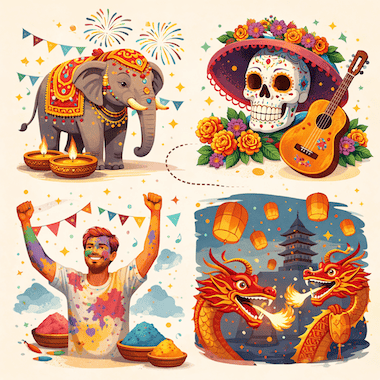
Festivals Around the Globe
세계의 축제
 Learn English음성, 퀴즈, 원서까지 담은 무료 앱
핵심 단어
- festival축제
- ceremony의식
- procession행렬
- ritual의례
- pilgrim순례자
- heritage유산
- solstice지점
- altar제단
- harvest수확
- costume의상
- sacred신성한
- deity신
단어 전체 보기 (30)
- reenactment재현
- offering제물
- bonfire모닥불
- spectator관중
- indigenous토착의
- communal공동체의
- myth신화
- fertility풍요
- mourning애도
- torch횃불
- baptism세례
- archery궁술
- lantern등불
- preservation보존
- empathy공감
- exuberant활기찬
- feast연회
- conquest정복
Every culture on Earth has its festivals. From the snowy north of Scandinavia to the deserts of Africa, people have always set aside special days to honor their gods, welcome a new season, remember the dead or simply have a good time together.
지구상의 모든 문화에는 저마다의 축제가 있습니다. 눈 덮인 스칸디나비아 북부에서 아프리카의 사막에 이르기까지, 사람들은 언제나 특별한 날을 정해 신을 섬기고, 새로운 계절을 맞이하고, 세상을 떠난 이들을 기억하거나, 그저 함께 즐거운 시간을 보냈습니다.
Some celebrations, like New Year's Eve, are known almost everywhere. Thousands of others are hardly known outside their own region. Here are a few of them, from Ethiopia to Mongolia, and what people actually do on those days.
새해 전야처럼 거의 모든 곳에 알려진 기념일도 있습니다. 하지만 자기 지역 밖에서는 거의 알려지지 않은 축제도 수천 가지에 이릅니다. 에티오피아에서 몽골까지, 그중 몇 가지와 사람들이 그날 실제로 무엇을 하는지 소개합니다.
Timkat: Epiphany in Ethiopia
팀캇: 에티오피아의 주현절
Timkat is the Ethiopian Orthodox celebration of Epiphany, the day that remembers the baptism of Jesus in the Jordan River. It falls on January 19, or January 20 in leap years. On the eve of the feast, priests carry the tabots out of the churches. A tabot is a tablet that stands for the Ark of the Covenant, and it is so holy that it is always wrapped in rich cloth and kept out of sight.
팀캇은 에티오피아 정교회의 주현절로, 예수가 요르단강에서 세례를 받은 일을 기념하는 날입니다. 1월 19일, 윤년에는 1월 20일에 열립니다. 축일 전날 밤, 사제들은 교회에서 타보트를 꺼내 옵니다. 타보트는 언약궤를 상징하는 판으로, 매우 신성하게 여겨져 늘 화려한 천에 싸여 사람들의 눈에 띄지 않게 보관됩니다.
Crowds dressed in white follow the procession to a pool or river, where they spend the night singing and praying. At dawn the priests bless the water, and many people jump in or get splashed to renew their baptism. One of the biggest celebrations takes place in Gondar, where people leap into the pool of Fasilides' Bath, built in the 17th century. UNESCO added Timkat to its list of Intangible Cultural Heritage in 2019.
흰옷을 입은 군중은 행렬을 따라 연못이나 강까지 가서, 그곳에서 찬송하고 기도하며 밤을 보냅니다. 새벽이 되면 사제들이 물을 축복하고, 많은 사람이 물에 뛰어들거나 물을 맞으며 세례를 새롭게 합니다. 가장 큰 축제 중 하나는 곤다르에서 열리는데, 사람들은 17세기에 지어진 파실리다스 목욕장의 연못에 뛰어듭니다. 유네스코는 2019년에 팀캇을 인류무형문화유산으로 등재했습니다.
Up Helly Aa: Fire in the Scottish Winter
업 헬리 아: 스코틀랜드의 겨울을 밝히는 불
On the last Tuesday of January, about a thousand people with burning torches march through the dark streets of Lerwick, the main town of Scotland's Shetland Islands. This is Up Helly Aa, one of the largest fire festivals in Europe. At the front marches the Jarl Squad, dressed as Vikings with helmets, shields and axes.
1월의 마지막 화요일, 약 천 명의 사람들이 불붙은 횃불을 들고 스코틀랜드 셰틀랜드 제도의 중심 도시 러윅의 어두운 거리를 행진합니다. 이것이 유럽에서 가장 큰 불 축제 중 하나인 업 헬리 아입니다. 맨 앞에는 투구를 쓰고 방패와 도끼를 든 바이킹 차림의 얄 분대가 걸어갑니다.
The march ends at a wooden Viking ship, or galley, built for the occasion. The costumed marchers, called guizers, throw their torches into it and watch it burn. The festival is younger than it looks: the Victorians invented the Viking theme in the 1880s, and the first galley was burned in 1889. After the fire, the guizers visit local halls, where music and dancing go on until morning. Since 2023, women and girls can march in the procession too.
행진은 이 축제를 위해 만든 나무 바이킹 배, 즉 갤리선 앞에서 끝납니다. 가이저라고 불리는 분장한 참가자들이 횃불을 배에 던져 넣고 배가 타는 모습을 지켜봅니다. 이 축제는 보기보다 역사가 짧습니다. 바이킹이라는 주제는 1880년대에 빅토리아 시대 사람들이 만들어 낸 것이고, 처음 배를 불태운 것은 1889년입니다. 불이 꺼진 뒤 가이저들은 동네 회관을 돌아다니고, 그곳에서는 아침까지 음악과 춤이 이어집니다. 2023년부터는 여성과 소녀들도 행진에 참여할 수 있게 되었습니다.
Songkran: Thailand's Water Festival
송끄란: 태국의 물 축제
Songkran is the Thai New Year, officially celebrated from April 13 to 15. It falls in the hottest part of the year, just before the rainy season. The tradition began quietly: people poured scented water over statues of the Buddha and over the hands of older relatives to show respect and ask for their blessing.
송끄란은 태국의 새해로, 공식적으로는 4월 13일부터 15일까지 기념합니다. 1년 중 가장 더운 시기, 우기가 시작되기 직전에 해당합니다. 이 전통은 조용하게 시작되었습니다. 사람들은 존경을 표하고 축복을 구하기 위해 불상과 집안 어른들의 손에 향기로운 물을 부었습니다.
Today the whole country seems to turn into one huge water fight. In Bangkok and Chiang Mai, the streets fill with people carrying water guns, buckets and hoses, and nobody stays dry. Many people still visit temples, give food to monks and build small piles of sand in the temple grounds. The water has a meaning too: it washes away the bad luck of the old year. In 2023, UNESCO added Songkran to its Intangible Cultural Heritage list.
오늘날에는 나라 전체가 하나의 거대한 물싸움터로 바뀌는 것처럼 보입니다. 방콕과 치앙마이의 거리는 물총과 양동이, 호스를 든 사람들로 가득하고, 젖지 않는 사람은 아무도 없습니다. 그래도 많은 사람이 여전히 사원을 찾아 승려에게 음식을 공양하고 사원 마당에 작은 모래 더미를 쌓습니다. 물에는 의미도 담겨 있는데, 지난해의 불운을 씻어 낸다는 것입니다. 2023년 유네스코는 송끄란을 무형문화유산 목록에 올렸습니다.
Día de los Muertos: Celebrating the Departed
죽은 자들의 날: 세상을 떠난 이들을 기리다
Mexico's Day of the Dead is celebrated on November 1 and 2. Outsiders often imagine a sad or gloomy holiday, but it is closer to a family reunion. People believe that on these days the souls of the dead come back to visit the living, and they prepare a warm welcome for them.
멕시코의 죽은 자들의 날은 11월 1일과 2일에 열립니다. 외부 사람들은 흔히 슬프거나 음울한 명절을 떠올리지만, 실제로는 가족 모임에 더 가깝습니다. 이 기간에 죽은 이들의 영혼이 산 사람들을 만나러 돌아온다고 믿기 때문에, 사람들은 그들을 따뜻하게 맞이할 준비를 합니다.
Families build altars called ofrendas and decorate them with orange marigolds, candles, photos and the favorite food and drinks of the people they have lost. In many towns, families spend the night in the cemetery, eating, playing music and telling stories about the dead. Skulls, or calaveras, are everywhere, often made of sugar and painted in bright colors. The festival mixes the traditions of the Aztecs and other indigenous peoples with the Catholic feasts of All Saints and All Souls, and UNESCO recognized it in 2008.
가족들은 오프렌다라는 제단을 만들고, 주황색 메리골드와 촛불, 사진, 그리고 세상을 떠난 가족이 좋아하던 음식과 음료로 장식합니다. 많은 마을에서 가족들은 묘지에서 밤을 보내며 음식을 먹고, 음악을 연주하고, 고인에 대한 이야기를 나눕니다. 칼라베라라고 부르는 해골은 어디에나 있는데, 설탕으로 만들어 밝은 색으로 칠한 것이 많습니다. 이 축제는 아즈텍을 비롯한 원주민의 전통과 가톨릭의 모든 성인의 날, 위령의 날이 어우러진 것으로, 유네스코는 2008년에 이를 인정했습니다.
Holi: The Festival of Colors
홀리: 색의 축제
Holi is one of the best-known Hindu festivals. It is celebrated in India and Nepal and by South Asian communities around the world. It takes place at the full moon in late February or March, marks the end of winter and the victory of good over evil, and is famous for its clouds of colored powder.
홀리는 가장 잘 알려진 힌두교 축제 중 하나입니다. 인도와 네팔, 그리고 전 세계의 남아시아 공동체에서 기념합니다. 2월 말이나 3월의 보름달이 뜨는 날에 열리며, 겨울의 끝과 악에 대한 선의 승리를 나타내고, 하늘을 뒤덮는 색 가루로 유명합니다.
It starts the night before with Holika Dahan, when people light bonfires. They remember the legend of the demoness Holika, who burned in a fire while the boy Prahlad, a devoted follower of Vishnu, walked out unharmed. The next morning, people of all ages go out and throw colored powder and water at friends, neighbors and strangers alike. For one day, many of the usual barriers between rich and poor, old and young are relaxed. The colors also recall the god Krishna, who, according to legend, playfully covered Radha and her friends in color.
축제는 전날 밤 홀리카 다한으로 시작되는데, 이때 사람들은 큰 모닥불을 피웁니다. 악마 홀리카는 불에 타 죽었지만, 비슈누를 독실하게 믿은 소년 프라흘라다는 다치지 않고 불 속에서 걸어 나왔다는 전설을 기리는 것입니다. 다음 날 아침이면 남녀노소가 거리로 나와 친구와 이웃, 심지어 낯선 사람에게까지 색 가루와 물을 뿌립니다. 이날 하루만큼은 빈부와 나이 사이의 평소 장벽이 상당히 느슨해집니다. 색깔은 크리슈나 신을 떠올리게도 하는데, 전설에 따르면 크리슈나는 장난삼아 라다와 그 친구들을 색으로 물들였다고 합니다.
Inti Raymi: Festival of the Sun
인티 라이미: 태양의 축제
Every year on June 24, the Inca Festival of the Sun comes back to life in Cusco, Peru. In Quechua, Inti Raymi means 'Festival of the Sun'. It was one of the most important ceremonies of the Inca Empire, held around the winter solstice in the Southern Hemisphere to honor the sun god Inti.
매년 6월 24일, 페루 쿠스코에서는 잉카의 태양 축제가 되살아납니다. 인티 라이미는 케추아어로 태양의 축제라는 뜻입니다. 잉카 제국에서 가장 중요한 의식 중 하나였으며, 남반구의 동지 무렵에 태양신 인티를 기리기 위해 열렸습니다.
After the conquest, the Spanish colonial authorities banned the festival in the 16th century. It was brought back in 1944 as a staged performance. Today, hundreds of actors in rich costumes play the Sapa Inca, the emperor, and his court at Sacsayhuamán, the old Inca fortress above the city. Tens of thousands of people come to watch. For many Quechua speakers, the festival is more than a show: it is a way to take pride in their language and history.
정복 이후 스페인 식민 당국은 16세기에 이 축제를 금지했습니다. 이 축제는 1944년에 무대 공연의 형태로 되살아났습니다. 오늘날에는 화려한 의상을 입은 수백 명의 배우가 도시를 내려다보는 옛 잉카 요새 삭사이와만에서 황제 사파 잉카와 그의 궁정을 연기합니다. 수만 명의 사람들이 이를 보러 옵니다. 케추아어를 쓰는 많은 사람에게 이 축제는 단순한 공연이 아니라 자신들의 언어와 역사에 자부심을 느끼는 방법입니다.
Onam: Kerala's Harvest Festival
오남: 케랄라의 추수 축제
Onam is the harvest festival of Kerala, in southern India. It lasts ten days and falls in August or September, in the Malayalam month of Chingam. People of all religions in Kerala celebrate it. According to legend, Onam marks the yearly visit of Mahabali, a kind and generous king who ruled the land long ago and comes back once a year to see his people.
오남은 인도 남부 케랄라주의 추수 축제입니다. 열흘 동안 이어지며, 말라얄람력의 칭감월, 즉 8월이나 9월에 열립니다. 케랄라에서는 모든 종교의 사람들이 이 축제를 기념합니다. 전설에 따르면 오남은 마하발리 왕이 해마다 찾아오는 것을 기념하는 날입니다. 마하발리는 오래전 이 땅을 다스린 선하고 너그러운 왕으로, 1년에 한 번 백성을 보러 돌아온다고 합니다.
Families make flower carpets called pookalam in front of their homes and add more flowers each day, so the designs grow bigger and more detailed. The high point is the Onam Sadya, a vegetarian feast of more than twenty dishes served on a banana leaf. In the same season, villages hold races of long snake boats, known as Vallam Kali, with about a hundred rowers in each boat, while huge crowds cheer from the riverbanks.
가족들은 집 앞에 푸깔람이라는 꽃 카펫을 만들고 날마다 꽃을 더하기 때문에, 무늬는 점점 더 커지고 정교해집니다. 축제의 절정은 바나나 잎 위에 차려 내는 스무 가지가 넘는 채식 잔치, 오남 사디야입니다. 같은 시기에 마을들은 발람 칼리라고 불리는 긴 뱀 배 경주를 엽니다. 배마다 약 100명의 노잡이가 타고, 강둑에 모인 엄청난 인파가 환호를 보냅니다.
Naadam: Mongolia's Festival of Three Games
나담: 몽골의 세 가지 경기 축제
Every July, Mongolia celebrates Naadam, a national festival built around three traditional sports: wrestling, horse racing and archery. The biggest Naadam opens in the capital, Ulaanbaatar, on July 11. The games go back many centuries, to a time when nomad armies used them to keep their warriors fit.
몽골에서는 매년 7월 나담을 기념합니다. 씨름, 경마, 활쏘기라는 세 가지 전통 스포츠를 중심으로 한 국가 축제입니다. 가장 큰 나담은 7월 11일 수도 울란바토르에서 개막합니다. 이 경기들의 역사는 수백 년 전, 유목민 군대가 전사들의 체력을 단련하기 위해 이 경기들을 활용하던 시대로 거슬러 올라갑니다.
The horse races are the most surprising part: the riders are children, some only five years old, and they race across the open steppe for 15 to 30 kilometers, depending on the age of the horses. The wrestlers wear tight open vests and pointed boots, and a match ends only when one of them touches the ground with his back, knee or elbow. Archers shoot at rows of small leather targets from up to 75 meters away. UNESCO added Naadam to its Intangible Cultural Heritage list in 2010.
가장 놀라운 것은 경마입니다. 기수는 어린이들인데, 그중에는 겨우 다섯 살인 아이도 있으며, 말의 나이에 따라 탁 트인 초원을 15킬로미터에서 30킬로미터까지 달립니다. 씨름 선수들은 앞이 트인 몸에 꼭 맞는 조끼와 끝이 뾰족한 장화를 착용하며, 한 선수의 등이나 무릎, 팔꿈치가 땅에 닿아야만 경기가 끝납니다. 궁수들은 최대 75미터 떨어진 곳에서 줄지어 놓인 작은 가죽 과녁을 겨냥합니다. 유네스코는 2010년에 나담을 인류무형문화유산으로 등재했습니다.
Festival Facts from Around the World
세계 축제에 관한 이모저모
At La Tomatina in Buñol, Spain, about 20,000 people throw more than 100 tons of tomatoes at each other in one hour every August.
스페인 부뇰에서 매년 8월에 열리는 라 토마티나에서는 약 2만 명이 한 시간 동안 100톤이 넘는 토마토를 서로에게 던집니다.
At Japan's Hadaka Matsuri, or Naked Festival, thousands of men in loincloths fight to grab sacred sticks that are said to bring a year of good luck.
일본의 하다카 마쓰리, 즉 알몸 축제에서는 훈도시 차림의 남자 수천 명이 1년 동안 행운을 가져다준다는 신성한 나무 막대를 차지하려고 다툽니다.
The Carnival of Oruro in Bolivia is famous for its devil dancers, and its main parade can last around 20 hours.
볼리비아의 오루로 카니발은 악마 춤꾼들로 유명하며, 주요 퍼레이드는 20시간 가까이 이어지기도 합니다.
Burning Man brings about 70,000 people to Nevada's Black Rock Desert, where they build a temporary city, burn a giant wooden figure and then remove every trace.
버닝맨에는 약 7만 명이 네바다주 블랙록 사막에 모여 임시 도시를 세우고, 거대한 나무 인형을 불태운 뒤 모든 흔적을 없앱니다.
Finland's Wife Carrying World Championship goes back to a legend about a 19th-century robber who stole women from nearby villages.
핀란드의 아내 업고 달리기 세계 선수권 대회는 이웃 마을에서 여자들을 납치해 갔다는 19세기 도적의 전설에서 유래했습니다.
During Taiwan's Lantern Festival, thousands of paper sky lanterns carrying people's written wishes rise into the night over the town of Pingxi.
대만의 원소절 등불 축제 기간에는 사람들의 소원이 적힌 수천 개의 종이 풍등이 핑시 마을 위 밤하늘로 떠오릅니다.
Why Festivals Matter
축제가 중요한 이유
Festivals are more than entertainment. Researchers have found that celebrating together brings people closer, gives them a clearer sense of who they are and offers a break from the stress of daily life. Dancing, singing or eating with hundreds of others gives people a strong feeling of belonging.
축제는 단순한 오락 이상입니다. 연구자들은 함께 축하하는 일이 사람들을 더 가깝게 만들고, 자신이 누구인지 더 분명히 느끼게 하며, 일상의 스트레스에서 잠시 벗어나게 해 준다는 사실을 밝혀냈습니다. 수백 명과 함께 춤추고 노래하고 음식을 먹으면 강한 소속감을 느끼게 됩니다.
Local festivals also keep old things alive. Songs, dances, crafts, recipes and sometimes whole languages survive because people need them for one special day each year. And for visitors, a festival is often the easiest way to understand how other people see the world.
지역 축제는 오래된 것을 살려 두는 역할도 합니다. 노래와 춤, 공예, 요리법, 때로는 언어 전체가 살아남는 것은 사람들이 해마다 그 특별한 하루를 위해 그것들을 필요로 하기 때문입니다. 그리고 방문객에게 축제는 다른 사람들이 세상을 어떻게 바라보는지 이해하는 가장 쉬운 방법인 경우가 많습니다.
Conclusion
맺음말
From burning Viking ships in Shetland to flower carpets in Kerala, from naked men at a Japanese temple to paper lanterns over Taiwan, festivals show how differently people celebrate. Each one tells you something about the place where it began.
셰틀랜드에서 불타는 바이킹 배부터 케랄라의 꽃 카펫까지, 일본 사원의 알몸 남자들부터 대만 하늘의 종이 등불까지, 축제는 사람들이 얼마나 다양한 방식으로 축하하는지 보여 줍니다. 각각의 축제는 그것이 태어난 곳에 대해 무언가를 들려줍니다.
Some are solemn and some are silly. Some are hundreds of years old, while others, like Burning Man, started only a few decades ago. But all of them bring people together: with their neighbors, with nature, with the past and with something bigger than themselves.
어떤 축제는 엄숙하고, 어떤 축제는 우스꽝스럽습니다. 수백 년 된 축제도 있고, 버닝맨처럼 불과 몇십 년 전에 시작된 축제도 있습니다. 하지만 모든 축제는 사람들을 이어 줍니다. 이웃과, 자연과, 과거와, 그리고 자신보다 더 큰 무언가와 말입니다.
무료 앱에서는 이 글을 음성으로 듣고, 단어를 누르면 뜻을 바로 볼 수 있습니다.