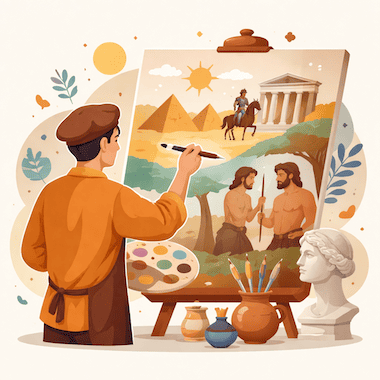
Storytelling Through Art
芸術で物語を伝える
 Learn English音声・クイズ・本が使える無料アプリ
重要単語
- composition構図
- perspective遠近法
- pigment顔料
- portrait肖像画
- frescoフレスコ画
- etchingエッチング
- realismリアリズム
- abstraction抽象
- woodblock print木版画
- symbolism象徴主義
- anatomy解剖学
- mural壁画
すべての単語(30)
- self-portrait自画像
- piety敬虔
- atrocity残虐行為
- shading陰影
- legitimacy正当性
- antiquity古代
- meditation瞑想
- ritual儀式
- anguish苦悩
- testimony証言
- auctionオークション
- genealogy系譜
- stencilステンシル
- tomb墓
- carving彫刻
- infrared赤外線
- photography写真
- existential実存的な
Long before people could write, they told stories with pictures. The cave paintings of Lascaux in southwestern France, found by four teenagers in 1940, are about 17,000 years old, and they are not random marks. Bulls, horses and deer are painted with care and skill, and some scenes may show hunts or rituals.
文字を書けるようになるはるか前から、人類は絵で物語を伝えてきました。フランス南西部のラスコー洞窟は1940年に4人の少年によって発見されたもので、その壁画はおよそ1万7000年前のものです。決して適当な落書きではありません。牛や馬、シカが丁寧に巧みに描かれ、狩りや儀式を表しているとみられる場面もあります。
Paintings can do something that words can't: they let you see a moment from centuries ago as if you were standing in the room. A painting shows how people dressed, what they valued, how they saw themselves and what their world looked like. If you learn to read paintings as historical sources, you get a view of the past that no written text can give you.
絵には言葉にはできないことができます。何百年も前の一瞬を、まるでその部屋に立っているかのように見せてくれるのです。一枚の絵からは、人々がどんな服を着て、何を大切にし、自分たちをどう見ていたのか、そして彼らの世界がどんな姿だったのかがわかります。絵を歴史の資料として読めるようになれば、どんな文章からも得られない角度で過去を見ることができます。
Cave Art: The First Stories
洞窟壁画:最初の物語
The Chauvet Cave in southern France holds some of the oldest paintings in Europe, made about 36,000 years ago. Its horses, lions, mammoths and rhinoceroses are drawn with real skill. The artists used shading and the natural shape of the rock to make the animals look solid, and they drew some legs and heads several times, as if the animals were moving. Even older cave art has been found on the Indonesian island of Sulawesi, where a painted scene of human figures and a wild pig is at least 51,000 years old.
フランス南部のショーヴェ洞窟には、ヨーロッパで最も古い部類の壁画が残っています。描かれたのはおよそ3万6000年前です。馬、ライオン、マンモス、サイが本物の腕前で描かれています。画家たちは陰影や岩の自然な凹凸を利用して動物に立体感を与え、脚や頭を何度も描き重ねて、まるで動いているように見せました。さらに古い洞窟壁画がインドネシアのスラウェシ島で見つかっており、人の姿とイノシシを描いた場面は少なくとも5万1000年前のものです。
Hand stencils are found in caves all over the world. People pressed a hand against the wall and blew paint around it, leaving its outline on the rock. Some on Sulawesi are around 40,000 years old, and the Cave of the Hands in Argentina has hundreds of them, some made about 9,000 years ago. No one knows exactly what they meant. Perhaps the message was the simplest one possible: I was here.
手形のステンシル画は、世界中の洞窟で見つかっています。手を壁に押し当て、そのまわりに顔料を吹きつけると、岩に手の輪郭が残ります。スラウェシ島には約4万年前のものがあり、アルゼンチンの「手の洞窟」(クエバ・デ・ラス・マノス)には何百もの手形があって、その一部は約9000年前に作られました。それが何を意味していたのか、正確にはだれにもわかりません。もしかすると、伝えたかったのはいちばん単純なこと、「私はここにいた」だったのかもしれません。
Egyptian Art: Order and Eternity
エジプト美術:秩序と永遠
Ancient Egyptian art followed strict rules that changed very little in 3,000 years. A figure usually has its head and legs in profile, while the eye and the shoulders face the viewer. To modern eyes this looks strange, but Egyptian artists were not clumsy. They chose this style on purpose, because of what their art was for.
古代エジプトの美術は厳しい決まりに従っており、その決まりは3000年の間ほとんど変わりませんでした。人物はふつう顔と脚が横向きなのに、目と肩は正面を向いています。今の私たちには奇妙に見えますが、エジプトの画家たちが下手だったわけではありません。美術の目的に合わせて、あえてこの様式を選んだのです。
An Egyptian painting was not meant to show what one person sees from one spot. It showed each part of the body in its clearest and most complete form, so that the whole person was recorded. A pharaoh was painted larger than the people around him because he was more important, not because the artist didn't understand proportions. The scenes on tomb walls had a practical job, too: Egyptians believed that the food, servants and pleasures painted there would serve the dead person in the afterlife. Art was meant to make things happen.
エジプトの絵は、ひとりの人がある一点から見た姿を描くためのものではありませんでした。体のそれぞれの部分を最もわかりやすく完全な形で描き、人物をまるごと記録したのです。ファラオがまわりの人々より大きく描かれたのは、画家が比率を知らなかったからではなく、ファラオがより重要な存在だったからです。墓の壁の場面にも実用的な役割がありました。エジプト人は、そこに描かれた食べ物や召使い、さまざまな楽しみが、来世で死者に仕えると信じていたのです。美術は物事を実際に起こすためのものでした。
Renaissance Art: Rediscovering the Human
ルネサンス美術:人間の再発見
The European Renaissance, which lasted roughly from the 14th to the 16th century, changed what art was for. Medieval painting mostly served the Church. Its figures were flat and stylized, and their size and position showed religious importance, not how things really looked. Renaissance artists turned their attention to the human body, the natural world and the art of ancient Greece and Rome.
ヨーロッパのルネサンスはおよそ14世紀から16世紀まで続き、美術の役割を変えました。中世の絵画はおもに教会のためのものでした。人物は平板で様式化され、その大きさや位置は、実際の見た目ではなく宗教上の重要さを示していました。ルネサンスの画家たちは、人間の体や自然、そして古代ギリシャとローマの美術に目を向けたのです。
Leonardo da Vinci dissected human bodies to understand muscles and bones. Michelangelo painted the ceiling of the Sistine Chapel between 1508 and 1512, and Raphael filled The School of Athens with lifelike figures of ancient thinkers. Renaissance art was also a tool of power. A portrait of a ruler or a rich merchant was carefully planned to show wealth, faith and the right to rule. The pose, the clothes, the objects and the background of such a portrait can tell you as much about 15th-century Italian politics as a written document.
レオナルド・ダ・ヴィンチは筋肉や骨を理解するために人体を解剖しました。ミケランジェロは1508年から1512年にかけてシスティーナ礼拝堂の天井画を描き、ラファエロは『アテナイの学堂』を古代の思想家たちの生き生きとした姿で満たしました。ルネサンス美術は権力の道具でもありました。君主や裕福な商人の肖像画は、富や信仰心、統治する権利を示すよう念入りに計算されていました。そうした肖像画のポーズや衣装、小物、背景は、15世紀イタリアの政治について、文書に劣らないほど多くを語ってくれます。
Hidden Stories in Famous Paintings
名画に隠された物語
Many famous paintings hide meanings that most viewers miss. Jan van Eyck's Arnolfini Portrait (1434), in the National Gallery in London, is full of symbols: a single candle burning in daylight, a small dog often read as a sign of loyalty, and a round mirror that reflects two more people in the doorway. Above the mirror, van Eyck wrote in Latin: "Jan van Eyck was here." A famous theory says the painting records a marriage, with the artist as a witness, but many experts now doubt it.
多くの名画には、ほとんどの人が見落とす意味が隠されています。ロンドン・ナショナル・ギャラリーにあるヤン・ファン・エイクの『アルノルフィーニ夫妻像』(1434年)は、象徴に満ちています。昼間なのに一本だけ灯されたろうそく、忠実さのしるしとされることの多い小さな犬、そして戸口に立つさらに二人の人物を映す丸い鏡です。鏡の上には、ファン・エイクがラテン語で「ヤン・ファン・エイクここにありき」と書き込んでいます。この絵は結婚の記録で、画家自身が証人だったという有名な説がありますが、今では疑問視する専門家も多くいます。
Diego Velázquez's Las Meninas (1656), in the Prado Museum in Madrid, plays a clever game with the viewer. Velázquez painted himself at work on a huge canvas, next to the young princess Margarita and her maids of honor. A mirror on the back wall shows King Philip IV and Queen Mariana, who seem to be standing exactly where we stand. The painting leaves it unclear who is really being painted and who is watching, and critics have argued about it for more than 350 years.
マドリードのプラド美術館にあるディエゴ・ベラスケスの『ラス・メニーナス(女官たち)』(1656年)は、見る人と巧みな遊びをしています。ベラスケスは、幼いマルガリータ王女と女官たちのそばで、巨大なキャンバスに向かう自分自身の姿を描きました。奥の壁の鏡には国王フェリペ4世とマリアナ王妃が映っており、二人はちょうど私たちが立っている場所にいるように見えます。本当に描かれているのはだれで、見ているのはだれなのか、絵ははっきりさせておらず、批評家たちは350年以上も議論を続けています。
Art as Protest and Revolution
抗議と革命の芸術
Artists have often used their work to criticize power and to record cruelty. Between 1810 and 1820, Francisco Goya made a series of more than 80 prints called The Disasters of War about the fighting that followed Napoleon's invasion of Spain. They show executions, hunger and mutilated bodies, and they make no one a hero. The series was so harsh that it was not published until 1863, 35 years after Goya's death, and it is still hard to look at today.
芸術家たちはたびたび作品を使って権力を批判し、残虐な行為を記録してきました。フランシスコ・デ・ゴヤは1810年から1820年にかけて、ナポレオンのスペイン侵攻後の戦いを題材に、80点を超える版画からなる『戦争の惨禍』を制作しました。そこには処刑や飢え、切り刻まれた遺体が描かれ、だれひとり英雄として描かれてはいません。あまりにむごい内容だったため、この連作が出版されたのはゴヤの死から35年後の1863年でした。今でも直視するのがつらい作品です。
Pablo Picasso painted Guernica in 1937, after German and Italian planes supporting Franco bombed the Basque town of Guernica during the Spanish Civil War. Its broken, screaming figures show the terror of an attack on ordinary people. The painting traveled to exhibitions in Europe and the United States and made the bombing known around the world. Picasso did not want it to go to Spain until democracy returned, so it stayed at the Museum of Modern Art in New York until 1981. Today it hangs in the Museo Reina Sofía in Madrid.
パブロ・ピカソは1937年に『ゲルニカ』を描きました。スペイン内戦中、フランコを支援するドイツとイタリアの飛行機がバスク地方の町ゲルニカを爆撃した後のことです。砕け、叫ぶ人物たちは、普通の人々への攻撃の恐ろしさを表しています。この絵はヨーロッパとアメリカの展覧会を巡回し、爆撃を世界中に知らせました。ピカソは民主主義が戻るまでスペインに渡すことを望まなかったため、絵は1981年までニューヨーク近代美術館に置かれました。現在はマドリードのソフィア王妃芸術センターに展示されています。
Non-Western Art Traditions
西洋以外の美術の伝統
The history of art is much wider than the European tradition that fills most textbooks. Chinese landscape painting, called shan shui ("mountain and water"), reached a high point between the 10th and 14th centuries, with works such as Fan Kuan's Travelers among Mountains and Streams from around 1000. These painters did not try to copy a real view. They wanted to capture the spirit, or qi, of a landscape, and they usually worked indoors, combining memories of many walks into one ideal scene.
美術の歴史は、ほとんどの教科書を占めているヨーロッパの伝統よりずっと幅広いものです。中国の山水画は10世紀から14世紀にかけて頂点を迎え、1000年ごろに描かれた范寛の『谿山行旅図』などの名作が生まれました。画家たちは実際の景色を写そうとはしませんでした。風景の精神、つまり「気」をとらえようとしたのです。たいていは室内で制作し、何度も歩いた山の記憶をひとつの理想の風景にまとめあげました。
In Japan, ukiyo-e woodblock prints of the 17th to 19th centuries showed everyday life: kabuki actors, sumo wrestlers, famous views and the pleasure districts of Edo, known as the "floating world." Their bold lines and flat colors influenced Van Gogh, Monet and Toulouse-Lautrec. In Ghana, kente cloth is woven in bright geometric patterns, and many of the patterns have names that come from proverbs, historical events or famous people. Every culture has found its own way to tell stories with images.
日本では、17世紀から19世紀の浮世絵の木版画が日々の暮らしを描きました。歌舞伎役者、力士、名所の風景、そして「浮世」と呼ばれた江戸の遊里です。大胆な線と平らな色づかいは、ゴッホやモネ、トゥールーズ=ロートレックに影響を与えました。ガーナでは、ケンテと呼ばれる布が鮮やかな幾何学模様で織られ、その模様の多くには、ことわざや歴史上の出来事、有名な人物に由来する名前がついています。どの文化も、絵で物語を伝える独自の方法を見つけてきたのです。
Modern Art: When Painting Became Personal
近代美術:絵画が個人的なものになったとき
When photography became public in 1839, painters no longer had to record exactly how things looked. If a camera could do that, painting could show how things felt and what they meant. In the decades that followed, artists experimented more than ever before, and the idea of what art could be changed completely.
1839年に写真が公に発表されると、画家はものの見た目を正確に記録する必要がなくなりました。それがカメラにできるなら、絵画は人が何を感じ、ものが何を意味するのかを表せばよいのです。その後の数十年間、芸術家たちはかつてないほど実験を重ね、芸術とは何かという考え方そのものが大きく変わりました。
Vincent van Gogh painted The Starry Night in 1889 at a mental hospital in Saint-Rémy in southern France. Its swirling sky is not what the night really looked like; it shows what the night felt like to him. Edvard Munch painted The Scream in 1893. He wrote that the idea came to him on an evening walk, when he felt a great scream passing through nature. So the figure is less a person screaming than a picture of fear itself. Works like these led the way to abstract art, in which color and shape express feelings without showing real objects at all.
フィンセント・ファン・ゴッホは1889年、南フランスのサン=レミにある精神科の療養所で『星月夜』を描きました。渦を巻く空は夜の本当の姿ではなく、彼にとって夜がどう感じられたかを表しています。エドヴァルド・ムンクは1893年に『叫び』を描きました。ムンクは、夕方の散歩中に、自然を貫く大きな叫びを感じたことから着想を得たと書いています。つまり、この人物は叫んでいる人というより、恐怖そのものの姿なのです。こうした作品が、色や形が現実のものをまったく描かずに感情を表す、抽象美術への道を開きました。
Surprising Facts About Art
美術にまつわる意外な事実
X-rays and infrared scans often reveal different pictures under the paint of Renaissance masterpieces, because artists painted over earlier work or changed their minds.
X線や赤外線で調べると、ルネサンスの名画の絵の具の下から、まったく別の絵が見つかることがよくあります。画家たちは以前の作品の上に描き直したり、途中で考えを変えたりしたからです。
The Mona Lisa became world famous only after an Italian worker, Vincenzo Peruggia, stole it from the Louvre in 1911. It was missing for more than two years.
『モナ・リザ』が世界的に有名になったのは、1911年にイタリア人の作業員ヴィンチェンツォ・ペルージャがルーヴル美術館から盗み出してからのことです。絵は2年以上も行方不明でした。
A popular story says Thomas Gainsborough painted The Blue Boy (around 1770) to prove Joshua Reynolds wrong about the color blue, but Reynolds made his famous remark in 1778, years later.
トマス・ゲインズバラが『青衣の少年』(1770年ごろ)を描いたのは、青についてのジョシュア・レノルズの主張がまちがっていると示すためだったという話がよく知られています。しかしレノルズがその有名な発言をしたのは、何年も後の1778年でした。
Leonardo da Vinci began the Mona Lisa around 1503 and was still working on it more than ten years later. He took it with him to France, where he died in 1519.
レオナルド・ダ・ヴィンチは1503年ごろに『モナ・リザ』を描き始め、10年以上たってもまだ手を加えていました。彼はこの絵をフランスに持っていき、1519年にその地で亡くなりました。
The most expensive painting ever sold at auction is Salvator Mundi, attributed to Leonardo da Vinci. It sold for $450 million in 2017.
オークションで売られた史上最も高価な絵は、レオナルド・ダ・ヴィンチの作とされる『サルバトール・ムンディ』です。2017年に4億5000万ドルで落札されました。
About 55 of Frida Kahlo's roughly 140 paintings are self-portraits. She said she painted herself because she was often alone and was "the subject I know best."
フリーダ・カーロの約140点の絵のうち、およそ55点は自画像です。彼女は、自分を描くのはひとりでいることが多く、自分こそが「いちばんよく知っている題材」だからだと語っています。
Learning to Look
見ることを学ぶ
From cave walls to museum galleries, painting is one of the oldest ways people have recorded their lives. Every painting was made by someone who wanted to say something, show something or keep something from being forgotten. When you look carefully at a painting, you meet the mind of a person from a very different world.
洞窟の壁から美術館の展示室まで、絵画は人々が自分たちの暮らしを記録してきた最も古い方法のひとつです。どの絵も、何かを伝えたい、何かを見せたい、何かを忘れられないようにしたいと願っただれかが描いたものです。一枚の絵をじっくり見れば、まったく違う世界に生きた人の心に出会えます。
Art history is more than a list of techniques and styles. It also tells us what people feared, worshipped, celebrated, mourned and fought for. A great painting is one person's vision and, at the same time, a record of its age. Seen this way, a visit to a museum is also a lesson in history.
美術史は技法や様式を並べたものにとどまりません。人々が何を恐れ、何を崇め、何を祝い、何を悼み、何のために闘ったのかも教えてくれます。偉大な絵は、ひとりの人間のまなざしであると同時に、その時代の記録でもあります。そう考えると、美術館を訪れることは歴史の授業を受けることでもあるのです。
無料アプリなら、この文章の音声を聞いたり、単語をタップして意味を確かめたりできます。