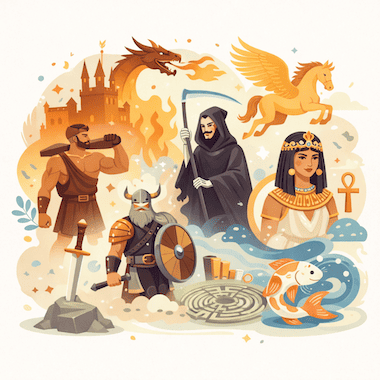
Famous Myths and Legends
أساطير وحكايات شهيرة
 Learn Englishتطبيق مجاني فيه نطق صوتي واختبارات وكتب حقيقية
كلمات مهمة
- mythأسطورة
- legendأسطورة
- immortalityالخلود
- deityإله
- underworldالعالم السفلي
- archetypeالنموذج الأصلي
- floodطوفان
- tricksterالمحتال
- questمهمة بحث
- mortalفاني
- allegoryمجاز تمثيلي
- serpentثعبان
كل الكلمات (30)
- epicملحمة
- prophecyنبوءة
- demigodنصف إله
- vengeanceانتقام
- creationالخلق
- tragedyمأساة
- rebirthالبعث
- griefحزن
- wisdomالحكمة
- cyclicalدوري
- chivalryالفروسية
- psycheالنفس
- narrativeسرد
- monsterوحش
- heroicبطولي
- eclipseكسوف
- cunningالدهاء
- mortalityالفناء
Long before anyone wrote down laws or history, people told stories. Every culture we know of has its myths and legends: tales about how the world began, why people suffer and die, and where the first fire or the first rain came from. These stories entertained, but they also held communities together, passed on rules and beliefs, and gave people a shared picture of the world.
قبل أن يدوّن أحدٌ القوانين أو التاريخ بزمن طويل، كان الناس يروون الحكايات. لكل ثقافة نعرفها أساطيرها وحكاياتها: قصص عن بداية العالم، وعن سبب معاناة البشر وموتهم، وعن مصدر أول نار أو أول مطر. كانت هذه القصص تسلّي الناس، لكنها أيضًا كانت تجمع المجتمعات، وتنقل القواعد والمعتقدات من جيل إلى جيل، وتمنح الناس صورة مشتركة عن العالم.
Myths say a lot about the people who told them. They deal with questions that every generation asks again: Where did the world come from? Why do we suffer? What happens after death? How should we treat each other? Myths are not failed attempts at science. They are serious, often clever ways of making sense of human life, and reading the myths of other cultures is one of the best ways to understand those cultures.
تكشف الأساطير الكثير عن الشعوب التي روتها. فهي تتناول أسئلة يطرحها كل جيل من جديد: من أين جاء العالم؟ لماذا نتألم؟ ماذا يحدث بعد الموت؟ كيف ينبغي أن يعامل بعضنا بعضًا؟ ليست الأساطير محاولات فاشلة لممارسة العلم، بل طرق جادة وذكية في الغالب لفهم حياة الإنسان، وقراءة أساطير الثقافات الأخرى من أفضل الطرق لفهم تلك الثقافات.
The Epic of Gilgamesh: One of the Oldest Stories
ملحمة جلجامش: من أقدم القصص
The first poems about Gilgamesh were written in Sumerian on clay tablets in Mesopotamia around 2100 BCE, which makes them some of the oldest literature we have. The best-known version, in the Akkadian language, dates from about 1200 BCE. Gilgamesh, king of the city of Uruk, is two-thirds god and one-third human. When his closest friend Enkidu dies, Gilgamesh is overwhelmed by grief and by fear of his own death, and he sets out to find the secret of eternal life.
كُتبت أولى القصائد عن جلجامش باللغة السومرية على ألواح من الطين في بلاد الرافدين نحو عام 2100 قبل الميلاد، وهذا يجعلها من أقدم النصوص الأدبية التي وصلتنا. أما النسخة الأشهر، وهي باللغة الأكدية، فتعود إلى نحو عام 1200 قبل الميلاد. جلجامش ملك مدينة أوروك، وهو إله في ثلثيه وإنسان في ثلثه الباقي. وحين يموت صديقه الأقرب أنكيدو، يغلبه الحزن والخوف من موته هو، فينطلق باحثًا عن سر الحياة الأبدية.
His journey takes him to the edge of the world, to Utnapishtim, a man the gods made immortal after he survived a great flood. The flood story is so close to the later Biblical account of Noah that scholars believe the two are related. Utnapishtim cannot give Gilgamesh eternal life, but he tells him about a plant at the bottom of the sea that makes old people young again. Gilgamesh dives down and gets it, but on the way home he stops to bathe in a pool, and a snake carries the plant away. He returns to Uruk with nothing. The epic ends with Gilgamesh showing a companion the great walls of his city, the work that will outlast him. Storytellers have returned to the search for immortality, and its failure, ever since.
تقوده رحلته إلى حافة العالم، إلى أوتنابشتيم، وهو رجل منحته الآلهة الخلود بعد أن نجا من طوفان عظيم. وتشبه قصة الطوفان هذه رواية التوراة اللاحقة عن نوح إلى حد يجعل الباحثين يرون أن بينهما صلة. لا يستطيع أوتنابشتيم أن يهب جلجامش الحياة الأبدية، لكنه يخبره بنبتة في قاع البحر تعيد الشباب إلى الشيوخ. يغوص جلجامش ويحصل عليها، لكنه في طريق العودة يتوقف ليستحم في بركة، فتأتي حية وتأخذ النبتة. ويعود إلى أوروك خالي الوفاض. وتنتهي الملحمة بجلجامش وهو يُري رفيقًا له أسوار مدينته العظيمة، العمل الذي سيبقى بعده. ومنذ ذلك الحين لم يكفّ الرواة عن العودة إلى البحث عن الخلود وإخفاقه.
Greek Mythology: Gods Who Behave Like Humans
الأساطير اليونانية: آلهة تتصرف كالبشر
What sets Greek mythology apart is how human its gods are. The gods of Mount Olympus were not perfectly good or all-knowing. They were jealous, vain and quick to take revenge, and they could be cruel as well as generous and loving. Zeus was constantly unfaithful to his wife, Hera, and Hera often punished the women he seduced instead of Zeus himself. The heroes were no better: in the Iliad, Achilles refuses to fight for the Greeks because King Agamemnon has taken away a woman he had won. These are ordinary human faults on a huge scale.
ما يميز الأساطير اليونانية هو أن آلهتها بشرية إلى حد بعيد. لم تكن آلهة جبل الأولمب خيّرة خيرًا كاملًا ولا عالمة بكل شيء. كانت غيورة ومغرورة وسريعة الانتقام، وكانت قادرة على القسوة كما كانت قادرة على الكرم والمحبة. كان زيوس يخون زوجته هيرا باستمرار، وكانت هيرا كثيرًا ما تعاقب النساء اللواتي أغواهن بدلًا من أن تعاقب زيوس نفسه. ولم يكن الأبطال أفضل حالًا: ففي الإلياذة يرفض أخيل القتال إلى جانب اليونانيين لأن الملك أجاممنون انتزع منه امرأة كان قد نالها غنيمةً. إنها عيوب بشرية عادية، لكن على نطاق هائل.
Because of this, Greek myths are full of psychology and moral questions. Sigmund Freud used the story of Oedipus, who unknowingly kills his father and marries his mother, to describe what he called the Oedipus complex. The beautiful young Narcissus, who fell in love with his own reflection, gave us the word “narcissism.” Prometheus stole fire from the gods and gave it to humans. As punishment, Zeus had him chained to a rock, where an eagle ate his liver every day, until the hero Heracles finally set him free. In Western art and literature, Prometheus became the classic image of the rebel who defies power to help others.
لهذا تمتلئ الأساطير اليونانية بعلم النفس وبالأسئلة الأخلاقية. فقد استخدم سيغموند فرويد قصة أوديب، الذي يقتل أباه ويتزوج أمه دون أن يعلم، ليصف ما سماه عقدة أوديب. والشاب الجميل نرجس، الذي وقع في حب صورته المنعكسة، أعطانا كلمة «النرجسية». وسرق بروميثيوس النار من الآلهة وأعطاها للبشر. وعقابًا له أمر زيوس بتقييده إلى صخرة، حيث كان نسر يأكل كبده كل يوم، إلى أن حرّره البطل هرقل في النهاية. وفي الفن والأدب الغربيين صار بروميثيوس الصورة الكلاسيكية للمتمرد الذي يتحدى السلطة ليساعد الآخرين.
Norse Mythology: A World Built to End
الأساطير الإسكندنافية: عالم مصيره الفناء
Norse mythology was the religion of Scandinavia in the Viking Age. Most of what we know about it comes from Icelandic texts written down in the 13th century, about two hundred years after Iceland became Christian. Its most unusual feature is that the gods know they are going to lose. At Ragnarök, the “fate of the gods,” the world tree Yggdrasil will shake, monsters will break free, and the gods will die in a final battle. Odin will be swallowed by the giant wolf Fenrir. Thor will kill the world serpent Jörmungandr, take nine steps, and fall dead from its poison.
كانت الأساطير الإسكندنافية ديانة إسكندنافيا في عصر الفايكنغ. ومعظم ما نعرفه عنها يأتي من نصوص آيسلندية دُوّنت في القرن الثالث عشر، أي بعد نحو مئتي عام من اعتناق آيسلندا المسيحية. وأغرب ما فيها أن الآلهة تعرف أنها ستُهزم. ففي «راغناروك»، أي «مصير الآلهة»، ستهتز شجرة العالم إغدراسيل، وستتحرر الوحوش، وستموت الآلهة في معركة أخيرة. سيبتلع الذئبُ العملاق فنرير الإلهَ أودين. وسيقتل ثور أفعى العالم يورمونغاندر، ثم يمشي تسع خطوات ويسقط ميتًا من سمّها.
Knowing the end does not make the Norse gods give up. They prepare for the battle anyway, and Odin gathers the bravest dead warriors in his hall, Valhalla, to fight beside him on the last day. The myths do not end in complete darkness either: after Ragnarök a new, green earth rises from the sea, and a few gods and two humans survive to begin again. The same Germanic gods, under their Old English names, gave English four days of the week: Tuesday is named after Tiw (the Norse Tyr), Wednesday after Woden (Odin), Thursday after Thunor (Thor), and Friday after Frig (Frigg).
لكن معرفة النهاية لا تجعل الآلهة الإسكندنافية تستسلم. فهي تستعد للمعركة رغم ذلك، ويجمع أودين أشجع المحاربين الموتى في قاعته فالهالا ليقاتلوا إلى جانبه في اليوم الأخير. ولا تنتهي الأساطير في ظلام تام أيضًا: فبعد راغناروك تنهض من البحر أرض جديدة خضراء، وينجو بعض الآلهة وإنسانان ليبدؤوا من جديد. وقد منحت الآلهة الجرمانية نفسها، بأسمائها في الإنجليزية القديمة، اللغةَ الإنجليزية أسماء أربعة من أيام الأسبوع: فيوم الثلاثاء Tuesday سُمّي باسم تيو (تير عند الإسكندنافيين)، والأربعاء Wednesday باسم وودن (أودين)، والخميس Thursday باسم ثونور (ثور)، والجمعة Friday باسم الإلهة فريغ.
The Legend of King Arthur: History or Myth?
أسطورة الملك آرثر: تاريخ أم أسطورة؟
Few legends have lasted in the Western world as long as the story of King Arthur: the boy who pulled a sword from a stone, gathered the Knights of the Round Table, sent them in search of the Holy Grail, and ruled at Camelot until his kingdom fell apart. The legend has been told for more than a thousand years, and every age has retold it in its own way.
قليلة هي الأساطير التي عاشت في العالم الغربي طويلًا مثل قصة الملك آرثر: الفتى الذي انتزع سيفًا من حجر، وجمع فرسان المائدة المستديرة، وأرسلهم بحثًا عن الكأس المقدسة، وحكم في كاميلوت حتى انهارت مملكته. تُروى هذه الأسطورة منذ أكثر من ألف عام، وقد أعاد كل عصر روايتها على طريقته.
Whether a real Arthur ever lived is still debated. A Latin history from the 9th century and some early Welsh poems mention a war leader called Arthur who fought against Saxon invaders of Britain around the year 500. Most of the famous legend, however, came later. In about 1136, Geoffrey of Monmouth wrote a “history” of the kings of Britain that gave Arthur his sword, his queen Guinevere and the wizard Merlin. The French poet Chrétien de Troyes added Lancelot and the Grail in the late 12th century, and in 1485 the English writer Thomas Malory collected the stories in Le Morte d'Arthur. Arthur is less a historical person than a picture onto which each generation paints its own idea of a good king.
لا يزال الجدل قائمًا حول ما إذا كان هناك آرثر حقيقي عاش فعلًا. فهناك كتاب تاريخ لاتيني من القرن التاسع وبعض القصائد الويلزية القديمة تذكر قائدًا حربيًا اسمه آرثر حارب الغزاة السكسونيين لبريطانيا نحو عام 500. غير أن معظم الأسطورة الشهيرة جاء لاحقًا. فنحو عام 1136 كتب جيفري من مونموث «تاريخًا» لملوك بريطانيا منح فيه آرثر سيفه وملكته غوينيفير والساحر ميرلين. ثم أضاف الشاعر الفرنسي كريتيان دو تروا لانسلوت والكأس المقدسة في أواخر القرن الثاني عشر، وفي عام 1485 جمع الكاتب الإنجليزي توماس مالوري الحكايات في كتابه «موت آرثر». فآرثر ليس شخصية تاريخية بقدر ما هو لوحة يرسم عليها كل جيل صورته الخاصة عن الملك الصالح.
Myths from the Americas: The Popol Vuh
أساطير من الأمريكتين: «بوبول فوه»
The Popol Vuh is the sacred book of the K'iche' Maya of Guatemala. It was written down in the K'iche' language with Latin letters in the 16th century, a few decades after the Spanish conquest, and the copy that survives was made by a Spanish priest around 1701. It tells how the gods tried several times to make beings who could speak and honor them. The animals could only screech and howl. People made of mud fell apart, and people made of wood had no hearts or minds. Only the fourth attempt worked: humans made from maize dough. For the Maya, maize was not just food; it was what people themselves were made of.
«بوبول فوه» هو الكتاب المقدس لشعب الكيتشي من المايا في غواتيمالا. دُوّن في القرن السادس عشر، بعد عقود قليلة من الغزو الإسباني، بلغة الكيتشي وبالحروف اللاتينية، أما النسخة التي وصلتنا فقد كتبها كاهن إسباني نحو عام 1701. ويحكي كيف حاولت الآلهة مرات عدة أن تخلق كائنات قادرة على الكلام وعلى تمجيدها. لم تكن الحيوانات تستطيع سوى الصراخ والعواء. وتفتت البشر المصنوعون من الطين، أما المصنوعون من الخشب فلم تكن لهم قلوب ولا عقول. ولم تنجح إلا المحاولة الرابعة: بشر مصنوعون من عجين الذرة. فالذرة عند المايا لم تكن مجرد طعام، بل كانت المادة التي صُنع منها البشر أنفسهم.
The Popol Vuh also tells the story of the Hero Twins, Hunahpu and Xbalanque. They go down into Xibalba, the underworld, play a dangerous ball game against its lords of death, and defeat them with tricks rather than strength. At one point they even let themselves be killed and then come back to life. In the end, the twins rise into the sky and become the Sun and the Moon. The story is about death and rebirth and about cleverness beating brute force, ideas that appear in myths all over the world.
ويروي «بوبول فوه» أيضًا قصة التوأمين البطلين هوناهبو وشبالانكي. ينزل التوأمان إلى شيبالبا، العالم السفلي، ويلعبان لعبة كرة خطيرة ضد أسياد الموت هناك، ويهزمانهم بالحيلة لا بالقوة. بل إنهما في لحظة ما يسمحان بقتلهما ثم يعودان إلى الحياة. وفي النهاية يصعد التوأمان إلى السماء ويصبحان الشمس والقمر. والقصة تدور حول الموت والبعث، وحول انتصار الذكاء على القوة الغاشمة، وهي أفكار تظهر في أساطير العالم كله.
African Mythology: Anansi the Spider
الأساطير الأفريقية: أنانسي العنكبوت
Anansi, a trickster in the shape of a spider, is one of the best-known characters in West African folklore. His stories come from the Akan people of present-day Ghana. In one famous tale, all the stories in the world belong to the sky god Nyame. Anansi asks to buy them, and Nyame sets a price that seems impossible: Anansi must bring him a python, a leopard, a swarm of hornets and a fairy. Using only tricks, Anansi captures all four, and since then the stories have been called Anansi's stories.
أنانسي محتال ماكر في هيئة عنكبوت، وهو من أشهر الشخصيات في الحكايات الشعبية لغرب أفريقيا. وتأتي حكاياته من شعب الأكان في غانا الحالية. في إحدى الحكايات الشهيرة تكون كل قصص العالم ملكًا لإله السماء نياميه. يطلب أنانسي أن يشتريها، فيحدد نياميه ثمنًا يبدو مستحيلًا: على أنانسي أن يحضر له ثعبان أصلة وفهدًا وسربًا من الدبابير وجنّية. وبالحيلة وحدها يصطاد أنانسي الأربعة جميعًا، ومنذ ذلك الحين صارت القصص تُسمى قصص أنانسي.
Enslaved Africans carried the Anansi stories across the Atlantic. They took root in Jamaica and other parts of the Caribbean and in the American South, where the spider sometimes became “Aunt Nancy.” The tales changed over time, but Anansi stayed the same: a small, weak creature who beats the powerful by using his head. For people who had no power and no rights, his victories were more than entertainment. Today Anansi also appears in modern fiction, for example in Neil Gaiman's novel Anansi Boys (2005).
حمل الأفارقة المستعبَدون حكايات أنانسي عبر المحيط الأطلسي. فترسخت في جامايكا وفي أنحاء أخرى من الكاريبي، وفي جنوب الولايات المتحدة، حيث صار العنكبوت أحيانًا «Aunt Nancy» (العمة نانسي). تغيرت الحكايات مع الزمن، لكن أنانسي بقي كما هو: مخلوق صغير ضعيف يهزم الأقوياء بعقله. وبالنسبة إلى أناس بلا سلطة ولا حقوق، كانت انتصاراته أكثر من مجرد تسلية. واليوم يظهر أنانسي أيضًا في الأدب الحديث، ومن ذلك رواية نيل غايمان «أبناء أنانسي» (2005).
Shared Themes in World Myths
موضوعات مشتركة في أساطير العالم
Scholars who compare myths have found that many themes appear in cultures far apart from each other. Flood stories are a good example. The Mesopotamian flood of Utnapishtim and the Biblical flood of Noah are probably related, but similar tales exist in India, where the god Vishnu warns the first man, Manu; in Greece, where Deucalion and his wife survive in a wooden chest; and in Aztec Mexico. Trickster figures appear on almost every continent too: clever troublemakers like Anansi, the Norse Loki or Coyote in many Native American tales, who break the rules and make fun of the powerful.
وجد الباحثون الذين يقارنون الأساطير أن موضوعات كثيرة تظهر في ثقافات متباعدة جدًا. وقصص الطوفان مثال جيد على ذلك. فطوفان أوتنابشتيم في بلاد الرافدين وطوفان نوح في التوراة مرتبطان على الأرجح، لكن هناك حكايات مشابهة في الهند، حيث يحذّر الإلهُ فيشنو الإنسانَ الأول مانو، وفي اليونان، حيث ينجو ديوكاليون وزوجته في صندوق خشبي، وفي المكسيك أيام الأزتيك. وتظهر شخصيات المحتال كذلك في كل قارة تقريبًا: مشاغبون أذكياء مثل أنانسي، ولوكي الإسكندنافي، وذئب البراري «كويوتي» في كثير من حكايات السكان الأصليين في أمريكا الشمالية، يخرقون القواعد ويسخرون من الأقوياء.
The psychologist Carl Jung explained these repeated patterns with his idea of archetypes: basic images and types of story that, he believed, all humans share deep in the unconscious mind. Many scholars today doubt Jung's theory and point to trade, migration and common human experience instead. Whatever the reason, people separated by oceans and thousands of years have told similar stories about floods, heroes, creation and death, perhaps because they all faced the same things: love, loss, fear and the wish to understand their place in the world.
فسّر عالم النفس كارل يونغ هذه الأنماط المتكررة بفكرته عن النماذج البدئية (الأركيتايب): صور وأنماط قصصية أساسية رأى أن جميع البشر يشتركون فيها في أعماق اللاوعي. ويشك كثير من الباحثين اليوم في نظرية يونغ، ويشيرون بدلًا منها إلى التجارة والهجرات والتجربة الإنسانية المشتركة. وأيًّا كان السبب، فقد روى أناس تفصل بينهم المحيطات وآلاف السنين قصصًا متشابهة عن الطوفانات والأبطال والخلق والموت، ربما لأنهم جميعًا واجهوا الأشياء نفسها: الحب والفقد والخوف والرغبة في فهم مكانهم في العالم.
Quick Facts About Myths
حقائق سريعة عن الأساطير
The word “mythology” comes from the Greek mythos (story) and logos (word, study). In Greek it meant “telling stories”; today it also means the study of myths.
كلمة «ميثولوجيا» (علم الأساطير) مأخوذة من الكلمتين اليونانيتين «ميثوس» (حكاية) و«لوغوس» (كلمة، علم). وكانت تعني في اليونانية «رواية الحكايات»، أما اليوم فتعني أيضًا دراسة الأساطير.
The ancient Olympic Games were held at Olympia in honor of Zeus. The modern Games, first held in Athens in 1896, were inspired by them.
كانت الألعاب الأولمبية القديمة تُقام في أولمبيا تكريمًا لزيوس. وقد استُلهمت منها الألعاب الحديثة التي أقيمت أول مرة في أثينا عام 1896.
Atlantis first appears in two dialogues by the Greek philosopher Plato, written around 360 BCE. Most scholars believe Plato made it up to illustrate his ideas.
تظهر أطلانتس لأول مرة في محاورتين للفيلسوف اليوناني أفلاطون كُتبتا نحو عام 360 قبل الميلاد. ويرى معظم الباحثين أن أفلاطون اخترعها ليوضح أفكاره.
In the Japanese myth of Amaterasu, the sun goddess hides in a cave and the world goes dark. Some scholars think the story may remember a real solar eclipse.
في الأسطورة اليابانية عن أماتيراسو، تختبئ إلهة الشمس في كهف فيغرق العالم في الظلام. ويرى بعض الباحثين أن القصة قد تحفظ ذكرى كسوف حقيقي للشمس.
The Polynesian trickster Maui is said to have pulled islands out of the sea with a magic fishhook. In Māori tradition, New Zealand's North Island is the fish he caught.
يُروى أن ماوي، المحتال في أساطير بولينيزيا، سحب جزرًا من البحر بخطاف صيد سحري. وفي تراث الماوري، الجزيرة الشمالية في نيوزيلندا هي السمكة التي اصطادها.
Folklorists have recorded hundreds of versions of the Cinderella story around the world. One of the oldest is the Chinese tale of Ye Xian, written down in the 9th century.
سجّل باحثو الفلكلور مئات النسخ من قصة سندريلا حول العالم. ومن أقدمها الحكاية الصينية عن يي شيان التي دُوّنت في القرن التاسع.
Why Myths Last
لماذا تبقى الأساطير
Myths and legends have outlived empires, burned libraries and even the religions that first told them. They survive because they deal with things that do not change: who we are, where we came from and how we should live.
عاشت الأساطير والحكايات أطول من الإمبراطوريات والمكتبات المحروقة، بل أطول من الديانات التي روتها أول مرة. وهي تبقى لأنها تتناول أمورًا لا تتغير: من نحن، ومن أين جئنا، وكيف ينبغي أن نعيش.
Gilgamesh still grieves for his friend, Prometheus still steals fire, Anansi still tricks the sky god, and the Hero Twins still outwit the lords of the underworld. These stories are not true as history, and they do not need to be. People keep retelling them because they still recognize themselves in them.
ما زال جلجامش يبكي صديقه، وما زال بروميثيوس يسرق النار، وما زال أنانسي يخدع إله السماء، وما زال التوأمان البطلان يتغلبان بالحيلة على أسياد العالم السفلي. هذه القصص ليست صحيحة بوصفها تاريخًا، ولا حاجة لأن تكون كذلك. ويواصل الناس روايتها لأنهم ما زالوا يرون أنفسهم فيها.
في التطبيق المجاني يمكنك الاستماع إلى هذا النص والضغط على أي كلمة لمعرفة معناها.