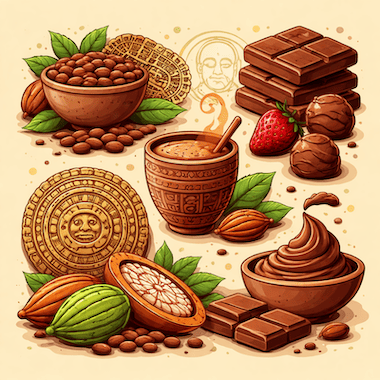
History of Chocolate
تاريخ الشوكولاتة
 Learn Englishتطبيق مجاني فيه نطق صوتي واختبارات وكتب حقيقية
كلمات مهمة
- cacaoالكاكاو
- fermentتخمير
- ceremonialطقوسي
- currencyعملة
- conquistadorفاتح إسباني
- nobilityالنبلاء
- antioxidantمضاد الأكسدة
- plantationمزرعة
- exploitationاستغلال
- confectioneryحلويات
- condensedمكثف
- flavonoidفلافونويد
كل الكلمات (30)
- hydraulicهيدروليكي
- sacredمقدس
- moderationالاعتدال
- archaeologistعالم آثار
- bitterمر
- refineتكرير
- medicinalطبي
- supply chainسلسلة التوريد
- tropicalاستوائي
- prosperityالازدهار
- cognitiveمعرفي
- palateذوق
- fair tradeالتجارة العادلة
- roastتحميص
- luxuryرفاهية
- spiceبهار
- colonialismالاستعمار
- cultivationزراعة
Chocolate is one of the most popular foods on Earth, and people eat millions of tons of it every year. Yet for most of its history, nobody ate chocolate at all. People drank it.
الشوكولاتة من أكثر الأطعمة المحبوبة في العالم، ويأكل الناس منها ملايين الأطنان كل عام. ومع ذلك، لم يكن أحد يأكل الشوكولاتة طوال معظم تاريخها، بل كان الناس يشربونها.
It started as a bitter, spicy drink in ancient Mexico and Central America, and it took more than three thousand years to become the sweet bar we find in every supermarket. Along the way it passed through temples, royal courts, London clubs and Swiss factories.
بدأت مشروبًا مرًّا حارًّا في المكسيك القديمة وأمريكا الوسطى، واحتاجت إلى أكثر من ثلاثة آلاف عام لتصبح اللوح الحلو الذي نجده اليوم في كل متجر كبير. وفي طريقها مرّت بالمعابد والبلاطات الملكية ونوادي لندن ومصانع سويسرا.
Where Cacao Began
أين بدأ الكاكاو
The cacao tree's scientific name, Theobroma cacao, comes from Greek and means "food of the gods." The Swedish scientist Carl Linnaeus gave it that name in 1753. The tree first grew wild in the upper Amazon in South America, and the oldest known traces of cacao, found on pottery in Ecuador, are about 5,300 years old.
الاسم العلمي لشجرة الكاكاو، Theobroma cacao، مأخوذ من اليونانية ويعني "طعام الآلهة". وقد أطلقه عليها العالم السويدي كارل لينيوس عام 1753. نمت الشجرة أول الأمر برّية في أعالي حوض الأمازون في أمريكا الجنوبية، وأقدم آثار معروفة للكاكاو، عُثر عليها على أوانٍ فخارية في الإكوادور، يبلغ عمرها نحو 5300 عام.
In Mexico and Central America, people were using cacao by around 1500 BCE, among them the Olmecs of southern Mexico. The earliest drinks may have been made not from the beans but from the sweet white pulp around them, which was left to ferment into a mildly alcoholic drink.
في المكسيك وأمريكا الوسطى كان الناس يستخدمون الكاكاو بحلول نحو عام 1500 قبل الميلاد، ومنهم الأولمك في جنوب المكسيك. وربما لم تُصنع المشروبات الأولى من الحبوب، بل من اللب الأبيض الحلو الذي يحيط بها، إذ كان يُترك ليتخمّر حتى يصير مشروبًا خفيف الكحول.
Chocolate Among the Maya and Aztecs
الشوكولاتة عند المايا والأزتك
For the Maya, cacao was sacred. They painted cacao trees in their art, placed cacao vessels in royal tombs, and told stories in which the gods gave the plant to humans. They called it kakaw. To make their drink, they ground roasted beans and mixed them with water, chili and cornmeal, then poured the liquid from one pot into another to create a thick foam.
كان الكاكاو مقدسًا عند المايا. فقد رسموا أشجار الكاكاو في فنونهم، ووضعوا أواني الكاكاو في المقابر الملكية، ورووا حكايات تقول إن الآلهة أهدت هذا النبات إلى البشر. وكانوا يسمونه "كاكاو" بلغتهم (kakaw). ولتحضير مشروبهم كانوا يطحنون الحبوب المحمّصة ويخلطونها بالماء والفلفل الحار ودقيق الذرة، ثم يصبّون السائل من إناء إلى آخر حتى تتكوّن رغوة كثيفة.
The Aztecs lived in the dry highlands, where cacao could not grow, so they got their beans through trade and as tribute from conquered regions. Spanish writers claimed that Emperor Moctezuma drank huge amounts of it. Cacao beans also worked as money: a price list from 1545 says a turkey hen cost 100 beans.
عاش الأزتك في هضاب جافة لا ينمو فيها الكاكاو، فكانوا يحصلون على الحبوب عن طريق التجارة وكجزية من المناطق التي غزوها. وزعم كتّاب إسبان أن الإمبراطور مونتيزوما كان يشرب منه كميات هائلة. وكانت حبوب الكاكاو تُستعمل نقودًا أيضًا، فقائمة أسعار من عام 1545 تذكر أن أنثى الديك الرومي كان ثمنها 100 حبة.
Chocolate Arrives in Europe
الشوكولاتة تصل إلى أوروبا
Christopher Columbus saw cacao beans in 1502, on his fourth voyage, but paid little attention to them. Europeans only got to know chocolate after the Spanish conquest of Mexico in the 1520s. A popular story says Hernán Cortés took beans home to the king around 1528, but the first recorded cacao in Spain arrived in 1544, as a gift from a group of Maya nobles to Prince Philip.
رأى كريستوفر كولومبوس حبوب الكاكاو عام 1502 في رحلته الرابعة، لكنه لم يُعِرها اهتمامًا يُذكر. ولم يتعرّف الأوروبيون إلى الشوكولاتة حقًّا إلا بعد الغزو الإسباني للمكسيك في عشرينيات القرن السادس عشر. وتقول قصة شائعة إن هرنان كورتيس حمل الحبوب إلى الملك نحو عام 1528، لكن أول كاكاو موثّق وصل إلى إسبانيا عام 1544، هديةً من مجموعة من نبلاء المايا إلى الأمير فيليب.
At first many Spaniards found the bitter drink hard to like. They soon sweetened it with sugar and flavored it with cinnamon and vanilla, and it became fashionable among the nobility. For several decades chocolate remained mostly a Spanish taste. It reached Italy, France and England only in the 1600s.
في البداية لم يستسغ كثير من الإسبان هذا المشروب المرّ. لكنهم سرعان ما حلّوه بالسكر وأضافوا إليه القرفة والفانيليا، فصار موضة بين النبلاء. وظلّت الشوكولاتة عدة عقود ذوقًا إسبانيًّا في الغالب، ولم تصل إلى إيطاليا وفرنسا وإنجلترا إلا في القرن السابع عشر.
The Age of Chocolate Houses
عصر بيوت الشوكولاتة
London's first chocolate house opened in 1657, run by a Frenchman. Like the coffee houses of the time, these were places where people met to read the news, talk politics and do business. White's, which opened as a chocolate house in 1693, later became one of London's most exclusive gentlemen's clubs, and it still exists today.
افتُتح أول بيت للشوكولاتة في لندن عام 1657، وكان يديره رجل فرنسي. وكما في المقاهي في ذلك الزمن، كان الناس يلتقون فيه لقراءة الأخبار والحديث في السياسة وعقد الصفقات. أما "وايتس"، الذي افتُتح بيتًا للشوكولاتة عام 1693، فقد أصبح لاحقًا من أرقى نوادي السادة في لندن، وما زال قائمًا حتى اليوم.
Chocolate remained a drink for the rich throughout the 17th and early 18th centuries. Cacao had to cross the Atlantic, it was heavily taxed, and grinding the beans by hand took hours. Most ordinary people never tasted a cup of hot chocolate in their lives.
بقيت الشوكولاتة مشروبًا للأغنياء طوال القرن السابع عشر وأوائل القرن الثامن عشر. فقد كان الكاكاو يعبر المحيط الأطلسي، وكانت الضرائب عليه مرتفعة، وكان طحن الحبوب باليد يستغرق ساعات. ولم يذق معظم عامة الناس فنجانًا من الشوكولاتة الساخنة طوال حياتهم.
Factories and the First Chocolate Bars
المصانع وأول ألواح الشوكولاتة
The big change came with machines. In 1828 the Dutch chocolate maker Coenraad van Houten patented a press that squeezed most of the fat, called cocoa butter, out of roasted cacao beans. What was left could be ground into a fine powder, cocoa, which mixed easily with water and was cheaper to produce.
جاء التحوّل الكبير مع الآلات. ففي عام 1828 سجّل صانع الشوكولاتة الهولندي كونراد فان هوتن براءة اختراع لمكبس يعصر معظم الدهن، المعروف بزبدة الكاكاو، من حبوب الكاكاو المحمّصة. وما يتبقّى يمكن طحنه ليصبح مسحوقًا ناعمًا هو الكاكاو، وكان يمتزج بالماء بسهولة وإنتاجه أرخص.
In 1847 the British company J. S. Fry & Sons mixed cocoa powder, sugar and melted cocoa butter into a paste that could be pressed into a mold. The first modern chocolate bar was born. In 1875 the Swiss chocolate maker Daniel Peter created milk chocolate, using condensed milk from his neighbor in Vevey, Henri Nestlé. Four years later Rodolphe Lindt invented the conche, a machine that stirred chocolate for days and finally made it smooth and creamy.
وفي عام 1847 خلطت الشركة البريطانية J. S. Fry & Sons مسحوق الكاكاو والسكر وزبدة الكاكاو المذابة في عجينة يمكن كبسها في قالب، فوُلد أول لوح شوكولاتة حديث. وفي عام 1875 ابتكر صانع الشوكولاتة السويسري دانيال بيتر شوكولاتة الحليب، مستخدمًا الحليب المكثّف الذي كان ينتجه جاره في مدينة فيفي، هنري نستله. وبعد أربع سنوات اخترع رودولف ليندت آلة الكونش، وهي آلة تقلّب الشوكولاتة أيامًا، فصارت أخيرًا ناعمة وكريمية.
The Big Chocolate Companies
شركات الشوكولاتة الكبرى
Many brands that are still on supermarket shelves grew big in the late 19th and early 20th centuries: Cadbury in England, Nestlé and Lindt in Switzerland, and Hershey in the United States. Milton Hershey went further than most. In 1903 he started building a factory in rural Pennsylvania, and around it a whole town for his workers, with houses, schools, a park and streetcars. The town is still called Hershey.
كثير من العلامات التجارية التي ما زالت على رفوف المتاجر كبرت في أواخر القرن التاسع عشر وأوائل القرن العشرين: كادبوري في إنجلترا، ونستله وليندت في سويسرا، وهيرشي في الولايات المتحدة. وذهب ميلتون هيرشي أبعد من معظمهم، ففي عام 1903 بدأ ببناء مصنع في ريف بنسلفانيا، وبنى حوله بلدة كاملة لعمّاله فيها بيوت ومدارس وحديقة وخطوط ترام. وما زالت البلدة تحمل اسم هيرشي.
These companies spent heavily on advertising and attractive packaging, and boxes of chocolates became a popular gift. In both world wars, soldiers carried chocolate as emergency food. By the 1950s, chocolate had changed from a rare luxury into an everyday treat that almost anyone in Europe or North America could afford.
أنفقت هذه الشركات أموالًا كثيرة على الإعلانات والتغليف الجذاب، وأصبحت علب الشوكولاتة هدية شائعة. وفي الحربين العالميتين حمل الجنود الشوكولاتة طعامًا للطوارئ. وبحلول خمسينيات القرن العشرين تحوّلت الشوكولاتة من ترف نادر إلى حلوى يومية يستطيع شراءها كل شخص تقريبًا في أوروبا وأمريكا الشمالية.
Types of Chocolate
أنواع الشوكولاتة
Dark chocolate has a high percentage of cacao and little or no milk, which makes it more bitter. It is also the richest in flavonoids, plant compounds that act as antioxidants. Milk chocolate contains milk powder or condensed milk, so it tastes sweeter and creamier, and it usually has much less cacao.
تحتوي الشوكولاتة الداكنة على نسبة عالية من الكاكاو وقليل من الحليب أو لا حليب فيها، ولذلك هي أكثر مرارة. وهي أيضًا الأغنى بالفلافونويدات، وهي مركّبات نباتية تعمل مضادات للأكسدة. أما شوكولاتة الحليب فتحتوي على حليب مجفف أو حليب مكثّف، فطعمها أحلى وقوامها أكثر كريمية، وفيها عادة كاكاو أقل بكثير.
White chocolate contains cocoa butter, sugar and milk, but none of the dark cocoa solids. That is why it is pale and very sweet, and why some people say it is not real chocolate at all. The newest type is ruby chocolate, introduced by the Swiss company Barry Callebaut in 2017. It is pink without any added color, and the company has never fully explained how it is made.
تحتوي الشوكولاتة البيضاء على زبدة الكاكاو والسكر والحليب، لكنها تخلو من مواد الكاكاو الصلبة الداكنة. ولهذا لونها فاتح وطعمها شديد الحلاوة، ولهذا أيضًا يقول بعض الناس إنها ليست شوكولاتة حقيقية. وأحدث الأنواع هي شوكولاتة الروبي التي قدّمتها الشركة السويسرية باري كاليبو عام 2017. لونها وردي من دون أي ملوّنات مضافة، ولم تشرح الشركة قط بالتفصيل كيف تُصنع.
Chocolate and Health
الشوكولاتة والصحة
People have argued about chocolate and health for centuries. The Aztecs used cacao in medicines, for example against tiredness, and in 17th-century Europe doctors debated whether the new drink was good or bad for the body.
يختلف الناس منذ قرون حول علاقة الشوكولاتة بالصحة. فقد استخدم الأزتك الكاكاو في الأدوية، مثلًا لعلاج التعب، وفي أوروبا في القرن السابع عشر تجادل الأطباء في ما إذا كان هذا المشروب الجديد مفيدًا للجسم أم ضارًّا.
Today most research focuses on flavonoids, which are found mainly in dark chocolate. Some studies have linked small amounts of dark chocolate to slightly lower blood pressure and better blood flow. But most chocolate bars are also full of sugar and fat, which can cancel out these benefits, so a small piece is a better choice than a whole bar.
تركّز معظم الأبحاث اليوم على الفلافونويدات الموجودة أساسًا في الشوكولاتة الداكنة. وقد ربطت بعض الدراسات بين تناول كميات صغيرة منها وانخفاض طفيف في ضغط الدم وتحسّن في تدفق الدم. لكن معظم ألواح الشوكولاتة مليئة أيضًا بالسكر والدهون، وقد يُلغي ذلك هذه الفوائد، ولهذا فقطعة صغيرة خيار أفضل من لوح كامل.
The Dark Side of Chocolate
الجانب المظلم من الشوكولاتة
Chocolate also has a darker history. From the 1600s on, enslaved Africans worked on cacao plantations in Venezuela, Brazil and the Caribbean. Even in the early 1900s, workers on the Portuguese islands of São Tomé and Príncipe lived almost like slaves, and in 1909 Cadbury stopped buying cacao from there after reports exposed the conditions.
للشوكولاتة أيضًا تاريخ أكثر قتامة. فمنذ القرن السابع عشر عمل أفارقة مستعبَدون في مزارع الكاكاو في فنزويلا والبرازيل ومنطقة الكاريبي. وحتى في أوائل القرن العشرين كان العمّال في جزيرتي ساو تومي وبرينسيب البرتغاليتين يعيشون كالعبيد تقريبًا، وفي عام 1909 توقفت كادبوري عن شراء الكاكاو من هناك بعد أن كشفت تقارير عن ظروفهم.
Problems remain today. About 60 percent of the world's cacao comes from just two West African countries, Ivory Coast and Ghana, where many farmers earn very little. A 2020 study estimated that more than 1.5 million children were working on cacao farms in these two countries. Fair-trade labels and company programs try to improve pay and conditions, but progress has been slow.
وما زالت المشكلات قائمة اليوم. فنحو 60 في المئة من كاكاو العالم يأتي من بلدين فقط في غرب أفريقيا، هما ساحل العاج وغانا، حيث يكسب كثير من المزارعين القليل جدًّا. وقدّرت دراسة أُجريت عام 2020 أن أكثر من 1.5 مليون طفل كانوا يعملون في مزارع الكاكاو في هذين البلدين. وتحاول علامات التجارة العادلة وبرامج الشركات تحسين الأجور وظروف العمل، لكن التقدّم بطيء.
Facts About Chocolate
حقائق عن الشوكولاتة
It takes about 400 cacao beans to make one pound (450 grams) of chocolate.
يلزم نحو 400 حبة كاكاو لصنع رطل واحد (نحو 450 غرامًا) من الشوكولاتة.
The word "chocolate" came into English through Spanish from Nahuatl, the Aztec language, but its exact origin is still debated.
دخلت كلمة "chocolate" إلى الإنجليزية عبر الإسبانية من لغة الناواتل، لغة الأزتك، لكن أصلها الدقيق ما زال موضع جدل.
The Swiss eat around 10 kilograms of chocolate per person every year, one of the highest amounts in the world.
يأكل السويسريون نحو 10 كيلوغرامات من الشوكولاتة للفرد في السنة، وهي من أعلى الكميات في العالم.
Cocoa butter melts just below body temperature, which is why chocolate melts in your mouth.
تذوب زبدة الكاكاو عند درجة أقل بقليل من حرارة الجسم، ولهذا تذوب الشوكولاتة في الفم.
The Spanish soldier Bernal Díaz wrote that about 50 jugs of foaming chocolate were prepared for Moctezuma's meals.
كتب الجندي الإسباني برنال دياز أن نحو 50 إبريقًا من الشوكولاتة المزبدة كانت تُحضَّر لوجبات مونتيزوما.
Cacao pods grow straight out of the tree's trunk, and a tree usually gives good harvests for about 25 years.
تنمو ثمار الكاكاو مباشرة من جذع الشجرة، وتعطي الشجرة عادة محصولًا جيدًا لمدة 25 عامًا تقريبًا.
From Temple to Supermarket
من المعبد إلى المتجر
Chocolate began as a sacred drink in ancient Mexico and Central America, and today it is a global industry worth more than 100 billion dollars a year. On the way it crossed the Atlantic, made great fortunes in Europe and America, and caused great suffering on plantations.
بدأت الشوكولاتة مشروبًا مقدسًا في المكسيك القديمة وأمريكا الوسطى، وهي اليوم صناعة عالمية تزيد قيمتها على 100 مليار دولار سنويًّا. وفي طريقها عبرت المحيط الأطلسي، وصنعت ثروات طائلة في أوروبا وأمريكا، وسبّبت معاناة كبيرة في المزارع.
Every bar in a supermarket carries a piece of that history: the foam of the Maya, Spanish sugar, a Dutch press, Swiss milk and, too often, the work of poorly paid farmers in West Africa.
كل لوح في المتجر يحمل جزءًا من هذا التاريخ: رغوة المايا، والسكر الإسباني، ومكبسًا هولنديًّا، والحليب السويسري، وفي أحيان كثيرة جدًّا عمل مزارعين يتقاضون أجورًا زهيدة في غرب أفريقيا.
في التطبيق المجاني يمكنك الاستماع إلى هذا النص والضغط على أي كلمة لمعرفة معناها.