Tolstoy vs Dostoevsky: Which Should You Read First?
Tolstoy or Dostoevsky first? A fair comparison of style, themes, length and how hard each is in Russian, with a clear pick for every kind of reader.
 Learn RussianFree app with audio, quizzes and real books
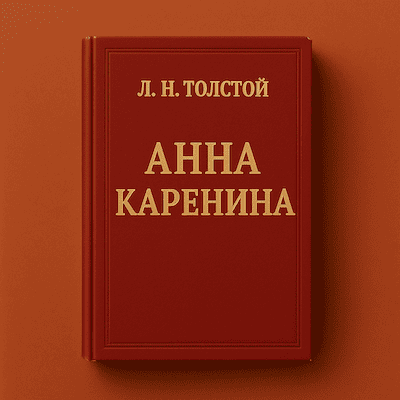
Read Dostoevsky first. For most readers, and especially for learners of Russian, his books are the easier way in: White Nights is short, Crime and Punishment grips you from page one, and his sentences are, on average, shorter than Tolstoy's. Keep Tolstoy for when you're ready to settle into a long book and stay there.
That's not a verdict on who's the greater writer. Both are giants, and the comparison is an old Russian argument with no winner. It's a question of which door is easier to open first.
Two writers who never met
Leo Tolstoy (1828–1910) and Fyodor Dostoevsky (1821–1881) wrote in the same decades and read each other's work, but they never met. Dostoevsky died in 1881, soon after finishing The Brothers Karamazov. Tolstoy lived nearly thirty more years.
Their lives were very different. Tolstoy was a count who wrote on his family estate. Dostoevsky was sent to a Siberian prison camp as a young man and spent years writing against deadlines to pay his debts. You can feel both lives in their books.
Tolstoy vs Dostoevsky at a glance
| Tolstoy | Dostoevsky | |
|---|---|---|
| Book in our app | Anna Karenina (1875–77) | White Nights (1848), Crime and Punishment (1866), The Brothers Karamazov (1879–80) |
| Length in the app | 281,000 words | 17,400 / 176,000 / 302,000 words |
| Opening sentence length | 21 words on average | 16 / 16 / 19 words on average |
| Narrator | Calm, all-seeing, steady | Restless, often close to one feverish mind |
| Setting | Family homes, high society, the countryside | Cramped rooms, streets, taverns, St Petersburg at night |
| Big themes | Marriage, family, love, society, how to live a good life | Guilt, faith, freedom, crime, suffering |
| Pace | Slow and wide, many storylines | Fast scenes, long conversations, crises |
| Good for learners because | Clear, ordinary situations and everyday vocabulary | Lots of dialogue and repetition, strong plots |
| Hard for learners because | Long, balanced sentences; huge length | Breathless speech, rants, abstract arguments |
The sentence figures come from our measurement of seven classics. They cover only each book's opening pages and should be read as a rough guide.
Style
Tolstoy writes like a calm observer who sees everything. He moves from one character's thoughts to another's, and he notices small physical details: a smile, a gesture, a dress. His sentences are long but orderly. They build up, clause by clause, and they rarely lose control.
Here's the second sentence of Anna Karenina, right after the famous first line:
Все смешалось в доме Облонских. Жена узнала, что муж был в связи с бывшею в их доме француженкою-гувернанткой, и объявила мужу, что не может жить с ним в одном доме.
Everything was in turmoil in the Oblonsky house. The wife had found out that her husband was having an affair with the French governess who used to live with them, and had told him that she could not go on living in the same house as him.
The vocabulary is everyday: жена (wife), муж (husband), дом (house), жить (to live). The challenge is the structure: two что clauses and a long phrase squeezed between с and its noun. Бывшею and француженкою are older forms of the instrumental case, today бывшей and француженкой. For more on this opening, see our post on Anna Karenina's first line.
Dostoevsky writes from inside a character's nerves. His narrators rush, exclaim, contradict themselves and ask questions. Here are the dreamer's closing lines in White Nights:
Боже мой! Целая минута блаженства! Да разве этого мало хоть бы и на всю жизнь человеческую?..
My God! A whole minute of bliss! Is that really so little, even for a whole human life?..
The sentences are short, but they're packed with emotional particles: да, разве and хоть бы add shades of "really", "surely" and "even" that a textbook rarely explains. Dostoevsky's difficulty lies in the voice, not the grammar.
Themes and psychology
Both writers are masters of psychology, and they work in opposite directions.
Tolstoy shows how ordinary people change slowly. Anna doesn't wake up one day a different person: we watch her marriage, her love for Vronsky and her place in society shift over hundreds of pages. Alongside her story runs Levin's, on his estate, asking how to live honestly. Our guide to the Anna Karenina characters maps out who's who.
Dostoevsky puts people in extreme situations and watches them crack. Raskolnikov commits a murder in the first part of Crime and Punishment and spends the rest of the book in a fever of guilt and self-justification. His characters argue about God and morality as if their lives depend on it, and often they do. See our Raskolnikov character analysis and the guide to the Brothers Karamazov characters.
A simple way to put it: Tolstoy asks how to live. Dostoevsky asks whether anything is allowed.
Length
This is where the difference matters most for a learner.
Anna Karenina is 281,000 words in our app. Dostoevsky gives you a choice. White Nights is just 17,400 words, short enough to finish in a few weeks. Crime and Punishment is 176,000. The Brothers Karamazov is the longest book in our library, at 302,000.
With Tolstoy, there's no short way in among the books in our app. With Dostoevsky, you can start small and work up.
Language difficulty
Neither writer is easy, but they're hard in different ways.
Tolstoy's Russian is precise and measured. Once you can follow his long sentences, the language itself is quite standard. The difficulty is staying with a sentence until it ends, and staying with the book for months.
Dostoevsky's Russian is emotional and spoken. You'll meet interruptions, repetitions, half-finished thoughts and many small particles. The good news is that repetition: his characters keep coming back to the same words and ideas, so you keep meeting them. Our guide to reading Dostoevsky in Russian has tips.
Both write in the 1800s, so expect some older words. Both use plenty of participles and gerunds, and both use names in several forms: Rodion Raskolnikov is also Родя (Rodya), and Konstantin Levin is Костя (Kostya) to his brother.
Which should you read first?
If you're a learner at intermediate level: start with White Nights (what it's about). It's short and it's free in full on our site. Then go on to Crime and Punishment.
If you want a gripping plot: Crime and Punishment. It reads almost like a thriller, and our guide on how to read Crime and Punishment helps you through the long middle.
If you love novels about relationships and family: Anna Karenina, but read it after a shorter book or two. Our tips on reading Anna Karenina in Russian will help you plan the long haul.
If you love philosophy and big questions: The Brothers Karamazov, last of all. It's the longest and most demanding of the four, and it rewards you most when the language no longer gets in the way.
If you're reading in English first: either will do. Many readers find Dostoevsky's intensity hooks them faster, while Tolstoy's calm grows on you over time.
Read them in Russian
Each book page has the Russian text with an English translation under every line: White Nights in full, and the opening pages of Crime and Punishment, Anna Karenina and The Brothers Karamazov. You can also browse all our Russian books.
The real answer to Tolstoy vs Dostoevsky is to read both, in their own language, one after the other. Our Learn Russian app has Anna Karenina, Crime and Punishment, White Nights and The Brothers Karamazov in full, with a translation under every line, along with the vocabulary and grammar to get you there. It's free to download, though some books and extra content need diamonds you earn while learning, or Premium.