Natural Wonders and How They Work
Le meraviglie della natura e come nascono
 Learn EnglishApp gratuita con audio, quiz e libri veri
Parole chiave
- auroraaurora
- bioluminescencebioluminescenza
- solar windvento solare
- atmosphereatmosfera
- migrationmigrazione
- static electricityelettricità statica
- glacierghiacciaio
- eruptioneruzione
- sedimentsedimento
- plasmaplasma
- condensationcondensazione
- phenomenonfenomeno
Tutte le 30 parole
- organismorganismo
- magnetic fieldcampo magnetico
- folklorefolclore
- awemeraviglia
- lakebedfondale lacustre
- particleparticella
- stationarystazionario
- habitathabitat
- compassbussola
- thunderstormtemporale
- mineralminerale
- synchronizedsincronizzato
- spectrographicspettrografico
- etherealetereo
- anxietyansia
- intricateintricato
- spectacularspettacolare
- isolatedisolato
Some things in nature look so strange that they feel like magic, even when you know the science behind them. Green curtains of light ripple across Arctic skies. Waves glow bright blue on a dark beach. Smooth, saucer-shaped clouds hang perfectly still above a mountain. In one California desert, heavy stones slide across a dry lakebed and leave long tracks behind them.
Alcuni fenomeni naturali sono così strani da sembrare magia, anche quando se ne conosce la spiegazione scientifica. Tende di luce verde ondeggiano nei cieli artici. Le onde brillano di un azzurro intenso su una spiaggia al buio. Nuvole lisce, a forma di disco volante, restano perfettamente immobili sopra una montagna. In un deserto della California, pesanti pietre scivolano sul fondo di un lago prosciugato e si lasciano dietro lunghe scie.
None of this is a miracle. Every one of these events follows the same laws of physics, chemistry and biology as the rest of nature. Knowing how they work doesn't spoil them, though. For many people it makes them even more impressive. Here are some of the most spectacular natural phenomena on Earth and what causes them.
Niente di tutto questo è un miracolo. Ognuno di questi fenomeni segue le stesse leggi della fisica, della chimica e della biologia che regolano il resto della natura. Sapere come funzionano, però, non li rende meno affascinanti. Anzi, a molti sembrano ancora più straordinari. Ecco alcuni dei fenomeni naturali più spettacolari della Terra e le loro cause.
The Northern Lights: Curtains in the Sky
L'aurora boreale: tende nel cielo
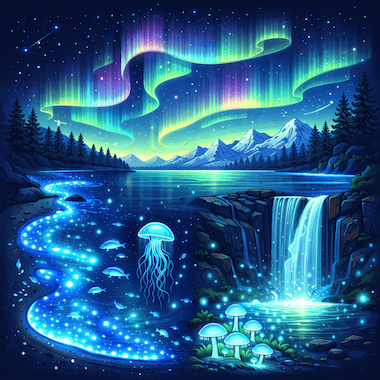
The aurora borealis, or northern lights, is probably the most famous light show in nature. Waves of green, pink and violet light ripple across the night sky in a wide ring around the North Pole, over places like northern Norway, Iceland, Alaska and northern Canada. For centuries the lights have shaped local legends, and today thousands of tourists travel north every winter just to see them.
L'aurora boreale è probabilmente lo spettacolo di luce più famoso della natura. Onde di luce verde, rosa e viola attraversano il cielo notturno lungo un ampio anello intorno al Polo Nord, sopra luoghi come la Norvegia settentrionale, l'Islanda, l'Alaska e il Canada settentrionale. Da secoli queste luci ispirano leggende locali, e oggi ogni inverno migliaia di turisti viaggiano verso nord solo per vederle.
The aurora begins with the Sun, which constantly sends out a stream of charged particles called the solar wind. Earth's magnetic field steers some of these particles toward the polar regions. There they crash into gases high in the atmosphere, mostly 100 to 300 kilometers up, and make them give off light. Oxygen glows green or red, while nitrogen adds blue and purple. When the Sun is very active, the aurora spreads much farther from the poles: in May 2024, people saw it as far south as Italy and Texas. The Southern Hemisphere has its own version, the aurora australis, or southern lights.
Tutto comincia dal Sole, che emette di continuo un flusso di particelle cariche chiamato vento solare. Il campo magnetico terrestre convoglia una parte di queste particelle verso le regioni polari. Lì le particelle urtano i gas dell'alta atmosfera, per lo più tra i 100 e i 300 chilometri di quota, e li fanno brillare. L'ossigeno emette luce verde o rossa, mentre l'azoto aggiunge sfumature blu e viola. Quando il Sole è molto attivo, l'aurora si spinge molto più lontano dai poli: nel maggio 2024 è stata vista persino in Italia e in Texas. L'emisfero australe ha la sua versione, l'aurora australe.
Bioluminescence: The Glowing Sea
La bioluminescenza: il mare che brilla
On some nights, the waves breaking on a beach glow an electric blue-green. Move your hand through the water and it leaves a trail of cold, ghostly light. This is bioluminescence, light made by living things. It is far more common than most people realize, but most of it happens where nobody sees it, in the darkness of the deep ocean.
In certe notti, le onde che si infrangono sulla spiaggia brillano di un blu verde elettrico. Se si muove una mano nell'acqua, resta una scia di luce fredda e spettrale. È la bioluminescenza, la luce prodotta da esseri viventi. È molto più diffusa di quanto si pensi, ma per lo più si manifesta dove nessuno la vede, nel buio delle profondità oceaniche.
The glowing waves are usually caused by dinoflagellates, tiny single-celled plankton that flash blue when the water around them moves. The light comes from a chemical reaction: a molecule called luciferin reacts with oxygen, helped by an enzyme called luciferase. Jellyfish, squid and many deep-sea fish make light too, and so do fireflies on land. A 2017 study off the coast of California found that about three quarters of the animals living in the open ocean can glow. They use light to find food, attract mates and confuse predators. Mosquito Bay in Puerto Rico and Vaadhoo Island in the Maldives are famous for their glowing water.
Le onde luminose sono di solito opera dei dinoflagellati, minuscoli organismi del plancton formati da una sola cellula, che emettono lampi blu quando l'acqua intorno a loro si muove. La luce nasce da una reazione chimica: una molecola chiamata luciferina reagisce con l'ossigeno grazie a un enzima, la luciferasi. Anche meduse, calamari e molti pesci degli abissi producono luce, come fanno le lucciole sulla terraferma. Uno studio condotto nel 2017 al largo della California ha rilevato che circa tre quarti degli animali che vivono in mare aperto sono in grado di brillare. Usano la luce per trovare cibo, attirare un partner e confondere i predatori. Mosquito Bay, a Porto Rico, e l'isola di Vaadhoo, alle Maldive, sono famose per le loro acque luminose.
Ball Lightning: Still a Mystery
I fulmini globulari: un mistero ancora aperto
Ball lightning is the strangest and least understood event in our weather. For centuries, people have described glowing balls of light, anywhere from the size of a golf ball to the size of a beach ball, that appear during thunderstorms. They float through the air for a few seconds, sometimes drift into rooms or even pass through windows, and then either fade quietly or disappear with a loud bang.
Il fulmine globulare è il fenomeno meteorologico più strano e meno compreso. Da secoli si raccontano sfere luminose, grandi da una pallina da golf a un pallone da spiaggia, che compaiono durante i temporali. Fluttuano nell'aria per qualche secondo, a volte entrano nelle stanze o attraversano perfino i vetri delle finestre, e poi si spengono in silenzio oppure svaniscono con un forte boato.
Because it is rare and lasts only seconds, ball lightning was very hard to study, and some scientists doubted that it existed at all. Then, in 2012, Chinese researchers who were studying ordinary lightning on the Tibetan Plateau happened to record a glowing ball with their cameras and instruments. It shone for about a second and a half, and its light showed silicon, iron and calcium, elements found in soil. This supports a popular theory: a lightning strike turns soil into hot vapor, and that cloud glows as it burns. Other theories involve plasma or microwaves, and scientists still don't agree on the cause.
Poiché è raro e dura solo pochi secondi, il fulmine globulare era molto difficile da studiare, e alcuni scienziati dubitavano persino che esistesse. Poi, nel 2012, alcuni ricercatori cinesi che studiavano i fulmini comuni sull'altopiano del Tibet ripresero per caso una sfera luminosa con le loro telecamere e i loro strumenti. La sfera brillò per circa un secondo e mezzo, e la sua luce rivelava silicio, ferro e calcio, elementi presenti nel suolo. Questo sostiene una teoria molto diffusa: un fulmine trasforma il terreno in vapore caldissimo, e quella nube brilla mentre brucia. Altre teorie chiamano in causa il plasma o le microonde, e gli scienziati non sono ancora d'accordo sulla causa.
Volcanic Lightning: Fire Meets Storm
I fulmini vulcanici: quando il fuoco incontra la tempesta
During some volcanic eruptions, lightning flashes through the huge cloud of ash rising from the volcano. Scientists sometimes call this a “dirty thunderstorm.” It is one of the most frightening sights in nature, and one of the oldest on record: the Roman writer Pliny the Younger described flashes like lightning in the dark cloud over Mount Vesuvius in AD 79.
Durante alcune eruzioni, i fulmini attraversano l'enorme nube di cenere che si alza dal vulcano. Gli scienziati a volte lo chiamano «temporale sporco». È uno degli spettacoli più spaventosi della natura e uno dei più antichi di cui si abbia notizia: lo scrittore romano Plinio il Giovane descrisse lampi simili a fulmini nella nube scura sopra il Vesuvio nel 79 d.C.
The lightning comes from electric charge. Inside the ash cloud, bits of rock and ash rub and crash into each other, and if the cloud rises high enough, ice forms in it too. These collisions build up positive and negative charges in different parts of the cloud, much as in an ordinary thunderstorm, until the charge is released as lightning. Volcanic lightning has been seen over Eyjafjallajökull in Iceland in 2010, over Mount Etna in Sicily and over Sakurajima in Japan. The 2022 eruption of Hunga Tonga in the Pacific produced the most intense lightning ever recorded, with hundreds of thousands of flashes in less than a day.
I fulmini nascono dalla carica elettrica. Nella nube di cenere, frammenti di roccia e di cenere si sfregano e si urtano, e se la nube sale abbastanza in alto vi si forma anche del ghiaccio. Questi urti accumulano cariche positive e negative in diverse parti della nube, proprio come in un normale temporale, finché la carica si scarica sotto forma di fulmine. Fulmini vulcanici sono stati osservati sopra l'Eyjafjallajökull in Islanda nel 2010, sopra l'Etna in Sicilia e sopra il Sakurajima in Giappone. L'eruzione dell'Hunga Tonga, nel Pacifico, nel 2022 ha prodotto l'attività elettrica più intensa mai registrata, con centinaia di migliaia di fulmini in meno di un giorno.
The Sailing Stones of Death Valley
Le pietre che si muovono nella Valle della Morte
On Racetrack Playa, a dry lakebed in a remote corner of Death Valley in California, rocks sit at the ends of long tracks in the cracked mud. Some of the tracks are straight, others curve or zigzag, and some of the rocks weigh more than 300 kilograms. The tracks clearly showed that the stones moved, but for decades nobody had ever seen one move.
Sulla Racetrack Playa, il letto asciutto di un lago in un angolo remoto della Valle della Morte, in California, alcune rocce si trovano alla fine di lunghe scie nel fango screpolato. Alcune scie sono dritte, altre curve o a zigzag, e certe rocce pesano più di 300 chili. Le scie dimostravano chiaramente che le pietre si spostavano, ma per decenni nessuno ne aveva mai vista muoversi una.
Geologists puzzled over the stones for more than 60 years. The answer finally came in December 2013, when a team using GPS trackers and time-lapse cameras caught the rocks in motion. In winter, rain and melting snow sometimes form a shallow pond on the playa. On cold nights its surface freezes into a sheet of ice only a few millimeters thick. On a sunny day the ice breaks into large floating panels, and a light wind pushes them across the water. The panels push the rocks ahead of them, a few meters per minute, and the stones leave tracks in the soft mud underneath. So the stones don't move by themselves, and they don't float: thin, almost invisible ice pushes them.
I geologi si sono interrogati su queste pietre per oltre 60 anni. La risposta è arrivata finalmente nel dicembre 2013, quando un gruppo di ricercatori con localizzatori GPS e fotocamere time-lapse ha colto le rocce in movimento. D'inverno, la pioggia e la neve sciolta formano a volte uno stagno poco profondo sulla piana. Nelle notti fredde la sua superficie gela in uno strato di ghiaccio spesso solo pochi millimetri. In una giornata di sole il ghiaccio si rompe in grandi lastre galleggianti, che un vento leggero spinge sull'acqua. Le lastre spingono le rocce davanti a sé, di qualche metro al minuto, e le pietre lasciano scie nel fango morbido sottostante. Le pietre quindi non si muovono da sole e non galleggiano: a spingerle è un ghiaccio sottile, quasi invisibile.
Lenticular Clouds: Nature's UFOs
Le nubi lenticolari: gli UFO della natura
Lenticular clouds, known to scientists as altocumulus lenticularis, look like something from another world. They are smooth, lens-shaped discs that hang over or just behind mountain peaks, sometimes stacked like a pile of plates. Strong winds blow all around them, yet they stay in the same place for a long time. Not surprisingly, people often report them as UFOs.
Le nubi lenticolari, che gli scienziati chiamano altocumulus lenticularis, sembrano venire da un altro mondo. Sono dischi lisci a forma di lente sospesi sopra le cime delle montagne o subito dietro, a volte impilati come una pila di piatti. Tutto intorno soffiano venti forti, eppure restano a lungo nello stesso punto. Non sorprende che vengano spesso scambiate per UFO.
They form when a steady, moist wind blows over a mountain. The mountain pushes the air up and sets off a series of waves in the air behind it, a bit like the ripples in a stream behind a rock. Where the air rises to the top of a wave, it cools and its moisture turns into cloud. Where it sinks again, it warms up and the cloud disappears. Air keeps flowing through the cloud, but because the cloud keeps forming on one side and disappearing on the other, it seems to stand still. Lenticular clouds are often seen over lone mountains such as Mount Fuji in Japan, Mount Rainier in the United States and the Matterhorn in the Alps.
Si formano quando un vento umido e costante soffia sopra una montagna. La montagna spinge l'aria verso l'alto e crea dietro di sé una serie di onde nell'aria, un po' come le increspature di un torrente dietro un sasso. Dove l'aria sale fino alla cresta di un'onda, si raffredda e la sua umidità si trasforma in nube. Dove ridiscende, si riscalda e la nube scompare. L'aria continua ad attraversare la nube, ma poiché questa si forma continuamente da un lato e si dissolve dall'altro, sembra ferma. Le nubi lenticolari si vedono spesso sopra montagne isolate come il monte Fuji in Giappone, il monte Rainier negli Stati Uniti e il Cervino nelle Alpi.
The Monarch Butterfly Migration
La migrazione delle farfalle monarca
Every fall, hundreds of millions of monarch butterflies fly south from Canada and the northern United States. Some travel more than 4,000 kilometers to reach the fir forests in the mountains of central Mexico. There they spend the winter packed together on the trees in such huge numbers that their weight can bend the branches.
Ogni autunno centinaia di milioni di farfalle monarca volano verso sud dal Canada e dal nord degli Stati Uniti. Alcune percorrono più di 4.000 chilometri per raggiungere le foreste di abeti sulle montagne del Messico centrale. Lì trascorrono l'inverno ammassate sugli alberi, in numero così enorme che il loro peso può piegare i rami.
The strangest part is that no single butterfly makes the whole round trip. The monarchs that leave Mexico in spring lay eggs in the southern United States and die. Their young continue north, and only after three or four generations does a new generation fly all the way back. So the butterflies that arrive in Mexico each fall have never been there before: they are usually the great-great-grandchildren of the ones that left. Scientists believe they find their way with a sun compass, corrected for the time of day by a clock in their antennae, and they may also sense Earth's magnetic field. How an insect with such a tiny brain finds a small patch of forest it has never seen is still not fully understood.
La cosa più sorprendente è che nessuna farfalla compie da sola l'intero viaggio di andata e ritorno. Le monarca che lasciano il Messico in primavera depongono le uova nel sud degli Stati Uniti e muoiono. I loro figli proseguono verso nord, e solo dopo tre o quattro generazioni una nuova generazione rifà tutto il viaggio a ritroso. Le farfalle che arrivano in Messico ogni autunno, quindi, non ci sono mai state: di solito sono le pronipoti di quelle che erano partite. Gli scienziati ritengono che si orientino con una bussola solare, regolata sull'ora del giorno da un orologio nelle antenne, e che forse percepiscano anche il campo magnetico terrestre. Come un insetto con un cervello così minuscolo trovi un piccolo lembo di foresta che non ha mai visto non è ancora del tutto chiaro.
More Wonders Worth Knowing
Altre meraviglie da conoscere
Over Lake Maracaibo in Venezuela, Catatumbo lightning can flash up to 280 times an hour on about 140 to 160 nights a year, which makes the lake the place with the most lightning on Earth.
Sopra il lago di Maracaibo, in Venezuela, il fulmine del Catatumbo può lampeggiare fino a 280 volte all'ora per circa 140-160 notti all'anno, il che fa del lago il luogo con più fulmini della Terra.
The Zhangye Danxia landforms in China are hills striped in red, orange and yellow, made of layers of sandstone that built up over millions of years and were later folded by moving tectonic plates.
Le formazioni Danxia di Zhangye, in Cina, sono colline a strisce rosse, arancioni e gialle, fatte di strati di arenaria accumulati nel corso di milioni di anni e poi piegati dal movimento delle placche tettoniche.
Frost flowers are delicate ice crystals that grow on thin, new sea ice in the polar regions, forming feathery shapes up to about four centimeters tall.
I fiori di ghiaccio sono delicati cristalli che crescono sul ghiaccio marino giovane e sottile delle regioni polari, formando strutture piumose alte fino a circa quattro centimetri.
Spotted Lake (Kliluk) in British Columbia, Canada, turns into a patchwork of colorful pools each summer as its water evaporates and leaves behind minerals such as magnesium sulfate.
Lo Spotted Lake (Kliluk), nella Columbia Britannica, in Canada, ogni estate si trasforma in un mosaico di pozze colorate man mano che l'acqua evapora e lascia minerali come il solfato di magnesio.
A murmuration, the swirling flight of thousands of starlings, has no leader: studies show that each bird keeps track of about seven of its nearest neighbors.
Un grande stormo di storni, migliaia di uccelli che volteggiano insieme in cielo, non ha un capo: gli studi mostrano che ogni uccello segue i movimenti di circa sette dei suoi vicini più prossimi.
Blood Falls in Antarctica pours out salty water from a lake trapped under Taylor Glacier for more than a million years; the water is clear underground, but its iron rusts in the air and turns it red.
Le Blood Falls, in Antartide, riversano acqua salata da un lago intrappolato sotto il ghiacciaio Taylor da più di un milione di anni; sottoterra l'acqua è limpida, ma il suo ferro arrugginisce a contatto con l'aria e la tinge di rosso.
Why Natural Wonders Matter
Perché le meraviglie della natura contano
Long before science could explain them, natural phenomena found their way into stories and beliefs. In Finnish folklore, the northern lights were sparks thrown into the sky by the tail of a fox running across the snow, and the Finnish word for them, revontulet, means “fox fires.” The Sami people of northern Scandinavia treated the lights with respect and told children not to wave or whistle at them. In Mexico, the monarchs arrive around the Day of the Dead in early November, and many people believe they carry the souls of the dead.
Molto prima che la scienza potesse spiegarli, i fenomeni naturali sono entrati nei racconti e nelle credenze. Nel folklore finlandese l'aurora boreale era fatta di scintille lanciate in cielo dalla coda di una volpe che correva sulla neve, e la parola finlandese che la indica, revontulet, significa «fuochi della volpe». Il popolo sami del nord della Scandinavia trattava queste luci con rispetto e diceva ai bambini di non salutarle con la mano e di non fischiare. In Messico le monarca arrivano verso il Giorno dei Morti, all'inizio di novembre, e molti credono che portino con sé le anime dei defunti.
These events still affect us today. Psychologists who study awe, the feeling we get in front of something so vast that we can't fully take it in, have linked it to lower stress, a stronger sense of connection to other people and more generous behavior. Standing under the aurora or on a beach full of glowing waves, many people say they feel small, but in a good way.
Questi fenomeni ci colpiscono ancora oggi. Gli psicologi che studiano la meraviglia, l'emozione che proviamo davanti a qualcosa di così vasto da non riuscire a coglierlo del tutto, l'hanno collegata a meno stress, a un senso più forte di legame con gli altri e a comportamenti più generosi. Sotto l'aurora o su una spiaggia piena di onde luminose, molte persone dicono di sentirsi piccole, ma in senso buono.
Conclusion
Conclusione
Auroras, glowing seas, sailing stones and migrating butterflies all have scientific explanations, or at least good working theories. Some, like ball lightning, still keep part of their secret, and discoveries keep coming: the sailing stones were caught moving for the first time only in 2013.
Aurore, mari luminosi, pietre che si muovono e farfalle migratrici hanno tutti una spiegazione scientifica, o almeno valide ipotesi di lavoro. Alcuni, come il fulmine globulare, conservano ancora una parte del loro segreto, e le scoperte continuano: le pietre della Valle della Morte sono state riprese in movimento per la prima volta solo nel 2013.
Science has not taken the wonder out of these events. Knowing that a butterfly steers by the Sun with the help of a clock in its antennae, or that a wave glows because of billions of tiny plankton, only makes them more interesting. Many of these sights are also easy to reach. A winter trip to the far north or a dark beach on a warm night may be enough to see one for yourself.
La scienza non ha tolto a questi fenomeni il loro incanto. Sapere che una farfalla si orienta col Sole grazie a un orologio nelle antenne, o che un'onda brilla per merito di miliardi di minuscoli organismi del plancton, li rende soltanto più interessanti. Molti di questi spettacoli, inoltre, sono facili da raggiungere. Un viaggio d'inverno nel Grande Nord o una spiaggia buia in una notte calda possono bastare per vederne uno con i propri occhi.
Nell'app gratuita puoi ascoltare il testo letto ad alta voce e toccare ogni parola per vederne il significato.