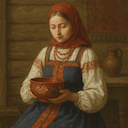
Русские народные традиции
Russian Folk Traditions
 Learn RussianFree app with audio, quizzes and real books
Key words
- традицияtradition
- народpeople
- праздникholiday
- обрядritual
- музыкаmusic
- танецdance
- ремеслоcraft
- сказкаfairy tale
- легендаlegend
- кухняcuisine
- блинpancake
- пирогpie
All 30 words
- борщborscht
- чайtea
- самоварsamovar
- играgame
- инструментinstrument
- балалайкаbalalaika
- гармоньaccordion
- вышивкаembroidery
- кружевоlace
- резьбаwood carving
- гжельGzhel
- хохломаKhokhloma
- персонажcharacter
- Баба ЯгаBaba Yaga
- КощейKoschei
- Илья МуромецIlya Muromets
- областьregion
- историяhistory
Русские народные традиции складывались веками и передавались от родителей к детям. Это праздники и обряды, ремёсла, песни, сказки и игры, по которым до сих пор видно, как жили и во что верили люди.
Russian folk traditions took shape over centuries and were handed down from parents to children. They include holidays and rituals, crafts, songs, fairy tales and games, and they still show how people lived and what they believed.
Большинство этих обычаев родилось в деревне. Крестьянский год зависел от природы: когда пахать, когда сеять, когда убирать урожай. Поэтому многие праздники приходились на важные моменты года: проводы зимы, самые длинные летние дни, конец жатвы.
Most of these customs were born in the village. The peasant year depended on nature: when to plough, when to sow, when to bring in the harvest. That is why many holidays fell on key moments of the year: seeing off winter, the longest days of summer, the end of the harvest.
Праздники и обряды
Holidays and Rituals
Народный календарь соединил церковные праздники с куда более древними, языческими обычаями. На праздник собиралась вся деревня: вместе пели, водили хороводы, ходили друг к другу в гости.
The folk calendar blended church holidays with much older pagan customs. The whole village came together for a holiday: people sang, danced in round dances and visited one another.
Масленица: проводы зимы с блинами, катанием на санях и с ледяных гор.
Maslenitsa: the send-off of winter, with pancakes, sleigh rides and sledding down ice hills.
Иван Купала: ночь с 6 на 7 июля, когда прыгают через костры и ищут цветок папоротника.
Ivan Kupala: the night of 6 to 7 July, when people jump over bonfires and search for the fern flower.
Рождество и Пасха: на Рождество колядуют, на Пасху пекут куличи и красят яйца.
Christmas and Easter: at Christmas people go carolling, at Easter they bake kulich and dye eggs.
Свои обряды сопровождали и всю жизнь человека: рождение, свадьбу, похороны. Русская свадьба, например, могла длиться несколько дней, и у каждого её этапа, от сватовства до пира, были свои песни. Чтобы уберечь младенца или молодых от беды, использовали обереги: вышитые узоры на одежде, пояса, маленькие амулеты.
Rituals also marked every stage of a person's life: birth, marriage, death. A Russian wedding, for example, could last several days, and each stage, from the matchmaking to the feast, had its own songs. To protect a baby or a newlywed couple from harm, people used charms: embroidered patterns on clothing, belts, small amulets.
Народная музыка и танцы
Folk Music and Dance
Без песни в деревне почти ничего не обходилось. Пели за работой в поле и за прялкой, на вечерних посиделках, на свадьбах и когда провожали парней в солдаты.
Hardly anything in the village happened without a song. People sang while working in the fields and at the spinning wheel, at evening get-togethers, at weddings and when young men were sent off to the army.
Балалайка: инструмент с треугольным корпусом и тремя струнами.
Balalaika: an instrument with a triangular body and three strings.
Гармонь: ручная гармоника, которая в XIX веке стала главным инструментом деревенских праздников.
Garmon: a hand-held accordion that became the main instrument of village festivities in the 19th century.
Хоровод, пляска «Тройка» и песня «Калинка», которую в 1860 году сочинил Иван Ларионов.
The khorovod round dance, the Troika dance and the song Kalinka, written by Ivan Larionov in 1860.
Хоровод был не просто танцем. В нём участвовала вся молодёжь деревни, и парни с девушками присматривались друг к другу. Так, через песню и пляску, старшие передавали младшим обычаи и правила поведения.
The khorovod was more than a dance. All the village's young people took part, and the boys and girls used it to size each other up. Through song and dance, the older generation passed its customs and rules of behaviour on to the young.
Народные ремёсла и промыслы
Folk Crafts
Многие ремёсла выросли из простой необходимости. Зимой работы в поле не было, и крестьяне делали на продажу посуду, игрушки, ткани. Со временем некоторые сёла прославились своим особым стилем на всю страну.
Many crafts grew out of simple necessity. In winter there was no work in the fields, so peasants made dishes, toys and fabrics to sell. Over time some villages became famous across the country for their own distinctive style.
Резьба по дереву: наличники на окнах, ложки, прялки и игрушки.
Woodcarving: window frames, spoons, spinning distaffs and toys.
Гжель, хохлома и филимоновская игрушка: синяя роспись по керамике, золото на дереве, расписные глиняные свистульки.
Gzhel, Khokhloma and Filimonovo toys: blue painting on ceramics, gold on wood, painted clay whistles.
Вышивка и кружево: узоры на рубахах, полотенцах и скатертях.
Embroidery and lace: patterns on shirts, towels and tablecloths.
При этом вещь оставалась полезной: в расписной миске хранили еду, в резном ковше подавали квас. Секреты мастерства берегли в семье и передавали от отца к сыну, от матери к дочери.
At the same time, these objects stayed useful: food was kept in a painted bowl, kvass was served from a carved ladle. The secrets of the craft were kept within the family and passed from father to son, from mother to daughter.
Сказки и былины
Fairy Tales and Epic Songs
Сказки рассказывали долгими зимними вечерами, и дети слушали их с самого раннего возраста. В них добро обычно побеждает зло, а младший и самый простой герой, например Иван-дурак, оказывается мудрее всех.
Fairy tales were told on long winter evenings, and children heard them from a very early age. In them good usually defeats evil, and the youngest and simplest hero, such as Ivan the Fool, turns out to be the wisest of all.
Баба-яга и Кощей Бессмертный пришли из сказок, а Илья Муромец из былин о богатырях.
Baba Yaga and Koschei the Deathless come from fairy tales, while Ilya Muromets comes from the byliny, epic songs about bogatyr heroes.
Сказки объясняли, как устроен мир, учили отличать хорошее от плохого и будили фантазию.
Fairy tales explained how the world works, taught children to tell right from wrong and stirred their imagination.
В XIX веке собиратели фольклора начали записывать сказки и былины. Самое известное собрание, «Народные русские сказки» Александра Афанасьева, выходило с 1855 по 1863 год.
In the 19th century, folklore collectors began writing down fairy tales and byliny. The best-known collection, Alexander Afanasyev's Russian Folk Tales, came out between 1855 and 1863.
Традиционная кухня
Traditional Cuisine
Основой крестьянского стола были хлеб, каша и щи. Почти всё готовили в русской печи: в ней томились супы и каши и пеклись пироги.
The peasant table was built on bread, porridge and shchi cabbage soup. Almost everything was cooked in the Russian stove: soups and porridges simmered in it slowly, and pies were baked in it.
Щи, борщ, соленья и квас: повседневная еда, которую готовили почти в каждом доме.
Shchi, borscht, pickles and kvass: everyday food made in almost every home.
Пироги и блины: угощение для праздников и семейных торжеств.
Pies and blini: treats for holidays and family celebrations.
Чай из самовара: символ гостеприимства и долгих разговоров.
Tea from the samovar: a symbol of hospitality and long conversations.
Рецепты передавались от матери к дочери, и в каждом краю были свои: на Севере пекли калитки, открытые ржаные пирожки, а в Сибири лепили пельмени.
Recipes were handed down from mother to daughter, and every region had its own: in the North people baked kalitki, small open rye pies, while in Siberia they made pelmeni dumplings.
Интересные факты
Did You Know
Масленица длится неделю и заканчивается сжиганием соломенного чучела.
Maslenitsa lasts a week and ends with the burning of a straw effigy.
На Ивана Купалу верили, что роса и травы обладают целебной силой.
On Ivan Kupala night, people believed that dew and herbs had healing power.
Среди народных игр были лапта, горелки, городки и кулачные бои.
Folk games included lapta, gorelki, gorodki and fist fights.
За простым сюжетом сказки часто стоит древний обряд или поверье.
Behind the simple plot of a fairy tale there is often an ancient ritual or belief.
Узоры на одежде и резьба на доме должны были защищать от злых духов.
Patterns on clothing and carvings on a house were meant to protect against evil spirits.
Заключение
Conclusion
Многие из этих обычаев живы и сегодня. На Масленицу по-прежнему пекут блины, на Пасху красят яйца, а мастера хохломы и гжели работают так же, как их предшественники сто лет назад.
Many of these customs are still alive today. People still bake blini for Maslenitsa and dye eggs for Easter, and Khokhloma and Gzhel craftsmen work just as their predecessors did a hundred years ago.
Знакомство с народными традициями помогает лучше понимать русские песни, книги и пословицы, где они упоминаются на каждом шагу.
Knowing these folk traditions makes it easier to understand Russian songs, books and proverbs, which refer to them at every turn.
In the free app you can listen to this text read aloud and tap any word to see what it means.