Архитектура Москвы
Architecture of Moscow
 Learn RussianFree app with audio, quizzes and real books
Key words
- архитектураarchitecture
- МоскваMoscow
- городcity
- историяhistory
- культураculture
- искусствоart
- столицаcapital
- эпохаera
- зданиеbuilding
- стильstyle
- церковьchurch
- кремльKremlin
All 30 words
- дворецpalace
- куполdome
- крепостьfortress
- фрескаfresco
- росписьpainting
- колоннаcolumn
- аркаarch
- бароккоbaroque
- классицизмclassicism
- модернArt Nouveau
- небоскрёбskyscraper
- музейmuseum
- театрtheater
- паркpark
- общественныйpublic
- технологияtechnology
- наследиеheritage
- дизайнdesign
Москва строится уже больше восьми веков, и почти каждая эпоха оставила в городе свои здания. Город не раз горел, его перестраивали и снова застраивали, а архитектура менялась вместе со страной.
Moscow has been growing for more than eight centuries, and almost every era has left its own buildings in the city. It has burned more than once, been rebuilt and built up again, and its architecture has changed along with the country.
На одной улице здесь можно увидеть белокаменную церковь XVII века, особняк в стиле модерн и сталинскую высотку. А на горизонте блестят стеклянные башни Москва-Сити.
On a single street you can see a white-stone church from the 17th century, an Art Nouveau mansion and a Stalin-era high-rise. And on the horizon, the glass towers of Moscow City glitter.
Средневековая Москва
Medieval Moscow
Первый деревянный Кремль появился на Боровицком холме в 1156 году, при князе Юрии Долгоруком. Каменное строительство началось позже, в 1320-х годах, при Иване Калите. Из камня тогда строили прежде всего крепостные стены и храмы.
The first wooden Kremlin went up on Borovitsky Hill in 1156, under Prince Yuri Dolgoruky. Building in stone came later, in the 1320s, under Ivan Kalita. At that time stone was used above all for fortress walls and churches.
Кремль: главная крепость города. Первые белокаменные стены поставили при Дмитрии Донском в 1367 году, а нынешние кирпичные возвели итальянские мастера с 1485 по 1495 год.
The Kremlin: the city's main fortress. The first white-stone walls were put up under Dmitry Donskoy in 1367, and the present brick ones were built by Italian masters between 1485 and 1495.
Соборы Кремля: Успенский собор (1479) построил итальянец Аристотель Фиораванти, Архангельский (1508) возвёл Алевиз Новый. Их купола похожи на шлемы: у Успенского собора все пять золочёные, а у Архангельского золочёный только центральный, остальные серебристые.
The Kremlin cathedrals: the Cathedral of the Dormition (1479) was built by the Italian Aristotele Fioravanti, the Archangel Cathedral (1508) by Aloisio the New. Their domes are shaped like helmets: all five on the Dormition Cathedral are gilded, while on the Archangel Cathedral only the central one is and the rest are silver.
Московские мастера опирались на традиции Владимира и Византии, но охотно учились и у приглашённых итальянцев. Внутри храмы расписывали фресками, а иконы для Благовещенского собора писали Феофан Грек и Андрей Рублёв.
Moscow's builders drew on the traditions of Vladimir and Byzantium, but were also keen to learn from the Italians they invited. Inside, the churches were covered with frescoes, and the icons for the Cathedral of the Annunciation were painted by Theophanes the Greek and Andrei Rublev.
Царская Москва
Moscow of the Tsars
В XVI-XVII веках московская архитектура стала ярче и смелее. Строили из красного кирпича с белокаменными деталями, а у храмов появились высокие шатровые крыши. Первым каменным шатровым храмом стала церковь Вознесения в Коломенском (1532).
In the 16th and 17th centuries, Moscow's architecture grew brighter and bolder. Buildings were made of red brick with white-stone details, and churches acquired tall tent-shaped roofs. The first stone tent-roofed church was the Church of the Ascension in Kolomenskoye (1532).
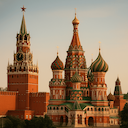
Собор Василия Блаженного на Красной площади построили в 1555-1561 годах по приказу Ивана Грозного в честь взятия Казани. Его пёстрые купола знают во всём мире.
St Basil's Cathedral on Red Square was built in 1555-1561 on the orders of Ivan the Terrible to mark the capture of Kazan. Its colourful domes are known all over the world.
Теремной дворец в Кремле (1636) и боярские палаты: здесь жили царская семья и знать, а залы украшали росписью, резьбой и изразцами.
The Terem Palace in the Kremlin (1636) and the boyars' mansions: home to the royal family and the nobility, with halls decorated with paintings, carvings and glazed tiles.
Мастера той эпохи не жалели украшений: фасады покрывали узорами из кирпича и цветных изразцов, окна обрамляли резными наличниками. Этот нарядный стиль позже назвали «русским узорочьем». Хороший пример: церковь Троицы в Никитниках.
The craftsmen of that era did not hold back on decoration: facades were covered with patterns of brick and coloured tiles, and windows were framed with carved surrounds. This festive style was later called "Russian uzorochye", or patterned style. A good example is the Church of the Trinity in Nikitniki.
Пётр I и европейские стили
Peter I and European styles
При Петре I в Москву пришла европейская архитектура, хотя в 1712 году столицей стал Петербург. В XVIII веке в городе строили сначала в стиле барокко, а затем в стиле классицизма с его строгими колоннами и портиками.
Under Peter I, European architecture came to Moscow, even though St Petersburg became the capital in 1712. In the 18th century the city built first in the Baroque style and then in the Neoclassical style, with its austere columns and porticoes.
Меншикова башня (1707) у Чистых прудов: барочная церковь, построенная для соратника Петра Александра Меншикова. Когда-то она была выше колокольни Ивана Великого.
The Menshikov Tower (1707) near Chistye Prudy: a Baroque church built for Peter's close associate Alexander Menshikov. At one time it was taller than the Ivan the Great Bell Tower.
Пашков дом (1784-1786) напротив Кремля: один из лучших образцов классицизма в Москве. Его автором считают Василия Баженова.
Pashkov House (1784-1786), opposite the Kremlin: one of the finest examples of Neoclassicism in Moscow. It is attributed to Vasily Bazhenov.
Двор переехал в Петербург, но Москва осталась любимым городом дворянства. Знать строила здесь просторные городские усадьбы с садами, а Матвей Казаков возвёл в Кремле здание Сената. Европейские колонны соседствовали со старыми церквями, и у Москвы сложился свой, более уютный облик.
The court moved to St Petersburg, but Moscow remained the nobility's favourite city. Aristocrats built spacious town estates with gardens here, and Matvey Kazakov put up the Senate building in the Kremlin. European columns stood next to old churches, and Moscow developed a look of its own, cosier than the capital's.
XIX век и модерн
The 19th century and Art Nouveau
После пожара 1812 года, когда сгорела большая часть Москвы, город пришлось отстраивать заново. Во второй половине века сюда пришли железные дороги, заводы и банки, и Москва стала крупным торговым и промышленным центром.
After the fire of 1812, which destroyed most of Moscow, the city had to be rebuilt from scratch. In the second half of the century railways, factories and banks arrived, and Moscow became a major centre of trade and industry.
Вокзалы: на Комсомольской площади стоят сразу три вокзала, Ленинградский, Ярославский и Казанский. Ярославский вокзал построил Фёдор Шехтель.
Railway stations: Komsomolskaya Square has three stations side by side, the Leningradsky, the Yaroslavsky and the Kazansky. The Yaroslavsky station was designed by Fyodor Schechtel.
Особняки и доходные дома в стиле модерн: плавные линии, мозаика, витражи. Самый известный пример: особняк Рябушинского работы Шехтеля.
Art Nouveau mansions and apartment buildings: flowing lines, mosaics, stained glass. The best-known example is Schechtel's Ryabushinsky Mansion.
Архитекторы того времени охотно смешивали исторические стили и при этом пользовались новыми материалами: сталью, стеклом, а позже и железобетоном. Над Верхними торговыми рядами на Красной площади, нынешним ГУМом, инженер Владимир Шухов сделал лёгкую стеклянную крышу.
Architects of the period happily mixed historical styles while using new materials: steel, glass and, later, reinforced concrete. Over the Upper Trading Rows on Red Square, today's GUM, the engineer Vladimir Shukhov built a light glass roof.
Советская архитектура
Soviet architecture
После революции 1917 года Москва в 1918-м снова стала столицей. Новое государство хотело новой архитектуры: простой, полезной и совсем не похожей на дворцы прошлого.
After the revolution of 1917, Moscow became the capital again in 1918. The new state wanted a new architecture: simple, practical and nothing like the palaces of the past.
Конструктивизм и авангард 1920-х годов: смелые простые формы без украшений. Пример: дом Константина Мельникова в Кривоарбатском переулке, составленный из двух цилиндров.
Constructivism and the avant-garde of the 1920s: bold, simple forms without ornament. One example is Konstantin Melnikov's house in Krivoarbatsky Lane, made of two interlocking cylinders.
Сталинский ампир: монументальные здания с колоннами и шпилями. Самые известные из них «Семь сестёр», семь высоток, среди которых главное здание МГУ.
Stalinist Empire style: monumental buildings with columns and spires. The best known are the "Seven Sisters", seven high-rises, among them the main building of Moscow State University.
С конца 1950-х годов город начал быстро застраиваться типовыми пятиэтажками, «хрущёвками». Они были скромными и тесными, зато дали отдельные квартиры семьям, которые раньше жили в коммуналках и бараках.
From the late 1950s the city quickly filled up with standard five-storey blocks known as "khrushchyovkas". They were plain and cramped, but they gave separate flats to families who had previously lived in communal apartments and barracks.
Современная Москва
Moscow today
Сегодня в Москве старинная церковь и стеклянный офисный центр нередко стоят на одной улице. Город продолжает расти, и новые стройки часто вызывают споры.
Today in Moscow an old church and a glass office building often stand on the same street. The city keeps growing, and new construction projects often stir up debate.
Москва-Сити: деловой квартал на Пресненской набережной. Самая высокая его башня, «Восток» комплекса «Федерация», поднимается на 374 метра.
Moscow City: a business district on the Presnenskaya Embankment. Its tallest tower, Vostok in the Federation complex, rises to 374 metres.
Новые музеи: «Гараж» в Парке Горького по проекту Рема Колхаса и «ГЭС-2», бывшая электростанция, которую перестроил Ренцо Пиано.
New museums: the Garage in Gorky Park, designed by Rem Koolhaas, and GES-2, a former power station converted by Renzo Piano.
Современные архитекторы работают со стеклом, металлом и бетоном. Многие старые заводы и фабрики не снесли, а превратили в выставочные залы, офисы и жилые дома.
Today's architects work with glass, metal and concrete. Many old factories and mills were not torn down but turned into exhibition spaces, offices and housing.
Парки и общественные пространства
Parks and public spaces
Архитектура Москвы состоит не только из домов. Это ещё и улицы, набережные и парки:
Moscow's architecture is not only about buildings. It also includes streets, embankments and parks:
Парк Горького открылся в 1928 году. В 2011 году его обновили: убрали старые аттракционы и сделали парк местом для прогулок.
Gorky Park opened in 1928. In 2011 it was renovated: the old fairground rides were removed and the park became a place for walking.
Зарядье: парк рядом с Кремлём, открытый в 2017 году. Его «парящий мост» в форме буквы V выходит далеко над Москвой-рекой.
Zaryadye: a park next to the Kremlin, opened in 2017. Its V-shaped "floating bridge" juts out far over the Moskva River.
Такие места нужны и москвичам, и туристам. Здесь гуляют, катаются на велосипедах и самокатах, а летом сидят на траве и смотрят на город.
Places like these are popular with Muscovites and tourists alike. People stroll, ride bikes and scooters, and in summer sit on the grass looking out over the city.
Интересные факты
Interesting facts
В стенах Московского Кремля 20 башен, самая высокая из них Троицкая.
The walls of the Moscow Kremlin have 20 towers; the tallest is the Trinity Tower.
Собор Василия Блаженного: это девять церквей на общем основании, и у каждой свой купол. Десятую церковь пристроили в 1588 году.
St Basil's Cathedral is nine churches on a shared base, each with its own dome. A tenth church was added in 1588.
Башня «Восток» в Москва-Сити до 2018 года была самым высоким зданием Европы.
Until 2018, the Vostok tower in Moscow City was the tallest building in Europe.
В Москве три объекта Всемирного наследия ЮНЕСКО: Кремль с Красной площадью, церковь Вознесения в Коломенском и Новодевичий монастырь.
Moscow has three UNESCO World Heritage Sites: the Kremlin and Red Square, the Church of the Ascension in Kolomenskoye and the Novodevichy Convent.
Москва впервые упоминается в летописи в 1147 году.
Moscow is first mentioned in the chronicles in 1147.
Заключение
Conclusion
Прогулка по Москве похожа на урок истории. Древние храмы, дворянские усадьбы, сталинские высотки и стеклянные башни стоят в одном городе, а иногда и на соседних улицах.
A walk through Moscow is like a history lesson. Ancient churches, aristocratic estates, Stalin-era high-rises and glass towers all stand in the same city, sometimes on neighbouring streets.
По зданиям видно, как менялась страна: что строили при царях, как жили в XIX веке, о чём мечтали в 1920-е и в сталинские годы. Москва строится и сейчас, так что её облик ещё не раз изменится.
The buildings show how the country changed: what was built under the tsars, how people lived in the 19th century, what they dreamed of in the 1920s and in Stalin's time. Moscow is still being built, so its face will change more than once.
In the free app you can listen to this text read aloud and tap any word to see what it means.