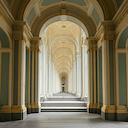
Искусство Эрмитажа
Art of the Hermitage
 Learn RussianFree app with audio, quizzes and real books
Key words
- ЭрмитажHermitage
- музейmuseum
- Санкт-ПетербургSaint Petersburg
- искусствоart
- коллекцияcollection
- экспонатexhibit
- живописьpainting
- скульптураsculpture
- декоративныйdecorative
- предметobject
- книгаbook
- рукописьmanuscript
All 30 words
- туристtourist
- историяhistory
- культураculture
- традицияtradition
- архитектураarchitecture
- зданиеbuilding
- дворецpalace
- бароккоbaroque
- классицизмclassicism
- мастерmaster
- европейскийEuropean
- азиатскийAsian
- отделdepartment
- выставкаexhibition
- образованиеeducation
- фактfact
- талантtalent
- публикаpublic
Эрмитаж в Санкт-Петербурге входит в число крупнейших художественных музеев мира. В его собрании больше трёх миллионов предметов: картины и скульптуры, мебель и фарфор, монеты, древние рукописи и археологические находки.
The Hermitage in Saint Petersburg is one of the largest art museums in the world. Its collection holds more than three million objects: paintings and sculptures, furniture and porcelain, coins, ancient manuscripts and archaeological finds.
Каждый год сюда приходят миллионы посетителей. Чтобы увидеть хотя бы главные залы, нужен целый день, а по коллекции можно проследить историю искусства от каменного века до XX столетия.
Millions of visitors come here every year. Seeing even the main halls takes a whole day, and the collection lets you trace the history of art from the Stone Age to the 20th century.
Как появился Эрмитаж
How the Hermitage Began
Днём рождения музея считается 1764 год. Тогда Екатерина II купила у берлинского купца Иоганна Гоцковского 225 картин, в основном голландских и фламандских мастеров. Для них рядом с Зимним дворцом устроили отдельные покои и назвали их Эрмитажем, что по-французски значит «приют отшельника». Сюда пускали немногих, и императрица шутила, что её сокровищами любуются только она да мыши.
The museum's birth year is considered to be 1764. That year Catherine II bought 225 paintings, mostly by Dutch and Flemish masters, from the Berlin merchant Johann Ernst Gotzkowsky. Private rooms were set up for them next to the Winter Palace and named the Hermitage, French for “a hermit's retreat.” Few people were let in, and the empress joked that only she and the mice admired her treasures.
После революции 1917 года музей сильно вырос за счёт национализированных частных коллекций. В 1948 году Эрмитаж получил часть знаменитых собраний московских купцов Сергея Щукина и Ивана Морозова. Но были и потери: в начале 1930-х годов правительство тайно продало за границу немало шедевров, среди них «Мадонну Альба» Рафаэля.
After the 1917 revolution the museum grew enormously thanks to nationalized private collections. In 1948 the Hermitage received part of the famous collections of the Moscow merchants Sergei Shchukin and Ivan Morozov. But there were losses too: in the early 1930s the government secretly sold many masterpieces abroad, among them Raphael's Alba Madonna.
Дворцы на Неве
Palaces on the Neva
Главное здание музея, Зимний дворец, построил архитектор Бартоломео Растрелли с 1754 по 1762 год для императрицы Елизаветы Петровны. Она не дожила до окончания работ, и первыми хозяевами дворца стали Пётр III и Екатерина II. Зелёно-белые фасады выдержаны в стиле барокко, а многие залы после пожара 1837 года восстановили уже в духе классицизма.
The museum's main building, the Winter Palace, was built by the architect Bartolomeo Rastrelli between 1754 and 1762 for Empress Elizabeth Petrovna. She did not live to see it finished, and its first occupants were Peter III and Catherine II. The green and white facades are Baroque, while many of the halls were restored in the Neoclassical style after the fire of 1837.
Рядом стоят Малый, Большой и Новый Эрмитаж, а также Эрмитажный театр, построенный Джакомо Кваренги. Вход в Новый Эрмитаж украшают десять гранитных атлантов. Именно это здание в 1852 году впервые открылось для публики.
Next to it stand the Small, Old (Great) and New Hermitage, as well as the Hermitage Theatre, designed by Giacomo Quarenghi. The entrance to the New Hermitage is adorned with ten granite Atlases. This was the building that first opened to the public in 1852.
Живопись и скульптура
Painting and Sculpture
Больше всего посетителей собирается у картин. Здесь висят две мадонны Леонардо да Винчи, «Даная» и «Возвращение блудного сына» Рембрандта, десятки полотен Рубенса. Работы Моне, Ван Гога и Матисса, в том числе знаменитый «Танец», выставлены в здании Главного штаба на другой стороне Дворцовой площади.
The paintings draw the biggest crowds. Here hang two Madonnas by Leonardo da Vinci, Rembrandt's Danaë and The Return of the Prodigal Son, and dozens of canvases by Rubens. Works by Monet, Van Gogh and Matisse, including his famous Dance, are on display in the General Staff Building across Palace Square.
Есть в музее и знаменитые скульптуры. Античную Таврическую Венеру привезли в Петербург ещё при Петре I, а «Скорчившийся мальчик» Микеланджело остаётся единственной работой этого мастера в России. Здесь же можно увидеть «Трёх граций» Антонио Кановы.
The museum also has famous sculptures. The ancient Venus of Taurida was brought to Saint Petersburg back in the time of Peter the Great, and Michelangelo's Crouching Boy is still the only work by the master in Russia. Here you can also see Antonio Canova's Three Graces.
Декоративное искусство
Decorative Arts
Не меньше впечатляет декоративное искусство: старинная мебель, фарфор, ковры, ювелирные украшения. Самый известный экспонат этого раздела, часы «Павлин» английского мастера Джеймса Кокса, купил в подарок Екатерине II князь Потёмкин. Механизм работает до сих пор: павлин раскрывает хвост, сова вертит головой, а петух кукарекает.
The decorative arts are just as impressive: antique furniture, porcelain, carpets and jewelry. The best-known piece in this section, the Peacock Clock by the English craftsman James Cox, was bought by Prince Potemkin as a gift for Catherine II. Its mechanism still works: the peacock spreads its tail, the owl turns its head and the rooster crows.
Самые ценные вещи из золота хранятся в Золотой кладовой. Там собраны украшения скифов и древних греков, найденные в курганах на юге России.
The most precious gold objects are kept in the Gold Room. It holds jewelry made by the Scythians and the ancient Greeks, found in burial mounds in southern Russia.
Отделы музея
The Museum's Departments
Коллекцию хранят и изучают несколько отделов. Вот некоторые из них:
The collection is kept and studied by several departments. Here are some of them:
Отдел западноевропейского искусства
Department of Western European Art
Отдел истории русской культуры
Department of the History of Russian Culture
Отдел античного мира
Department of the Classical World
Отдел Востока
Department of the Orient
В Отделе Востока, например, хранятся египетские мумии, китайский фарфор и иранское серебро, а античный отдел славится греческими вазами и римскими портретами.
The Department of the Orient, for example, holds Egyptian mummies, Chinese porcelain and Iranian silver, while the classical department is famous for its Greek vases and Roman portraits.
Выставки и занятия
Exhibitions and Classes
Эрмитаж много работает с детьми и студентами. В Школьном центре музея проходят кружки и лекции, а для групп устраивают тематические экскурсии по залам.
The Hermitage does a lot of work with children and students. The museum's School Center runs clubs and lectures, and groups are taken on themed tours of the halls.
Кроме постоянной экспозиции, каждый год открываются временные выставки. На них показывают вещи из запасников, которые посетители обычно не видят, или привозят работы из других музеев.
Besides the permanent exhibition, temporary exhibitions open every year. They show objects from the storerooms that visitors don't usually see, or bring in works from other museums.
Интересные факты
Interesting Facts
Как публичный музей Эрмитаж открылся в 1852 году, при Николае I.
The Hermitage opened as a public museum in 1852, under Nicholas I.
В главном комплексе больше 350 залов, и обойти их все за один день невозможно.
The main complex has more than 350 halls, and it is impossible to see them all in one day.
В коллекции есть картины Леонардо да Винчи, Рафаэля и Питера Пауля Рубенса.
The collection includes paintings by Leonardo da Vinci, Raphael and Peter Paul Rubens.
Летом 1941 года, ещё до начала блокады Ленинграда, больше миллиона экспонатов вывезли в Свердловск, а на стенах остались пустые рамы.
In the summer of 1941, before the Siege of Leningrad began, over a million exhibits were taken to Sverdlovsk, leaving empty frames on the walls.
Зимний дворец входит в исторический центр Петербурга, который с 1990 года находится в списке Всемирного наследия ЮНЕСКО.
The Winter Palace is part of the historic centre of Saint Petersburg, which has been on the UNESCO World Heritage List since 1990.
Эрмитаж сегодня
The Hermitage Today
Сегодня Эрмитаж давно не умещается в дворцах на Неве. В 2014 году, к 250-летию музея, в восточном крыле Главного штаба открылись новые залы, а в районе Старая Деревня работает большое хранилище, куда тоже можно прийти на экскурсию.
The Hermitage has long outgrown its palaces on the Neva. In 2014, for the museum's 250th anniversary, new galleries opened in the east wing of the General Staff Building, and a large storage center in the Staraya Derevnya district can also be visited on a guided tour.
Собрание продолжает пополняться. Реставраторы музея каждый год возвращают к жизни старые картины, мебель и ткани, и многие из этих вещей потом попадают в залы.
The collection keeps growing. Every year the museum's restorers bring old paintings, furniture and textiles back to life, and many of these pieces later go on display.
In the free app you can listen to this text read aloud and tap any word to see what it means.