Türkiye'de Gelenekler ve Günlük Yaşam
Traditions and Daily Life in Turkey
 Learn TurkishFree app with audio, quizzes and real books
Key words
- misafirperverlikhospitality
- gelenektradition
- gündelik hayatdaily life
- dayanışmasolidarity
- saygırespect
- çaytea
- kahvecoffee
- sofradining table / meal table
- misafirguest
- ev sahibihost
- ailefamily
- komşuneighbor
All 26 words
- bayramholiday / festival
- harçlıkallowance / pocket money
- ziyaretvisit
- hamamTurkish bath / hammam
- nazar boncuğuevil eye bead
- ritüelritual
- sohbetconversation / chat
- mahalleneighborhood
- görgüetiquette / manners
- selamlaşmagreeting
- el sanatıhandicraft
- halıcarpet
- çinitile art / ceramic tile
- imececollective voluntary work
Bir ülkeyi tanımak için tarihini ve coğrafyasını bilmek yetmez, insanların gündelik hayatına da bakmak gerekir. Türkiye'nin gündelik hayatında Anadolu'nun eski gelenekleri, İslam kültürü ve modern şehir yaşamı iç içedir.
To get to know a country, knowing its history and geography is not enough; you also have to look at people's everyday lives. In Turkey's daily life, the old traditions of Anatolia, Islamic culture and modern city living are intertwined.
Konukseverlik, aile bağları, komşuluk ve büyüklere saygı bu hayatın temel taşlarıdır. Bu değerler kitaplarda kalmaz. Kapıda çıkarılan ayakkabıda, ikram edilen çayda, otobüste yaşlılara verilen yerde her gün kendini gösterir.
Hospitality, family ties, neighbourliness and respect for elders are the cornerstones of this life. These values do not stay in books. They show themselves every day in the shoes taken off at the door, the tea offered to guests and the seat given up to an older person on the bus.
Misafirperverlik: Misafir Bereketiyle Gelir
Hospitality: A Guest Brings Blessings
Türkiye'de misafire büyük değer verilir. Habersiz gelen konuğa 'Tanrı misafiri' denir ve böyle bir konuk kapıdan geri çevrilmez. Ev sahibi elindeki en iyi yiyeceği çıkarır, en güzel fincanları kullanır. Sofra sade olsa bile misafir hemen buyur edilir. Nitekim bir atasözünde 'Misafir umduğunu değil, bulduğunu yer.' denir. Misafiri aç ya da çaysız göndermek ayıp sayılır.
In Turkey, guests are held in great esteem. A guest who turns up unannounced is called a 'Tanrı misafiri', a guest sent by God, and such a guest is never turned away. The host brings out the best food in the house and uses the finest cups. Even if the table is simple, the guest is invited to sit down at once. As the proverb says, 'Misafir umduğunu değil, bulduğunu yer': a guest eats not what he hoped for, but what he finds. Sending a guest away hungry or without tea is considered shameful.
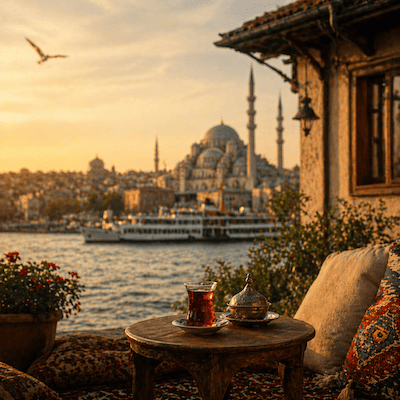
Konukseverliğin en sık görülen işareti çaydır. Halıcıda, oto tamircisinde, hatta devlet dairesinde bile misafire hemen çay söylenir. Bu ikramı kabul etmek kibarlıktır. Çay gelince sohbet de başlar ve bazen saatlerce sürer. Çay istemeyen biri 'Sağ olun, az önce içtim' diyerek teklifi nazikçe geri çevirebilir.
The most common sign of hospitality is tea. At a carpet seller's, at a car repair shop, even at a government office, tea is ordered for a visitor straight away. Accepting this offer is good manners. Once the tea arrives, the conversation begins too, and sometimes it goes on for hours. Someone who doesn't want tea can politely decline by saying 'Sağ olun, az önce içtim' (Thank you, I've just had one).
Çay ve Kahve: Bardakta ve Fincanda Sohbet
Tea and Coffee: Conversation in a Glass and a Cup
Türkiye, kişi başına çay tüketiminde yıllardır dünyanın ilk sıralarındadır. Çayın büyük kısmı Doğu Karadeniz'de, özellikle Rize'de yetişir. Evlerde çay iki katlı çaydanlıkta demlenir ve ince belli bardaklarda içilir. Bazıları demli çayı, bazıları açık çayı sever. Kahvaltıdan gece yarısına kadar çay hiç eksik olmaz. Çay ocaklarındaki çaycılar, tepsileriyle dükkân dükkân dolaşıp çay taşır.
For years Turkey has ranked among the top countries in the world for tea consumption per person. Most of the tea grows in the eastern Black Sea region, especially in Rize. At home, tea is brewed in a two-tiered teapot and drunk from small tulip-shaped glasses. Some like their tea strong, others like it light. From breakfast until midnight, there is always tea. Tea boys from the tea stalls go from shop to shop with their trays, carrying tea.
Türk kahvesi ise daha özel anlara ayrılır. Cezvede köpüklü pişirilir ve küçük fincanlarda, yanında bir bardak suyla ikram edilir. Fincanın dibinde kalan telveyle fal bakılır. Kız istemeye gelen damat adayının kahvesini genç kız pişirir; bazen de şaka yollu kahveye tuz katar. 'Bir fincan kahvenin kırk yıl hatırı vardır' sözü bu kültürü iyi anlatır. Türk kahvesi kültürü ve geleneği 2013'te UNESCO listesine girdi.
Turkish coffee, on the other hand, is kept for special moments. It is cooked with foam in a cezve and served in small cups with a glass of water on the side. People read fortunes from the grounds left at the bottom of the cup. When a young man's family comes to ask for a girl's hand, the girl makes the coffee for the prospective groom and sometimes, as a joke, puts salt in his cup. The saying 'Bir fincan kahvenin kırk yıl hatırı vardır', a cup of coffee is remembered for forty years, sums up this culture well. Turkish coffee culture and tradition entered the UNESCO list in 2013.
Aile: Uzaktayken Bile Yakın
Family: Close Even When Far Away
Türkiye'de aile, hayatın merkezindedir. Eskiden, özellikle köylerde, büyükanne, büyükbaba, oğullar, gelinler ve torunlar aynı evde ya da aynı avluda yaşardı. Evlilik ya da meslek seçimi gibi önemli kararları çoğu zaman bütün aile birlikte konuşur. Biri hastalandığında ya da başı sıkıştığında ilk yardıma koşan yine ailedir.
In Turkey, family is at the centre of life. In the past, especially in villages, grandparents, sons, daughters-in-law and grandchildren lived in the same house or around the same courtyard. Important decisions, such as marriage or the choice of a career, are often discussed by the whole family together. When someone falls ill or gets into trouble, it is again the family who rushes to help first.
Şehirleşmeyle birlikte aileler küçüldü; ancak aile bağları kopmadı. Pek çok genç evlenene kadar anne babasıyla yaşar. Pazar kahvaltıları, bayram ziyaretleri ve her gün telefonla hal hatır sormak bugün de yaygındır. Başarı da sorun da tek kişinin değil, bütün ailenin meselesi sayılır. Bu durum insana hem güven verir hem de sorumluluk yükler.
With urbanisation, families have become smaller, but the ties have not been broken. Many young people live with their parents until they marry. Sunday breakfasts, holiday visits and daily phone calls to ask how everyone is are still common today. Success and problems alike are seen not as one person's business but as the whole family's. This gives people a sense of security and also places responsibility on them.
Büyüklere Saygı: Abla, Abi, Teyze, Amca
Respect for Elders: Abla, Abi, Teyze, Amca
Türk çocukları büyüklere saygıyı küçük yaşta öğrenir. Bayramlarda büyüklerin eli öpülür ve alına götürülür. Yaşça büyük biri odaya girdiğinde gençler ayağa kalkar; otobüste de büyüklere yer verilir. Sofrada yemeğe önce büyükler başlar. Bazı ailelerde büyüklerin yanında bacak bacak üstüne atmak ya da sigara içmek hâlâ ayıp sayılır.
Turkish children learn respect for elders at an early age. At holidays, they kiss their elders' hands and touch them to their foreheads. When an older person enters the room, young people stand up, and on the bus they give up their seat. At the table, the elders start eating first. In some families, crossing your legs or smoking in front of elders is still considered rude.
Bu saygı dile de yansır. Türkçede yaşça büyük birine yalnızca adıyla seslenmek pek kibar bulunmaz. Bunun yerine 'abla', 'abi', 'teyze' ya da 'amca' denir. Bu sözcükler akraba olmayan insanlar için de kullanılır. Bakkala 'amca', pazarda sebze satan kadına 'teyze' demek hem saygıyı hem de yakınlığı gösterir. Resmî ortamlarda ise addan sonra 'Hanım' ya da 'Bey' eklenir ve kişiye Ayşe Hanım, Mehmet Bey diye seslenilir.
This respect is reflected in the language too. In Turkish, it is not thought very polite to address an older person by their first name alone. Instead, people say 'abla' (big sister), 'abi' (big brother), 'teyze' (auntie) or 'amca' (uncle). These words are also used for people who are not relatives. Calling the grocer 'amca' or the woman selling vegetables at the market 'teyze' shows both respect and closeness. In formal settings, 'Hanım' or 'Bey' is added after the first name, as in Ayşe Hanım or Mehmet Bey.
Sofra Kültürü: Uzun Kahvaltılar, Paylaşılan Tabaklar
Table Culture: Long Breakfasts, Shared Plates
Türkiye'de yemek, bir araya gelmek için iyi bir bahanedir. Özellikle hafta sonu kahvaltısı uzun sürer. Sofraya beyaz peynir, kaşar, zeytin, domates, salatalık, bal, kaymak, reçel ve haşlanmış yumurta dizilir. Yanında simit ya da sıcak ekmek bulunur, bazen tavada menemen ya da sucuklu yumurta da gelir. 'Kahvaltı' sözcüğü 'kahve altı'ndan türemiştir ve kahveden önce yenen yemek demektir.
In Turkey, food is a good excuse to get together. Weekend breakfast in particular goes on for a long time. White cheese, kaşar cheese, olives, tomatoes, cucumbers, honey, clotted cream, jam and boiled eggs are laid out on the table. There are simit or warm bread on the side, and sometimes menemen or eggs with sucuk arrive in the pan. The word 'kahvaltı' comes from 'kahve altı' and means the food eaten before coffee.
Akşam yemeklerinde de paylaşmak esastır. Mezeler ve salatalar ortaya konur, herkes istediğinden alır. Yemeğe başlarken 'Afiyet olsun' denir. Yemeği yapan kişiye de 'Elinize sağlık' diye teşekkür edilir. Yemekten sonra çay gelir ve çoğu evde çay içilmeden kimse sofradan kalkmaz.
Sharing is also the rule at dinner. Meze and salads are placed in the middle, and everyone takes what they like. Before starting, people say 'Afiyet olsun' (Enjoy your meal). The person who cooked is thanked with 'Elinize sağlık' (Bless your hands). After the meal tea arrives, and in most homes nobody leaves the table before drinking it.
Türk Gelenekleri Hakkında İlginç Bilgiler
Interesting Facts About Turkish Traditions
Türk evlerinde ayakkabılar kapıda çıkarılır. Ev sahibi misafire genellikle terlik verir.
In Turkish homes, shoes are taken off at the door. The host usually gives guests slippers.
Mavi camdan yapılan nazar boncuğu, kötü bakışlardan koruması için kapılara, arabalara ve bebeklerin giysilerine takılır.
The blue glass evil eye bead is pinned to doors, cars and babies' clothes to protect against envious looks.
Yeni bir ev, iş ya da araba alan birine 'Hayırlı olsun' denir. Bu dileğe genellikle 'Sağ ol' ya da 'Teşekkürler' diye karşılık verilir.
When someone buys a new house, starts a new job or gets a new car, people say 'Hayırlı olsun' (May it bring you luck). The usual reply to this wish is 'Sağ ol' or 'Teşekkürler' (Thanks).
Düğünlerde gelinle damadın yakasına para iğnelenir, akrabalar altın takar. Bu takılar yeni çiftin ilk birikimi olur.
At weddings, banknotes are pinned to the collars of the bride and groom, and relatives give gold. These gifts become the new couple's first savings.
Bir evde cenaze olduğunda komşular birkaç gün boyunca o eve yemek getirir ve yas tutan aile mutfağa girmez. Ölünün ardından helva kavrulup dağıtılır.
When there is a death in a household, the neighbours bring food to that home for several days, and the grieving family does not cook. After the death, helva is made and handed out.
Türk hamamının kökleri Roma ve Bizans hamamlarına uzanır. Osmanlı döneminde insanlar hamama hem yıkanmak hem de buluşup sohbet etmek için giderdi.
The Turkish hamam has its roots in Roman and Byzantine baths. In Ottoman times, people went to the hamam both to wash and to meet and chat.
Bayramlar: Ziyaretler ve Harçlıklar
Holidays: Visits and Pocket Money
Yılın en kalabalık ve hareketli günleri iki dinî bayramdır: Ramazan Bayramı ve Kurban Bayramı. Ramazan Bayramı bir aylık orucun ardından gelir ve üç gün sürer. Bayram sabahı erkekler bayram namazına gider, ardından ziyaretler başlar. Çocuklar büyüklerin elini öper ve harçlık alır. Misafirlere şeker ve tatlı ikram edilir. Bayramdan önce milyonlarca kişi memleketine gitmek için yola çıkar.
The busiest and liveliest days of the year are the two religious holidays: Ramazan Bayramı and Kurban Bayramı. Ramazan Bayramı follows the month of fasting and lasts three days. In the morning men go to the holiday prayer, and then the visits begin. Children kiss their elders' hands and get pocket money. Guests are offered sweets and desserts. Before the holiday, millions of people set off for their home towns.
Kurban Bayramı dört gün sürer ve kökü Hz. İbrahim'in hikâyesine dayanır. Durumu iyi olan aileler kurban keser, etin bir kısmını yoksullara ve komşulara dağıtır. Bayramda insanlar tanıdık tanımadık herkesle bayramlaşır. Küs olanlar barışır, uzun süredir görüşmeyen akrabalar birbirini arar.
Kurban Bayramı lasts four days and goes back to the story of Abraham. Families who can afford it sacrifice an animal and share part of the meat with the poor and their neighbours. During the holiday, people exchange holiday greetings with everyone, whether they know them or not. People who have fallen out make up, and relatives who haven't seen each other for a long time get in touch.
Görgü: Yazılı Olmayan Kurallar
Manners: The Unwritten Rules
Türkiye'de gündelik hayatın yazılı olmayan pek çok kuralı vardır. Konuşan birinin sözünü kesmek kabalık sayılır. Taşınan komşuya yardım etmek ya da hasta komşuya çorba götürmek beklenen davranışlardır. Bu yardımın karşılığında kimse bir şey istemez. Köylerde bu yardımlaşmanın adı imecedir: Yol yapımında ya da hasatta bütün köy birlikte çalışır.
Everyday life in Turkey has many unwritten rules. Interrupting someone who is speaking is considered rude. Helping a neighbour who is moving house or taking soup to a sick neighbour is expected behaviour. Nobody asks for anything in return for this help. In villages, this kind of mutual help is called imece: when a road is built or a harvest brought in, the whole village works together.
Selamlaşma da kısa sürmez. Tanıdık biriyle karşılaşınca yalnızca 'Merhaba' demek yetmez; 'Nasılsın?', 'Evdekiler nasıl?', 'İşler nasıl?' gibi sorular da sorulur. Çalışan birine 'Kolay gelsin', hasta birine 'Geçmiş olsun' denir. Bu kalıpları bilen bir yabancı kısa sürede sıcak bir ilgiyle karşılanır.
Greetings don't end quickly either. When you meet someone you know, just saying 'Merhaba' is not enough; questions like 'Nasılsın?' (How are you?), 'Evdekiler nasıl?' (How's the family?) and 'İşler nasıl?' (How's work?) are asked as well. To someone at work you say 'Kolay gelsin' (May it be easy), and to someone who is ill 'Geçmiş olsun' (Get well soon). A foreigner who knows these phrases is soon met with warm interest.
El Sanatları: Halıdan Çiniye
Crafts: From Carpets to Tiles
Anadolu'da el sanatları yüzyıllar boyunca hem geçim kaynağı hem de bir sanat dalı olmuştur. Halı ve kilim dokumacılığı köylerde bugün de sürer. Her yörenin kendine özgü desenleri ve renkleri vardır. Bir uzman, halıya bakarak onun nerede dokunduğunu söyleyebilir. Desenlerin de birer anlamı vardır: Koçboynuzu gücü, elibelinde ise kadını ve bereketi simgeler.
In Anatolia, handicrafts have for centuries been both a livelihood and an art form. Carpet and kilim weaving still goes on in villages today. Each area has its own patterns and colours. An expert can look at a carpet and tell where it was woven. The patterns have meanings too: the ram's horn stands for strength, while the elibelinde, a figure with hands on hips, stands for woman and fertility.
Çini sanatı, Osmanlı döneminde, özellikle 16. yüzyılda en parlak çağını yaşadı. İznik çinileri kobalt mavisi ve mercan kırmızısıyla ünlüdür. İstanbul'daki Rüstem Paşa Camii ile Sultanahmet Camii'nin duvarları bu çinilerle kaplıdır. Bakırcılık, ahşap oymacılığı, hat ve tezhip de köklü sanatlardır. Bu sanatları öğrenmek bugün de yıllar alır. Çırak, ustasının yanında adım adım ilerler.
The art of tile-making reached its golden age in Ottoman times, especially in the 16th century. İznik tiles are famous for their cobalt blue and coral red. The walls of the Rüstem Paşa Mosque and the Sultan Ahmed Mosque in Istanbul are covered with these tiles. Coppersmithing, wood carving, calligraphy and illumination are also long-standing arts. Learning these crafts still takes years today. The apprentice progresses step by step at the master's side.
Hamam: Kese, Köpük ve Sohbet
The Hamam: Scrubbing Mitt, Foam and Conversation
Osmanlı şehirlerinde neredeyse her mahallenin bir hamamı vardı. Çoğu evde banyo olmadığı için insanlar haftada bir hamama giderdi. Hamam aynı zamanda bir buluşma yeriydi. Kadınlar ve erkekler ayrı bölümlerde ya da ayrı saatlerde yıkanır, bu arada dinlenip mahallenin haberlerini konuşurdu. Düğünden önceki gelin hamamı ve doğumdan kırk gün sonra yapılan kırk hamamı gibi gelenekler bazı ailelerde bugün de sürer.
In Ottoman cities, almost every neighbourhood had its own hamam. Because most houses had no bathroom, people went to the hamam once a week. The hamam was also a meeting place. Women and men bathed in separate sections or at separate times, resting and catching up on the neighbourhood news. Traditions such as the bride's bath before the wedding and the 'kırk hamamı', held forty days after a birth, still live on in some families.
Hamam üç bölümden oluşur: soyunma yeri olan soğukluk ya da camekân, ılık bir geçiş bölümü olan ılıklık ve asıl yıkanılan sıcaklık. Sıcaklıkta yıkanan kişi ortadaki mermer göbek taşına uzanır. Tellak ya da natır önce keseyle sırtını ovar, sonra onu bol köpükle yıkar. İstanbul'da Mimar Sinan'ın yaptığı Çemberlitaş Hamamı gibi 16. yüzyıldan kalma hamamlar bugün de açıktır.
A hamam has three parts: the soğukluk or camekân, where people undress; the ılıklık, a warm passage; and the sıcaklık, the hot room where the actual bathing takes place. In the hot room, the bather lies down on the marble göbek taşı in the middle. The attendant, a tellak for men or a natır for women, first scrubs the bather's back with a kese mitt and then washes them with plenty of foam. In Istanbul, 16th-century hamams such as the Çemberlitaş Hamam, built by Mimar Sinan, are still open today.
Değişen Türkiye: Gelenek ve Modern Hayat
Changing Turkey: Tradition and Modern Life
Türkiye son yetmiş yılda hızla değişti. Köylerden şehirlere büyük göçler yaşandı; bugün nüfusun büyük çoğunluğu şehirlerde yaşar. Birçok genç okumak ya da çalışmak için ailesinden uzaklaşır, bir kısmı yurt dışına gider. Alışveriş merkezleri, e-ticaret ve sosyal medya eski alışkanlıkların bazılarını değiştirdi.
Turkey has changed fast over the last seventy years. There were great migrations from villages to cities, and today the vast majority of the population lives in cities. Many young people leave their families to study or work, and some go abroad. Shopping centres, online shopping and social media have changed some of the old habits.
Yine de birçok gelenek yeni hayata uyum sağladı. İstanbul'da tek başına yaşayan bir genç bayramda memleketine gider ve annesinin dolmasını hâlâ her yemekten üstün tutar. Bayram tebrikleri artık telefondan mesajla gönderilir; ancak büyüklerin eli yine yüz yüze öpülür. Gelenek ile modern hayat çoğu zaman birbirini dışlamaz, yan yana yürür.
Even so, many traditions have adapted to the new life. A young person living alone in Istanbul goes back home for the holidays and still rates their mother's dolma above any other dish. Holiday greetings are now sent as text messages, but elders' hands are still kissed face to face. Tradition and modern life usually do not exclude each other; they walk side by side.
Son Söz: Her Gün Yaşanan Gelenekler
Final Word: Traditions Lived Every Day
Türkiye'deki geleneklerin çoğu müzelerde değil, gündelik hayatın içindedir. Çay bardağının başında dönen sohbet, bayramda öpülen eller, cenaze evine götürülen yemek ve otobüste yaşlıya verilen yer bunlardan yalnızca birkaçıdır.
Most traditions in Turkey are found not in museums but in everyday life. The conversation over a glass of tea, the hands kissed at holidays, the food taken to a house in mourning and the seat given up to an older person on the bus are just a few of them.
Bu geleneklerin dili de Türkçedir. 'Kolay gelsin', 'Geçmiş olsun', 'Elinize sağlık' ve 'Hayırlı olsun' gibi kalıpları öğrenen biri hem dili hem de bu küçük âdetleri daha iyi anlar.
The language of these traditions is Turkish. Anyone who learns phrases such as 'Kolay gelsin', 'Geçmiş olsun', 'Elinize sağlık' and 'Hayırlı olsun' understands both the language and these small customs better.
In the free app you can listen to this text read aloud and tap any word to see what it means.