İstanbul: Kıtaların Buluştuğu Yer
Istanbul: Where Continents Meet
 Learn TurkishFree app with audio, quizzes and real books
Key words
- medeniyetcivilization
- mirasheritage / legacy
- başkentcapital city
- fetihconquest
- kuşatmasiege
- surcity wall / fortress wall
- ticarettrade / commerce
- stratejikstrategic
- limanharbor / port
- kubbedome
- minareminaret
- saraypalace
All 27 words
- imparatorlukempire
- kozmopolitcosmopolitan
- göçmigration
- mahalleneighborhood
- çarşıbazaar / market
- kalıntıruin / remains
- yarımadapeninsula
- boğazstrait / Bosphorus
- iskelepier / dock
- yalıwaterside mansion
- sentezsynthesis
- baharatspice
- semtdistrict / neighborhood
- katmanlayer
- keşifdiscovery / exploration
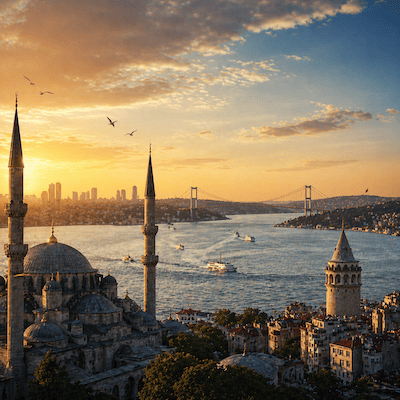
İstanbul, Avrupa ile Asya'yı ayıran İstanbul Boğazı'nın iki yakasına kurulmuş bir şehirdir. Sabah Üsküdar'dan vapura binen biri, yirmi dakika sonra başka bir kıtada, Eminönü'nde işinin başında olabilir. Şehrin tarihi en az 2.600 yıl öncesine uzanır.
Istanbul is a city built on both shores of the Bosphorus, the strait that separates Europe from Asia. Someone who boards a ferry in Üsküdar in the morning can be at work twenty minutes later in Eminönü, that is, on another continent. The city's history goes back at least 2,600 years.
İstanbul, 330'dan 1923'e kadar yaklaşık 1.600 yıl boyunca önce Roma İmparatorluğu'na, ardından Bizans'a, son olarak da Osmanlı Devleti'ne başkentlik yaptı. Her dönem, bir öncekinin üzerine yeni bir katman ekledi. Bugün aynı sokakta bir Bizans sarnıcı, bir Osmanlı çeşmesi ve modern bir kafe yan yana bulunabilir.
For about 1,600 years, from 330 to 1923, Istanbul served as the capital first of the Roman Empire, then of Byzantium and finally of the Ottoman state. Each era added a new layer on top of the one before. Today a Byzantine cistern, an Ottoman fountain and a modern café can stand side by side on the same street.
Başlangıç: Byzantion'un Kuruluşu
Beginnings: The Founding of Byzantion
Geleneğe göre şehri MÖ 657'de Megaralı Byzas kurdu. Anlatılana göre Delfi kâhini, Byzas'a "körlerin karşısına" yerleşmesini söylemişti. Byzas, karşı kıyıdaki Kalkedon'a (bugünkü Kadıköy) yerleşenleri kör saydı, çünkü onlar bu güzel yarımadayı görmeyip karşısına şehir kurmuşlardı. Kendisi de Haliç ile Marmara Denizi arasındaki yarımadada Byzantion'u kurdu.
According to tradition, the city was founded in 657 BC by Byzas of Megara. The story goes that the oracle at Delphi had told Byzas to settle "opposite the blind". Byzas considered the people who had settled at Chalcedon, today's Kadıköy, on the opposite shore to be blind, because they had built their city across from this beautiful peninsula without noticing it. He himself founded Byzantion on the peninsula between the Golden Horn and the Sea of Marmara.
Byzantion uzun süre orta büyüklükte bir ticaret şehri olarak kaldı. Balığı bol suları ve korunaklı limanı şehre zenginlik getirdi. Karadeniz'in ağzındaki konumu ise onu herkesin ele geçirmek istediği bir hedef hâline getirdi. Persler şehri aldı. Makedonya Kralı II. Filip ise şehri kuşattı, ancak alamadı. MS 196'da Roma İmparatoru Septimius Severus şehri yıktırdı, ardından yeniden inşa ettirdi.
For a long time Byzantion remained a medium-sized trading city. Its waters, rich in fish, and its sheltered harbour brought the city wealth. Its position at the mouth of the Black Sea, however, made it a prize that everyone wanted to seize. The Persians took the city. Philip II, king of Macedon, besieged it but failed to take it. In AD 196 the Roman emperor Septimius Severus had the city destroyed and then rebuilt.
Konstantinopolis: Yeni Roma
Constantinople: The New Rome
Roma İmparatoru I. Konstantin, 324'te bu şehri imparatorluğun yeni merkezi olarak seçti. "Yeni Roma", 11 Mayıs 330'da düzenlenen bir törenle resmen açıldı. Şehir kısa sürede kurucusunun adıyla anılmaya başladı: Konstantinopolis. Yeni forumlar, saraylar ve kiliseler yapıldı, Hipodrom genişletildi.
In 324 the Roman emperor Constantine I chose this city as the new centre of the empire. "New Rome" was officially inaugurated with a ceremony on 11 May 330. The city soon came to be known by the name of its founder: Constantinople. New forums, palaces and churches were built, and the Hippodrome was enlarged.
476'da Batı Roma İmparatorluğu yıkıldı, ancak Doğu Roma varlığını sürdürdü. Bugün "Bizans" adıyla anılan bu devletin halkı, kendini hâlâ "Romalı" sayıyordu. Konstantinopolis bin yılı aşkın bir süre bu imparatorluğun başkenti olarak kaldı. Şehir, Orta Çağ'ın büyük bölümünde Avrupa'nın en kalabalık ve en zengin şehriydi.
In 476 the Western Roman Empire fell, but the Eastern Roman Empire lived on. The people of this state, known today as "Byzantium", still considered themselves "Romans". Constantinople remained the capital of this empire for more than a thousand years. For most of the Middle Ages it was the largest and richest city in Europe.
Bizans: Surların Ardındaki Bin Yıl
Byzantium: A Thousand Years Behind the Walls
Şehri yüzyıllar boyunca, 5. yüzyılın başında II. Theodosius döneminde yapılan Kara Surları korudu. Avarlar ve Persler 626'da, Araplar 7. ve 8. yüzyıllarda, Ruslar ve Bulgarlar daha sonra bu surların önüne geldi, ancak hiçbiri şehri alamadı. Şehir ilk kez 1204'te düştü: Dördüncü Haçlı Seferi'nin askerleri deniz surlarını aşarak içeri girdi ve şehri yağmaladı.
For centuries the city was protected by the Land Walls, built in the early 5th century under Theodosius II. The Avars and Persians in 626, the Arabs in the 7th and 8th centuries, and later the Rus and the Bulgars all came before these walls, but none of them took the city. It fell for the first time in 1204: soldiers of the Fourth Crusade broke over the sea walls, entered the city and sacked it.
Bizans döneminde Konstantinopolis, Ortodoks Hristiyanlığın merkeziydi. Patrik bu şehirde otururdu ve kilisenin büyük konsillerinden birkaçı burada toplandı. Sarayın karmaşık törenleri ve entrikaları ise dillere destandı. Türkçedeki "Bizans oyunu" deyimi, bugün de gizli ve dolambaçlı entrikalar için kullanılır.
In the Byzantine era Constantinople was the centre of Orthodox Christianity. The patriarch resided in the city, and several of the church's great councils met here. The palace's elaborate ceremonies and intrigues were legendary. The Turkish expression "Bizans oyunu" (a Byzantine game) is still used today for secret, tortuous intrigues.
Ayasofya: İki Medeniyetin Simgesi
Hagia Sophia: Symbol of Two Civilisations
Ayasofya'yı İmparator I. Justinianus yaptırdı ve yapı 537'de tamamlandı. Mimarları Trallesli Anthemios ile Miletli İsidoros'tur. Bizans döneminde Patrikliğin ana kilisesi olan Ayasofya, yaklaşık bin yıl boyunca dünyanın en büyük kilisesi olarak kaldı. Yerden yaklaşık 55 metre yükseklikteki kubbesi, tabanındaki 40 pencere sayesinde havada asılı duruyormuş gibi görünür.
Hagia Sophia was commissioned by the emperor Justinian I and completed in 537. Its architects were Anthemius of Tralles and Isidore of Miletus. Hagia Sophia, the main church of the Patriarchate in the Byzantine era, remained the largest church in the world for nearly a thousand years. Its dome, about 55 metres above the floor, seems to float in the air thanks to the 40 windows around its base.
1453'te şehri alan Fatih Sultan Mehmed, Ayasofya'yı camiye çevirdi. Yapı yıkılmadı. Minareler zamanla eklendi, figürlü mozaikler ise sonraki yüzyıllarda sıvayla örtüldü. Ayasofya, 1934'te alınan bir kararla müzeye dönüştürüldü, 2020'de ise yeniden cami oldu. Bugün Bizans mozaikleri ile büyük hat levhaları aynı mekânda görülebilir.
Mehmed the Conqueror, who took the city in 1453, converted Hagia Sophia into a mosque. The building was not demolished. Minarets were added over time, while the figurative mosaics were covered with plaster in later centuries. By a decision taken in 1934, Hagia Sophia was turned into a museum, and in 2020 it became a mosque again. Today Byzantine mosaics and huge calligraphic roundels can be seen in the same space.
1453: Kuşatma ve Fetih
1453: Siege and Conquest
Kuşatma 6 Nisan 1453'te başladı ve 53 gün sürdü. 21 yaşındaki Sultan II. Mehmed, Macar usta Urban'a dev toplar döktürdü. Bunların en büyüğü "Şahi" adıyla anılır. Bizanslılar Haliç'in girişini kalın bir zincirle kapatmıştı. Osmanlılar ise 22 Nisan'da gemilerini Galata'nın arkasındaki tepelerden karadan yürüterek Haliç'e indirdi. Şehir 29 Mayıs'ta düştü.
The siege began on 6 April 1453 and lasted 53 days. The 21-year-old Sultan Mehmed II had the Hungarian master Urban cast giant cannons for him. The largest of them is known as "Şahi". The Byzantines had closed the entrance to the Golden Horn with a heavy chain. On 22 April the Ottomans hauled their ships overland across the hills behind Galata and lowered them into the Golden Horn. The city fell on 29 May.
Fetihten sonra II. Mehmed şehri yeniden canlandırmaya girişti. Anadolu'dan ve Balkanlardan getirilen Müslüman, Hristiyan ve Yahudi aileler şehre yerleştirildi. Topkapı Sarayı yapıldı. Kapalıçarşı'nın çekirdeğini oluşturan bedesten de bu dönemde kuruldu. 1492'de, II. Bayezid döneminde, İspanya'dan sürülen Yahudiler de şehre geldi. Osmanlılar resmî yazışmalarda çoğunlukla "Kostantiniyye" adını kullanıyordu, halk ise şehre "İstanbul" diyordu.
After the conquest, Mehmed II set about reviving the city. Muslim, Christian and Jewish families brought from Anatolia and the Balkans were settled there. Topkapı Palace was built. The bedesten, which forms the core of the Grand Bazaar, was also founded in this period. In 1492, under Bayezid II, Jews expelled from Spain also came to the city. In official documents the Ottomans mostly used the name "Kostantiniyye", while ordinary people called the city "Istanbul".
Osmanlı İstanbul'u: İmparatorluğun Kalbi
Ottoman Istanbul: Heart of an Empire
Osmanlı İstanbul'u çok dilli ve çok dinli bir şehirdi. Galata'da Cenevizliler ve Avrupalı tüccarlar, Fener'de Rum aileler, Balat'ta Yahudiler, Samatya ve Kumkapı'da Ermeniler yaşardı. Her cemaatin kendi kilisesi, havrası ya da camisi ve kendi okulları vardı.
Ottoman Istanbul was a city of many languages and many faiths. Genoese and European merchants lived in Galata, Greek families in Fener, Jews in Balat, and Armenians in Samatya and Kumkapı. Each community had its own church, synagogue or mosque, and its own schools.
Topkapı Sarayı yaklaşık 400 yıl boyunca padişahların evi ve devletin yönetim merkeziydi. Divan burada toplanır, hazine burada saklanırdı. Saray mutfaklarında her gün binlerce kişi için yemek pişirilirdi. 1856'da padişah Dolmabahçe Sarayı'na taşındı. Osmanlı Devleti, 600 yılı aşkın tarihinde toplam 36 padişah tarafından yönetildi.
For about 400 years Topkapı Palace was the home of the sultans and the seat of government. The imperial council met here and the treasury was kept here. Every day the palace kitchens cooked for thousands of people. In 1856 the sultan moved to Dolmabahçe Palace. In its history of more than 600 years, the Ottoman state was ruled by 36 sultans in all.
İstanbul Hakkında İlginç Bilgiler
Curious Facts About Istanbul
İstanbul, iki kıtaya yayılmış şehirlerin en büyüğüdür. Boğaz'ın batı yakası Avrupa'da, doğu yakası Asya'dadır. Pek çok İstanbullu işe gitmek için her gün kıtalar arasında gidip gelir.
Istanbul is the largest city that spans two continents. The western shore of the Bosphorus lies in Europe, the eastern shore in Asia. Many people in Istanbul cross between continents every day to get to work.
Marmaray kazıları sırasında Yenikapı'da Bizans dönemine ait Theodosius Limanı ortaya çıkarıldı. Kazıda 30'dan fazla batık gemi ve yaklaşık 8.000 yıllık yerleşim izleri bulundu.
During the excavations for the Marmaray rail tunnel, the Byzantine Harbour of Theodosius was uncovered at Yenikapı. The dig revealed more than 30 shipwrecks and traces of settlement some 8,000 years old.
Kapalıçarşı, dünyanın en eski ve en büyük kapalı çarşılarından biridir. Çekirdeği 15. yüzyılda kuruldu. Bugün 60 kadar sokağında 4.000'e yakın dükkân bulunur.
The Grand Bazaar is one of the oldest and largest covered markets in the world. Its core was founded in the 15th century. Today its roughly 60 streets hold nearly 4,000 shops.
Boğaz'dan her yıl 40 bin civarında gemi geçer. Bu sayı, Süveyş Kanalı'ndan geçen gemilerin sayısından fazladır.
Around 40,000 ships pass through the Bosphorus every year. That is more than the number of ships that pass through the Suez Canal.
Tarihî yarımada, tıpkı Roma gibi yedi tepe üzerine kuruludur. Bizanslılar bu benzerlikten hoşlanır, şehre "Yeni Roma" derlerdi.
Like Rome, the historic peninsula is built on seven hills. The Byzantines liked this resemblance and called the city "New Rome".
Şehrin tarih boyunca pek çok adı oldu: Byzantion, Augusta Antonina, Nova Roma, Konstantinopolis, Kostantiniyye ve İstanbul. "İstanbul" adının, Yunanca "şehre doğru" anlamına gelen "is tin polin" sözünden türediği düşünülür. Bu ad 1930'da resmîleşti.
Over its history the city has had many names: Byzantion, Augusta Antonina, Nova Roma, Constantinople, Kostantiniyye and Istanbul. The name "Istanbul" is thought to come from the Greek phrase "is tin polin", meaning "to the city". It became official in 1930.
Boğaz: İki Denizi Bağlayan Su Yolu
The Bosphorus: A Waterway Joining Two Seas
İstanbul Boğazı, Karadeniz'i Marmara Denizi'ne bağlar. Uzunluğu yaklaşık 31 kilometre, en dar yerindeki genişliği ise 700 metre kadardır. Tarih boyunca Karadeniz'den Akdeniz'e giden her gemi buradan geçmek zorundaydı. II. Mehmed de kuşatmadan bir yıl önce, 1452'de, Boğaz'ın en dar yerinde Rumeli Hisarı'nı yaptırdı.
The Bosphorus connects the Black Sea with the Sea of Marmara. It is about 31 kilometres long and some 700 metres wide at its narrowest point. Throughout history every ship sailing from the Black Sea to the Mediterranean had to pass through here. In 1452, a year before the siege, Mehmed II built the fortress of Rumeli Hisarı at the narrowest point of the strait.
Boğaz, bugün İstanbul'un en sevilen manzarasıdır. Kıyı boyunca ahşap yalılar, balık lokantaları ve çay bahçeleri sıralanır. İki yakayı 1973'ten beri köprüler, 2013'ten beri de deniz altından geçen Marmaray tüneli birbirine bağlar. Yine de pek çok İstanbullu karşıya geçmek için vapuru tercih eder.
Today the Bosphorus is Istanbul's best-loved view. Wooden waterside mansions, fish restaurants and tea gardens line the shore. Since 1973 bridges, and since 2013 the undersea Marmaray tunnel, have linked the two shores. Even so, many people in Istanbul prefer to take the ferry across.
Cumhuriyet Dönemi ve Bugünkü İstanbul
The Republican Era and Istanbul Today
13 Ekim 1923'te Ankara yeni devletin başkenti oldu. 29 Ekim'de ise cumhuriyet ilan edildi. Kurtuluş Savaşı Ankara'dan yönetilmişti. Anadolu'nun ortasındaki bu şehir daha güvenli de görülüyordu. Böylece İstanbul, yaklaşık 1.600 yıl sonra ilk kez başkent olmaktan çıktı.
On 13 October 1923 Ankara became the capital of the new state. On 29 October the Republic was proclaimed. The War of Independence had been directed from Ankara. This city in the middle of Anatolia was also seen as safer. So, after about 1,600 years, Istanbul ceased to be a capital for the first time.
Yine de İstanbul ülkenin ekonomi, kültür ve eğitim merkezi olmayı sürdürdü. 1950'lerden itibaren Anadolu'dan gelen büyük göç dalgalarıyla nüfusu katlanarak arttı. Bugün yaklaşık 16 milyon kişinin yaşadığı İstanbul, Avrupa'nın en kalabalık şehri kabul edilir. Hızlı büyüme beraberinde trafik, konut ve çevre sorunlarını da getirdi.
Even so, Istanbul remained the country's centre of business, culture and education. From the 1950s onwards, great waves of migration from Anatolia made its population multiply. Today Istanbul, home to about 16 million people, is considered the most populous city in Europe. Rapid growth has also brought problems with traffic, housing and the environment.
Semtler: Her Mahallede Başka Bir Tarih
Districts: A Different History in Every Neighbourhood
Sultanahmet'te Bizans ve Osmanlı mirası iç içedir. Eski Hipodrom'un yerinde bugün Mısır'dan getirilen bir dikilitaş ile Yılanlı Sütun durur. Birkaç adım ötede Ayasofya'nın kubbesi ve 17. yüzyılın başında yapılan altı minareli Sultanahmet Camii yükselir. Kapalıçarşı ve Mısır Çarşısı da buraya yürüme mesafesindedir.
In Sultanahmet, the Byzantine and Ottoman heritage is intertwined. Where the old Hippodrome once was, an obelisk brought from Egypt and the Serpent Column stand today. A few steps away rise the dome of Hagia Sophia and the six-minaret Sultan Ahmed Mosque, built in the early 17th century. The Grand Bazaar and the Spice Bazaar are also within walking distance.
Beyoğlu ise bambaşka bir İstanbul'dur. 19. yüzyılda Avrupalı tüccarların ve elçiliklerin semti olan Pera'nın ana caddesi, bugünkü İstiklal Caddesi'dir. Fener ve Balat'ın renkli evleri, şehrin Rum ve Yahudi geçmişini hatırlatır. Asya yakasında Üsküdar eski camileri ve sahiliyle, Kadıköy ise çarşısı, kafeleri ve konser salonlarıyla tanınır.
Beyoğlu is a completely different Istanbul. The main street of Pera, the district of European merchants and embassies in the 19th century, is today's İstiklal Avenue. The colourful houses of Fener and Balat recall the city's Greek and Jewish past. On the Asian side, Üsküdar is known for its old mosques and waterfront, and Kadıköy for its market, cafés and concert halls.
Sokakta ve Sofrada İstanbul
Istanbul on the Street and at the Table
İstanbul mutfağı, şehrin çok kültürlü geçmişini yansıtır. Bu mutfakta Osmanlı saray mutfağının mirası, Rum, Ermeni, Yahudi, Balkan ve Arap mutfaklarıyla harmanlanmıştır. Sokakta simit, midye dolma ve kokoreç satılır. Eminönü'nde teknelerde pişirilen balık ekmeğin ünü ise şehrin sınırlarını çoktan aşmıştır.
Istanbul's cuisine reflects the city's multicultural past. In it the legacy of Ottoman palace cooking blends with Greek, Armenian, Jewish, Balkan and Arab cooking. Simit, stuffed mussels (midye dolma) and kokoreç are sold on the street. The fame of balık ekmek, the fish sandwiches cooked on boats at Eminönü, has long since spread beyond the city.
Mısır Çarşısı'nın tezgâhlarında baharat, kuru meyve ve lokum yığınları göze çarpar. Türk kahvesi kültürü 2013'te UNESCO'nun Somut Olmayan Kültürel Miras listesine alındı. Kahvaltı da İstanbul'da başlı başına bir gelenektir: Hafta sonları Boğaz kıyısındaki kahvaltı mekânlarında peynir, zeytin, bal ve kaymakla uzun sofralar kurulur.
At the stalls of the Spice Bazaar, heaps of spices, dried fruit and Turkish delight catch the eye. Turkish coffee culture was added to UNESCO's list of Intangible Cultural Heritage in 2013. Breakfast, too, is a tradition in its own right in Istanbul: at weekends, long tables are laid with cheese, olives, honey and kaymak at breakfast places along the Bosphorus.
Bir Günde İki Kıta
Two Continents in One Day
İstanbul'da bir gün içinde birkaç çağı dolaşmak mümkündür. Bir gezgin sabah yaklaşık 1.500 yıllık Ayasofya'nın kubbesinin altında durabilir, öğle saatlerinde Kapalıçarşı'nın sokaklarında kaybolabilir. Akşamüstü ise vapura binip çay eşliğinde Asya yakasına geçebilir.
In Istanbul it is possible to travel through several eras in a single day. A visitor can stand under the dome of the roughly 1,500-year-old Hagia Sophia in the morning and get lost in the lanes of the Grand Bazaar at midday. In the late afternoon they can board a ferry and cross to the Asian side over a glass of tea.
Antik sütunlar, Bizans surları, Osmanlı camileri ve gökdelenler aynı şehrin parçalarıdır. Byzantion'dan Konstantinopolis'e, oradan İstanbul'a uzanan 2.600 yıllık hikâye bugün de devam eder. Her gün Boğaz'ın iki yakası arasında gidip gelen insanlar, bu hikâyenin yeni sayfalarını yazar.
Ancient columns, Byzantine walls, Ottoman mosques and skyscrapers are all parts of the same city. The 2,600-year story that runs from Byzantion to Constantinople and from there to Istanbul still goes on today. The people who travel between the two shores of the Bosphorus every day are writing its new pages.
In the free app you can listen to this text read aloud and tap any word to see what it means.