Türk Mutfağı
Turkish Cuisine
 Learn TurkishFree app with audio, quizzes and real books
Key words
- mutfakcuisine / kitchen
- kahvaltıbreakfast
- çaytea
- kahvecoffee
- sofradining table / meal table
- lezzetflavor / taste
- böreksavory pastry
- pilavpilaf / rice dish
- tatlıdessert / sweet
- baklavabaklava
- yoğurtyogurt
- ayranayran
All 26 words
- peynircheese
- zeytinolive
- baharatspice
- misafirguest
- ikramtreat / offering
- gelenektradition
- hamurdough
- şerbetsherbet / sweet syrup drink
- simitsimit / sesame bread ring
- sokakstreet
- balıkfish
- komşuneighbor
- paylaşmakto share
- afiyetgood appetite / well-being
Dünyada pek çok kişi, Türk mutfağı denince önce kebabı ve baklavayı düşünür. Oysa bu mutfağın kökleri çok daha geniş bir alana yayılır: Orta Asya göçebelerinin yoğurdu ve kurutulmuş eti, Osmanlı sarayının pilavları ve şerbetleri, Akdeniz'in zeytinyağlı sebzeleri ve Karadeniz'in mısır ekmeği bu mirasın parçalarıdır.
For many people around the world, Turkish cuisine means kebabs and baklava first and foremost. Yet the roots of this cuisine spread over a much wider area: the yogurt and dried meat of the Central Asian nomads, the pilafs and sherbets of the Ottoman palace, the olive-oil vegetables of the Mediterranean and the cornbread of the Black Sea are all part of this heritage.
Türkiye büyük bir ülkedir ve her bölgenin sofrası farklıdır. Ege'de zeytinyağı ve otlar, Güneydoğu'da baharat ve et öne çıkar. Karadeniz'de hamsisiz bir kış düşünülemez. İç Anadolu'da ise sofranın temelini bulgur, un ve hamur işleri oluşturur. Bu nedenle "Türk mutfağı", aslında onlarca yerel mutfağın ortak adıdır.
Turkey is a large country, and every region's table is different. In the Aegean, olive oil and herbs take centre stage; in the southeast, spices and meat. A winter without hamsi, the Black Sea anchovy, is unthinkable on the Black Sea coast. In Central Anatolia, the basis of the table is bulgur, flour and dough dishes. So "Turkish cuisine" is really the shared name for dozens of local cuisines.
Osmanlı Saray Mutfağı
Ottoman Palace Cuisine
İstanbul'daki Topkapı Sarayı'nın mutfaklarında yüzlerce aşçı çalışırdı. Malzemeler imparatorluğun dört bir yanından gelirdi: Mısır'dan pirinç, Ege'den zeytinyağı, Anadolu'dan bal ve tereyağı. Aşçıların her biri kendi alanının ustasıydı. Kimi yalnızca pilav pişirir, kimi yalnızca börek açardı. Helvahanede çalışanlar ise helva, şerbet ve reçel yapardı.
Hundreds of cooks worked in the kitchens of Topkapı Palace in Istanbul. Ingredients came from every corner of the empire: rice from Egypt, olive oil from the Aegean, honey and butter from Anatolia. Each cook was a master of his own speciality. Some cooked only pilaf, others only rolled out pastry for börek. Those who worked in the helvahane, the confectionery kitchen, made helva, sherbet and jam.
Saray mutfağından bugüne pek çok şey kaldı: dolmalar, börekler, pilavlar, özenle hazırlanan tatlılar ve yemeğin göze de hoş görünmesi için gösterilen dikkat. Bugün mahalle muhallebicilerinde satılan muhallebi ve kadayıf, bir zamanlar saray sofralarında da yer alırdı.
Much has survived from palace cooking to this day: dolmas, böreks, pilafs, carefully made desserts and the care taken to make food pleasing to the eye. The muhallebi (milk pudding) and kadayıf sold today in neighbourhood pudding shops were once also served at palace tables.
Türk Kahvaltısı: Uzun ve Kalabalık Bir Sofra
Turkish Breakfast: A Long and Crowded Table
"Kahvaltı" kelimesi "kahve altı" sözünden gelir ve "kahveden önce yenen yemek" anlamını taşır. Hafta içi kahvaltı çoğu zaman kısa sürer. Hafta sonu ise durum değişir: Pazar sabahı saat onda kurulan sofra, sohbet eşliğinde öğleden sonraya kadar uzayabilir.
The word "kahvaltı" (breakfast) comes from "kahve altı" and means "the meal eaten before coffee". On weekdays breakfast is often short. At the weekend, though, things change: a table laid at ten on a Sunday morning can stretch on, with conversation, into the afternoon.
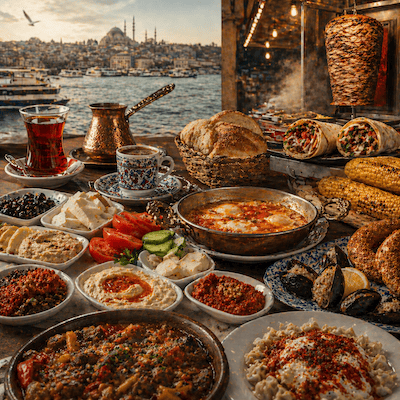
Sofrada genellikle beyaz peynir, kaşar, siyah ve yeşil zeytin, domates, salatalık, tereyağı, bal, kaymak ve birkaç çeşit reçel bulunur. Bunların yanında simit, poğaça, sucuklu yumurta ya da menemen yenir. Her bölge sofraya kendi lezzetini katar: Van'da otlu peynir, Ege'de bol zeytin, Karadeniz'de mısır ekmeği ve kuymak. İnce belli bardakta demli çay ise hiç eksik olmaz.
The table usually holds white cheese, kaşar cheese, black and green olives, tomatoes, cucumbers, butter, honey, kaymak and several kinds of jam. Alongside these come simit, poğaça, eggs with sucuk or menemen. Each region adds its own flavour: herb cheese in Van, plenty of olives in the Aegean, cornbread and kuymak on the Black Sea. And strong tea in a tulip-shaped glass is never missing.
Çay: Bir Bardaktan Fazlası
Tea: More Than a Glass
Kişi başına çay tüketiminde Türkiye dünyada ilk sıralarda yer alır. Günde beş altı bardak çay içen pek çok insan vardır. Çay, sohbetin ayrılmaz bir parçasıdır: Eve gelen misafire çay ikram edilir, çarşıda pazarlık çay eşliğinde yapılır, iş yerlerinde çaycı elinde tepsiyle odadan odaya dolaşır.
Turkey ranks among the world's top countries for tea consumption per person. Many people drink five or six glasses a day. Tea is an inseparable part of conversation: guests at home are offered tea, haggling in the bazaar goes on over tea, and in offices the tea man goes from room to room with his tray.
Çay, iki katlı bir çaydanlıkta hazırlanır: Alttaki kapta su kaynar, üstteki küçük demlikte çay demlenir. Bardağa önce biraz koyu dem konur, üzerine sıcak su eklenir. Az dem isteyen "açık", çok dem isteyen "koyu" çay ister. İnce belli bardakta çayın tavşan kanı rengi güzel görünür. Türkiye'de içilen çayın çoğu Doğu Karadeniz'de, özellikle Rize'nin yamaçlarında yetişir ve büyük bölümü ülke içinde tüketilir.
Tea is made in a two-tiered teapot: water boils in the lower pot, and the tea brews in the small pot on top. A little strong brew is poured into the glass first, then hot water is added. Someone who wants a weak brew asks for "açık" (light) tea, someone who wants a strong one for "koyu" (dark). In a tulip-shaped glass, the tea's "rabbit's blood" colour looks beautiful. Most of the tea drunk in Turkey is grown in the eastern Black Sea region, especially on the slopes of Rize, and most of it is consumed within the country.
Türk Kahvesi: Küçük Fincanda Uzun Bir Gelenek
Turkish Coffee: A Long Tradition in a Small Cup
Türkiye'de bugün çay kahveden çok daha fazla içilir, ancak kahvenin yeri ayrıdır. Türk kahvesi kültürü ve geleneği, 2013'te UNESCO'nun İnsanlığın Somut Olmayan Kültürel Mirası listesine alındı. Eski bir söz, kahvenin değerini iyi anlatır: "Bir fincan kahvenin kırk yıl hatırı vardır."
Today far more tea than coffee is drunk in Turkey, but coffee has a special place. Turkish coffee culture and tradition were added to UNESCO's list of the Intangible Cultural Heritage of Humanity in 2013. An old saying sums up its value well: "A cup of coffee is remembered for forty years."
Kahve, cezve adı verilen küçük, saplı bir kapta pişirilir. Çok ince çekilmiş kahve soğuk suyla karıştırılır ve kısık ateşte yavaş yavaş ısıtılır. Şeker sonradan eklenmediği için misafire önceden sorulur: "Kahveniz nasıl olsun? Sade mi, orta mı, şekerli mi?" Kahve köpürünce kaynamadan fincana dökülür ve telve fincanın dibine çöker. İçildikten sonra fincan ters kapatılır, soğuyunca da telveye bakılarak fal yorumlanır. Kahve falı, arkadaş buluşmalarının sevilen eğlencelerinden biridir.
Coffee is brewed in a small pot with a handle called a cezve. Very finely ground coffee is mixed with cold water and heated slowly over a low flame. Because sugar is not added afterwards, the guest is asked beforehand: "How would you like your coffee? Plain, medium or sweet?" When the coffee foams, it is poured into the cup before it boils, and the grounds settle at the bottom. After drinking, the cup is turned upside down, and once it has cooled, fortunes are read from the grounds. Coffee-cup reading is a favourite pastime when friends get together.
Bölgeden Bölgeye Değişen Tatlar
Flavours That Change from Region to Region
Türkiye yedi coğrafi bölgeye ayrılır. Her bölgenin mutfağı da kendine özgüdür. Güneydoğu'da, özellikle Gaziantep ve Şanlıurfa'da yemekler bol baharatlı ve bol biberlidir. Bu yemeklerin birçoğunda fıstık kullanılır. Gaziantep, 2015'te gastronomi dalında UNESCO Yaratıcı Şehirler Ağı'na katıldı. Daha sonra Hatay ve Afyonkarahisar da bu ağa girdi. Antep denince akla baklava, kahvaltıda yenen katmer ve sarımsaklı, etli beyran çorbası gelir.
Turkey is divided into seven geographical regions. Each region's cuisine is distinctive too. In the southeast, especially in Gaziantep and Şanlıurfa, dishes are heavily spiced and full of pepper. Many of them use pistachios. In 2015 Gaziantep joined the UNESCO Creative Cities Network in the field of gastronomy. Later, Hatay and Afyonkarahisar also joined the network. Antep brings to mind baklava, katmer eaten at breakfast, and beyran, a garlicky meat soup.
Ege mutfağı daha hafiftir. Bu mutfağın temelini zeytinyağı, taze otlar, sebze ve balık oluşturur. Zeytinyağıyla pişirilip soğuk yenen enginar, taze fasulye ve yaprak sarması gibi yemekler "zeytinyağlı" adıyla anılır ve Ege mutfağının en bilinen lezzetleri arasında yer alır. Karadeniz'de ise mısır unu, kara lahana, tereyağı ve hamsi öne çıkar. Hamsi bu bölgede o kadar sevilir ki tavası, pilavı, hatta ekmeği bile yapılır.
Aegean cooking is lighter. Its basis is olive oil, fresh herbs, vegetables and fish. Dishes such as artichokes, green beans and stuffed vine leaves, cooked in olive oil and eaten cold, are known as "zeytinyağlı" and are among the best-known flavours of Aegean cuisine. On the Black Sea, cornmeal, black cabbage, butter and hamsi take the lead. Hamsi is so loved in this region that people make it fried, in pilaf and even in bread.
Sokak Lezzetleri
Street Food
Türkiye'de sokakta bir şeyler atıştırmak gündelik hayatın bir parçasıdır. Sokak yemeklerinin en bilineni belki de susamlı, halka biçiminde bir ekmek olan simittir. Sabahları simitçiler tablalarıyla ya da camlı arabalarıyla köşe başlarında bekler. Pek çok kişi işe giderken bir simit ve bir çay alır.
In Turkey, snacking on the street is part of everyday life. Perhaps the best known street food is simit, a ring-shaped bread covered in sesame. In the mornings, simit sellers wait on street corners with their trays or glass-fronted carts. Many people buy a simit and a tea on the way to work.
Midye dolma, kestane kebap, haşlanmış ya da közlenmiş mısır, lahmacun, gözleme ve kumpir de sokakta sık görülür. İstanbul'da Eminönü'ndeki teknelerde hazırlanan balık ekmek, şehrin simgelerinden biri hâline geldi. Kumpir ise Ortaköy'de ün kazandı. Fırında pişirilen iri bir patatesin içi tereyağı ve kaşarla ezilir, üstüne turşudan mısıra kadar onlarca malzeme konur.
Stuffed mussels, roast chestnuts, boiled or grilled corn, lahmacun, gözleme and kumpir are also common on the street. In Istanbul, balık ekmek made on the boats at Eminönü has become one of the city's symbols. Kumpir, for its part, became famous in Ortaköy. The inside of a large baked potato is mashed with butter and kaşar cheese, and dozens of toppings, from pickles to sweetcorn, are piled on top.
Türk Mutfağı Hakkında İlginç Bilgiler
Curious Facts About Turkish Cuisine
Türkiye'de yöreden yöreye değişen onlarca peynir çeşidi vardır: beyaz peynir, tulum, kaşar, lor, Çerkez peyniri ve daha niceleri.
Turkey has dozens of cheeses that vary from place to place: white cheese, tulum, kaşar, lor, Circassian cheese and many more.
Yoğurt, su ve tuzla yapılan ayran, Türkiye'nin en sevilen içeceklerinden biridir. Kebapçıların da fast food zincirlerinin de menüsünde ayran bulunur.
Ayran, made of yogurt, water and salt, is one of Turkey's favourite drinks. It is on the menu at kebab houses and fast-food chains alike.
Pek çok dildeki "yoğurt" kelimesi Türkçeden geçmiştir.
The word "yogurt" in many languages comes from Turkish.
Aşure tatlısı buğday, nohut, kuru fasulye, kuru meyve ve cevizle yapılır. Halk arasındaki inanışa göre bu tatlı, Nuh'un gemisinde kalan son malzemelerle yapılmıştır. Pişirildikten sonra kâse kâse komşulara dağıtılır.
Aşure is a dessert made with wheat, chickpeas, white beans, dried fruit and walnuts. According to popular belief, it was first made from the last ingredients left on Noah's Ark. Once cooked, it is shared out to the neighbours bowl by bowl.
İskender kebap, adını Bursalı İskender Efendi'den alır. Aile 1867'yi başlangıç yılı olarak kabul eder. İskender Efendi'nin torunları bugün hâlâ Bursa'da kebapçı işletir.
İskender kebab takes its name from İskender Efendi of Bursa. The family considers 1867 its founding year. İskender Efendi's descendants still run kebab restaurants in Bursa today.
Dünyada yetişen fındığın yarısından fazlası Türkiye'de, özellikle Karadeniz kıyılarında üretilir.
More than half of the world's hazelnuts are grown in Turkey, especially along the Black Sea coast.
Tatlı Bir Son: Şerbetliler ve Sütlüler
A Sweet Ending: Syrup Desserts and Milk Desserts
Türk tatlıları kabaca iki gruba ayrılır: şerbetli hamur tatlıları ve sütlü tatlılar. Baklava, kadayıf, şekerpare ve revani ilk gruba girer. Bu tatlılar ince yufkayla, tel kadayıfla ya da irmikli hamurla yapılır ve pişince üzerlerine şerbet dökülür. Gaziantep baklavası 2013'te Avrupa Birliği'nden coğrafi işaret aldı. Bu nedenle yalnızca Gaziantep'te yapılan baklava bu adı taşıyabilir.
Turkish desserts fall roughly into two groups: pastry desserts soaked in syrup and milk-based desserts. Baklava, kadayıf, şekerpare and revani belong to the first group. They are made with thin yufka pastry, shredded kadayıf dough or semolina batter, and syrup is poured over them once they are baked. In 2013 Gaziantep baklava received a geographical indication from the European Union. As a result, only baklava made in Gaziantep may bear that name.
Sütlü tatlılar ise bambaşka bir dünyadır. Muhallebi, fırın sütlaç ve altı hafifçe yakılan kazandibi bu grubun en sevilen örnekleridir. Bunların en şaşırtıcısı tavuk göğsüdür. Tatlının adı bir şaka değildir: İçinde gerçekten ince ince didiklenmiş tavuk göğsü bulunur, ancak tadı hiç tavuğu hatırlatmaz.
Milk desserts are another world entirely. Muhallebi, baked rice pudding and kazandibi, with its lightly caramelised bottom, are the best-loved examples of this group. The most surprising of them is tavuk göğsü. Its name, "chicken breast", is no joke: the dessert really does contain finely shredded chicken breast, yet it does not taste of chicken at all.
Sofradan Öteye: Yemek ve İnsanlar
Beyond the Table: Food and People
Türkiye'de yemek genellikle tek başına değil, topluca yenir. Masaya büyük tabaklar konur ve herkes ortadan alır. Misafir geldiğinde sofraya bir tabak daha eklenir, "Biraz daha alın" diye ısrar edilir. Kapıya gelen biri, "Buyurun, sofraya!" davetini duymadan pek gidemez. Yemekten sonra ev sahibine "Elinize sağlık" denir.
In Turkey, meals are usually eaten together rather than alone. Large dishes are set on the table and everyone helps themselves from the middle. When a guest arrives, another plate is added to the table, and the hosts insist, "Have a little more." Anyone who comes to the door can hardly leave without hearing the invitation "Buyurun, sofraya!" (Come, join us at the table!). After the meal, the host is told "Elinize sağlık" (Health to your hands).
Bayramlarda, düğünlerde ve cenazelerde de yemek her zaman işin merkezindedir. Ramazan'da belediyelerin kurduğu iftar çadırlarında yüzlerce kişi aynı anda orucunu açar. Aşure pişirilen evlerden komşulara kâse kâse aşure gönderilir. Kurban Bayramı'nda ise kesilen hayvanın etinin bir kısmı ihtiyaç sahiplerine dağıtılır. Kapı komşusuna götürülen bir tabak yemek, komşuluğun en kolay ve en eski yoludur.
At festivals, weddings and funerals, too, food is always at the heart of things. During Ramadan, hundreds of people break their fast together in iftar tents set up by municipalities. Homes where aşure is cooked send bowls of it to the neighbours. At the Feast of the Sacrifice, part of the meat of the slaughtered animal is given to those in need. A plate of food taken to the neighbour next door is the easiest and oldest way of being a good neighbour.
Son Söz: Bir Kültürü Tatmak
Final Word: Tasting a Culture
Türk mutfağı bugünkü hâlini yüzyıllar içinde, pek çok bölgeden ve kültürden aldıklarıyla kazandı. Kebap, bu mutfağın yalnızca küçük bir köşesidir. Asıl zenginlik, bölgelerin kendine özgü yemeklerinde, anneden kıza geçen tariflerde ve sofra başındaki sohbetlerde saklıdır.
Turkish cuisine took its present form over centuries, with what it gathered from many regions and cultures. Kebab is only a small corner of it. Its real richness lies in the dishes particular to each region, in the recipes passed from mother to daughter and in the conversations around the table.
Mutfak, Türkçe öğrenenler için de iyi bir başlangıç noktasıdır. Bir tarif okumak, pazarda sebzelerin adını sormak ya da lokantada yemek ısmarlamak, dili gerçek hayatta kullanmanın en keyifli yollarındandır. Türk sofrasında en sık duyulan sözlerden biri de "Afiyet olsun!"dur.
Food is also a good starting point for learners of Turkish. Reading a recipe, asking the names of vegetables at the market or ordering at a restaurant are among the most enjoyable ways of using the language in real life. And one of the words heard most often at a Turkish table is "Afiyet olsun!" (Enjoy your meal!).
In the free app you can listen to this text read aloud and tap any word to see what it means.