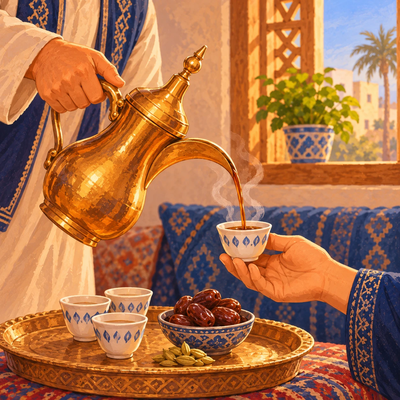
الْقَهْوَة الْعَرَبِيَّة
Arabic Coffee
Key words
- الْقَهْوَةcoffee
- مَشْرُوبdrink
- الْكَرَمgenerosity
- الضَّيْفguest
- أَهْلًا وَسَهْلًاwelcome!
- تَفَضَّلplease, go ahead
- الْبُنّcoffee beans
- الْهَيْلcardamom
- تَابِلspice
- رَائِحَةsmell
- الزَّعْفَرَانsaffron
- الْقُرُنْفُلcloves
All 25 words
- سُكَّرsugar
- رَشْفَةsip
- الدَّلَّةdallah, coffee pot
- الْفِنْجَانsmall cup
- الْمُضِيفhost
- يَصُبّpours
- الْيَد الْيُمْنَىright hand
- يَكْفِيthat's enough
- التَّمْرdates
- الْأَعْرَاسweddings
- الْعَزَاءcondolence gathering
- سَادَةplain, no sugar
- الْأَدَبgood manners
فِي الْبُيُوت الْعَرَبِيَّة، الْقَهْوَة أَكْثَر مِنْ مَشْرُوب. هِيَ عَلَامَة الْكَرَم وَالتَّرْحِيب بِالضَّيْف.
In Arab homes, coffee is more than a drink. It is a sign of generosity and of welcome to the guest.
عِنْدَمَا تَزُور عَائِلَة عَرَبِيَّة، تَسْمَع فِي الْبِدَايَة: «أَهْلًا وَسَهْلًا»، ثُمَّ: «تَفَضَّل، اشْرَب قَهْوَة».
When you visit an Arab family, the first thing you hear is "ahlan wa sahlan", and then: "Please, have some coffee."
مِنَ الْيَمَن إِلَى الْعَالَم
From Yemen to the world
قِصَّة الْقَهْوَة بَدَأَت فِي الْيَمَن قَبْلَ أَكْثَر مِنْ خَمْسِمِائَة سَنَة. هُنَاكَ شَرِبَهَا الصُّوفِيُّون فِي اللَّيْل، لِكَيْ يَبْقَوْا مُسْتَيْقِظِين فِي الصَّلَاة.
The story of coffee began in Yemen more than five hundred years ago. There, Sufis drank it at night so they could stay awake for their prayers.
وَمِنْ مِينَاء الْمُخَا فِي الْيَمَن سَافَرَتِ الْقَهْوَة إِلَى مَكَّة وَالْقَاهِرَة وَإِسْطَنْبُول، ثُمَّ إِلَى أُورُوبَّا وَكُلّ الْعَالَم.
From the port of Mocha in Yemen, coffee travelled to Mecca, Cairo and Istanbul, and then to Europe and the whole world.
وَكَلِمَة «قَهْوَة» عَرَبِيَّة، وَمِنْهَا جَاءَتِ الْكَلِمَة فِي لُغَات كَثِيرَة.
The word "qahwa" is Arabic, and many languages took their word for coffee from it.
قَهْوَة مُخْتَلِفَة
A different coffee
الْقَهْوَة الْعَرَبِيَّة تَخْتَلِف عَنْ قَهْوَة الْمَقَاهِي. لَوْنُهَا ذَهَبِيّ أَوْ بُنِّيّ فَاتِح، لِأَنَّ الْبُنّ لَا يُحَمَّص كَثِيرًا.
Arabic coffee is different from the coffee you get in cafés. Its colour is golden or light brown, because the beans are only lightly roasted.
وَفِيهَا الْهَيْل، وَهُوَ تَابِل لَهُ رَائِحَة قَوِيَّة وَجَمِيلَة. وَأَحْيَانًا يَضَعُون فِيهَا الزَّعْفَرَان أَوِ الْقُرُنْفُل أَيْضًا.
It contains cardamom, a spice with a strong and lovely smell. Sometimes people add saffron or cloves as well.
وَالْقَهْوَة الْعَرَبِيَّة بِدُون سُكَّر، وَطَعْمُهَا مُرّ قَلِيلًا.
Arabic coffee has no sugar, and it tastes slightly bitter.
الدَّلَّة وَالْفِنْجَان
The dallah and the finjan
تُطْبَخ الْقَهْوَة فِي إِنَاء خَاصّ اسْمُهُ «الدَّلَّة». لِلدَّلَّة شَكْل جَمِيل، وَلَهَا فَم طَوِيل مِثْلَ مِنْقَار الطَّائِر.
The coffee is made in a special pot called a "dallah". The dallah has a beautiful shape and a long spout like a bird's beak.
وَنَشْرَب الْقَهْوَة فِي فِنْجَان صَغِير جِدًّا بِدُون يَد. وَالْفِنْجَان لَا يَمْتَلِئ: الْمُضِيف يَصُبّ قَلِيلًا فَقَط، فِي أَسْفَل الْفِنْجَان.
We drink the coffee from a very small cup without a handle. The cup is never filled: the host pours only a little, at the bottom of the cup.
كَيْفَ تُقَدَّم الْقَهْوَة؟
How is coffee served?
الْمُضِيف يَحْمِل الدَّلَّة بِيَدِهِ الْيُسْرَى، وَالْفَنَاجِين بِيَدِهِ الْيُمْنَى. ثُمَّ يُعْطِي الْفِنْجَان لِلضَّيْف بِالْيَد الْيُمْنَى.
The host holds the dallah in his left hand and the cups in his right. Then he gives the cup to the guest with his right hand.
وَيَبْدَأ الْمُضِيف بِالضَّيْف الْأَهَمّ، أَوْ بِالْأَكْبَر سِنًّا، أَوْ بِالشَّخْص الَّذِي عَلَى الْيَمِين.
The host starts with the most important guest, or the oldest, or the person on the right.
وَالضَّيْف يَأْخُذ الْفِنْجَان بِيَدِهِ الْيُمْنَى أَيْضًا. هٰذَا مِنَ الْأَدَب.
The guest takes the cup with his right hand too. That is good manners.
هَزّ الْفِنْجَان
Shaking the cup
الْمُضِيف يَصُبّ لَكَ مَرَّة بَعْدَ مَرَّة. إِذَا شَرِبْتَ وَلَا تُرِيد أَكْثَر، هُزَّ الْفِنْجَان قَلِيلًا يَمِينًا وَيَسَارًا.
The host pours for you again and again. If you have drunk enough and don't want more, shake the cup gently from side to side.
هٰذِهِ الْحَرَكَة تَعْنِي: «شُكْرًا، يَكْفِي». إِذَا لَمْ تَهُزّ الْفِنْجَان، سَيَصُبّ لَكَ الْمُضِيف مَرَّة أُخْرَى!
This movement means: "Thank you, that's enough." If you don't shake the cup, the host will pour you another one!
فِي الْعَادَة يَشْرَب الضَّيْف فِنْجَانَيْن أَوْ ثَلَاثَة. وَمِنْ غَيْر الْمُهَذَّب أَنْ تَرْفُض الْفِنْجَان الْأَوَّل.
Usually a guest drinks two or three cups. And it is impolite to refuse the first cup.
الْقَهْوَة وَالتَّمْر
Coffee and dates
مَعَ الْقَهْوَة يُقَدِّم الْعَرَب التَّمْر فِي الْعَادَة. حَلَاوَة التَّمْر مَعَ مَرَارَة الْقَهْوَة شَيْء رَائِع.
With coffee, Arabs usually serve dates. The sweetness of the dates with the bitterness of the coffee is wonderful.
فِي الْخَلِيج يَأْكُل النَّاس تَمْرَة، ثُمَّ يَشْرَبُون رَشْفَة مِنَ الْقَهْوَة. وَأَحْيَانًا يُقَدِّمُون الْحَلْوَى أَوِ الْفَوَاكِه أَيْضًا.
In the Gulf, people eat a date and then take a sip of coffee. Sometimes they serve sweets or fruit too.
قَهْوَة فِي كُلّ مُنَاسَبَة
Coffee for every occasion
الْقَهْوَة حَاضِرَة فِي كُلّ مُنَاسَبَة: فِي الْأَعْرَاس، وَفِي الْأَعْيَاد، وَفِي الْعَزَاء أَيْضًا. فِي الْفَرَح وَفِي الْحُزْن، يَجْلِس النَّاس مَعًا وَيَشْرَبُون الْقَهْوَة.
Coffee is there on every occasion: at weddings, at festivals and at funerals too. In joy and in sorrow, people sit together and drink coffee.
وَفِي رَمَضَان، بَعْدَ الْإِفْطَار، تَجْتَمِع الْعَائِلَات حَوْلَ الْقَهْوَة وَالتَّمْر.
In Ramadan, after breaking the fast, families gather around coffee and dates.
قَهْوَة أُخْرَى
Another coffee
فِي بِلَاد الشَّام وَمِصْر يَشْرَب النَّاس قَهْوَة أُخْرَى كَثِيرًا: الْقَهْوَة السَّوْدَاء الثَّقِيلَة. بَعْضُهُم يُسَمِّيهَا «الْقَهْوَة التُّرْكِيَّة».
In the Levant and in Egypt, people often drink a different coffee: strong black coffee. Some call it "Turkish coffee".
تُطْبَخ هٰذِهِ الْقَهْوَة فِي «رَكْوَة» صَغِيرَة، وَيَسْأَل الْمُضِيف: «كَيْفَ تُحِبّ قَهْوَتَكَ؟ سَادَة، أَوْ وَسَط، أَوْ حُلْوَة؟». سَادَة تَعْنِي بِدُون سُكَّر.
This coffee is made in a small pot called a "rakwa", and the host asks: "How do you like your coffee? Sada, wasat or sweet?" Sada means without sugar.
تُرَاث لِلْعَالَم
A heritage for the world
فِي سَنَة 2015 دَخَلَتِ الْقَهْوَة الْعَرَبِيَّة قَائِمَة الْيُونِسْكُو لِلتُّرَاث الثَّقَافِيّ غَيْر الْمَادِّيّ.
In 2015, Arabic coffee was added to UNESCO's list of the Intangible Cultural Heritage.
هٰذَا يَعْنِي أَنَّ الْقَهْوَة جُزْء مُهِمّ مِنْ ثَقَافَة الْعَرَب، وَأَنَّ الْعَالَم كُلَّهُ يَعْرِف قِيمَتَهَا.
This means that coffee is an important part of Arab culture and that the whole world knows its value.
كَلِمَات مُفِيدَة
Useful words
هٰذِهِ كَلِمَات تَسْمَعُهَا فِي مَجْلِس الْقَهْوَة:
Here are words you will hear when coffee is served:
تَفَضَّل: نَقُولُهَا عِنْدَمَا نُقَدِّم لَكَ الْقَهْوَة.
Tafaddal: what we say when we offer you coffee.
الدَّلَّة: إِنَاء الْقَهْوَة الْعَرَبِيَّة.
Dallah: the pot for Arabic coffee.
الْفِنْجَان: كُوب صَغِير بِدُون يَد.
Finjan: a small cup without a handle.
الْهَيْل: تَابِل لَهُ رَائِحَة جَمِيلَة.
Hayl: cardamom, a spice with a lovely smell.
يَكْفِي، شُكْرًا: لَا أُرِيد أَكْثَر.
Yakfi, shukran: that's enough, thank you; I don't want any more.
سَادَة: بِدُون سُكَّر.
Sada: without sugar.
دَائِمَة: يَقُولُهَا الضَّيْف بَعْدَ الْقَهْوَة، وَمَعْنَاهَا: أَتَمَنَّى أَنْ يَبْقَى الْخَيْر فِي بَيْتِكُم.
Dayma: said by the guest after the coffee; it means: may good things always stay in your home.
فِي النِّهَايَة
In the end
فِنْجَان الْقَهْوَة صَغِير، لٰكِنْ مَعْنَاهُ كَبِير. هُوَ يَقُول لِلضَّيْف: أَنْتَ فِي بَيْتِكَ، وَنَحْنُ سُعَدَاء بِكَ.
A cup of coffee is small, but its meaning is big. It tells the guest: you are at home, and we are happy to have you.
فِي زِيَارَتِكَ الْقَادِمَة لِبَيْت عَرَبِيّ، خُذِ الْفِنْجَان بِيَدِكَ الْيُمْنَى، وَاشْرَب، وَلَا تَنْسَ أَنْ تَهُزّ الْفِنْجَان عِنْدَمَا تَكْتَفِي!
Next time you visit an Arab home, take the cup with your right hand, drink, and don't forget to shake the cup when you've had enough!
In the free app you can listen to this text read aloud and tap any word to see what it means.
From the blog
Learn Arabic arrives on 1 December
The app is almost ready: the Arabic alphabet from scratch, grammar, over 2,500 words with audio and classics such as Gibran's The Broken Wings in the original. Leave your email and we'll let you know the day it's out.
One email when the app is out. Nothing else.