الشعر العربي
Arabic poetry
Key words
- الشعرpoetry
- الشاعرpoet
- القصيدةpoem
- البيتline of verse
- القافيةrhyme
- وزنmetre
- العَروضprosody
- الديوانcollection of poems
- الرواةreciters
- المدحpraise
- الهجاءsatire
- الرثاءelegy
All 25 words
- الفخرboasting
- الحكمةwisdom
- الأطلالruins
- القبيلةtribe
- خيامtents
- الإيقاعrhythm
- الموشّحmuwashshah (sung strophic poem)
- الشعر الحرّfree verse
- الإنشادrecitation
- التدوينwriting down
- الذاكرةmemory
- اللهجة العاميةcolloquial dialect
- يحفظونthey memorize
كان العرب يقولون قديمًا: «الشعر ديوان العرب»، أي إنّه السجلّ الذي حفظ أيّامهم وأخبارهم وأخلاقهم وأحلامهم. فقبل أن ينتشر التدوين، كان الشعر هو الذاكرة التي تنتقل من جيل إلى جيل على ألسنة الرواة.
The Arabs used to say: "Poetry is the register of the Arabs", meaning that it is the record that kept their days, their stories, their values and their dreams. Before writing spread, poetry was the memory that passed from generation to generation on the tongues of reciters.
في هذه المقالة نرحل مع الشعر العربي من خيام الصحراء قبل الإسلام إلى قصور بغداد وحدائق الأندلس، ثم إلى القاهرة وبيروت وبغداد في العصر الحديث، ونتعرّف على بعض أشهر شعرائه، وعلى الطريقة التي تُبنى بها القصيدة.
In this article we travel with Arabic poetry from the desert tents before Islam to the palaces of Baghdad and the gardens of al-Andalus, and then to Cairo, Beirut and Baghdad in modern times. We get to know some of its most famous poets, and the way a poem is built.
ديوان العرب
The register of the Arabs
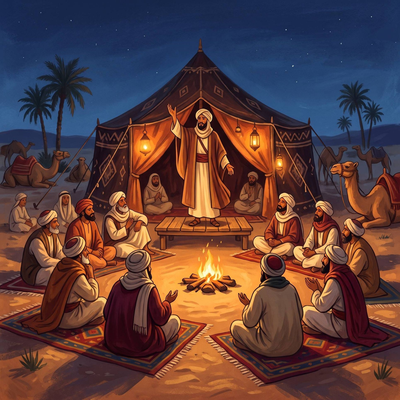
في الجزيرة العربية قبل الإسلام، في القرن السادس الميلادي تقريبًا، كان للشعر مكانة لا تشبهها مكانة أخرى. فالشاعر هو لسان قبيلته: يمدح كرمها وشجاعتها، ويدافع عنها، ويهجو أعداءها.
In Arabia before Islam, around the sixth century, poetry held a place like no other. The poet was the voice of his tribe: he praised its generosity and courage, defended it, and mocked its enemies.
وتذكر كتب الأدب أنّ القبيلة كانت إذا نبغ فيها شاعر جاءتها القبائل الأخرى تهنّئها، وصنعت الأطعمة، واجتمعت النساء يلعبن بالمزاهر كما يفعلن في الأعراس، لأنّ الشاعر يحمي شرفها ويخلّد ذكرها.
Books of literature tell that when a poet appeared in a tribe, the other tribes came to congratulate it, food was prepared, and the women gathered to play the lute as they did at weddings, because the poet would protect the tribe's honour and make its name live on.
سوق عكاظ
The market of Ukaz
كانت للعرب أسواق موسمية يجتمعون فيها للتجارة، ومن أشهرها سوق عكاظ قرب الطائف. ولم تكن هذه السوق مكانًا للبيع والشراء فقط، بل كانت أيضًا ميدانًا يتنافس فيه الشعراء.
The Arabs had seasonal markets where they gathered to trade, and one of the most famous was the market of Ukaz near Taif. This market was not only a place for buying and selling; it was also an arena where poets competed.
ويُروى أنّ الشاعر النابغة الذبياني كانت تُضرب له في عكاظ قبّة من جلد أحمر، فيأتيه الشعراء ينشدونه قصائدهم، فيحكم بينهم ويقول أيّهم أشعر.
It is said that a tent of red leather used to be set up at Ukaz for the poet al-Nabigha al-Dhubyani. Poets came to recite their poems to him, and he judged between them and said which of them was the best poet.
المعلّقات
The Muallaqat
من أشهر ما بقي من الشعر الجاهلي قصائد طويلة تُسمّى «المعلّقات». ويُقال في تفسير اسمها إنّها كُتبت بماء الذهب وعُلّقت على الكعبة، لكنّ كثيرًا من الباحثين يشكّون في هذه الرواية، ويرون أنّ الاسم قد يعني القصائد النفيسة التي تتعلّق بها القلوب.
Among the most famous poems left from the time before Islam are long poems called the "Muallaqat", "the hung poems". One explanation of the name says they were written in gold and hung on the Kaaba, but many researchers doubt this story, and think the name may mean precious poems that hearts cling to.
وأشهر المعلّقات معلّقة امرئ القيس، التي تبدأ بقوله: «قِفا نَبْكِ من ذِكرى حبيبٍ ومنزلِ». فالشاعر يطلب من صاحبيه أن يقفا معه عند آثار ديار الحبيبة، ليبكيا على أيّام مضت.
The most famous of them is the poem of Imru al-Qays, which begins: "Halt, both of you, and let us weep at the memory of a beloved and a dwelling." The poet asks his two companions to stop with him at the traces of his beloved's home and weep for days gone by.
بناء القصيدة
How a poem is built
كانت القصيدة الجاهلية الطويلة تمرّ في الغالب بمراحل معروفة. فهي تبدأ كثيرًا بالوقوف على الأطلال، أي آثار الديار التي رحل عنها أهلها، وتذكّر الحبيبة التي كانت تسكنها.
The long poem of the time before Islam usually went through well-known stages. It often began by standing at the ruins, the traces of a camp whose people had left, and remembering the beloved who once lived there.
ثم ينتقل الشاعر إلى وصف رحلته في الصحراء، وناقته القوية الصبور، والحيوانات التي يراها في الطريق، كالظباء وبقر الوحش، والليل الطويل والعطش.
Then the poet moved on to describe his journey through the desert: his strong and patient she-camel, the animals he saw on the way, such as gazelles and wild oxen, the long night and the thirst.
وبعد ذلك يصل إلى غرضه الأساسي: قد يكون المدح، أو الفخر بنفسه وقبيلته، أو الهجاء، أو الرثاء، أي البكاء على ميّت وذكر فضائله، أو الحكمة التي تعلّمها من الحياة.
After that he reached his main purpose. It might be praise, or boasting about himself and his tribe, or mockery, or the elegy, which mourns someone who has died and recalls his virtues, or the wisdom he had learned from life.
البيت والقافية
The verse and the rhyme
يتكوّن الشعر العربي القديم من أبيات، والبيت هو السطر الواحد من القصيدة. ومن الجميل أنّ كلمة «بيت» نفسها تعني أيضًا المسكن، وكأنّ القصيدة مخيّم من بيوت متجاورة.
Classical Arabic poetry is made of verses, and a verse, called a bayt, is a single line of the poem. Beautifully, the word "bayt" also means a house or a dwelling, as if the poem were a camp of houses standing side by side.
وينقسم البيت إلى نصفين: الأوّل يسمّى «الصدر»، والثاني يسمّى «العَجُز». وبين النصفين مسافة صغيرة في الكتابة، فتبدو القصيدة على الورق عمودين متوازيين.
The verse is divided into two halves: the first is called the "sadr", the chest, and the second the "ajuz", the back. There is a small gap between the two halves on the page, so the poem looks like two parallel columns.
وتنتهي أبيات القصيدة كلّها بقافية واحدة، أي بالصوت نفسه والحرف الأخير نفسه، حتى لو كانت القصيدة مئة بيت. ولهذا تُنسب القصائد أحيانًا إلى حرفها الأخير، فيقال مثلًا «لاميّة» أو «ميميّة» أو «نونيّة».
All the verses of a poem end in the same rhyme, the same sound and the same last letter, even if the poem is a hundred verses long. That is why poems are sometimes named after their final letter, so people speak of a "lamiyya", a poem rhyming in lam, or a "mimiyya" or a "nuniyya".
الخليل وبحور الشعر
Al-Khalil and the meters
لا يكفي في الشعر العربي أن تتّفق القافية، بل لا بدّ أن يسير البيت على وزن معيّن، أي على ترتيب ثابت من المقاطع الطويلة والقصيرة، كأنّه إيقاع موسيقي.
In Arabic poetry it is not enough for the rhyme to match. The verse must also follow a fixed meter: a set order of long and short syllables, like a musical rhythm.
وفي القرن الثامن الميلادي درس العالِم الخليل بن أحمد الفراهيدي في البصرة أشعار العرب، فاكتشف أنّها تسير على خمسة عشر وزنًا، وسمّاها «البحور». ثم أضاف الأخفش، تلميذ تلميذه سيبويه، بحرًا آخر، فصارت ستّة عشر.
In the eighth century the scholar al-Khalil ibn Ahmad al-Farahidi studied the poems of the Arabs in Basra and discovered that they followed fifteen meters, which he called "buhur", "seas". Later al-Akhfash, a student of his student Sibawayh, added one more, making sixteen.
ويُروى أنّ الخليل خطرت له فكرة هذا العلم وهو يمشي في سوق الصفّارين، فسمع دقّات المطارق على النحاس منتظمة كأنّها أوزان. ويُسمّى هذا العلم «العَروض»، وما زال يُدرَّس في الجامعات العربية إلى اليوم.
It is said that the idea for this science came to al-Khalil as he walked through the coppersmiths' market and heard the hammers striking the copper in a regular beat, like meters. This science is called "al-arud", prosody, and it is still taught in Arab universities today.
من الصحراء إلى بغداد
From the desert to Baghdad
مع ظهور الإسلام في القرن السابع، بقي الشعر حاضرًا في حياة الناس. ومن أشهر شعراء تلك المرحلة حسّان بن ثابت، الذي يُلقَّب بـ«شاعر الرسول»، لأنّه كان يدافع بشعره عن النبيّ محمّد والمسلمين.
With the rise of Islam in the seventh century, poetry stayed present in people's lives. One of the most famous poets of that time was Hassan ibn Thabit, known as "the Poet of the Prophet", because he used his poetry to defend the Prophet Muhammad and the Muslims.
وكان أبو نواس من أشهر شعراء بغداد في عصر هارون الرشيد. وقد سخر من الشعراء الذين ما زالوا يبدؤون قصائدهم بالبكاء على الأطلال، وهم يعيشون في المدن، ودعا إلى شعر يصف الحياة التي يعيشها الناس فعلًا.
Abu Nuwas was one of the most famous poets of Baghdad in the time of Harun al-Rashid. He made fun of poets who still began their poems by weeping over ruins while they lived in cities, and called for poetry that describes the life people really live.
المتنبّي
Al-Mutanabbi
يرى كثير من العرب أنّ أبا الطيّب المتنبّي، الذي وُلد في الكوفة سنة 915 تقريبًا، هو أعظم شعراء العربية. وقد جاءه لقب «المتنبّي» لأنّه ادّعى النبوّة في شبابه، كما تقول الروايات، فسُجن ثم تاب.
Many Arabs consider Abu al-Tayyib al-Mutanabbi, born in Kufa around 915, the greatest poet of the Arabic language. He got the nickname "al-Mutanabbi", "the one who claimed to be a prophet", because, according to the stories, he claimed prophethood in his youth, was imprisoned, and then repented.
عاش المتنبّي سنوات طويلة في حلب عند الأمير سيف الدولة الحمداني، وكتب فيه أجمل قصائد المدح، ثم رحل إلى مصر وغضب على حاكمها كافور فهجاه هجاءً قاسيًا. وكان فخورًا بنفسه وبشعره إلى حدّ بعيد.
Al-Mutanabbi lived for many years in Aleppo at the court of the prince Sayf al-Dawla al-Hamdani, and wrote his finest poems of praise for him. Then he went to Egypt, fell out with its ruler Kafur, and mocked him harshly. He was extremely proud of himself and of his poetry.
ومن أشهر أبياته: «الخيلُ والليلُ والبيداءُ تعرفني، والسيفُ والرمحُ والقرطاسُ والقلمُ». ويُروى أنّه حين هاجمه اللصوص في الطريق سنة 965 أراد أن يهرب، فذكّره خادمه بهذا البيت، فرجع وقاتل حتى قُتل.
One of his most famous verses says: "The horses, the night and the desert know me, and the sword, the spear, the paper and the pen." It is said that when robbers attacked him on the road in 965 he wanted to flee, but his servant reminded him of this verse, so he turned back and fought until he was killed.
المعرّي
Al-Maarri
ومن الشعراء الكبار أيضًا أبو العلاء المعرّي، الذي عاش في معرّة النعمان في شمال سوريا بين سنتي 973 و1057. وقد فقد بصره وهو طفل صغير بسبب مرض الجدري، لكنّه صار من أعلم أهل عصره باللغة والأدب.
Another great poet was Abu al-Ala al-Maarri, who lived in Maarrat al-Numan in northern Syria between 973 and 1057. He lost his sight as a small child because of smallpox, yet he became one of the most learned men of his time in language and literature.
وكان المعرّي شاعرًا فيلسوفًا، يتأمّل في الحياة والموت والإنسان. وفي ديوانه «اللزوميّات» ألزم نفسه بقواعد في القافية أصعب ممّا يطلبه الشعر، وكتب أيضًا «رسالة الغفران» التي يتخيّل فيها رحلة إلى العالم الآخر يلقى فيها الشعراء.
Al-Maarri was a philosopher poet who reflected on life, death and human beings. In his collection "al-Luzumiyyat" he bound himself to rhyme rules stricter than poetry demands, and he also wrote "The Epistle of Forgiveness", in which he imagines a journey to the next world where he meets the poets.
الأندلس والموشّحات
Al-Andalus and the muwashshah
في الأندلس، أي في جنوب إسبانيا والبرتغال اليوم، ازدهر الشعر العربي قرونًا طويلة. وأحبّ شعراء الأندلس الطبيعة، فوصفوا الأنهار والبساتين والقصور.
In al-Andalus, today's southern Spain and Portugal, Arabic poetry flourished for many centuries. The poets of al-Andalus loved nature, and described rivers, orchards and palaces.
وهناك ظهر فنّ جديد اسمه «الموشّح»، وهو شعر يتكوّن من مقاطع، تتغيّر فيه القوافي من مقطع إلى آخر، ويُكتب ليُغنّى. وكانت بعض الموشّحات تُختم بأبيات قصيرة باللهجة العامية، وأحيانًا بلغة محلّية قديمة قريبة من الإسبانية كان يتكلّمها أهل البلاد.
There a new art appeared, called the "muwashshah": poetry made of stanzas, in which the rhymes change from one stanza to the next, written to be sung. Some muwashshahs ended with short lines in the spoken dialect, and sometimes in an old local language close to Spanish that the people of the land spoke.
ومن أشهر شعراء الأندلس ابن زيدون، الذي عاش في قرطبة في القرن الحادي عشر، واشتهر بقصائده في حبّ الأميرة الشاعرة ولّادة بنت المستكفي. وما زالت الموشّحات تُغنّى إلى اليوم في حلب والمغرب وتونس.
One of the most famous poets of al-Andalus was Ibn Zaydun, who lived in Cordoba in the eleventh century and became known for his love poems to the princess and poet Wallada bint al-Mustakfi. Muwashshahs are still sung today in Aleppo, Morocco and Tunisia.
الشعر الحديث
Modern poetry
في أواخر القرن التاسع عشر وأوائل القرن العشرين، عاد الشعراء إلى قوّة الشعر القديم وجماله، ليكتبوا عن قضايا عصرهم. ومن أشهرهم المصري أحمد شوقي، الذي بايعه الشعراء سنة 1927 «أميرًا للشعراء».
In the late nineteenth and early twentieth centuries, poets went back to the strength and beauty of the old poetry to write about the issues of their own time. One of the most famous was the Egyptian Ahmad Shawqi, whom the poets hailed in 1927 as "the Prince of Poets".
وفي أواخر الأربعينيات ظهر في العراق «شعر التفعيلة»، أو الشعر الحرّ، على يد نازك الملائكة وبدر شاكر السيّاب. فلم يعد البيت مكوّنًا من شطرين متساويين، وصار الشاعر يحرّر سطوره ويغيّر قوافيه، مع الحفاظ على الإيقاع.
In the late 1940s "taf'ila poetry", or free verse, appeared in Iraq, led by Nazik al-Malaika and Badr Shakir al-Sayyab. The verse was no longer made of two equal halves: the poet freed his lines and changed his rhymes, while keeping the rhythm.
ومن أشهر الشعراء المحدثين السوري نزار قبّاني، الذي كتب عن الحبّ والمرأة بلغة قريبة من الناس، والفلسطيني محمود درويش، الذي صار شعره صوتًا لشعبه وقضيّته، وتُرجم إلى لغات كثيرة.
Among the best-known modern poets are the Syrian Nizar Qabbani, who wrote about love and women in a language close to ordinary people, and the Palestinian Mahmoud Darwish, whose poetry became a voice for his people and their cause and was translated into many languages.
الشعر في حياة الناس اليوم
Poetry in people's lives today
ما زال الشعر حاضرًا في الحياة العربية اليومية. فقد غنّت أمّ كلثوم قصائد كثيرة لشعراء كبار، منها قصيدة «الأطلال» لإبراهيم ناجي، التي غنّتها سنة 1966 وما زال الناس يحفظونها.
Poetry is still part of everyday Arab life. Umm Kulthum sang many poems by great poets, among them "Al-Atlal", "The Ruins", by Ibrahim Naji, which she sang in 1966 and which people still know by heart.
وفي دول الخليج يحبّ الناس «الشعر النبطي»، وهو شعر يُقال باللهجة البدوية. ومنذ سنة 2006 يتابع الملايين برنامجًا تلفزيونيًا في أبوظبي اسمه «شاعر المليون»، يتنافس فيه شعراء من بلاد كثيرة.
In the Gulf countries people love "Nabati poetry", poetry composed in the Bedouin dialect. Since 2006 millions have watched a television programme in Abu Dhabi called "Million's Poet", in which poets from many countries compete.
كلمات الشعر
Words of poetry
هذه كلمات مهمّة من عالم الشعر العربي:
Here are some important words from the world of Arabic poetry:
القصيدة: عمل شعري طويل، وجمعها قصائد.
Al-qasida: a long poem; its plural is qasa'id.
البيت: سطر من القصيدة، وجمعه أبيات.
Al-bayt: a line of a poem; its plural is abyat.
القافية: الصوت الذي تنتهي به الأبيات.
Al-qafiya: the rhyme, the sound the verses end with.
البحر: الوزن الذي يسير عليه الشعر، وهو أيضًا البحر الذي نعرفه.
Al-bahr: the meter a poem follows; it is also the sea we know.
الديوان: كتاب يجمع شعر شاعر واحد.
Al-diwan: a book that collects the poems of one poet.
الإنشاد: قراءة الشعر بصوت عالٍ أمام الناس.
Al-inshad: reciting poetry aloud in front of people.
في النهاية
In the end
الشعر العربي رحلة طويلة تمتدّ أكثر من خمسة عشر قرنًا، من خيمة في الصحراء إلى شاشة التلفزيون. وقد تغيّرت أشكاله وموضوعاته، لكنّ حبّ العرب للكلمة الجميلة بقي كما هو.
Arabic poetry is a long journey of more than fifteen centuries, from a tent in the desert to the television screen. Its forms and its subjects have changed, but the Arabs' love for the beautiful word has stayed the same.
وحين يتعلّم المرء العربية، يصل يومًا إلى لحظة يسمع فيها بيتًا من الشعر فيفهمه ويشعر بموسيقاه. وهذه اللحظة من أجمل ما يمكن أن يمنحه تعلّم هذه اللغة.
Anyone who learns Arabic reaches a moment one day when they hear a verse of poetry, understand it and feel its music. That moment is one of the finest gifts that learning this language can give.
فلعلّك تبدأ اليوم ببيت واحد تحفظه، كما كان الرواة يحفظون آلاف الأبيات، ثم تضيف إليه بيتًا آخر، حتى يصير لك ديوانك الصغير.
So perhaps you can start today with a single verse to learn by heart, as the reciters once learned thousands, then add another verse to it, until you have a small diwan of your own.
In the free app you can listen to this text read aloud and tap any word to see what it means.
From the blog
Learn Arabic arrives on 1 December
The app is almost ready: the Arabic alphabet from scratch, grammar, over 2,500 words with audio and classics such as Gibran's The Broken Wings in the original. Leave your email and we'll let you know the day it's out.
One email when the app is out. Nothing else.