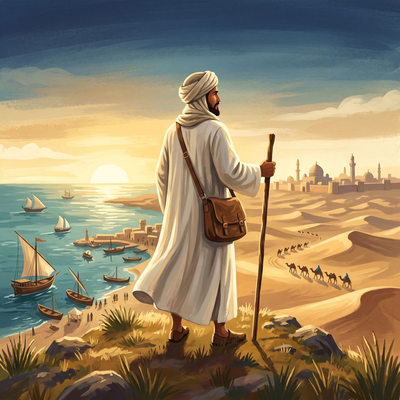
ابن بطوطة
Ibn Battuta
Key words
- رحلةjourney
- الرحّالةgreat traveler, explorer
- القافلةcaravan
- الحجّpilgrimage to Mecca (Hajj)
- القاضيjudge
- الفقهIslamic law (fiqh)
- الغريبstranger, foreigner
- السلطانsultan
- مملكةkingdom
- ساحلcoast
- الصحراءdesert
- الجمالcamels
All 25 words
- السفينةship
- عاصفةstorm
- ميناءport, harbor
- جزيرةisland
- هداياgifts
- الذهبgold
- العملة الورقيةpaper money
- الطاعونplague
- خريطةmap
- الذاكرةmemory
- الباحثونresearchers
- مطارairport
- قبرgrave, tomb
في سنة 1325 خرج شابّ في الحادية والعشرين من عمره من مدينة طنجة في المغرب، يريد أن يحجّ إلى مكّة. وكان يظنّ أنّ رحلته ستستغرق سنة أو سنتين، لكنّه لم يعد إلى بلده إلا بعد نحو أربع وعشرين سنة.
In 1325 a young man of twenty-one left the city of Tangier in Morocco, wanting to make the pilgrimage to Mecca. He thought his journey would take a year or two, but he did not return home until some twenty-four years later.
هذا الشابّ هو ابن بطوطة، الذي صار من أشهر الرحّالة في تاريخ العالم. في هذه المقالة نتبع طريقه من المغرب إلى مصر والشام والحجاز، ثم إلى أفريقيا الشرقية والأناضول والهند والصين، وأخيرًا عبر الصحراء الكبرى إلى مالي.
That young man was Ibn Battuta, who became one of the most famous travellers in the history of the world. In this article we follow his road from Morocco to Egypt, Syria and the Hijaz, then to East Africa, Anatolia, India and China, and finally across the Sahara to Mali.
فتى من طنجة
A young man from Tangier
اسمه الكامل أبو عبد الله محمد بن عبد الله اللواتي الطنجي، وُلد في طنجة سنة 1304، في أسرة من أصل أمازيغي اشتهر فيها القضاة والعلماء.
His full name was Abu Abdullah Muhammad ibn Abdullah al-Lawati al-Tanji. He was born in Tangier in 1304, into a family of Amazigh origin known for its judges and scholars.
ولم يكن ابن بطوطة تاجرًا ولا مستكشفًا بالمعنى الحديث. فقد كان عالمًا شابًّا، وكانت معرفته بالفقه هي التي تفتح له الأبواب في كلّ بلد إسلامي يصل إليه، فيكرمه الحكّام ويعيّنونه أحيانًا قاضيًا.
Ibn Battuta was neither a merchant nor an explorer in the modern sense. He was a young scholar, and it was his knowledge of Islamic law that opened doors for him in every Muslim country he reached: rulers honoured him and sometimes appointed him as a judge.
وكان العالم الإسلامي في القرن الرابع عشر يمتدّ من المغرب والأندلس إلى الهند وجزر المحيط الهندي، فكان المسافر الذي يعرف العربية والفقه يستطيع أن يجد في كلّ مكان تقريبًا مسجدًا وعلماء يتكلّمون لغته.
In the fourteenth century the Muslim world stretched from Morocco and al-Andalus to India and the islands of the Indian Ocean, so a traveller who knew Arabic and Islamic law could find, almost everywhere, a mosque and scholars who spoke his language.
الطريق إلى مكّة
The road to Mecca
خرج ابن بطوطة من طنجة وحده، وحزن لفراق والديه حزنًا شديدًا، كما يقول في كتابه. ثم انضمّ إلى القوافل التي تسير على طول ساحل شمال أفريقيا، حتى وصل إلى الإسكندرية ثم إلى القاهرة.
Ibn Battuta left Tangier alone, and was deeply saddened to leave his parents, as he says in his book. He then joined the caravans that travelled along the coast of North Africa, until he reached Alexandria and then Cairo.
وقد أُعجب بالقاهرة إعجابًا كبيرًا، ووصفها بأنّها مدينة لا تكاد تتّسع لأهلها من كثرتهم. ثم سار إلى الشام، فزار القدس ودمشق، ومن دمشق خرج مع قافلة الحجّ إلى المدينة ومكّة، فأدّى الحجّ سنة 1326.
He admired Cairo greatly, and described it as a city that could barely hold its people, there were so many of them. Then he went on to Syria, visiting Jerusalem and Damascus, and from Damascus he set out with the pilgrim caravan to Medina and Mecca, where he made the pilgrimage in 1326.
وكان يمكنه بعد ذلك أن يعود إلى بلده، لكنّه قرّر أن يواصل السفر. ويقال إنّه وضع لنفسه قاعدة غريبة: ألّا يسلك طريقًا واحدًا مرّتين إن استطاع.
After that he could have gone home, but he decided to keep travelling. It is said that he set himself a strange rule: never to take the same road twice if he could avoid it.
رحلة لا تنتهي
A journey without end
من مكّة سافر ابن بطوطة إلى العراق وبلاد فارس، فزار البصرة وبغداد وتبريز، ثم عاد إلى مكّة وأقام فيها مدّة يدرس ويتعبّد.
From Mecca Ibn Battuta travelled to Iraq and Persia, visiting Basra, Baghdad and Tabriz, then returned to Mecca and stayed there for a while, studying and praying.
ثم ركب البحر من اليمن إلى ساحل أفريقيا الشرقي، فزار مقديشو، ونزل جنوبًا حتى كِلْوَة، في تنزانيا اليوم. ووصف أهل هذه المدن التجارية وكرمهم، وبيوتهم، وطعامهم الذي يُطبخ بالموز وجوز الهند.
Then he sailed from Yemen to the coast of East Africa. He visited Mogadishu and went south as far as Kilwa, in today's Tanzania. He described the people of these trading cities and their generosity, their houses, and their food cooked with bananas and coconut.
وبعد ذلك عاد شمالًا عبر عُمان والخليج، ثم اتّجه إلى الأناضول، وهي اليوم جزء من تركيا.
After that he went back north by way of Oman and the Gulf, then headed for Anatolia, which is part of Turkey today.
في بلاد الأتراك
In the land of the Turks
أحبّ ابن بطوطة الأناضول وأهلها. وقد تعجّب بشكل خاصّ من جماعات «الأخيّة»، وهم شباب من أهل الحِرَف في المدن، يجتمعون في زوايا لهم، ويستضيفون الغرباء ويطعمونهم دون مقابل.
Ibn Battuta loved Anatolia and its people. He was especially amazed by the groups called the "akhis": young craftsmen in the towns who met in their own lodges, welcomed strangers and fed them for nothing.
وفي مدينة بورصة التقى بالسلطان أورخان، ابن عثمان مؤسّس الدولة العثمانية. وكانت تلك الدولة يومئذ صغيرة، ولم يكن أحد يعرف أنّها ستصير بعد ذلك من أكبر دول العالم.
In the city of Bursa he met Sultan Orhan, the son of Osman, the founder of the Ottoman state. That state was still small then, and no one knew it would later become one of the greatest states in the world.
ثم عبر البحر الأسود إلى السهوب الواسعة في شماله، حيث كانت تحكم «القبيلة الذهبية»، فزار السلطان أوزبك خان. ويحكي في كتابه أنّه سافر من هناك مع إحدى زوجات السلطان، وهي أميرة بيزنطية، حين عادت لزيارة أبيها في القسطنطينية.
Then he crossed the Black Sea to the wide steppes to the north, where the "Golden Horde" ruled, and visited Sultan Özbeg Khan. He tells in his book that from there he travelled with one of the sultan's wives, a Byzantine princess, when she went back to visit her father in Constantinople.
قاضٍ في دلهي
A judge in Delhi
بعد آسيا الوسطى وأفغانستان، وصل ابن بطوطة إلى الهند نحو سنة 1334. وكان يحكم دلهي يومئذ السلطان محمد بن تغلق، وهو حاكم عُرف بكرمه الكبير على العلماء الغرباء، وبقسوته الشديدة في الوقت نفسه.
After Central Asia and Afghanistan, Ibn Battuta reached India around 1334. Delhi was ruled at that time by Sultan Muhammad ibn Tughluq, a ruler known both for his great generosity towards foreign scholars and for his extreme cruelty.
عيّن السلطان ابن بطوطة قاضيًا في دلهي، وأعطاه مالًا كثيرًا، فبقي في خدمته نحو سبع سنوات. لكنّ الحياة قرب هذا السلطان كانت خطيرة، فقد يرضى عن الرجل اليوم ويغضب عليه غدًا.
The sultan made Ibn Battuta a judge in Delhi and gave him a great deal of money, and he stayed in his service for about seven years. But life near this sultan was dangerous: he might be pleased with a man today and furious with him tomorrow.
وفي سنة 1341 تقريبًا اختاره السلطان ليكون سفيره إلى إمبراطور الصين، وأرسل معه هدايا ثمينة. لكنّ السفينة التي تحمل الهدايا غرقت في عاصفة قرب ساحل الهند، فخاف ابن بطوطة أن يعود إلى دلهي، وواصل طريقه وحده.
Around 1341 the sultan chose him as his ambassador to the emperor of China and sent valuable gifts with him. But the ship carrying the gifts sank in a storm off the coast of India. Ibn Battuta was afraid to go back to Delhi, so he went on alone.
جزر المالديف
The Maldives
وصل ابن بطوطة إلى جزر المالديف في المحيط الهندي، فرحّب به أهلها، لأنّه عالم جاء من بلاد بعيدة. وعيّنوه قاضيًا، وتزوّج هناك، وأقام بينهم نحو تسعة أشهر.
Ibn Battuta reached the Maldives in the Indian Ocean, and the islanders welcomed him because he was a scholar who had come from a faraway land. They made him a judge, he married there, and he stayed among them for about nine months.
ووصف في كتابه حياة أهل الجزر، وكيف كانوا يستعملون الوَدَع، وهو صدف صغير، عملةً في التجارة، ويبيعونه إلى بلاد بعيدة. ثم زار جزيرة سيلان، أي سريلانكا اليوم، وصعد إلى جبل عالٍ فيها يقدّسه الناس من أديان مختلفة.
In his book he described the islanders' life, and how they used cowries, small shells, as money in trade and sold them to distant lands. Then he visited the island of Ceylon, today's Sri Lanka, and climbed a high mountain there that people of different religions hold sacred.
إلى الصين
To China
بعد سيلان مرّ ابن بطوطة بالبنغال، ثم بجزيرة سومطرة، ثم وصل بالبحر إلى الصين. ويقول إنّه نزل في ميناء كبير يسمّيه «الزيتون»، وهو مدينة تشيوانتشو في جنوب الصين اليوم.
After Ceylon, Ibn Battuta passed through Bengal and the island of Sumatra, and then reached China by sea. He says he landed at a great port he calls "Zaytun", which is the city of Quanzhou in southern China today.
وتعجّب ابن بطوطة من السفن الصينية الضخمة، ومن العملة الورقية التي يتعامل بها الناس بدل الذهب والفضّة، ومن أمان الطرق، فقد كان المسافر يستطيع أن يسير فيها وحده ومعه ماله. ووجد في المدن الكبيرة جماعات من التجّار المسلمين لهم مساجدهم وقضاتهم.
Ibn Battuta was amazed by the huge Chinese ships, by the paper money people used instead of gold and silver, and by the safety of the roads, where a traveller could go alone with his money. In the big cities he found communities of Muslim merchants with their own mosques and judges.
لكنّ هذا الجزء من الرحلة قصير في كتابه، وفيه أخبار غامضة، ولذلك يشكّ بعض الباحثين في أنّه زار كلّ الأماكن الصينية التي يذكرها.
But this part of the journey is short in his book and contains some vague reports, so some researchers doubt that he visited all the Chinese places he mentions.
العودة والطاعون
The return and the plague
بدأ ابن بطوطة رحلة العودة نحو الغرب، فمرّ بالهند والخليج والعراق، حتى وصل إلى الشام سنة 1348. وهناك رأى «الموت الأسود»، أي الطاعون الذي قتل في تلك السنوات أعدادًا هائلة من الناس في آسيا وأوروبا وأفريقيا.
Ibn Battuta began the journey back west, passing through India, the Gulf and Iraq, until he reached Syria in 1348. There he saw the "Black Death", the plague that in those years killed huge numbers of people in Asia, Europe and Africa.
ويذكر أنّ عدد الموتى في دمشق بلغ في يوم واحد أكثر من ألفين. ثم عرف في الطريق أنّ أمّه قد ماتت بالطاعون، وأنّ أباه كان قد مات قبلها بسنوات، فوصل إلى مدينة فاس سنة 1349 بعد غياب طويل.
He says that in Damascus the number of dead in a single day passed two thousand. On the way he learned that his mother had died of the plague, and that his father had died years before her. He finally reached the city of Fez in 1349, after a long absence.
إلى مالي عبر الصحراء
To Mali across the desert
لم يبقَ ابن بطوطة في بلده طويلًا، فقد زار الأندلس، ثم قام بآخر رحلاته الكبيرة: عبر الصحراء الكبرى مع قافلة من الجمال إلى مملكة مالي في غرب أفريقيا، سنة 1352.
Ibn Battuta did not stay home for long. He visited al-Andalus, and then made the last of his great journeys: in 1352 he crossed the Sahara with a camel caravan to the kingdom of Mali in West Africa.
وكانت مالي يومئذ مملكة غنيّة بالذهب، يحكمها السلطان سليمان، أخو منسا موسى الذي اشتهر بحجّه وبالذهب الكثير الذي حمله معه إلى مكّة. وزار ابن بطوطة مدينة تمبكتو، ووصف أمان البلاد وحرص أهلها على الصلاة وتعلّم القرآن.
Mali was then a kingdom rich in gold, ruled by Sultan Sulayman, the brother of Mansa Musa, who was famous for his pilgrimage and for the great amount of gold he took with him to Mecca. Ibn Battuta visited the city of Timbuktu and described the safety of the country and how careful its people were about prayer and learning the Quran.
ثم عاد إلى المغرب سنة 1354، بعد نحو تسع وعشرين سنة من خروجه الأوّل من طنجة. ويقدّر الباحثون أنّه قطع في رحلاته كلّها أكثر من مئة ألف كيلومتر.
Then he returned to Morocco in 1354, about twenty-nine years after he had first left Tangier. Researchers estimate that in all his journeys he covered more than a hundred thousand kilometres.
كتاب «الرحلة»
The book of the "Rihla"
أُعجِب سلطان المغرب أبو عنان المريني بأخبار ابن بطوطة، فأمره أن يملي رحلته على كاتب أديب شابّ اسمه ابن جُزَيّ. فجلس معه في فاس، وكتب ما يرويه، ورتّبه وزيّنه بالأشعار.
The sultan of Morocco, Abu Inan the Marinid, was impressed by Ibn Battuta's stories, and ordered him to dictate his journey to a young man of letters named Ibn Juzayy. Ibn Juzayy sat with him in Fez, wrote down what he told, put it in order and decorated it with poems.
وانتهى الكتاب سنة 1355، وعنوانه «تحفة النُّظّار في غرائب الأمصار وعجائب الأسفار»، لكنّ الناس يسمّونه اختصارًا «رحلة ابن بطوطة» أو «الرحلة».
The book was finished in 1355. Its title is "A Gift to Those Who Contemplate the Wonders of Cities and the Marvels of Travelling", but people call it for short "The Travels of Ibn Battuta" or simply "the Rihla", "the Journey".
وبقي الكتاب قرونًا معروفًا في العالم الإسلامي أكثر من غيره، ثم اكتشفه الأوروبيون في القرن التاسع عشر، فتُرجم كاملًا إلى الفرنسية، ثم إلى لغات كثيرة.
For centuries the book was known mainly in the Muslim world. Then Europeans discovered it in the nineteenth century: it was translated in full into French, and then into many other languages.
هل صدق ابن بطوطة؟
Did Ibn Battuta tell the truth?
يرى الباحثون أنّ «الرحلة» مصدر ثمين جدًّا لمعرفة العالم في القرن الرابع عشر، لكنّهم ينبّهون إلى بعض المشكلات. فقد أملى ابن بطوطة كتابه من الذاكرة بعد سنوات طويلة، فاختلطت عليه أحيانًا التواريخ والأسماء.
Researchers consider the "Rihla" a very valuable source for knowing the world of the fourteenth century, but they point out some problems. Ibn Battuta dictated his book from memory many years later, so he sometimes mixed up dates and names.
ووجد الباحثون أيضًا أنّ ابن جزي نقل بعض الأوصاف من كتاب رحّالة أقدم هو ابن جبير، وأنّ بعض الأجزاء، مثل جزء الصين، أقلّ دقّة من غيرها. ومع ذلك فإنّ معظم ما يذكره عن الهند والمالديف وأفريقيا يتّفق مع مصادر أخرى.
Researchers have also found that Ibn Juzayy copied some descriptions from the book of an earlier traveller, Ibn Jubayr, and that some parts, such as the China part, are less accurate than others. Even so, most of what he says about India, the Maldives and Africa agrees with other sources.
ابن بطوطة اليوم
Ibn Battuta today
ما زال اسم ابن بطوطة حاضرًا في أماكن كثيرة. فمطار طنجة يحمل اسمه، وفي دبي سوق تجاري كبير اسمه «ابن بطوطة»، أقسامه مزيّنة على طراز البلاد التي زارها، وهناك حفرة على سطح القمر سُمّيت باسمه أيضًا.
Ibn Battuta's name is still present in many places. Tangier's airport bears his name; in Dubai there is a large shopping centre called "Ibn Battuta", whose sections are decorated in the style of the lands he visited; and there is a crater on the Moon named after him too.
وفي المدينة القديمة في طنجة قبر صغير يقول الناس إنّه قبره، وإن كان المؤرّخون لا يعرفون بالتأكيد أين دُفن. وقد مات في المغرب نحو سنة 1368 أو 1369.
In the old city of Tangier there is a small tomb that people say is his, although historians do not know for certain where he was buried. He died in Morocco around 1368 or 1369.
كلمات الرحلة
Words of the journey
هذه كلمات مهمّة من عالم ابن بطوطة:
Here are some important words from the world of Ibn Battuta:
الرحلة: سفر طويل، وهي أيضًا الكتاب الذي يصف هذا السفر.
Al-rihla: a long journey; it is also the book that describes such a journey.
الرحّالة: الشخص الذي يسافر كثيرًا ويكتب عن رحلاته.
Al-rahhala: a person who travels a lot and writes about their journeys.
القافلة: جماعة من المسافرين والجمال يسيرون معًا.
Al-qafila: a caravan, a group of travellers and camels moving together.
الحجّ: السفر إلى مكّة لأداء الفريضة.
Al-hajj: the journey to Mecca to perform the pilgrimage.
القاضي: الشخص الذي يحكم بين الناس بالشرع.
Al-qadi: the judge, the person who judges between people by Islamic law.
الغريب: الشخص الذي يأتي من بلد آخر.
Al-gharib: the stranger, a person who comes from another country.
في النهاية
In the end
لم يكن ابن بطوطة يملك خريطة دقيقة ولا وسيلة سفر سريعة، لكنّه كان يملك فضولًا لا ينتهي، ولغة يفهمها العلماء من المغرب إلى الصين، وقدرة عجيبة على أن يجد مكانًا له بين كلّ قوم.
Ibn Battuta had no accurate map and no fast way to travel, but he had endless curiosity, a language understood by scholars from Morocco to China, and an amazing ability to find a place for himself among every people.
وقد ترك لنا في «الرحلة» صورة حيّة للعالم قبل نحو سبعة قرون: أسواقه وموانئه، وطعامه وملابسه، وحكّامه وعلماءه وناسه البسطاء.
In the "Rihla" he left us a living picture of the world about seven centuries ago: its markets and ports, its food and clothes, its rulers and scholars and its ordinary people.
ولعلّ أجمل ما في قصّته أنّها بدأت بنيّة رحلة واحدة قصيرة، ثم صارت رحلة عمر كامل. فمن يدري؟ قد تبدأ أنت أيضًا بتعلّم كلمة عربية واحدة، ثم تجد نفسك في رحلة طويلة لا تريد أن تنتهي.
Perhaps the most beautiful thing about his story is that it began as the plan for one short journey and became the journey of a whole life. Who knows? You too might start by learning a single Arabic word, and then find yourself on a long journey you never want to end.
In the free app you can listen to this text read aloud and tap any word to see what it means.
From the blog
Learn Arabic arrives on 1 December
The app is almost ready: the Arabic alphabet from scratch, grammar, over 2,500 words with audio and classics such as Gibran's The Broken Wings in the original. Leave your email and we'll let you know the day it's out.
One email when the app is out. Nothing else.