ألف ليلة وليلة
The Thousand and One Nights
Key words
- حكاياتtales
- الراويstoryteller
- أنقذتshe saved
- خانتهshe betrayed him
- الوزيرvizier
- العروسbride
- ذكيةclever
- خطّةplan
- الفجرdawn
- السهرstaying up at night
- يعفوpardons
- السيفsword
All 25 words
- مغامراتadventures
- سحرmagic
- ألغازriddles
- البخلاءmisers
- مخطوطةmanuscript
- الخليفةcaliph
- متنكّرًاin disguise
- يكافئrewards
- البحّارةsailors
- جزيرةisland
- المصباحlamp
- لصًّاthief
- كنوزtreasures
قليلة هي الكتب التي سافرت في العالم كما سافر كتاب «ألف ليلة وليلة». فقد يعرف كثير من الناس السندباد وعلاء الدين وعلي بابا، دون أن يعرفوا أنّ هذه الشخصيات خرجت من كتاب عربي واحد، أو على الأقلّ ارتبطت به.
Few books have travelled the world the way "The Thousand and One Nights" has. Many people know Sindbad, Aladdin and Ali Baba without knowing that these characters came out of a single Arabic book, or were at least linked to it.
في هذه المقالة نتعرّف على القصّة التي تجمع حكايات الكتاب كلّها، وعلى شهرزاد التي أنقذت حياتها بالكلام، ثم نتتبّع رحلة هذه الحكايات من فارس إلى بغداد والقاهرة، ومنها إلى أوروبا والعالم.
In this article we get to know the story that holds all the book's tales together, and Shahrazad, who saved her life with words. Then we follow the journey of these tales from Persia to Baghdad and Cairo, and from there to Europe and the world.
ملك لا يثق بأحد
A king who trusts no one
تبدأ الحكاية بملك اسمه شهريار، يكتشف أنّ زوجته خانته. فيغضب غضبًا شديدًا، ويقرّر ألّا يثق بامرأة بعد ذلك أبدًا.
The story begins with a king named Shahryar, who discovers that his wife has betrayed him. He is furious, and decides never to trust a woman again.
وتصل قسوته إلى حدّ رهيب: فهو يتزوّج كلّ ليلة فتاة جديدة، ثم يأمر بقتلها في الصباح، حتى لا تخونه. ويمضي على ذلك زمن طويل، والخوف يملأ المدينة، والآباء يهربون ببناتهم.
His cruelty goes to terrible lengths: every night he marries a new girl, and in the morning he orders her to be killed, so that she cannot betray him. This goes on for a long time; fear fills the city, and fathers flee with their daughters.
وكان الوزير هو الذي يُكلَّف كلّ يوم بإحضار العروس الجديدة، حتى لم يبقَ في المدينة تقريبًا فتاة يمكن أن يأتي بها. فعاد إلى بيته حزينًا لا يعرف ماذا يفعل.
It was the vizier who had to bring the new bride every day, until there was hardly a girl left in the city for him to bring. So he went home sad, not knowing what to do.
شهرزاد
Shahrazad
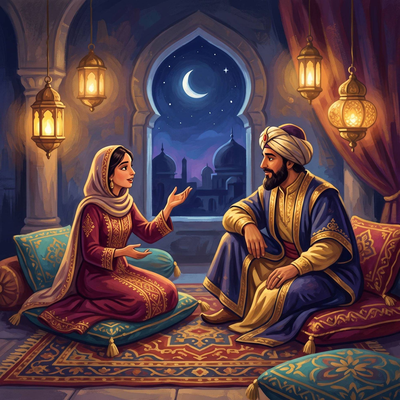
كان للوزير ابنة ذكية اسمها شهرزاد، قرأت الكتب وحفظت الأشعار وأخبار الملوك والحكايات القديمة. فقالت لأبيها: «زوّجني هذا الملك، فإمّا أن أعيش، وإمّا أن أكون فداءً لبنات المسلمين».
The vizier had a clever daughter named Shahrazad, who had read books and learned by heart poems, the stories of kings and old tales. She said to her father: "Marry me to this king. Either I will live, or I will be a ransom for the daughters of the Muslims."
خاف الأب على ابنته، وحاول أن يمنعها، لكنها أصرّت. وكانت لها خطّة: أن تطلب من أختها الصغيرة دنيازاد أن تأتي إليها في الليل وتقول لها: «يا أختي، حدّثينا حديثًا نقطع به سهر ليلتنا».
Her father feared for her and tried to stop her, but she insisted. She had a plan: she would ask her little sister Dunyazad to come to her at night and say: "Sister, tell us a story to pass our sleepless night."
فبدأت شهرزاد تحكي، والملك يسمع. وعندما يطلع الفجر، تكون الحكاية قد وصلت إلى أكثر لحظاتها تشويقًا، فتسكت. فيقول الملك في نفسه: لن أقتلها حتى أسمع بقيّة الحكاية.
So Shahrazad began to tell a story, and the king listened. When dawn broke, the story had reached its most exciting moment, and she fell silent. The king said to himself: I will not kill her until I have heard the rest of the story.
«وأدرك شهرزاد الصباح»
"And dawn overtook Shahrazad"
ولهذا تنتهي كلّ ليلة في الكتاب تقريبًا بالجملة نفسها: «وأدرك شهرزاد الصباح فسكتت عن الكلام المباح». وقد صارت هذه الجملة من أشهر الجمل في الأدب العربي.
That is why almost every night in the book ends with the same sentence: "And dawn overtook Shahrazad, and she fell silent from permitted speech." This sentence has become one of the most famous in Arabic literature.
وهكذا تمضي الليالي، ليلة بعد ليلة، وحكاية بعد حكاية، حتى تبلغ ألف ليلة وليلة. وفي النهاية يكون الملك قد تغيّر: فقد شفته الحكايات من غضبه وقسوته، فيعفو عن شهرزاد ويبقيها زوجة له.
And so the nights go by, night after night and tale after tale, until they reach a thousand and one. In the end the king has changed: the stories have cured him of his anger and cruelty, so he pardons Shahrazad and keeps her as his wife.
ويرى كثير من القرّاء في هذه القصّة فكرة جميلة: أنّ الكلمة أقوى من السيف، وأنّ الحكاية تستطيع أن تغيّر قلب الإنسان وتنقذ الحياة.
Many readers see a beautiful idea in this story: that the word is stronger than the sword, and that a story can change a person's heart and save a life.
حكاية داخل حكاية
A story within a story
من أجمل ما في «ألف ليلة وليلة» طريقة بنائه. فالقصّة الكبيرة، قصّة شهرزاد وشهريار، هي الإطار، وداخلها حكايات كثيرة. ويسمّي الباحثون هذا النوع «الحكاية الإطارية».
One of the most beautiful things about "The Thousand and One Nights" is the way it is built. The big story, the story of Shahrazad and Shahryar, is the frame, and inside it are many tales. Researchers call this kind of story a "frame story".
لكنّ الكتاب يذهب أبعد من ذلك: فأحيانًا تحكي شخصية في حكاية شهرزاد حكاية أخرى، وفي هذه الحكاية شخصية تحكي حكاية ثالثة. فيدخل القارئ في حكايات متداخلة، كأنها صناديق صغيرة داخل صناديق.
But the book goes further: sometimes a character in Shahrazad's tale tells another tale, and in that tale a character tells a third. So the reader enters stories nested inside each other, like little boxes inside boxes.
وفي الكتاب أنواع كثيرة من الحكايات: حكايات حبّ، ومغامرات في البحر، وحكايات جنّ وسحر، وحكايات على ألسنة الحيوانات، وألغاز وجرائم، ونوادر مضحكة عن البخلاء والمحتالين.
The book contains many kinds of stories: love stories, adventures at sea, tales of jinn and magic, fables told by animals, riddles and crimes, and funny anecdotes about misers and tricksters.
ومن أشهر الأمثلة حكاية الحمّال والبنات الثلاث في بغداد، التي تتفرّع منها حكايات كثيرة يرويها ضيوف غرباء، يحكي كلّ واحد منهم كيف فقد إحدى عينيه.
One of the best-known examples is the tale of the porter and the three ladies of Baghdad, from which many tales branch out, told by strange guests, each of whom tells how he lost one of his eyes.
من أين جاءت الحكايات؟
Where did the tales come from?
لا نعرف مؤلّفًا واحدًا لهذا الكتاب. فهو مجموعة من الحكايات جمعها رواة ونسّاخ كثيرون على مدى قرون طويلة، وأضاف كلّ واحد منهم ما أحبّ.
We do not know a single author for this book. It is a collection of tales gathered by many storytellers and copyists over long centuries, each of whom added what he liked.
ويذكر مؤرّخون عرب من القرن العاشر، مثل المسعودي وابن النديم، كتابًا فارسيًا اسمه «هزار أفسان»، أي «ألف خرافة»، تُرجم إلى العربية. ويبدو أنّ هذا الكتاب كان الأصل الأول، وأنّ فيه قصّة شهرزاد.
Arab historians of the tenth century, such as al-Masudi and Ibn al-Nadim, mention a Persian book called "Hazar Afsan", "A Thousand Tales", which was translated into Arabic. It seems that this book was the first source, and that it contained the story of Shahrazad.
ثم أضاف الرواة العرب إلى هذا الأصل حكايات من بغداد في العصر العبّاسي، وحكايات أخرى من القاهرة في عصر المماليك، فصار الكتاب مرآة لحياة المدن العربية: أسواقها وقصورها وتجّارها وحرفيّيها.
Arab storytellers then added to this source tales from Baghdad in the Abbasid age, and other tales from Cairo in the Mamluk period. So the book became a mirror of life in Arab cities: their markets and palaces, their merchants and craftsmen.
أقدم الأوراق
The oldest pages
يحتفظ معهد في جامعة شيكاغو الأمريكية بورقة صغيرة من القرن التاسع الميلادي، فيها بداية الكتاب واسما شهرزاد ودنيازاد. وهي أقدم دليل مكتوب نعرفه على الكتاب.
An institute at the University of Chicago keeps a small sheet of paper from the ninth century with the beginning of the book and the names of Shahrazad and Dunyazad on it. It is the oldest written evidence of the book that we know.
أما أقدم مخطوطة كبيرة باقية فقد كُتبت في الشام في القرن الرابع عشر أو الخامس عشر، وهي اليوم محفوظة في المكتبة الوطنية في باريس. وفيها نحو ثلاثمئة ليلة فقط، لا ألف ليلة.
The oldest large manuscript that survives was written in the Levant in the fourteenth or fifteenth century, and is kept today in the National Library in Paris. It contains only about three hundred nights, not a thousand.
ولهذا أضاف النسّاخ والمترجمون في القرون التالية حكايات كثيرة من مصادر مختلفة، حتى يكتمل العدد ألف ليلة وليلة كما يعد العنوان.
That is why, in later centuries, copyists and translators added many tales from different sources, so as to complete the number of a thousand and one nights that the title promises.
هارون الرشيد في الليل
Harun al-Rashid at night
من أشهر شخصيات الكتاب الخليفة العبّاسي هارون الرشيد. وهو شخصية تاريخية حقيقية حكم من بغداد في أواخر القرن الثامن وأوائل التاسع، لكنّ صورته في الحكايات صورة أدبية أكثر منها تاريخية.
One of the most famous characters in the book is the Abbasid caliph Harun al-Rashid. He was a real historical figure who ruled from Baghdad in the late eighth and early ninth centuries, but his image in the tales is more literary than historical.
ففي كثير من الحكايات يلبس هارون الرشيد ثياب التجّار، ويخرج في الليل متنكّرًا مع وزيره جعفر وسيّافه مسرور، ليتجوّل في شوارع بغداد ويرى أحوال الناس بنفسه.
In many tales Harun al-Rashid puts on merchant's clothes and goes out at night in disguise with his vizier Jafar and his swordsman Masrur, to wander the streets of Baghdad and see with his own eyes how people live.
وتقوده هذه الجولات الليلية إلى مغامرات عجيبة: يدخل بيوتًا غريبة، ويسمع حكايات حزينة أو مضحكة، وفي الصباح يكافئ المظلوم ويعاقب الظالم.
These night walks lead him into strange adventures: he enters strange houses and hears sad or funny stories, and in the morning he rewards the wronged and punishes the wrongdoer.
السندباد البحري
Sindbad the Sailor
ومن أحبّ الحكايات إلى القرّاء حكايات السندباد البحري، وهو تاجر من بغداد يسافر سبع رحلات في البحر، ويعود من كلّ رحلة غنيًا بعد أن ينجو من الموت.
Among readers' favourite tales are those of Sindbad the Sailor, a merchant from Baghdad who makes seven voyages at sea, and comes back rich from each one after escaping death.
وفي هذه الرحلات يرى السندباد عجائب كثيرة: سمكة ضخمة يظنّها البحّارة جزيرة فينزلون عليها، وطائرًا عملاقًا اسمه الرُّخّ يحمل الفيلة، ووادي ماس تحرسه الثعابين.
On these voyages Sindbad sees many wonders: a huge fish that the sailors take for an island and land on, a giant bird called the roc that carries elephants, and a valley of diamonds guarded by snakes.
ويرى الباحثون أنّ هذه الحكايات تعكس عالم التجارة البحرية في المحيط الهندي، حين كان التجّار العرب يبحرون من البصرة إلى الهند والصين، ويعودون بقصص عجيبة عن البلاد البعيدة.
Researchers think these tales reflect the world of sea trade in the Indian Ocean, when Arab merchants sailed from Basra to India and China and came back with amazing stories about faraway lands.
وكانت رحلات السندباد تُروى أحيانًا في كتاب مستقلّ، ثم أُدخلت في بعض نسخ «ألف ليلة وليلة»، حتى صار السندباد من أشهر أبطاله.
Sindbad's voyages were sometimes told as a separate book, and were later added to some versions of "The Thousand and One Nights", until Sindbad became one of its most famous heroes.
علاء الدين وعلي بابا
Aladdin and Ali Baba
من المفاجآت أنّ أشهر حكايتين في الغرب، «علاء الدين والمصباح السحري» و«علي بابا والأربعون لصًّا»، لا توجدان في أيّ مخطوطة عربية قديمة معروفة للكتاب.
One of the surprises is that the two most famous tales in the West, "Aladdin and the Magic Lamp" and "Ali Baba and the Forty Thieves", are not found in any known old Arabic manuscript of the book.
فقد سمعهما المترجم الفرنسي أنطوان غالان سنة 1709 في باريس من شابّ سوري من حلب اسمه حنّا دياب، كان يحكي الحكايات حكيًا جميلًا. فكتبهما غالان بالفرنسية، وأضافهما إلى ترجمته.
The French translator Antoine Galland heard them in Paris in 1709 from a young Syrian from Aleppo named Hanna Diyab, who was a wonderful storyteller. Galland wrote them down in French and added them to his translation.
ومع ذلك فقد صارت هاتان الحكايتان جزءًا من «ألف ليلة وليلة» في خيال الناس في كلّ العالم، ثم تُرجمتا إلى العربية أيضًا، فعادتا إلى اللغة التي يُفترض أنهما خرجتا منها!
Even so, these two tales have become part of "The Thousand and One Nights" in people's imagination all over the world. They were later translated into Arabic too, and so returned to the language they were supposed to have come from!
ألف ليلة في أوروبا والعالم
The Nights in Europe and the world
نشر غالان ترجمته الفرنسية بين سنتي 1704 و1717، فنجحت نجاحًا كبيرًا، وصار الأوروبيون يقرؤون عن بغداد والجنّ والمصابيح السحرية بشغف. ثم تُرجم الكتاب إلى معظم لغات أوروبا، ومنها إلى لغات العالم.
Galland published his French translation between 1704 and 1717, and it was a huge success: Europeans read eagerly about Baghdad, jinn and magic lamps. The book was then translated into most European languages, and from them into the languages of the world.
وأثّر الكتاب في كتّاب وموسيقيين ورسّامين كثيرين. فقد ألّف الموسيقار الروسي ريمسكي كورساكوف سنة 1888 عملًا موسيقيًا مشهورًا اسمه «شهرزاد»، وصُنعت عن حكايات الكتاب أفلام كثيرة، منها أفلام رسوم متحرّكة يعرفها الأطفال في كلّ مكان.
The book influenced many writers, musicians and painters. In 1888 the Russian composer Rimsky-Korsakov wrote a famous piece of music called "Scheherazade", and many films have been made of the book's tales, including cartoons that children everywhere know.
وفي القرن التاسع عشر طُبع النصّ العربي نفسه لأوّل مرّة كاملًا تقريبًا، في كلكتا بالهند وفي بولاق بالقاهرة، فصار القرّاء العرب يقرؤونه في كتاب مطبوع بعد أن كان يُروى ويُنسخ باليد.
In the nineteenth century the Arabic text itself was printed almost complete for the first time, in Calcutta in India and in Bulaq in Cairo. Arab readers could now read it in a printed book, after it had been told aloud and copied by hand.
ألف ليلة عند العرب اليوم
The Nights among Arabs today
لم ينظر بعض العلماء العرب قديمًا إلى «ألف ليلة وليلة» على أنه أدب رفيع، بل رأوا فيه حكايات شعبية للتسلية. لكنّ الكتاب اليوم يُدرَّس في الجامعات، ويُعدّ من كنوز الأدب العربي والعالمي.
In the past, some Arab scholars did not see "The Thousand and One Nights" as high literature, but as popular tales for entertainment. Today, however, the book is taught at universities and counted among the treasures of Arabic and world literature.
وقد استلهمه كتّاب عرب كبار، منهم نجيب محفوظ الحائز على جائزة نوبل، الذي كتب رواية عنوانها «ليالي ألف ليلة». كما تحوّلت حكاياته إلى مسلسلات إذاعية وتلفزيونية يتابعها الناس في ليالي رمضان.
Great Arab writers have drawn on it, among them the Nobel Prize winner Naguib Mahfouz, who wrote a novel called "Arabian Nights and Days". Its tales have also become radio and television series that people follow on Ramadan nights.
وما زالت عبارات من الكتاب تعيش في الكلام اليومي، فإذا سمع الناس قصّة طويلة عجيبة قالوا إنها «من ألف ليلة وليلة».
Phrases from the book still live on in everyday speech: when people hear a long, amazing story, they say it is "straight out of the Thousand and One Nights".
كلمات الحكايات
Words from the tales
هذه كلمات مهمّة من عالم «ألف ليلة وليلة»:
Here are some important words from the world of "The Thousand and One Nights":
الحكاية: قصّة تُروى، وجمعها حكايات.
Al-hikaya: a tale, a story that is told; its plural is hikayat.
الراوي: الشخص الذي يحكي القصص.
Al-rawi: the storyteller, the person who tells stories.
السهر: البقاء مستيقظًا في الليل.
Al-sahar: staying awake at night.
الجنّي: كائن من نار لا يراه الناس عادة.
Al-jinni: a genie, a being made of fire that people usually cannot see.
المصباح: سراج قديم يُضاء بالزيت.
Al-misbah: a lamp, an old light that burns oil.
المخطوطة: كتاب قديم مكتوب باليد.
Al-makhtuta: a manuscript, an old book written by hand.
في النهاية
In the end
«ألف ليلة وليلة» ليس كتابًا واحدًا بقدر ما هو نهر من الحكايات، شاركت فيه شعوب ولغات كثيرة: الهند وفارس والعرب، ثم أوروبا التي أضافت إليه وغيّرت فيه.
"The Thousand and One Nights" is not so much a single book as a river of stories, to which many peoples and languages contributed: India, Persia and the Arabs, and then Europe, which added to it and changed it.
وفي قلب هذا النهر تقف امرأة شجاعة لم تحمل سيفًا، بل حملت الكلمات. فقد عرفت شهرزاد أنّ الإنسان الذي يسمع حكاية جميلة يريد دائمًا أن يعرف ماذا سيحدث بعد ذلك.
At the heart of this river stands a brave woman who carried no sword, only words. Shahrazad knew that a person who hears a good story always wants to know what will happen next.
ولعلّ هذا هو سرّ الكتاب كلّه: فبعد أكثر من ألف سنة، ما زلنا نحن أيضًا نجلس في الليل، ونقول مثل الملك شهريار: «وماذا حدث بعد ذلك؟».
Perhaps that is the secret of the whole book: more than a thousand years later, we too still sit up at night and say, like King Shahryar, "And what happened next?"
In the free app you can listen to this text read aloud and tap any word to see what it means.
From the blog
Learn Arabic arrives on 1 December
The app is almost ready: the Arabic alphabet from scratch, grammar, over 2,500 words with audio and classics such as Gibran's The Broken Wings in the original. Leave your email and we'll let you know the day it's out.
One email when the app is out. Nothing else.