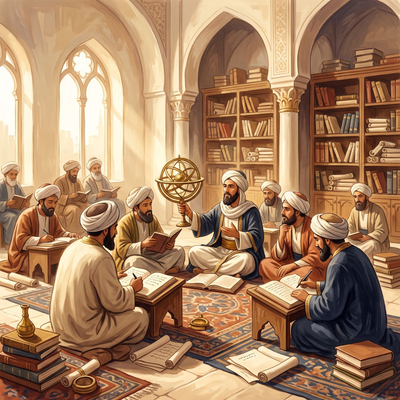
بيت الحكمة
The House of Wisdom
Key words
- الحكمةwisdom
- المعرفةknowledge
- الترجمةtranslation
- ترجمto translate
- المترجمtranslator
- الكتبbooks
- مكتبةlibrary
- المخطوطاتmanuscripts
- الناسخcopyist, scribe
- العلماءscholars, scientists
- المؤرّخونhistorians
- الخليفةcaliph
All 25 words
- قصرpalace
- التجّارmerchants
- الطبّmedicine
- الرياضياتmathematics
- الفلكastronomy
- الفلسفةphilosophy
- الهندسةgeometry
- الجبرalgebra
- المرصدobservatory
- النجومstars
- محيط الأرضcircumference of the Earth
- حبرink
- نهرriver
في القرن التاسع الميلادي كانت بغداد من أكبر مدن العالم وأغناها، وكانت أيضًا مدينة الكتب والعلماء. وفي قلب هذه الحياة العلمية كان مكان يُسمّى «بيت الحكمة».
In the ninth century Baghdad was one of the largest and richest cities in the world, and it was also a city of books and scholars. At the heart of this scholarly life was a place called the "House of Wisdom".
في هذه المقالة نتعرّف على بغداد في زمن العبّاسيين، وعلى حركة الترجمة الكبيرة التي نقلت علوم اليونان والفرس والهند إلى العربية، وعلى بعض العلماء الذين عملوا فيها، ثم نرى كيف وصلت هذه المعرفة إلى أوروبا.
In this article we get to know Baghdad in the time of the Abbasids, and the great translation movement that carried the sciences of the Greeks, the Persians and India into Arabic. We meet some of the scholars who worked in it, and then see how this knowledge reached Europe.
بغداد، مدينة السلام
Baghdad, the City of Peace
بدأ الخليفة العبّاسي أبو جعفر المنصور بناء مدينة بغداد سنة 762 على نهر دجلة، وسمّاها «مدينة السلام». وكان قلبها القديم مدينة مدوّرة لها أربعة أبواب.
The Abbasid caliph Abu Jafar al-Mansur began building the city of Baghdad in 762 on the river Tigris, and called it "Madinat al-Salam", the City of Peace. Its old heart was a round city with four gates.
وكان مكان بغداد مناسبًا جدًّا للتجارة، فهي قريبة من نهرَي دجلة والفرات، وتصل إليها الطرق من فارس والشام والجزيرة العربية. فوصل إليها التجّار والسلع من الصين إلى أفريقيا.
Baghdad's location was ideal for trade: it lies close to the two rivers, the Tigris and the Euphrates, and roads reached it from Persia, the Levant and Arabia. So merchants and goods came to it from China to Africa.
وبسرعة كبيرة صارت بغداد مدينة ضخمة يسكنها مئات الآلاف من الناس، وفيها أسواق ومساجد وقصور ومستشفيات، ويعيش فيها العرب والفرس والسريان واليهود وغيرهم.
Very quickly Baghdad became a huge city with hundreds of thousands of inhabitants, with markets, mosques, palaces and hospitals, where Arabs, Persians, Syriacs, Jews and others lived together.
ما بيت الحكمة؟
What was the House of Wisdom?
بيت الحكمة كان في الأصل مكتبة في قصر الخلفاء، تُحفظ فيها الكتب، ويعمل فيها النُّسّاخ والمترجمون. ويبدو أنه بدأ في زمن هارون الرشيد أو قبله، ثم كبر كثيرًا في زمن ابنه المأمون، الذي حكم من سنة 813 إلى سنة 833.
The House of Wisdom was originally a library in the caliphs' palace, where books were kept and where copyists and translators worked. It seems to have begun in the time of Harun al-Rashid or earlier, and then it grew a great deal in the time of his son al-Mamun, who ruled from 813 to 833.
ولا يعرف المؤرّخون اليوم كلّ تفاصيل هذا المكان: هل كان مكتبة كبيرة فقط، أم مركزًا للبحث والتعليم أيضًا؟ فالمصادر القديمة قليلة، وبعضها كُتب بعد ذلك بزمن طويل.
Historians today do not know every detail about this place: was it only a large library, or also a centre of research and teaching? The old sources are few, and some of them were written long afterwards.
لكنّ الأمر المؤكّد أنّ بغداد في ذلك الزمن عرفت حركة علمية لم يعرف العالم مثلها من قبل، وأنّ اسم «بيت الحكمة» صار رمزًا لهذه الحركة كلّها.
But what is certain is that Baghdad at that time saw a scholarly movement such as the world had never seen before, and that the name "House of Wisdom" became a symbol of that whole movement.
حركة الترجمة
The translation movement
كان الخلفاء والوزراء والأغنياء في بغداد يدفعون أموالًا كثيرة لشراء الكتب القديمة وترجمتها إلى العربية. وكانوا يرسلون الرسل أحيانًا إلى بلاد الروم للبحث عن المخطوطات.
Caliphs, ministers and rich people in Baghdad paid large sums to buy old books and have them translated into Arabic. Sometimes they even sent envoys to Byzantium to look for manuscripts.
فتُرجمت كتب في الطبّ والرياضيات والفلك والفلسفة من اليونانية والفارسية والسنسكريتية والسريانية. ومن أشهرها كتب أرسطو وجالينوس، وكتاب «الأصول» لإقليدس في الهندسة، وكتاب بطليموس في الفلك الذي سمّاه العرب «المجسطي».
So books on medicine, mathematics, astronomy and philosophy were translated from Greek, Persian, Sanskrit and Syriac. Among the most famous were the works of Aristotle and Galen, Euclid's "Elements" on geometry, and Ptolemy's book on astronomy, which the Arabs called "al-Majisti", the Almagest.
واستمرّت هذه الحركة نحو قرنين من الزمن. ولم يكن هدفها حفظ الكتب فقط، بل فهمها ونقدها، والبناء عليها، وإضافة أفكار جديدة إليها.
This movement lasted about two centuries. Its aim was not only to preserve books, but to understand them, criticise them, build on them and add new ideas to them.
حنين بن إسحاق
Hunayn ibn Ishaq
من أشهر المترجمين في هذا العصر حنين بن إسحاق، وهو طبيب مسيحي من مدينة الحيرة في العراق. وكان يعرف العربية والسريانية واليونانية والفارسية.
One of the most famous translators of this age was Hunayn ibn Ishaq, a Christian physician from the city of al-Hira in Iraq. He knew Arabic, Syriac, Greek and Persian.
ترجم حنين كثيرًا من كتب جالينوس في الطبّ، وكان دقيقًا جدًّا في عمله: فكان يجمع عدّة نسخ من الكتاب الواحد، ويقارن بينها، قبل أن يبدأ الترجمة.
Hunayn translated many of Galen's books on medicine, and he was very careful in his work: he would collect several copies of the same book and compare them before he began translating.
ويروي بعض المؤرّخين أنّ المأمون كان يعطيه من الذهب بوزن الكتب التي يترجمها. وسواء أكانت هذه القصّة صحيحة أم لا، فهي تدلّ على قيمة الترجمة والمعرفة في ذلك الزمن.
Some historians report that al-Mamun gave him the weight of the books he translated in gold. Whether this story is true or not, it shows how much translation and knowledge were valued at that time.
ثابت بن قرّة
Thabit ibn Qurra
ومن المترجمين الكبار أيضًا ثابت بن قرّة، وهو من مدينة حرّان. وكان رياضيًا وفلكيًا، وترجم كتبًا كثيرة في الرياضيات من اليونانية إلى العربية.
Another great translator was Thabit ibn Qurra, from the city of Harran. He was a mathematician and astronomer, and he translated many books on mathematics from Greek into Arabic.
ولم يكن ثابت مترجمًا فقط، بل كتب أيضًا أبحاثًا جديدة في الهندسة والأعداد. وهذا يوضّح طبيعة هذه الحركة: كان المترجم في كثير من الأحيان عالمًا هو نفسه.
Thabit was not only a translator: he also wrote new studies on geometry and numbers. This shows the nature of the movement: very often the translator was a scholar himself.
الكندي، فيلسوف العرب
Al-Kindi, the philosopher of the Arabs
ومن أبرز علماء بغداد في ذلك القرن يعقوب بن إسحاق الكندي، الذي يُلقَّب بـ«فيلسوف العرب»، لأنه من أوائل الفلاسفة الذين كتبوا بالعربية.
One of the most outstanding scholars in Baghdad in that century was Yaqub ibn Ishaq al-Kindi, who is called "the philosopher of the Arabs", because he was one of the first philosophers to write in Arabic.
كتب الكندي في موضوعات كثيرة جدًّا: في الفلسفة، والرياضيات، والطبّ، والموسيقى، والضوء. وكان يرى أنّ الإنسان يجب أن يقبل الحقيقة من أيّ مكان جاءت.
Al-Kindi wrote on a great many subjects: philosophy, mathematics, medicine, music and light. He believed that people should accept the truth wherever it comes from.
ومن أعماله المشهورة رسالة في فكّ الرسائل السرّية، شرح فيها طريقة تعتمد على حساب تكرار الحروف في اللغة. وهي من أقدم ما نعرفه عن هذه الطريقة في علم التشفير.
One of his famous works is a treatise on breaking secret messages, in which he explained a method based on counting how often each letter appears in a language. It is one of the oldest descriptions we know of this method in the science of codes.
الخوارزمي وبنو موسى
Al-Khwarizmi and the Banu Musa
وفي بغداد أيضًا عمل محمد بن موسى الخوارزمي، الذي كتب في الحساب والجبر والفلك والجغرافيا، ومن اسمه جاءت كلمة «الخوارزمية» التي نستعملها اليوم.
Muhammad ibn Musa al-Khwarizmi also worked in Baghdad. He wrote on arithmetic, algebra, astronomy and geography, and from his name comes the word "algorithm" that we use today.
وكان هناك ثلاثة إخوة يُسمَّون «بني موسى»، وهم أبناء موسى بن شاكر. وقد كتبوا «كتاب الحيل»، ووصفوا فيه أكثر من مئة آلة ذكية تعمل بالماء والهواء، مثل أوانٍ عجيبة ونوافير ومصابيح.
There were also three brothers known as the "Banu Musa", the sons of Musa ibn Shakir. They wrote the "Book of Ingenious Devices", in which they described more than a hundred clever machines worked by water and air, such as trick vessels, fountains and lamps.
وكان بنو موسى أغنياء، فكانوا ينفقون أموالهم على شراء الكتب ودفع أجور المترجمين، ومنهم ثابت بن قرّة نفسه.
The Banu Musa were rich, and they spent their money on buying books and paying translators, among them Thabit ibn Qurra himself.
المراصد وقياس الأرض
Observatories and measuring the Earth
اهتمّ المأمون كثيرًا بعلم الفلك، فبنى مرصدًا في بغداد ومرصدًا آخر على جبل قاسيون في دمشق. وكان الفلكيون فيهما يراقبون الشمس والقمر والنجوم، ويصحّحون الجداول القديمة.
Al-Mamun was very interested in astronomy, so he built an observatory in Baghdad and another on Mount Qasiyun in Damascus. The astronomers there observed the sun, the moon and the stars, and corrected the old tables.
وأراد المأمون أن يعرف حجم الأرض، فأرسل فريقًا من العلماء إلى سهل سنجار، في شمال العراق اليوم. فمشى العلماء في الصحراء نحو الشمال ونحو الجنوب، وقاسوا المسافة التي تقابل درجة واحدة من محيط الأرض.
Al-Mamun wanted to know the size of the Earth, so he sent a team of scholars to the plain of Sinjar, in what is today northern Iraq. The scholars walked across the desert northwards and southwards, and measured the distance that corresponds to one degree of the Earth's circumference.
ومن هذا القياس حسبوا محيط الأرض كلّها، وكانت النتيجة قريبة جدًّا من الحقيقة. وهذا عمل كبير، لأنه تمّ قبل أكثر من ألف ومئة سنة، بلا أقمار صناعية ولا آلات حديثة.
From this measurement they calculated the circumference of the whole Earth, and the result was very close to the truth. This was a great achievement, because it was done more than eleven hundred years ago, without satellites or modern instruments.
أسماء عربية في السماء
Arabic names in the sky
بقي أثر هذه الحركة في السماء نفسها! فكثير من النجوم المشهورة لها أسماء عربية في كلّ لغات العالم تقريبًا.
The mark of this movement remains in the sky itself! Many famous stars have Arabic names in almost every language in the world.
فاسم النجم Aldebaran جاء من «الدَّبَران»، أي التابع، لأنه يتبع مجموعة نجوم الثريّا. واسم Altair جاء من «الطائر»، واسم Vega جاء من «الواقع»، أي النسر الواقع.
The name of the star Aldebaran comes from "al-dabaran", the follower, because it follows the star cluster of the Pleiades. The name Altair comes from "al-tair", the flying one, and the name Vega from "al-waqi", the falling one, that is, the falling eagle.
وحتى اسم Betelgeuse جاء من كلمات عربية هي «يد الجوزاء»، لكنّ الأوروبيين أخطؤوا في قراءتها. فإذا نظرت إلى السماء في الليل، فأنت ترى قطعة من تاريخ بغداد.
Even the name Betelgeuse comes from Arabic words, "yad al-jawza", the hand of al-Jawza, but Europeans misread them. So when you look at the night sky, you are seeing a piece of Baghdad's history.
سقوط بغداد
The fall of Baghdad
بقيت بغداد مركزًا للعلم قرونًا طويلة، لكنّ قوّة الخلافة العبّاسية ضعفت مع الوقت. وفي سنة 1258 حاصر المغول بقيادة هولاكو مدينة بغداد، ثم دخلوها.
Baghdad remained a centre of learning for many centuries, but the power of the Abbasid caliphate weakened over time. In 1258 the Mongols, led by Hulagu, besieged Baghdad and then entered it.
قُتل كثير من الناس، وأُحرقت المكتبات، وضاعت كتب لا نعرف عددها. وتقول روايات قديمة إنّ ماء دجلة صار أسود من حبر الكتب التي أُلقيت فيه.
Many people were killed, the libraries were burned, and books were lost in numbers we do not know. Old accounts say the water of the Tigris turned black from the ink of the books thrown into it.
لكنّ المعرفة لم تمت، لأنّ كثيرًا من هذه الكتب كانت قد نُسخت من قبل، وانتشرت في القاهرة ودمشق وقرطبة وسمرقند وغيرها من المدن.
But knowledge did not die, because many of these books had already been copied and had spread to Cairo, Damascus, Cordoba, Samarkand and other cities.
من العربية إلى اللاتينية
From Arabic to Latin
في القرن الثاني عشر بدأت حركة ترجمة جديدة، لكن في الاتجاه المعاكس هذه المرّة: من العربية إلى اللاتينية. وكان من أهمّ مراكزها مدينة طليطلة في إسبانيا.
In the twelfth century a new translation movement began, but this time in the opposite direction: from Arabic into Latin. One of its most important centres was the city of Toledo in Spain.
وكان من أشهر المترجمين هناك جيرارد الكريموني، وهو إيطالي ترجم عشرات الكتب العربية إلى اللاتينية، ومنها «المجسطي» وكتب في الطبّ والرياضيات.
One of the most famous translators there was Gerard of Cremona, an Italian who translated dozens of Arabic books into Latin, among them the Almagest and books on medicine and mathematics.
وهكذا عادت كتب اليونان إلى أوروبا، لكن بعد أن مرّت بالعربية، وأضاف إليها العلماء العرب والمسلمون شروحًا وأفكارًا جديدة كثيرة.
And so the books of the Greeks returned to Europe, but only after passing through Arabic, and after Arab and Muslim scholars had added many commentaries and new ideas to them.
كلمات من المقالة
Words from the article
هذه كلمات مهمّة من عالم بيت الحكمة:
Here are some important words from the world of the House of Wisdom:
الترجمة: نقل الكلام من لغة إلى لغة أخرى.
Al-tarjama: translation, carrying words from one language into another.
المخطوطة: كتاب قديم مكتوب باليد.
Al-makhtuta: a manuscript, an old book written by hand.
الناسخ: الشخص الذي ينقل الكتب بخطّ يده.
Al-nasikh: a copyist, a person who copies books by hand.
المرصد: مكان لمراقبة النجوم والكواكب.
Al-marsad: an observatory, a place for watching the stars and planets.
الفلك: علم الشمس والقمر والنجوم.
Al-falak: astronomy, the science of the sun, the moon and the stars.
الحكمة: المعرفة العميقة، وكانت تعني أيضًا الفلسفة.
Al-hikma: wisdom, deep knowledge; it also used to mean philosophy.
في النهاية
In the end
لم يكن بيت الحكمة مجرّد مبنى فيه كتب، بل كان فكرة: أنّ المعرفة تكبر عندما تلتقي اللغات والثقافات، وعندما يقرأ الناس ما كتبه غيرهم ويضيفون إليه.
The House of Wisdom was not just a building full of books, but an idea: that knowledge grows when languages and cultures meet, and when people read what others have written and add to it.
فقد عمل في بغداد مسلمون ومسيحيون وصابئة، وعرب وفرس وغيرهم، وكانوا جميعًا يكتبون بالعربية، التي صارت في ذلك الزمن لغة العلم في جزء كبير من العالم.
In Baghdad, Muslims, Christians and Sabians worked side by side, Arabs, Persians and others, and they all wrote in Arabic, which at that time became the language of science in a large part of the world.
واليوم، كلّما استعملنا كلمة مثل «الجبر» أو «الخوارزمية»، أو نظرنا إلى نجم له اسم عربي، فإننا نتذكّر تلك المدينة على نهر دجلة، وذلك البيت الذي جمع الحكمة من كلّ مكان.
Today, whenever we use a word like "algebra" or "algorithm", or look at a star with an Arabic name, we remember that city on the Tigris, and that house which gathered wisdom from everywhere.
In the free app you can listen to this text read aloud and tap any word to see what it means.
From the blog
Learn Arabic arrives on 1 December
The app is almost ready: the Arabic alphabet from scratch, grammar, over 2,500 words with audio and classics such as Gibran's The Broken Wings in the original. Leave your email and we'll let you know the day it's out.
One email when the app is out. Nothing else.