السَّلَام عَلَيْكُم
Greetings in the Arab World
Key words
- التَّحِيَّةgreeting
- يُسَلِّمto greet
- السَّلَام عَلَيْكُمpeace be upon you
- وَعَلَيْكُمُ السَّلَامand peace be upon you (reply)
- مَرْحَبًاhello
- أَهْلًا وَسَهْلًاwelcome
- صَبَاح الْخَيْرgood morning
- صَبَاح النُّورgood morning (reply)
- مَسَاء الْخَيْرgood evening
- كَيْفَ حَالُكَhow are you?
- بِخَيْرfine, well
- الْحَمْد لِلَّهthank God
All 25 words
- مَعَ السَّلَامَةgoodbye
- تُصْبِح عَلَى خَيْرgood night
- الْوَدَاعfarewell
- الْجَوَابanswer, reply
- السُّؤَالquestion
- الضَّيْفguest
- الْأَصْدِقَاءfriends
- الْغَرِيبstranger
- احْتِرَامrespect
- الْقُبْلَةkiss
- الْخَدّcheek
- الْهَاتِفtelephone
- اللَّهَجَاتdialects
فِي الْعَالَم الْعَرَبِيّ، التَّحِيَّة مُهِمَّة جِدًّا. النَّاس يُسَلِّمُون عَلَى الْجِيرَان، وَعَلَى الْأَصْدِقَاء، وَعَلَى صَاحِب الدُّكَّان. لَا أَحَد يَدْخُل إِلَى مَكَان بِدُون تَحِيَّة.
In the Arab world, greetings are very important. People greet their neighbours, their friends and the shopkeeper. Nobody walks into a place without a greeting.
فِي هٰذِهِ الْمَقَالَة نَتَعَلَّم أَشْهَر التَّحِيَّات، وَمَتَى نَقُولُهَا، وَكَيْفَ نُجِيب.
In this article we learn the best-known greetings, when to say them and how to answer.
السَّلَام عَلَيْكُم
As-salamu alaykum
أَشْهَر تَحِيَّة هِيَ «السَّلَام عَلَيْكُم». مَعْنَاهَا: السَّلَام لَكُم. نَقُولُهَا فِي الصَّبَاح، وَفِي الْمَسَاء، وَفِي كُلّ وَقْت.
The best-known greeting is "as-salamu alaykum". It means "peace be upon you". We say it in the morning, in the evening and at any time of day.
وَالْجَوَاب هُوَ «وَعَلَيْكُمُ السَّلَام». هٰذِهِ التَّحِيَّة تَصْلُح مَعَ كُلّ النَّاس: مَعَ الْكَبِير وَالصَّغِير، وَمَعَ الصَّدِيق وَالْغَرِيب.
The answer is "wa alaykum as-salam". This greeting works with everyone: young and old, friends and strangers.
وَأَحْيَانًا يَكُون الْجَوَاب أَطْوَل: «وَعَلَيْكُمُ السَّلَام وَرَحْمَة اللَّه وَبَرَكَاتُهُ». الْجَوَاب الطَّوِيل أَجْمَل وَأَكْرَم.
Sometimes the answer is longer: "wa alaykum as-salam wa rahmatu Allahi wa barakatuh" (and peace be upon you, and God's mercy and blessings). A longer answer is more beautiful and more generous.
مَرْحَبًا وَأَهْلًا
Marhaban and ahlan
«مَرْحَبًا» تَحِيَّة سَهْلَة وَخَفِيفَة. نَقُولُهَا لِلْأَصْدِقَاء وَلِلزُّمَلَاء. وَالْجَوَاب «مَرْحَبًا» أَيْضًا، أَوْ «أَهْلًا».
"Marhaban" is an easy, light greeting. We say it to friends and colleagues. The answer is "marhaban" too, or "ahlan".
وَعِنْدَمَا يَدْخُل ضَيْف إِلَى الْبَيْت، نَقُول لَهُ: «أَهْلًا وَسَهْلًا». مَعْنَاهَا: أَنْتَ بَيْنَ أَهْلِكَ، وَالطَّرِيق سَهْل. وَالضَّيْف يُجِيب: «أَهْلًا بِكَ» أَوْ «أَهْلًا بِكُم».
When a guest comes into the house, we say "ahlan wa sahlan". It means: you are among your family, and your way is easy. The guest answers "ahlan bik" or "ahlan bikum".
تَحِيَّات الصَّبَاح وَالْمَسَاء
Morning and evening greetings
فِي الصَّبَاح نَقُول: «صَبَاح الْخَيْر». وَالْجَوَاب الْجَمِيل هُوَ «صَبَاح النُّور». الْخَيْر هُوَ الشَّيْء الطَّيِّب، وَالنُّور هُوَ الضَّوْء.
In the morning we say "sabah al-khayr" (morning of goodness). The nice answer is "sabah an-nur" (morning of light). Khayr means something good, and nur means light.
وَفِي الْمَسَاء نَقُول: «مَسَاء الْخَيْر»، وَالْجَوَاب «مَسَاء النُّور». الْعَرَب يُحِبُّون الْجَوَاب الْأَجْمَل: إِذَا قُلْتَ «الْخَيْر»، يَقُولُون «النُّور».
In the evening we say "masa' al-khayr", and the answer is "masa' an-nur". Arabs like to give the nicer answer: if you say "goodness", they say "light".
كَيْفَ حَالُكَ؟
How are you?
بَعْدَ التَّحِيَّة يَأْتِي السُّؤَال. نَسْأَل الرَّجُل: «كَيْفَ حَالُكَ؟»، وَنَسْأَل الْمَرْأَة: «كَيْفَ حَالُكِ؟».
After the greeting comes the question. We ask a man "kayfa haluka?" and a woman "kayfa haluki?".
وَالْجَوَاب الْمَشْهُور: «بِخَيْر، الْحَمْد لِلَّه». «الْحَمْد لِلَّه» تَعْنِي: الشُّكْر لِلَّه. يَقُولُهَا كُلّ النَّاس، الْمُسْلِمُون وَالْمَسِيحِيُّون، لِأَنَّهَا جُزْء مِنَ اللُّغَة الْيَوْمِيَّة.
The usual answer is "bi-khayr, al-hamdu lillah" (fine, praise be to God). "Al-hamdu lillah" means thanks be to God. Everyone says it, Muslims and Christians alike, because it is part of everyday language.
وَأَحْيَانًا يَسْأَل الْعَرَب أَكْثَر مِنْ سُؤَال: كَيْفَ الصِّحَّة؟ كَيْفَ الْعَائِلَة؟ كَيْفَ الْأَوْلَاد؟ هٰذَا شَيْء عَادِيّ، وَهُوَ عَلَامَة اهْتِمَام.
Sometimes Arabs ask more than one question: How is your health? How is the family? How are the children? This is quite normal, and it shows that people care.
فِي الْعَادَة الْجَوَاب قَصِير: «بِخَيْر، الْحَمْد لِلَّه». ثُمَّ تَسْأَل أَنْتَ أَيْضًا: «وَأَنْتَ، كَيْفَ حَالُكَ؟».
Usually the answer is short: "bi-khayr, al-hamdu lillah". Then you ask in return: "And you, how are you?"
مَنْ يُسَلِّم أَوَّلًا؟
Who greets first?
عِنْدَ الْعَرَب قَوَاعِد بَسِيطَة لِلتَّحِيَّة. الصَّغِير يُسَلِّم عَلَى الْكَبِير، وَالْمَاشِي يُسَلِّم عَلَى الْجَالِس، وَالْقَادِم يُسَلِّم عَلَى الْمَوْجُودِين.
Arabs have simple rules for greeting. The younger person greets the older one, the one walking greets the one sitting, and the one arriving greets those who are already there.
وَإِذَا دَخَلْتَ إِلَى غُرْفَة فِيهَا نَاس كَثِيرُون، سَلِّم عَلَى الْجَمِيع. وَإِذَا سَلَّمْتَ بِالْيَد، ابْدَأ مِنَ الْيَمِين، أَوْ مِنَ الْأَكْبَر سِنًّا.
If you walk into a room with many people, greet everyone. If you shake hands, start on the right, or with the oldest person.
وَعِنْدَمَا يَقُوم شَخْص كَبِير لِيُسَلِّم عَلَيْكَ، قُم أَنْتَ أَيْضًا. هٰذَا احْتِرَام.
When an older person stands up to greet you, stand up too. This is a sign of respect.
الْيَد وَالْقُبْلَة
Hands and kisses
الرِّجَال يُسَلِّمُون بِالْيَد. وَبَيْنَ الْأَصْدِقَاء، الْقُبْلَة عَلَى الْخَدّ شَيْء عَادِيّ أَيْضًا، مَرَّتَيْن أَوْ ثَلَاث مَرَّات، وَهٰذَا يَخْتَلِف مِنْ بَلَد إِلَى بَلَد.
Men greet each other with a handshake. Between friends, a kiss on the cheek is also normal, two or three times, and this changes from country to country.
وَالنِّسَاء يُسَلِّمْنَ عَلَى النِّسَاء بِالْقُبْلَة أَيْضًا. لٰكِنْ بَيْنَ رَجُل وَامْرَأَة، كَثِير مِنَ النَّاس لَا يُسَلِّمُون بِالْيَد. انْتَظِر قَلِيلًا: إِذَا مَدَّ الشَّخْص يَدَهُ، سَلِّم عَلَيْهِ.
Women also greet other women with a kiss. But between a man and a woman, many people do not shake hands. Wait a moment: if the other person holds out a hand, shake it.
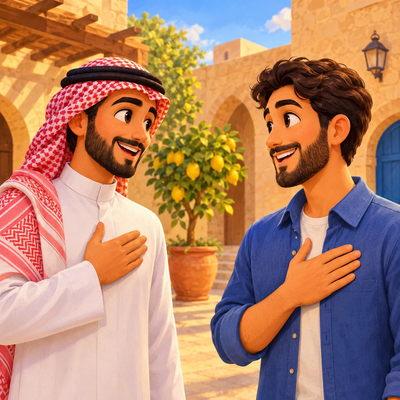
وَأَحْيَانًا يَضَع الشَّخْص يَدَهُ عَلَى قَلْبِهِ بَعْدَ التَّحِيَّة. هٰذِهِ حَرَكَة جَمِيلَة، وَمَعْنَاهَا: أُحَيِّيكَ مِنْ قَلْبِي.
Sometimes people put a hand on their heart after the greeting. It is a lovely gesture, and it means: I greet you from my heart.
كُلّ بَلَد لَهُ كَلِمَاتُهُ
Every country has its own words
التَّحِيَّات فِي هٰذِهِ الْمَقَالَة مِنَ اللُّغَة الْفُصْحَى، وَكُلّ الْعَرَب يَفْهَمُونَهَا. لٰكِنْ فِي الشَّارِع تَسْمَع كَلِمَات أُخْرَى مِنَ اللَّهَجَات.
The greetings in this article come from Standard Arabic, and all Arabs understand them. But in the street you will hear other words from the dialects.
فِي مِصْر يَقُول النَّاس «إِزَّيَّك؟»، وَفِي الشَّام «كِيفَك؟»، وَفِي الْمَغْرِب «لَابَاس؟». كُلُّهَا تَعْنِي: كَيْفَ حَالُكَ؟
In Egypt people say "izzayyak?", in the Levant "kifak?" and in Morocco "labas?". They all mean: how are you?
التَّحِيَّة فِي الْهَاتِف
Greetings on the phone
فِي الْهَاتِف، كَثِير مِنَ النَّاس يَقُولُون «أَلُو» فِي الْبِدَايَة، ثُمَّ «السَّلَام عَلَيْكُم» أَوْ «مَرْحَبًا».
On the phone, many people say "alo" first, then "as-salamu alaykum" or "marhaban".
وَفِي الرَّسَائِل الْقَصِيرَة يَكْتُب النَّاس التَّحِيَّة أَيْضًا. رِسَالَة بِدُون تَحِيَّة تَبْدُو بَارِدَة قَلِيلًا.
People write a greeting in text messages too. A message without a greeting feels a little cold.
الْوَدَاع
Saying goodbye
عِنْدَ الذَّهَاب نَقُول: «مَعَ السَّلَامَة»، وَالْجَوَاب: «اللَّه يُسَلِّمُكَ».
When we leave, we say "ma'a as-salama" (go safely), and the answer is "Allah yusallimak" (may God keep you safe).
وَفِي اللَّيْل نَقُول: «تُصْبِح عَلَى خَيْر». مَعْنَاهَا: أَتَمَنَّى لَكَ لَيْلَة هَادِئَة وَصَبَاح خَيْر. وَالْجَوَاب: «وَأَنْتَ مِنْ أَهْلِهِ».
At night we say "tusbih ala khayr". It means: I wish you a quiet night and a good morning. The answer is "wa anta min ahlih" (and the same to you).
كَلِمَات مُفِيدَة
Useful words
هٰذِهِ تَحِيَّات تَسْمَعُهَا كُلّ يَوْم:
Here are greetings you will hear every day:
السَّلَام عَلَيْكُم: لِكُلّ وَقْت، وَالْجَوَاب «وَعَلَيْكُمُ السَّلَام».
As-salamu alaykum: for any time; the answer is "wa alaykum as-salam".
صَبَاح الْخَيْر: فِي الصَّبَاح، وَالْجَوَاب «صَبَاح النُّور».
Sabah al-khayr: in the morning; the answer is "sabah an-nur".
مَسَاء الْخَيْر: بَعْدَ الظُّهْر وَفِي الْمَسَاء.
Masa' al-khayr: in the afternoon and evening.
أَهْلًا وَسَهْلًا: لِلضَّيْف.
Ahlan wa sahlan: for a guest.
مَعَ السَّلَامَة: عِنْدَ الذَّهَاب.
Ma'a as-salama: when you leave.
تُصْبِح عَلَى خَيْر: قَبْلَ النَّوْم.
Tusbih ala khayr: before going to sleep.
فِي النِّهَايَة
In the end
التَّحِيَّة عِنْدَ الْعَرَب لَيْسَت كَلِمَة فَقَط. هِيَ احْتِرَام وَمَحَبَّة.
For Arabs, a greeting is not just a word. It is respect and affection.
إِذَا تَعَلَّمْتَ هٰذِهِ التَّحِيَّات، سَتَرَى الِابْتِسَامَة عَلَى وُجُوه النَّاس. ابْدَأ الْيَوْم: قُل «السَّلَام عَلَيْكُم»، وَاسْمَع الْجَوَاب!
If you learn these greetings, you will see smiles on people's faces. Start today: say "as-salamu alaykum" and listen to the answer!
In the free app you can listen to this text read aloud and tap any word to see what it means.
From the blog
Learn Arabic arrives on 1 December
The app is almost ready: the Arabic alphabet from scratch, grammar, over 2,500 words with audio and classics such as Gibran's The Broken Wings in the original. Leave your email and we'll let you know the day it's out.
One email when the app is out. Nothing else.