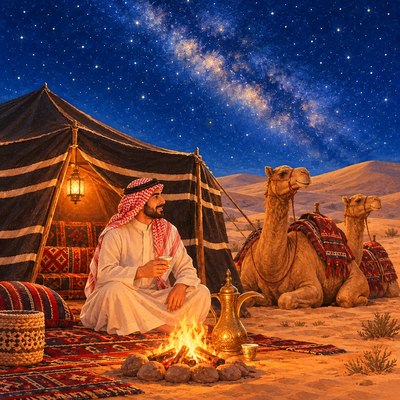
الْحَيَاة فِي الصَّحْرَاء
Life in the Desert
Key words
- الصَّحْرَاءdesert
- رِمَالsands
- الْبَدْوBedouins
- الْخَيْمَةtent
- الْجَمَلcamel
- النَّاقَةshe-camel
- الْمَاءwater
- الْبِئْرwell
- الْوَاحَةoasis
- نَخْلpalm trees
- الْكَرَمgenerosity
- الضِّيَافَةhospitality
All 25 words
- ضَيْفguest
- النُّجُومstars
- الْحَرَارَةheat
- الْبَرْدcold
- الْعَاصِفَة الرَّمْلِيَّةsandstorm
- الشِّعْرpoetry
- الصَّقْرfalcon
- الْمَطَرrain
- الرَّبِيعspring, green season
- الْكَمْأَةdesert truffle
- الْكَثِيبsand dune
- الصَّبْرpatience
- السَّمَاءsky
الصَّحْرَاء جُزْء كَبِير مِنَ الْعَالَم الْعَرَبِيّ. مِنَ الصَّحْرَاء الْكُبْرَى فِي أَفْرِيقِيَا إِلَى صَحَارِي الْجَزِيرَة الْعَرَبِيَّة، هُنَاكَ رِمَال وَجِبَال وَسَمَاء وَاسِعَة.
The desert is a large part of the Arab world. From the Sahara in Africa to the deserts of the Arabian Peninsula, there are sands, mountains and wide skies.
فِي هٰذِهِ الْمَقَالَة نَتَعَرَّف عَلَى الْحَيَاة فِي الصَّحْرَاء: الْبَدْو، وَالْجِمَال، وَالْمَاء، وَالنُّجُوم، وَالْكَرَم.
In this article we get to know life in the desert: the Bedouin, camels, water, the stars and generosity.
الْبَدْو
The Bedouin
«الْبَدْو» هُمُ النَّاس الَّذِينَ يَعِيشُون فِي الْبَادِيَة، أَيِ الصَّحْرَاء. فِي الْمَاضِي كَانُوا يَتَنَقَّلُون دَائِمًا مِنْ مَكَان إِلَى مَكَان، يَبْحَثُون عَنِ الْمَاء وَالْعُشْب لِحَيَوَانَاتِهِم.
The "Bedouin" are the people who live in the badiya, that is, the desert. In the past they were always moving from place to place, looking for water and grass for their animals.
كَانُوا يَعِيشُون فِي «بُيُوت الشَّعَر»، وَهِيَ خِيَام مِنْ شَعَر الْمَاعِز. هٰذِهِ الْخِيَام تَحْمِي مِنَ الشَّمْس فِي النَّهَار وَمِنَ الْبَرْد فِي اللَّيْل، وَنَقْلُهَا سَهْل.
They lived in "houses of hair", tents made of goat hair. These tents protect from the sun by day and from the cold at night, and they are easy to move.
وَالْيَوْم يَعِيش أَكْثَر الْبَدْو فِي الْقُرَى وَالْمُدُن. لٰكِنْ كَثِير مِنَ الْعَائِلَات فِي الْخَلِيج تُحِبّ الرِّحْلَات إِلَى الْبَرّ فِي الشِّتَاء، وَتَنْصِب الْخِيَام هُنَاكَ أَيَّامًا.
Today most Bedouin live in villages and towns. But many families in the Gulf love trips out to the desert in winter, and they put up tents there for days.
سَفِينَة الصَّحْرَاء
The ship of the desert
الْجَمَل اسْمُهُ «سَفِينَة الصَّحْرَاء»، لِأَنَّهُ يَحْمِل النَّاس وَالْبِضَاعَة فِي الرِّمَال، كَمَا تَحْمِلُهُم السَّفِينَة فِي الْبَحْر.
The camel is called "the ship of the desert", because it carries people and goods across the sand, as a ship carries them across the sea.
الْجَمَل يَسْتَطِيع أَنْ يَعِيش أَيَّامًا كَثِيرَة بِلَا مَاء. وَفِي سَنَامِهِ دُهْن، لَا مَاء، كَمَا يَظُنّ بَعْض النَّاس.
A camel can live for many days without water. Its hump holds fat, not water, as some people think.
وَلِلْجَمَل رُمُوش طَوِيلَة تَحْمِي عَيْنَيْهِ مِنَ الرَّمْل، وَأَقْدَام عَرِيضَة لَا تَغُوص فِي الرِّمَال.
Camels have long eyelashes that protect their eyes from sand, and wide feet that do not sink into the sand.
وَالْعَرَب يُحِبُّون الْجَمَل كَثِيرًا، وَفِي الْعَرَبِيَّة كَلِمَات كَثِيرَة جِدًّا لِلْجَمَل وَالنَّاقَة. وَحَلِيب النَّاقَة وَلَحْمُهَا مِنْ طَعَام الْبَدْو.
Arabs love the camel very much, and Arabic has a great many words for the male and the female camel. The milk and meat of the she-camel are part of the Bedouin diet.
الْمَاء
Water
الْمَاء فِي الصَّحْرَاء أَغْلَى شَيْء. الْبَدْو يَعْرِفُون أَمَاكِن الْآبَار، وَيَحْفَظُون الطُّرُق بَيْنَهَا جَيِّدًا.
In the desert, water is the most precious thing. The Bedouin know where the wells are, and they know the routes between them by heart.
وَ«الْوَاحَة» مَكَان فِيهِ مَاء فِي وَسَط الصَّحْرَاء. حَوْلَ الْمَاء نَخْل وَبَسَاتِين وَبُيُوت. وَمِنْ أَشْهَر الْوَاحَات وَاحَة سِيوَة فِي مِصْر، وَوَاحَة الْأَحْسَاء فِي السُّعُودِيَّة.
An "oasis" is a place with water in the middle of the desert. Around the water there are palm trees, gardens and houses. Among the most famous oases are Siwa in Egypt and Al-Ahsa in Saudi Arabia.
وَعِنْدَ الْبَدْو قَاعِدَة قَدِيمَة: لَا أَحَد يَمْنَع الْمَاء عَنْ إِنْسَان عَطْشَان.
The Bedouin have an old rule: no one refuses water to a thirsty person.
وَفِي بَعْض الْمَنَاطِق حَفَرَ النَّاس قَنَوَات تَحْت الْأَرْض تَحْمِل الْمَاء إِلَى الْبَسَاتِين، وَاسْمُهَا فِي عُمَان «الْأَفْلَاج».
In some regions people dug channels under the ground to carry water to the gardens, and in Oman these are called "aflaj".
الْكَرَم وَالضِّيَافَة
Generosity and hospitality
الْكَرَم أَهَمّ صِفَة عِنْدَ الْبَدْو. إِذَا وَصَلَ ضَيْف إِلَى الْخَيْمَة، يَسْتَقْبِلُهُ صَاحِب الْخَيْمَة، وَيُقَدِّم لَهُ الْقَهْوَة وَالتَّمْر، ثُمَّ الطَّعَام.
Generosity is the most important quality among the Bedouin. When a guest reaches the tent, the owner welcomes him and offers him coffee and dates, and then food.
وَيُقَال إِنَّ الضَّيْف عِنْدَ الْبَدْو يَبْقَى ثَلَاثَة أَيَّام قَبْلَ أَنْ يَسْأَلَهُ أَحَد عَنْ سَبَب زِيَارَتِهِ.
It is said that among the Bedouin a guest stays three days before anyone asks him the reason for his visit.
وَأَشْهَر رَجُل كَرِيم فِي تَارِيخ الْعَرَب هُوَ «حَاتِم الطَّائِيّ». تَقُول الْقِصَّة إِنَّهُ ذَبَحَ فَرَسَهُ لِضُيُوفِهِ، لِأَنَّهُ لَمْ يَكُنْ عِنْدَهُ طَعَام آخَر. وَالْعَرَب يَقُولُون حَتَّى الْيَوْم عَنِ الرَّجُل الْكَرِيم: «أَكْرَم مِنْ حَاتِم».
The most famous generous man in Arab history is "Hatim al-Tai". The story says he slaughtered his horse for his guests because he had no other food. And to this day Arabs say of a generous man: "more generous than Hatim".
النُّجُوم
The stars
سَمَاء الصَّحْرَاء فِي اللَّيْل مَلِيئَة بِالنُّجُوم، لِأَنَّهُ لَا تُوجَد هُنَاكَ أَضْوَاء مُدُن.
At night the desert sky is full of stars, because there are no city lights there.
وَالْبَدْو كَانُوا يَعْرِفُون النُّجُوم جَيِّدًا، وَيَهْتَدُون بِهَا إِلَى الطَّرِيق فِي اللَّيْل.
The Bedouin knew the stars well and used them to find their way at night.
وَكَثِير مِنْ أَسْمَاء النُّجُوم فِي اللُّغَات الْأُورُوبِّيَّة جَاءَت مِنَ الْعَرَبِيَّة، مِثْلَ «الدَّبَرَان» وَ«رِجْل الْجَبَّار» وَ«النَّسْر الْوَاقِع».
Many star names in European languages come from Arabic, such as Aldebaran, Rigel and Vega.
وَكَانُوا يَعْرِفُون مِنَ النُّجُوم أَيْضًا أَوْقَات الْمَطَر وَالْحَرّ وَالْبَرْد، فَكَانَتِ النُّجُوم لَهُم مِثْلَ التَّقْوِيم.
From the stars they also knew the seasons of rain, heat and cold, so the stars were like a calendar for them.
الْحَرّ وَالْبَرْد
Heat and cold
فِي الصَّيْف قَدْ تَصِل الْحَرَارَة فِي النَّهَار إِلَى خَمْسِين دَرَجَة. لٰكِنْ فِي اللَّيْل يَبْرُد الْجَوّ كَثِيرًا، وَلَيَالِي الشِّتَاء بَارِدَة جِدًّا.
In summer the temperature can reach fifty degrees during the day. But at night it gets much cooler, and winter nights are very cold.
لِهٰذَا يَلْبَس أَهْل الصَّحْرَاء مَلَابِس طَوِيلَة وَوَاسِعَة، وَيُغَطُّون رُؤُوسَهُم. الْمَلَابِس الْوَاسِعَة تَحْمِي مِنَ الشَّمْس وَالرَّمْل، وَتَتْرُك الْهَوَاء يَمُرّ.
That is why desert people wear long, loose clothes and cover their heads. Loose clothes protect from the sun and the sand and let the air pass through.
وَأَحْيَانًا تَكُون الرِّيح قَوِيَّة جِدًّا، فَتَأْتِي «الْعَاصِفَة الرَّمْلِيَّة». يُصْبِح الْجَوّ أَصْفَر، وَلَا تَرَى الطَّرِيق أَمَامَكَ.
Sometimes the wind gets very strong and a "sandstorm" comes. The air turns yellow, and you cannot see the road in front of you.
الشِّعْر وَالْقِصَص
Poetry and stories
فِي لَيَالِي الصَّحْرَاء الطَّوِيلَة يَجْلِس النَّاس حَوْلَ النَّار. يَشْرَبُون الْقَهْوَة، وَيَحْكُون الْقِصَص، وَيَقُولُون الشِّعْر.
On long desert nights people sit around the fire. They drink coffee, tell stories and recite poetry.
وَالشِّعْر الْعَرَبِيّ الْقَدِيم وُلِدَ فِي الصَّحْرَاء. فِيهِ الْجَمَل، وَالْخَيْمَة، وَالْمَطَر، وَالْحَبِيب الْبَعِيد.
Old Arabic poetry was born in the desert. In it there are camels, tents, rain and a faraway beloved.
وَإِلَى الْيَوْم يُحِبّ النَّاس فِي الْخَلِيج «الشِّعْر النَّبَطِيّ»، وَهُوَ شِعْر بِلَهْجَة أَهْل الْبَادِيَة.
To this day people in the Gulf love "Nabati poetry", poetry in the dialect of the desert people.
الصَّقْر
The falcon
الصَّيْد بِالصُّقُور هِوَايَة قَدِيمَة عِنْدَ الْعَرَب فِي الصَّحْرَاء. الصَّقْر طَائِر سَرِيع جِدًّا، وَعَيْنُهُ قَوِيَّة، فَهُوَ يَرَى الْفَرِيسَة مِنْ بَعِيد.
Hunting with falcons is an old pastime of the Arabs in the desert. The falcon is a very fast bird with very sharp eyes, so it sees its prey from far away.
كَانَ الْبَدْو يُدَرِّبُون الصُّقُور لِتَصِيد الطُّيُور وَالْأَرَانِب، فَيَكُون عِنْدَهُم لَحْم فِي الشِّتَاء.
The Bedouin trained falcons to catch birds and hares, so that they had meat in winter.
وَالْيَوْم الصَّقْر رَمْز مُهِمّ فِي بِلَاد الْخَلِيج، وَفِي أَبُو ظَبْي مُسْتَشْفَى خَاصّ بِالصُّقُور!
Today the falcon is an important symbol in the Gulf countries, and in Abu Dhabi there is a special hospital for falcons!
الْمَطَر وَالرَّبِيع
Rain and spring
الْمَطَر فِي الصَّحْرَاء قَلِيل، لٰكِنَّهُ عِنْدَمَا يَأْتِي يَفْرَح بِهِ الْجَمِيع. بَعْدَ أَيَّام قَلِيلَة تَخْرُج مِنَ الرَّمْل أَعْشَاب خَضْرَاء وَزُهُور صَغِيرَة.
There is little rain in the desert, but when it comes, everyone is happy. After a few days, green plants and small flowers come up out of the sand.
وَيُسَمِّي الْبَدْو هٰذَا الْوَقْت «الرَّبِيع». فِيهِ تَأْكُل الْإِبِل وَالْغَنَم كَثِيرًا، وَيَكْثُر الْحَلِيب.
The Bedouin call this time "al-rabi", the spring. The camels and sheep eat a lot, and there is plenty of milk.
وَبَعْدَ الْمَطَر يَبْحَث النَّاس أَيْضًا عَنِ «الْكَمْأَة»، وَهِيَ فِطْر يَنْمُو تَحْت الرَّمْل، وَسِعْرُهَا مُرْتَفِع.
After the rain, people also look for "kamaa", desert truffles, a fungus that grows under the sand and fetches a high price.
وَلِهٰذَا كَانَ الْمَطَر عِنْدَ الْعَرَب رَمْز الْخَيْر، وَكَانُوا يُشَبِّهُون الرَّجُل الْكَرِيم بِالْمَطَر.
That is why rain was a symbol of good things for the Arabs, and they compared a generous man to the rain.
الصَّحْرَاء الْيَوْم
The desert today
الْيَوْم تَغَيَّرَتِ الصَّحْرَاء. فِيهَا طُرُق، وَسَيَّارَات، وَمُدُن جَدِيدَة. وَالسُّيَّاح يَأْتُون لِرُكُوب الْجِمَال، وَالنَّوْم فِي الْخِيَام، وَمُشَاهَدَة النُّجُوم.
Today the desert has changed. There are roads, cars and new cities. Tourists come to ride camels, sleep in tents and watch the stars.
وَفِي بِلَاد الْخَلِيج سِبَاقَات الْهُجُن مَشْهُورَة جِدًّا، وَهُنَاكَ أَيْضًا مَهْرَجَانَات لِجَمَال الْإِبِل!
In the Gulf countries camel races are very popular, and there are even camel beauty contests!
لٰكِنَّ قِيَم الصَّحْرَاء الْقَدِيمَة مَا زَالَت حَيَّة: الْكَرَم، وَالصَّبْر، وَاحْتِرَام الضَّيْف.
But the old values of the desert are still alive: generosity, patience and respect for the guest.
كَلِمَات الصَّحْرَاء
Desert words
هٰذِهِ كَلِمَات مُهِمَّة عَنِ الصَّحْرَاء:
Here are some important words about the desert:
الْبَدْو: أَهْل الْبَادِيَة.
Al-badw: the people of the desert, the Bedouin.
الْجَمَل وَالنَّاقَة: ذَكَر الْإِبِل وَأُنْثَاهَا.
Al-jamal and al-naqa: the male and the female camel.
الْوَاحَة: مَكَان فِيهِ مَاء وَنَخْل فِي الصَّحْرَاء.
Al-waha: a place in the desert with water and palm trees, an oasis.
الْخَيْمَة: بَيْت مِنَ الْقُمَاش أَوْ مِنَ الشَّعَر.
Al-khayma: a house made of cloth or hair, a tent.
الْبِئْر: مَكَان نَأْخُذ مِنْهُ الْمَاء مِنْ تَحْت الْأَرْض.
Al-bir: a place where we take water from under the ground, a well.
الْكَثِيب: تَلّ مِنَ الرَّمْل.
Al-kathib: a hill of sand, a dune.
فِي النِّهَايَة
In the end
الصَّحْرَاء لَيْسَت فَارِغَة كَمَا يَظُنّ بَعْض النَّاس. فِيهَا حَيَاة، وَتَارِيخ، وَشِعْر، وَنَاس كُرَمَاء.
The desert is not empty, as some people think. It has life, history, poetry and generous people.
وَإِذَا زُرْتَ الصَّحْرَاء يَوْمًا، فَاجْلِسْ فِي اللَّيْل وَانْظُرْ إِلَى السَّمَاء. سَتَفْهَم لِمَاذَا أَحَبَّ الْعَرَب الصَّحْرَاء كُلّ هٰذَا الْحُبّ.
And if you visit the desert one day, sit outside at night and look up at the sky. You will understand why the Arabs loved the desert so much.
In the free app you can listen to this text read aloud and tap any word to see what it means.
From the blog
Learn Arabic arrives on 1 December
The app is almost ready: the Arabic alphabet from scratch, grammar, over 2,500 words with audio and classics such as Gibran's The Broken Wings in the original. Leave your email and we'll let you know the day it's out.
One email when the app is out. Nothing else.