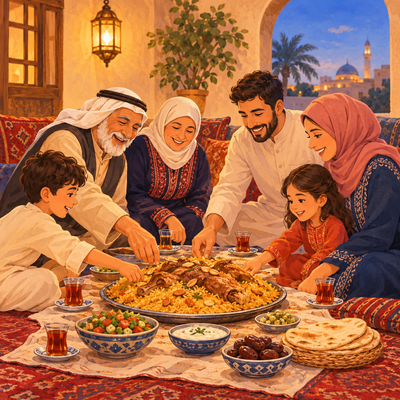
الْعَائِلَة الْعَرَبِيَّة
The Arab Family
Key words
- الْعَائِلَةfamily
- الْأُمّmother
- الْأَبfather
- الْوَالِدَانparents
- الْجَدّgrandfather
- الْجَدَّةgrandmother
- الْعَمّpaternal uncle
- الْخَالmaternal uncle
- الْعَمَّةpaternal aunt
- الْخَالَةmaternal aunt
- الِابْنson
- الْبِنْتdaughter
All 25 words
- الطِّفْلchild
- الْأَقَارِبrelatives
- الْكِبَارelders
- الْكُنْيَةkunya (name as "father/mother of" first child)
- الزَّوَاجmarriage
- الْعُرْسwedding
- الْجَارneighbor
- احْتِرَامrespect
- مَحَبَّةlove, affection
- الْمَائِدَةdining table
- الْغَدَاءlunch
- الْعِيدِيَّةEid money gift
- الضَّحِكlaughter
الْعَائِلَة فِي الْعَالَم الْعَرَبِيّ كَبِيرَة وَقَرِيبَة. لَيْسَتِ الْأُمّ وَالْأَب وَالْأَوْلَاد فَقَط، بَلْ أَيْضًا الْجَدّ وَالْجَدَّة، وَالْعَمّ وَالْخَال، وَالْعَمَّة وَالْخَالَة، وَأَوْلَادُهُم.
In the Arab world, families are big and close. A family is not just the mother, the father and the children, but also the grandfather and grandmother, the uncles and aunts on both sides, and their children.
فِي هٰذِهِ الْمَقَالَة نَتَعَرَّف عَلَى الْعَائِلَة الْعَرَبِيَّة: أَسْمَاؤُهَا، وَعَادَاتُهَا، وَأَيَّامُهَا الْجَمِيلَة.
In this article we get to know the Arab family: its names, its customs and its happy days.
عَمّ وَخَال
Amm and khal
فِي الْعَرَبِيَّة كَلِمَتَان لِأَخ الْأَب وَأَخ الْأُمّ. أَخُو الْأَب هُوَ «الْعَمّ»، وَأَخُو الْأُمّ هُوَ «الْخَال».
Arabic has two words for a father's brother and a mother's brother. The father's brother is "amm", and the mother's brother is "khal".
وَكَذٰلِكَ أُخْت الْأَب هِيَ «الْعَمَّة»، وَأُخْت الْأُمّ هِيَ «الْخَالَة». فِي لُغَات كَثِيرَة هُنَاكَ كَلِمَة وَاحِدَة فَقَط، لٰكِنْ فِي الْعَرَبِيَّة هُنَاكَ أَرْبَع كَلِمَات.
In the same way, the father's sister is "amma", and the mother's sister is "khala". Many languages have only one word, but Arabic has four.
وَالْعَرَب يَسْتَعْمِلُون هٰذِهِ الْكَلِمَات مَعَ النَّاس الْكِبَار أَيْضًا. الطِّفْل يَقُول لِجَار كَبِير: «يَا عَمِّي»، وَلِجَارَة كَبِيرَة: «يَا خَالَتِي». هٰذَا احْتِرَام وَمَحَبَّة.
Arabs also use these words with older people. A child calls an older neighbour "ya ammi" (my uncle) and an older woman next door "ya khalati" (my aunt). It shows respect and affection.
أَبُو أَحْمَد وَأُمّ أَحْمَد
Abu Ahmad and Umm Ahmad
عِنْدَمَا يُولَد الطِّفْل الْأَوَّل، تَتَغَيَّر أَسْمَاء الْأَب وَالْأُمّ أَحْيَانًا! إِذَا كَانَ اسْم الِابْن أَحْمَد، يُصْبِح الْأَب «أَبُو أَحْمَد»، وَتُصْبِح الْأُمّ «أُمّ أَحْمَد».
When the first child is born, the parents' names sometimes change! If the son's name is Ahmad, the father becomes "Abu Ahmad" (Ahmad's father) and the mother becomes "Umm Ahmad" (Ahmad's mother).
هٰذَا الِاسْم اسْمُهُ «الْكُنْيَة». النَّاس يُنَادُون الْأَب وَالْأُمّ بِالْكُنْيَة، لِأَنَّهَا لَطِيفَة وَفِيهَا احْتِرَام.
This name is called the "kunya". People call the parents by their kunya because it is friendly and respectful.
وَالْكُنْيَة قَدِيمَة جِدًّا فِي الثَّقَافَة الْعَرَبِيَّة، وَمَا زَالَت مُهِمَّة الْيَوْم.
The kunya is very old in Arab culture, and it is still important today.
الِاسْم الْكَامِل
The full name
فِي بِلَاد عَرَبِيَّة كَثِيرَة، فِي الِاسْم الْكَامِل اسْم الشَّخْص، ثُمَّ اسْم الْأَب، ثُمَّ اسْم الْجَدّ، ثُمَّ اسْم الْعَائِلَة.
In many Arab countries, a full name has the person's own name, then the father's name, then the grandfather's name, then the family name.
مَثَلًا: «سَارَة خَالِد مَحْمُود الْعَلِي». سَارَة هِيَ الْبِنْت، وَخَالِد أَبُوهَا، وَمَحْمُود جَدُّهَا، وَالْعَلِي اسْم الْعَائِلَة.
For example: "Sara Khalid Mahmud al-Ali". Sara is the girl, Khalid is her father, Mahmud is her grandfather, and al-Ali is the family name.
وَالْمَرْأَة الْعَرَبِيَّة فِي الْعَادَة لَا تُغَيِّر اسْمَهَا بَعْدَ الزَّوَاج. هِيَ تَبْقَى «سَارَة خَالِد» كُلّ حَيَاتِهَا.
An Arab woman usually does not change her name when she marries. She stays "Sara Khalid" all her life.
يَوْم الْجُمُعَة
Friday
يَوْم الْجُمُعَة يَوْم الْعَائِلَة فِي بِلَاد كَثِيرَة. الْأَوْلَاد وَالْبَنَات يَزُورُون بَيْت الْجَدّ وَالْجَدَّة مَعَ أَوْلَادِهِم.
In many countries, Friday is family day. The sons and daughters visit their parents' home with their own children.
عَلَى الْمَائِدَة طَعَام كَثِير: أُرْز وَلَحْم وَسَلَطَة وَخُبْز. الْجَدَّة تَطْبُخ مُنْذُ الصَّبَاح، وَالْبَنَات يُسَاعِدْنَهَا.
There is a lot of food on the table: rice, meat, salad and bread. Grandma has been cooking since the morning, and the daughters help her.
بَعْدَ الْغَدَاء يَشْرَب الْكِبَار الشَّاي وَيَتَكَلَّمُون، وَالْأَطْفَال يَلْعَبُون مَعًا فِي الْبَيْت أَوْ فِي الشَّارِع. الْبَيْت مَلِيء بِالْأَصْوَات وَالضَّحِك.
After lunch the grown-ups drink tea and talk, and the children play together in the house or in the street. The house is full of voices and laughter.
الْكِبَار فِي الْبَيْت
Older people at home
فِي الْعَائِلَة الْعَرَبِيَّة لِلْكِبَار مَكَان خَاصّ. النَّاس يَسْتَشِيرُون الْجَدّ وَالْجَدَّة فِي الْأُمُور الْمُهِمَّة، وَيَسْمَعُون كَلَامَهُم.
In the Arab family, older people have a special place. People ask the grandparents for advice on important matters and listen to what they say.
وَكَثِير مِنَ الْكِبَار يَعِيشُون مَعَ أَوْلَادِهِم، لَا فِي بَيْت لِلْمُسِنِّين. رِعَايَة الْأَب وَالْأُمّ عِنْدَ الْكِبَر وَاجِب عِنْدَ الْعَرَب، وَهِيَ أَيْضًا شَرَف.
Many older people live with their children, not in a care home. Looking after your parents in old age is a duty for Arabs, and an honour too.
وَهُنَاكَ قَوْل مَشْهُور عَنِ الْأُمّ: «الْجَنَّة تَحْتَ أَقْدَام الْأُمَّهَات». كُلّ طِفْل عَرَبِيّ يَعْرِف هٰذَا الْقَوْل.
There is a famous saying about mothers: "Paradise lies at the feet of mothers." Every Arab child knows it.
الْجِيرَان أَيْضًا عَائِلَة
Neighbours are family too
عِنْدَ الْعَرَب، الْجَار قَرِيب مِثْلَ الْعَائِلَة. هُنَاكَ قَوْل مَشْهُور: «الْجَار قَبْلَ الدَّار». مَعْنَاهُ: اخْتَرِ الْجَار الطَّيِّب قَبْلَ أَنْ تَخْتَار الْبَيْت.
For Arabs, a neighbour is as close as family. A well-known saying goes: "The neighbour before the house." It means: choose a good neighbour before you choose a house.
الْجِيرَان يَتَبَادَلُون الطَّعَام، وَيَزُورُون الْمَرِيض، وَيُسَاعِدُون فِي الْأَفْرَاح وَالْأَحْزَان.
Neighbours share food, visit the sick, and help at happy and sad times.
وَفِي أَحْيَان كَثِيرَة تُرْسِل الْأُمّ صَحْن طَعَام إِلَى الْجِيرَان، وَالْجِيرَان يُرْجِعُون الصَّحْن وَفِيهِ طَعَام أَيْضًا.
Often a mother sends a plate of food to the neighbours, and the neighbours send the plate back with food on it too.
الْعَائِلَة فِي الْمُنَاسَبَات
Family occasions
فِي الْأَعْيَاد وَالْأَعْرَاس تَجْتَمِع الْعَائِلَة الْكَبِيرَة كُلُّهَا. قَدْ يَكُون فِي الْعُرْس مِئَات النَّاس، وَأَكْثَرُهُم مِنَ الْأَقَارِب.
At festivals and weddings, the whole big family gets together. A wedding may have hundreds of guests, and most of them are relatives.
وَفِي الْعِيد يَزُور الصِّغَار الْكِبَار، وَيَأْخُذُون «الْعِيدِيَّة»: نُقُود قَلِيلَة أَوْ هَدِيَّة. الْأَطْفَال يُحِبُّون الْعِيد كَثِيرًا لِهٰذَا السَّبَب!
At Eid, the young visit the old and receive "eidiyya": a little money or a present. That is one reason children love Eid so much!
كَلِمَات الْعَائِلَة
Family words
هٰذِهِ كَلِمَات مُهِمَّة عَنِ الْعَائِلَة:
Here are some important family words:
الْأَب وَالْأُمّ: الْوَالِدَان.
Al-ab and al-umm: the parents.
الِابْن وَالْبِنْت: الْأَوْلَاد.
Al-ibn and al-bint: the children.
الْجَدّ وَالْجَدَّة: وَالِدَا الْأَب أَوِ الْأُمّ.
Al-jadd and al-jadda: the father's or mother's parents.
الْعَمّ وَالْعَمَّة: أَخ الْأَب وَأُخْتُهُ.
Al-amm and al-amma: the father's brother and sister.
الْخَال وَالْخَالَة: أَخ الْأُمّ وَأُخْتُهَا.
Al-khal and al-khala: the mother's brother and sister.
الْكُنْيَة: «أَبُو» أَوْ «أُمّ» مَعَ اسْم الطِّفْل الْأَوَّل.
Al-kunya: "Abu" or "Umm" with the name of the first child.
فِي النِّهَايَة
In the end
الْعَائِلَة عِنْدَ الْعَرَب هِيَ الْقَلْب. فِيهَا الْمَحَبَّة وَالْمُسَاعَدَة وَالِاحْتِرَام، وَفِيهَا أَيْضًا الْأَكْل الْكَثِير وَالْكَلَام الْكَثِير!
For Arabs, the family is the heart of life. It is full of love, help and respect, and also of lots of food and lots of talk!
إِذَا زَارَكَ صَدِيق عَرَبِيّ، اسْأَلْهُ عَنْ عَائِلَتِهِ. سَيَفْرَح بِسُؤَالِكَ، وَسَيُحَدِّثُكَ عَنْهُم طَوِيلًا.
If an Arab friend visits you, ask about their family. They will be glad you asked, and they will tell you about them for a long time.
In the free app you can listen to this text read aloud and tap any word to see what it means.
From the blog
Learn Arabic arrives on 1 December
The app is almost ready: the Arabic alphabet from scratch, grammar, over 2,500 words with audio and classics such as Gibran's The Broken Wings in the original. Leave your email and we'll let you know the day it's out.
One email when the app is out. Nothing else.