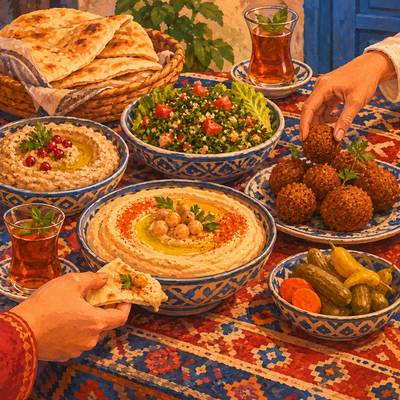
الطَّعَام الْعَرَبِيّ
Arab Food
Key words
- الطَّعَامfood
- الْخُبْزbread
- الْمَطْبَخcuisine, kitchen
- الْمَائِدَةdining table
- وَجْبَةmeal
- طَبَقdish
- صَحْنplate
- الْمِلْعَقَةspoon
- الْمَزَّةmezze (small starter dishes)
- الْبَهَارَاتspices
- الْحَلَوِيَّاتsweets, desserts
- أُرْزrice
All 25 words
- اللَّحْمmeat
- الدَّجَاجchicken
- الْفُطُورbreakfast
- الْعَشَاءdinner
- الشَّاي بِالنَّعْنَاعmint tea
- سُكَّرsugar
- التَّمْرdates (fruit)
- زَيْت الزَّيْتُونolive oil
- الضَّيْفguest
- الْمُضِيفhost
- الْكَرَمgenerosity
- شَبِعْتُI'm full
- بِالْهَنَاء وَالشِّفَاءenjoy your meal
الطَّعَام فِي الْعَالَم الْعَرَبِيّ أَكْثَر مِنْ أَكْل. هُوَ كَرَم، وَعَائِلَة، وَتَارِيخ طَوِيل. وَمِنَ الْمَغْرِب إِلَى الْعِرَاق، لِكُلّ بَلَد أَطْبَاقُهُ الْخَاصَّة.
In the Arab world, food is more than eating. It is generosity, family and a long history. And from Morocco to Iraq, every country has its own dishes.
فِي هٰذِهِ الْمَقَالَة نَزُور الْمَطْبَخ الْعَرَبِيّ: الْخُبْز، وَالْمَزَّة، وَالْأَطْبَاق الْكَبِيرَة، وَالْحَلَوِيَّات، وَآدَاب الْمَائِدَة.
In this article we visit the Arab kitchen: bread, mezze, the big dishes, sweets and table manners.
الْخُبْز أَوَّلًا
Bread first
الْخُبْز أَهَمّ شَيْء عَلَى الْمَائِدَة الْعَرَبِيَّة. فِي مِصْر اسْمُهُ «الْعَيْش»، وَهٰذِهِ الْكَلِمَة تَعْنِي أَيْضًا «الْحَيَاة».
Bread is the most important thing on the Arab table. In Egypt it is called "aish", and this word also means "life".
هُنَاكَ أَنْوَاع كَثِيرَة مِنَ الْخُبْز: الْخُبْز الْعَرَبِيّ الْمُسْتَدِير، وَخُبْز الصَّاج الرَّقِيق، وَالْخُبْز الْمَغْرِبِيّ الْكَبِير. وَالنَّاس يَأْكُلُون بِقِطْعَة الْخُبْز بَدَلًا مِنَ الْمِلْعَقَة أَحْيَانًا.
There are many kinds of bread: round Arabic flatbread, thin saj bread and big Moroccan loaves. People sometimes eat with a piece of bread instead of a spoon.
وَلِلْخُبْز احْتِرَام كَبِير. إِذَا وَقَعَت قِطْعَة خُبْز عَلَى الْأَرْض، يَرْفَعُهَا كَثِير مِنَ النَّاس وَيَضَعُونَهَا فِي مَكَان نَظِيف، وَبَعْضُهُم يُقَبِّلُهَا.
Bread is treated with great respect. If a piece of bread falls on the ground, many people pick it up and put it in a clean place, and some kiss it.
الْمَزَّة
Mezze
فِي لُبْنَان وَسُورِيَا وَفِلَسْطِين وَالْأُرْدُنّ يَبْدَأ الْأَكْل بِالْمَزَّة. الْمَزَّة صُحُون صَغِيرَة كَثِيرَة يَأْكُل مِنْهَا الْجَمِيع مَعًا.
In Lebanon, Syria, Palestine and Jordan, a meal begins with mezze. Mezze are lots of small dishes that everyone eats from together.
عَلَى الْمَائِدَة حُمُّص بِالطَّحِينَة، وَمُتَبَّل الْبَاذِنْجَان، وَتَبُّولَة خَضْرَاء بِالْبَقْدُونِس، وَفَتُّوش بِالْخُبْز الْمُحَمَّص، وَفَلَافِل سَاخِنَة.
On the table there is hummus with tahini, mutabbal (smoky aubergine dip), green tabbouleh with parsley, fattoush with toasted bread, and hot falafel.
وَالْمَزَّة لَيْسَت وَجْبَة سَرِيعَة. النَّاس يَجْلِسُون سَاعَات، يَأْكُلُون قَلِيلًا وَيَتَكَلَّمُون كَثِيرًا.
Mezze is not a quick meal. People sit for hours, eating a little and talking a lot.
الْأَطْبَاق الْكَبِيرَة
The big dishes
لِكُلّ بَلَد عَرَبِيّ طَبَق مَشْهُور. فِي الْمَغْرِب «الْكُسْكُس» وَ«الطَّاجِين»، وَفِي مِصْر «الْكُشَرِي»، وَفِي الْخَلِيج «الْكَبْسَة»، وَفِي الْأُرْدُنّ «الْمَنْسَف».
Every Arab country has a famous dish. In Morocco there are "couscous" and "tajine", in Egypt "koshari", in the Gulf "kabsa", and in Jordan "mansaf".
الْكُسْكُس حُبُوب صَغِيرَة مِنَ السَّمِيد، وَيَأْكُلُهُ الْمَغَارِبَة مَعَ الْخُضَار وَاللَّحْم، وَخَاصَّةً يَوْم الْجُمُعَة. وَالطَّاجِين طَبَق يُطْبَخ بِبُطْء فِي إِنَاء مِنَ الطِّين لَهُ غِطَاء عَلَى شَكْل مَخْرُوط.
Couscous is small grains made from semolina, and Moroccans eat it with vegetables and meat, especially on Fridays. Tajine is a dish cooked slowly in a clay pot with a cone-shaped lid.
وَالْكُشَرِي طَعَام شَعْبِيّ رَخِيص فِي مِصْر: أُرْز، وَعَدَس، وَمَعْكَرُونَة، وَحِمَّص، مَعَ صَلْصَة الطَّمَاطِم وَالْبَصَل الْمَقْلِيّ.
Koshari is cheap, popular food in Egypt: rice, lentils, pasta and chickpeas, with tomato sauce and fried onions.
وَالْمَنْسَف لَحْم خَرُوف مَطْبُوخ فِي «الْجَمِيد»، وَهُوَ لَبَن مُجَفَّف، وَيُقَدَّم عَلَى الْأُرْز فِي صِينِيَّة كَبِيرَة. وَالْكَبْسَة أُرْز مَعَ اللَّحْم أَوِ الدَّجَاج وَبَهَارَات كَثِيرَة.
Mansaf is lamb cooked in "jameed", a dried yoghurt, and served on rice on a big tray. Kabsa is rice with meat or chicken and lots of spices.
الْبَهَارَات
Spices
الْبَهَارَات قَلْب الْمَطْبَخ الْعَرَبِيّ. الْكَمُّون، وَالْكُزْبَرَة، وَالْقِرْفَة، وَالْهَيْل، وَالسُّمَّاق، كُلُّهَا تُعْطِي الطَّعَام رَائِحَة جَمِيلَة.
Spices are the heart of Arab cooking. Cumin, coriander, cinnamon, cardamom and sumac all give food a lovely smell.
وَهُنَاكَ خَلْطَات مَشْهُورَة، مِثْلَ «الزَّعْتَر»: زَعْتَر مُجَفَّف مَعَ السُّمْسُم وَالسُّمَّاق. النَّاس يَأْكُلُونَهُ فِي الصَّبَاح مَعَ الْخُبْز وَزَيْت الزَّيْتُون.
There are famous mixes too, such as "zaatar": dried thyme with sesame and sumac. People eat it in the morning with bread and olive oil.
وَفِي الْأَسْوَاق الْقَدِيمَة تَرَى الْبَهَارَات فِي أَكْيَاس كَبِيرَة بِأَلْوَان كَثِيرَة: أَحْمَر، وَأَصْفَر، وَبُنِّيّ، وَأَخْضَر.
In the old markets you see spices in big sacks of many colours: red, yellow, brown and green.
الْفُطُور
Breakfast
الْفُطُور الْعَرَبِيّ غَنِيّ. فِي مِصْر يَأْكُل النَّاس «الْفُول الْمُدَمَّس» وَ«الطَّعْمِيَّة»، وَهِيَ فَلَافِل مِصْرِيَّة مِنَ الْفُول.
An Arab breakfast is rich. In Egypt people eat "ful medames" (stewed fava beans) and "taamiya", which is Egyptian falafel made from fava beans.
وَفِي بِلَاد الشَّام يَأْكُلُون اللَّبْنَة، وَالزَّيْتُون، وَالْبَيْض، وَ«الْمَنَاقِيش»: خُبْز بِالزَّعْتَر أَوْ بِالْجُبْن مِنَ الْفُرْن.
In the Levant they eat labneh, olives, eggs and "manaqish": bread baked in the oven with zaatar or cheese.
وَفِي الْمَغْرِب الْعَرَبِيّ يَشْرَب النَّاس الشَّاي بِالنَّعْنَاع، وَيَأْكُلُون «الْمُسَمَّن»، وَهُوَ فَطِيرَة رَقِيقَة مُرَبَّعَة مَعَ الْعَسَل أَوِ الزُّبْدَة.
In the Maghreb people drink mint tea and eat "msemmen", a thin square flatbread with honey or butter.
الْمَشْرُوبَات
Drinks
الشَّاي مَشْرُوب كُلّ يَوْم. فِي الْمَغْرِب يَصُبُّون الشَّاي بِالنَّعْنَاع مِنْ فَوْق، حَتَّى تَظْهَر عَلَيْهِ رَغْوَة صَغِيرَة. وَفِي مِصْر وَالْعِرَاق يُحِبُّ النَّاس الشَّاي الثَّقِيل مَعَ سُكَّر كَثِير.
Tea is an everyday drink. In Morocco they pour mint tea from high up so that a little foam forms on top. In Egypt and Iraq people like strong tea with lots of sugar.
وَفِي الصَّيْف يَشْرَب النَّاس الْعَصِير الطَّازَج: عَصِير الْبُرْتُقَال، وَالْمَانْجُو، وَقَصَب السُّكَّر. وَمَعَ الْأَكْل يُحِبُّ كَثِيرُون «الْعَيْرَان»، وَهُوَ مَشْرُوب بَارِد مِنَ اللَّبَن وَالْمَاء وَالْمِلْح.
In summer people drink fresh juice: orange, mango and sugar cane. With meals, many people like "ayran", a cold drink of yoghurt, water and salt.
التَّمْر وَالزَّيْتُون
Dates and olives
النَّخْل وَالزَّيْتُون شَجَرَتَان قَدِيمَتَان فِي الْبِلَاد الْعَرَبِيَّة. فِي الْخَلِيج وَالْعِرَاق وَمِصْر نَخْل كَثِير، وَفِي بِلَاد الشَّام وَالْمَغْرِب الْعَرَبِيّ زَيْتُون كَثِير.
The date palm and the olive tree are ancient trees in Arab lands. The Gulf, Iraq and Egypt have many palms, and the Levant and the Maghreb have many olive trees.
التَّمْر طَعَام حُلْو وَمُفِيد، وَلَهُ أَنْوَاع كَثِيرَة جِدًّا. فِي بُيُوت كَثِيرَة يَأْكُل الضَّيْف التَّمْر مَعَ الْقَهْوَة الْعَرَبِيَّة.
Dates are a sweet and healthy food, and there are very many kinds. In many homes a guest eats dates with Arabic coffee.
وَزَيْت الزَّيْتُون فِي كُلّ مَطْبَخ تَقْرِيبًا فِي الشَّام. فِي الْخَرِيف تَخْرُج الْعَائِلَات إِلَى الْحُقُول لِقَطْف الزَّيْتُون مَعًا، وَهُوَ يَوْم عَمَل وَفَرَح أَيْضًا.
Olive oil is in almost every kitchen in the Levant. In autumn, families go out to the fields to pick olives together, and it is a day of work but also of joy.
الْحَلَوِيَّات
Sweets
الْعَرَب يُحِبُّون الْحُلْو. وَمِنْ أَشْهَر الْحَلَوِيَّات «الْبَقْلَاوَة»: طَبَقَات رَقِيقَة مِنَ الْعَجِين، فِيهَا الْفُسْتُق أَوِ الْجَوْز، وَعَلَيْهَا الْقَطْر.
Arabs love sweet things. One of the most famous sweets is "baklava": thin layers of pastry with pistachios or walnuts, covered in syrup.
وَ«الْكُنَافَة» مِنْ نَابُلُس فِي فِلَسْطِين مَشْهُورَة جِدًّا. فِيهَا جُبْن سَاخِن تَحْتَ عَجِين ذَهَبِيّ وَقَطْر حُلْو.
"Kunafa" from Nablus in Palestine is very famous. It has hot cheese under golden pastry and sweet syrup.
وَفِي مِصْر حَلْوَى اسْمُهَا «أُمّ عَلِي»، وَهِيَ عَجِين وَحَلِيب وَمُكَسَّرَات مِنَ الْفُرْن. وَ«الْبَسْبُوسَة» كَعْكَة مِنَ السَّمِيد بِالْقَطْر، يُحِبُّهَا النَّاس فِي بِلَاد كَثِيرَة.
In Egypt there is a dessert called "Umm Ali", made of pastry, milk and nuts baked in the oven. "Basbousa" is a semolina cake with syrup that people love in many countries.
الْأَكْل مَعًا
Eating together
فِي كَثِير مِنَ الْبُيُوت يَأْكُل النَّاس مِنْ صَحْن كَبِير وَاحِد فِي وَسَط الْمَائِدَة. هٰذَا يَعْنِي الْقُرْب وَالْمَحَبَّة.
In many homes people eat from one big dish in the middle of the table. This means closeness and affection.
وَفِي الْبَادِيَة وَالْقُرَى يَجْلِس النَّاس أَحْيَانًا عَلَى الْأَرْض حَوْلَ صِينِيَّة كَبِيرَة، وَيَأْكُلُون بِالْيَد الْيُمْنَى.
In the desert and in villages, people sometimes sit on the floor around a big tray and eat with their right hand.
وَهُنَاكَ قَوْل مَشْهُور: «بَيْنَنَا خُبْز وَمِلْح». مَعْنَاهُ أَنَّ النَّاس الَّذِينَ أَكَلُوا مَعًا أَصْبَحُوا أَصْدِقَاء، وَلَا يَخُون أَحَدُهُم الْآخَر.
There is a famous saying: "There is bread and salt between us." It means that people who have eaten together have become friends, and neither will betray the other.
وَالْغَدَاء فِي بِلَاد كَثِيرَة هُوَ الْوَجْبَة الْكَبِيرَة فِي الْيَوْم، بَعْدَ الْعَمَل وَالْمَدْرَسَة، فِي السَّاعَة الثَّانِيَة أَوِ الثَّالِثَة. أَمَّا الْعَشَاء فَهُوَ فِي الْعَادَة خَفِيف.
In many countries lunch is the big meal of the day, after work and school, at two or three o'clock. Dinner, on the other hand, is usually light.
آدَاب الْمَائِدَة
Table manners
قَبْلَ الْأَكْل يَقُول النَّاس: «بِسْمِ اللَّه»، وَبَعْدَهُ يَقُولُون: «الْحَمْدُ لِلَّه».
Before eating, people say "Bismillah" (in the name of God), and afterwards they say "Alhamdulillah" (praise be to God).
وَالْمُضِيف يَقُول لِلضَّيْف كَثِيرًا: «كُلْ! كُلْ!»، وَيَضَع لَهُ الطَّعَام مِنْ جَدِيد كُلَّمَا فَرَغَ صَحْنُهُ.
The host often tells the guest "Eat! Eat!" and puts more food in front of them every time their plate is empty.
إِذَا قُلْتَ «شَبِعْتُ» مَرَّة وَاحِدَة، فَقَدْ لَا يُصَدِّقُكَ الْمُضِيف! قُلْهَا أَكْثَر مِنْ مَرَّة.
If you say "I'm full" only once, the host may not believe you! Say it more than once.
وَبَعْدَ الْأَكْل يَقُول الضَّيْف: «سُفْرَة دَائِمَة»، وَمَعْنَاهَا: أَتَمَنَّى أَنْ تَبْقَى مَائِدَتُكُم مَلِيئَة دَائِمًا. وَالْجَوَاب: «دَامَت أَيَّامُكَ».
After the meal the guest says "sufra daima", which means: I hope your table always stays full. The answer is "damat ayyamak" (may your days last).
كَلِمَات الطَّعَام
Food words
هٰذِهِ كَلِمَات مُهِمَّة عَنِ الطَّعَام:
Here are some important words about food:
الْخُبْز: أَهَمّ طَعَام عَلَى الْمَائِدَة.
Al-khubz: the most important food on the table, bread.
الْمَزَّة: صُحُون صَغِيرَة فِي بِدَايَة الْأَكْل.
Al-mazza: small dishes at the start of a meal.
الْبَهَارَات: الْكَمُّون وَالْقِرْفَة وَالْهَيْل وَغَيْرُهَا.
Al-baharat: cumin, cinnamon, cardamom and others, the spices.
الْحُمُّص: طَبَق مِنَ الْحِمَّص وَالطَّحِينَة.
Al-hummus: a dish of chickpeas and tahini.
الصِّينِيَّة: صَحْن كَبِير يَأْكُل مِنْهُ الْجَمِيع.
Al-siniyya: a big tray that everyone eats from.
«بِالْهَنَاء وَالشِّفَاء»: تُقَال لِمَنْ يَأْكُل.
"Bil-hana wal-shifa": said to someone who is eating (enjoy your meal).
فِي النِّهَايَة
In the end
الطَّعَام الْعَرَبِيّ مُتَنَوِّع جِدًّا، لِأَنَّ الْعَالَم الْعَرَبِيّ كَبِير. لٰكِنْ هُنَاكَ شَيْء وَاحِد لَا يَتَغَيَّر فِي كُلّ بَلَد: الْكَرَم.
Arab food is very varied, because the Arab world is big. But there is one thing that does not change in any country: generosity.
إِذَا دُعِيتَ إِلَى بَيْت عَرَبِيّ، فَلَا تَأْكُل قَبْلَ الزِّيَارَة! سَيَكُون هُنَاكَ طَعَام كَثِير جِدًّا.
If you are invited to an Arab home, don't eat before the visit! There will be a great deal of food.
In the free app you can listen to this text read aloud and tap any word to see what it means.
From the blog
Learn Arabic arrives on 1 December
The app is almost ready: the Arabic alphabet from scratch, grammar, over 2,500 words with audio and classics such as Gibran's The Broken Wings in the original. Leave your email and we'll let you know the day it's out.
One email when the app is out. Nothing else.