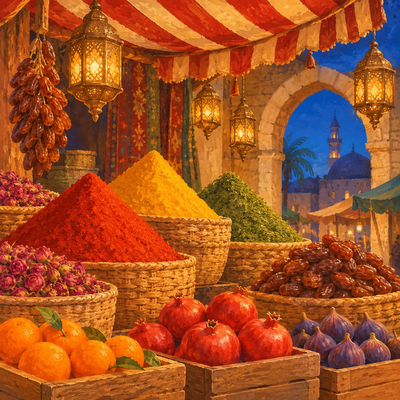
السُّوق الْعَرَبِيّ
The Arab Souq
Key words
- السُّوقmarket
- الْبَهَارَاتspices
- السَّجَّادcarpets
- الذَّهَبgold
- الْمُسَاوَمَةhaggling
- سِعْر ثَابِتfixed price
- الْبَائِعseller
- الْمُشْتَرِيbuyer
- الزَّبَائِنcustomers
- مُرْتَفِعhigh
- الْأَسَاوِرbracelets
- الْخَوَاتِمrings
All 25 words
- الصَّائِغgoldsmith
- الْخُطُوبَةengagement
- الْخُضَارvegetables
- الْفَوَاكِهfruit
- الْقَوَافِلcaravans
- التُّجَّارmerchants
- الْعَطَّارspice and herb seller
- الْأَعْشَابherbs
- الْبُخُورincense
- مَاء الْوَرْدrose water
- مَقْهَىcafé
- نُقُود صَغِيرَةsmall change
- بِكَمْ هٰذَاHow much is this?
السُّوق مَكَان قَدِيم جِدًّا فِي الْمُدُن الْعَرَبِيَّة. فِيهِ تَشْتَرِي كُلّ شَيْء: الطَّعَام، وَالْمَلَابِس، وَالذَّهَب، وَالْبَهَارَات، وَالسَّجَّاد.
The souq is a very old place in Arab cities. There you can buy everything: food, clothes, gold, spices and carpets.
لٰكِنَّ السُّوق لَيْسَ لِلشِّرَاء فَقَط. هُوَ مَكَان لِلْكَلَام وَاللِّقَاء وَالْحَيَاة. فِي هٰذِهِ الْمَقَالَة نَمْشِي مَعًا فِي سُوق عَرَبِيّ قَدِيم.
But the souq is not only for shopping. It is a place for talking, meeting and living. In this article we walk together through an old Arab souq.
شَوَارِع ضَيِّقَة
Narrow streets
السُّوق الْقَدِيم فِي الْعَادَة فِي وَسَط الْمَدِينَة، قَرِيب مِنَ الْمَسْجِد الْكَبِير. شَوَارِعُهُ ضَيِّقَة، وَكَثِير مِنْهَا لَهُ سَقْف، فَالْجَوّ فِيهِ بَارِد فِي الصَّيْف.
The old souq is usually in the centre of the city, close to the great mosque. Its streets are narrow, and many of them are roofed, so it stays cool inside in summer.
فِي الْمَاضِي كَانَ لِكُلّ مِهْنَة شَارِع خَاصّ: سُوق الْعَطَّارِين، وَسُوق النَّحَّاسِين، وَسُوق الصَّاغَة، وَسُوق الْقُمَاش. وَمَا زَالَت هٰذِهِ الْأَسْمَاء مَوْجُودَة فِي مُدُن كَثِيرَة.
In the past every trade had its own street: the spice sellers' souq, the coppersmiths' souq, the goldsmiths' souq and the cloth souq. These names still exist in many cities.
وَمِنْ أَشْهَر الْأَسْوَاق: خَان الْخَلِيلِي فِي الْقَاهِرَة، وَسُوق الْحَمِيدِيَّة فِي دِمَشْق، وَأَسْوَاق مَدِينَة فَاس الْقَدِيمَة فِي الْمَغْرِب.
Among the most famous souqs are Khan al-Khalili in Cairo, Souq al-Hamidiyya in Damascus and the souqs of the old city of Fez in Morocco.
أَصْوَات وَرَوَائِح
Sounds and smells
السُّوق مَكَان مَلِيء بِالْأَصْوَات. الْبَائِع يُنَادِي: «تَفَضَّل! تَفَضَّل!»، وَالْعَرَبَات تَمُرّ، وَالنَّاس يَتَكَلَّمُون وَيَضْحَكُون.
The souq is full of sounds. The seller calls out "Tafaddal! Tafaddal!" (please, come in), carts go by, and people talk and laugh.
وَفِي السُّوق رَوَائِح كَثِيرَة: رَائِحَة الْقَهْوَة وَالْهَيْل، وَرَائِحَة الْخُبْز السَّاخِن، وَرَائِحَة الْعُطُور وَالصَّابُون.
And there are many smells in the souq: coffee and cardamom, hot bread, perfumes and soap.
إِذَا أَغْمَضْتَ عَيْنَيْكَ فِي السُّوق، تَعْرِف أَيْنَ أَنْتَ مِنَ الرَّائِحَة فَقَط!
If you close your eyes in the souq, you can tell where you are just from the smell!
الْمُسَاوَمَة
Bargaining
فِي الْأَسْوَاق الْقَدِيمَة لَا يُوجَد سِعْر ثَابِت لِأَشْيَاء كَثِيرَة. الْمُشْتَرِي وَالْبَائِع يَتَكَلَّمَان حَتَّى يَتَّفِقَا عَلَى السِّعْر، وَهٰذَا اسْمُهُ «الْمُسَاوَمَة».
In the old souqs there is no fixed price for many things. The buyer and the seller talk until they agree on a price, and this is called "musawama", bargaining.
يَبْدَأ الْبَائِع بِسِعْر مُرْتَفِع، وَالْمُشْتَرِي يَقْتَرِح سِعْر أَقَلّ. ثُمَّ يَقْتَرِبَان شَيْئًا فَشَيْئًا، حَتَّى يَصِلَا إِلَى سِعْر يُرْضِي الِاثْنَيْن.
The seller starts with a high price, and the buyer suggests a lower one. Then they come closer little by little, until they reach a price that pleases both.
وَالْمُسَاوَمَة لُعْبَة لَطِيفَة، فِيهَا ابْتِسَام وَمِزَاح، لَا غَضَب. وَأَحْيَانًا يُقَدِّم الْبَائِع كُوب شَاي لِلزَّبُون فِي أَثْنَاء الْكَلَام.
Bargaining is a friendly game, with smiles and jokes, not anger. Sometimes the seller offers the customer a glass of tea while they talk.
لٰكِنْ فِي الْمَحَلَّات الْحَدِيثَة وَالْمَرَاكِز التِّجَارِيَّة الْأَسْعَار ثَابِتَة، وَلَا أَحَد يُسَاوِم.
But in modern shops and shopping centres the prices are fixed, and nobody bargains.
سُوق الذَّهَب
The gold souq
فِي كُلّ مَدِينَة عَرَبِيَّة تَقْرِيبًا سُوق لِلذَّهَب. الْمَحَلَّات صَغِيرَة، لٰكِنَّ نَوَافِذَهَا تَلْمَع بِالْأَسَاوِر وَالسَّلَاسِل وَالْخَوَاتِم. وَفِي دُبَيّ سُوق ذَهَب مَشْهُور جِدًّا.
Almost every Arab city has a gold souq. The shops are small, but their windows shine with bracelets, chains and rings. Dubai has a very famous gold souq.
وَالذَّهَب مُهِمّ فِي الزَّوَاج. فِي بِلَاد كَثِيرَة يَشْتَرِي الْعَرِيس الذَّهَب لِلْعَرُوس عِنْدَ الْخُطُوبَة، وَاسْمُهُ فِي مِصْر «الشَّبْكَة».
Gold is important in marriage. In many countries the groom buys gold for the bride at the engagement, and in Egypt this is called the "shabka".
وَسِعْر الذَّهَب يَتَغَيَّر كُلّ يَوْم، فَالنَّاس يَدْفَعُون حَسَب الْوَزْن وَسِعْر الْيَوْم، وَيَدْفَعُون أَيْضًا ثَمَن عَمَل الصَّائِغ.
The price of gold changes every day, so people pay by weight and by that day's price, and they also pay for the goldsmith's work.
سُوق الْخُضَار
The vegetable market
فِي الصَّبَاح الْبَاكِر يَأْتِي الْفَلَّاحُون مِنَ الْقُرَى إِلَى سُوق الْخُضَار. يَبِيعُون الطَّمَاطِم، وَالْخِيَار، وَالْبَاذِنْجَان، وَالْفَوَاكِه الطَّازَجَة.
Early in the morning, farmers come from the villages to the vegetable market. They sell tomatoes, cucumbers, aubergines and fresh fruit.
الْبَائِعُون يُنَادُون عَلَى بِضَاعَتِهِم بِصَوْت قَوِيّ، وَبَعْضُهُم يُغَنِّي لِيَجْذِب الزَّبَائِن.
The sellers call out their goods in loud voices, and some of them sing to attract customers.
وَفِي بِلَاد كَثِيرَة سُوق أُسْبُوعِيّ فِي يَوْم مُعَيَّن. وَفِي الْمَغْرِب هُنَاكَ مُدُن صَغِيرَة اسْمُهَا اسْم يَوْم السُّوق فِيهَا، مِثْلَ «سُوق الْأَرْبِعَاء».
In many countries there is a weekly market on a fixed day. In Morocco some small towns are even named after their market day, such as "Souq al-Arbaa" (Wednesday Market).
الْخَان
The khan
فِي الْمَاضِي كَانَتِ الْقَوَافِل تَأْتِي إِلَى الْمُدُن بِالْبِضَاعَة مِنْ بِلَاد بَعِيدَة. وَكَانَ التُّجَّار يَنْزِلُون فِي «الْخَان»، وَهُوَ بِنَاء كَبِير حَوْلَ سَاحَة.
In the past, caravans came to the cities with goods from faraway lands. The merchants stayed in a "khan", a large building around a courtyard.
فِي الطَّابِق الْأَرْضِيّ مَكَان لِلْجِمَال وَالْبِضَاعَة، وَفِي الطَّابِق الْأَوَّل غُرَف لِلتُّجَّار.
On the ground floor there was room for the camels and the goods, and on the first floor there were rooms for the merchants.
وَالْيَوْم بَعْض الْخَانَات الْقَدِيمَة مَفْتُوحَة لِلزُّوَّار، مِثْلَ خَان أَسْعَد بَاشَا فِي دِمَشْق.
Today some old khans are open to visitors, such as Khan As'ad Pasha in Damascus.
الْحِرَف الْيَدَوِيَّة
Handicrafts
فِي السُّوق تَرَى الْحِرَفِيِّين يَعْمَلُون أَمَامَكَ. النَّحَّاس يَدُقّ عَلَى صَحْن مِنَ النُّحَاس، وَالنَّجَّار يَصْنَع الصَّنَادِيق مِنَ الْخَشَب، وَالْخَطَّاط يَكْتُب الْأَسْمَاء بِخَطّ جَمِيل.
In the souq you see craftsmen working in front of you. The coppersmith hammers a copper plate, the carpenter makes wooden boxes, and the calligrapher writes names in beautiful script.
وَفِي فَاس تَرَى دَار الدِّبَاغَة الْقَدِيمَة، حَيْثُ يَصْبُغُون الْجِلْد بِأَلْوَان كَثِيرَة فِي أَحْوَاض كَبِيرَة.
In Fez you can see the old tannery, where they dye leather in many colours in large vats.
وَهٰذِهِ الْهَدَايَا الْيَدَوِيَّة أَجْمَل مِنْ هَدَايَا الْمَصَانِع، لِأَنَّ فِي كُلّ وَاحِدَة مِنْهَا قِصَّة.
These handmade gifts are more beautiful than factory-made ones, because each one has a story.
الْعَطَّار
The attar
فِي كُلّ سُوق قَدِيم دُكَّان «الْعَطَّار». هُوَ يَبِيع الْبَهَارَات، وَالْأَعْشَاب، وَالْبُخُور، وَمَاء الْوَرْد، وَالْحِنَّاء.
In every old souq there is the shop of the "attar". He sells spices, herbs, incense, rose water and henna.
وَالْعَطَّار فِي الْمَاضِي كَانَ مِثْلَ الطَّبِيب أَيْضًا. النَّاس يَسْأَلُونَهُ عَنْ دَوَاء لِلْبَرْد أَوْ لِلْمَعِدَة، وَهُوَ يَخْلِط لَهُم الْأَعْشَاب.
In the past the attar was also a kind of doctor. People asked him for a remedy for a cold or a stomach ache, and he mixed herbs for them.
وَمَا زَالَ كَثِير مِنَ النَّاس يَشْرَبُون الْيَانْسُون أَوِ الزَّنْجَبِيل عِنْدَ الْبَرْد، كَمَا كَانَت جَدَّاتُهُم تَفْعَل.
Many people still drink aniseed or ginger tea when they have a cold, as their grandmothers used to do.
الْمَقْهَى
The cafe
وَفِي وَسَط السُّوق هُنَاكَ دَائِمًا مَقْهَى قَدِيم. التُّجَّار يَجْلِسُون فِيهِ بَعْدَ الْعَمَل، يَشْرَبُون الشَّاي أَوِ الْقَهْوَة، وَيَلْعَبُون الطَّاوِلَة، وَيَتَكَلَّمُون عَنِ الْأَسْعَار وَالْأَخْبَار.
And in the middle of the souq there is always an old cafe. Merchants sit there after work, drink tea or coffee, play backgammon and talk about prices and the news.
وَفِي خَان الْخَلِيلِي مَقْهَى مَشْهُور اسْمُهُ «مَقْهَى الْفِيشَاوِي». هٰذَا الْمَقْهَى مَفْتُوح مُنْذُ أَكْثَر مِنْ مِئَتَيْ سَنَة، وَجَلَسَ فِيهِ كُتَّاب وَفَنَّانُون كَثِيرُون.
In Khan al-Khalili there is a famous cafe called "El Fishawy". It has been open for more than two hundred years, and many writers and artists have sat there.
سُوق عُكَاظ
Souq Ukaz
قَبْلَ الْإِسْلَام كَانَ «سُوق عُكَاظ» قُرْبَ مَدِينَة الطَّائِف مِنْ أَشْهَر أَسْوَاق الْعَرَب. كَانَ النَّاس يَأْتُون إِلَيْهِ مِنْ كُلّ مَكَان فِي الْجَزِيرَة الْعَرَبِيَّة.
Before Islam, "Souq Ukaz", near the city of Taif, was one of the most famous markets of the Arabs. People came to it from all over the Arabian Peninsula.
فِيهِ كَانُوا يَبِيعُون وَيَشْتَرُون، وَكَانُوا أَيْضًا يَسْمَعُون الشِّعْر. الشُّعَرَاء يَقْرَؤُون قَصَائِدَهُم أَمَام النَّاس، وَالْقَصِيدَة الْجَمِيلَة تَصِير مَشْهُورَة بَيْنَ الْقَبَائِل.
There they bought and sold, but they also listened to poetry. Poets recited their poems in front of the crowd, and a beautiful poem became famous among the tribes.
وَالْيَوْم هُنَاكَ فِي السُّعُودِيَّة مِهْرَجَان كُلّ سَنَة بِاسْم «سُوق عُكَاظ»، فِيهِ شِعْر وَحِرَف وَتَارِيخ.
Today in Saudi Arabia there is a festival every year called "Souq Ukaz", with poetry, crafts and history.
نَصَائِح لِلزَّائِر
Tips for visitors
اذْهَبْ إِلَى السُّوق فِي الصَّبَاح، فَالْجَوّ أَلْطَف وَالسُّوق أَهْدَأ. وَخُذْ مَعَكَ نُقُود صَغِيرَة، لِأَنَّ بَعْض الْبَائِعِين لَا يَقْبَلُون الْبِطَاقَات.
Go to the souq in the morning, when the air is cooler and the souq is quieter. And take small change with you, because some sellers do not accept cards.
وَإِذَا دَعَاكَ بَائِع إِلَى الشَّاي، فَلَا تَخَفْ. هٰذَا كَرَم، وَلَا يَجِب عَلَيْكَ أَنْ تَشْتَرِي.
If a seller invites you for tea, don't worry. It is hospitality, and you don't have to buy anything.
وَإِذَا رَأَيْتَ أَنَّ السِّعْر مُرْتَفِع جِدًّا، فَابْتَسِمْ وَقُلْ: «سَأُفَكِّر قَلِيلًا». أَحْيَانًا يُنَادِيكَ الْبَائِع قَبْلَ أَنْ تَبْتَعِد، وَيُخَفِّض السِّعْر!
And if you think the price is too high, smile and say: "I'll think about it." Sometimes the seller calls you back before you walk away and lowers the price!
كَلِمَات السُّوق
Souq words
هٰذِهِ جُمَل مُفِيدَة فِي السُّوق:
Here are some useful phrases for the souq:
«بِكَمْ هٰذَا؟»: سُؤَال عَنِ السِّعْر.
"Bikam hadha?": a question about the price (how much is this?).
«السِّعْر مُرْتَفِع جِدًّا»: لِلْمُسَاوَمَة.
"Al-siir murtafi jiddan": for bargaining (the price is too high).
«هَلْ هٰذَا آخِر سِعْر؟»: سُؤَال عَنِ السِّعْر الْأَخِير.
"Hal hadha akhir siir?": a question about the final price (is this your last price?).
«تَفَضَّل»: كَلِمَة الْبَائِع لِيَدْعُوَكَ إِلَى الدُّكَّان.
"Tafaddal": the seller's word to invite you into the shop.
«مَبْرُوك»: يَقُولُهَا الْبَائِع بَعْدَ الشِّرَاء.
"Mabruk": what the seller says after you buy something (congratulations).
«اللَّه يُبَارِك فِيكَ»: الْجَوَاب عَلَى «مَبْرُوك».
"Allah yubarik fik": the answer to "mabruk" (God bless you).
فِي النِّهَايَة
In the end
السُّوق قَلْب الْمَدِينَة الْعَرَبِيَّة الْقَدِيمَة. فِيهِ التَّارِيخ، وَالتِّجَارَة، وَالنَّاس.
The souq is the heart of the old Arab city. It holds history, trade and people.
فِي زِيَارَتِكَ الْقَادِمَة، لَا تَذْهَب إِلَى الْمَرْكَز التِّجَارِيّ فَقَط. امْشِ فِي السُّوق الْقَدِيم، وَاشْرَبِ الشَّاي مَعَ الْبَائِعِين، وَجَرِّبِ الْمُسَاوَمَة!
On your next visit, don't just go to the shopping centre. Walk through the old souq, drink tea with the sellers, and try bargaining!
In the free app you can listen to this text read aloud and tap any word to see what it means.
From the blog
Learn Arabic arrives on 1 December
The app is almost ready: the Arabic alphabet from scratch, grammar, over 2,500 words with audio and classics such as Gibran's The Broken Wings in the original. Leave your email and we'll let you know the day it's out.
One email when the app is out. Nothing else.