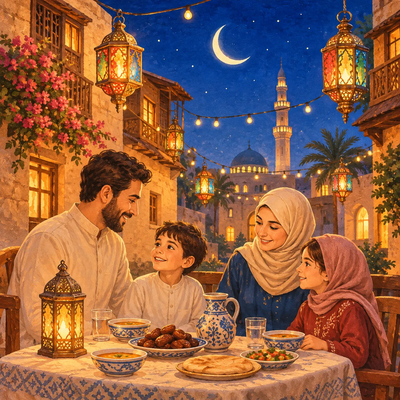
رَمَضَان
Ramadan
Key words
- الصِّيَامfasting
- السُّحُورsuhoor (pre-dawn meal)
- الْإِفْطَارiftar (fast-breaking meal)
- الْفَانُوسlantern
- الْهِلَالcrescent moon
- التَّرَاوِيحtarawih prayers
- الْفَجْرdawn
- غُرُوب الشَّمْسsunset
- التَّقْوِيم الْهِجْرِيّHijri calendar
- قَمَرِيّlunar
- يَصُومto fast
- الْجُوعhunger
All 25 words
- عَطَشthirst
- صَبْرpatience
- الْفُقَرَاءthe poor
- وَجْبَةmeal
- تَمْرdates (fruit)
- الْمُسَحِّرpre-dawn drummer (musaharati)
- الْأَذَانcall to prayer
- الصَّدَقَاتalms
- الْكَرَمgenerosity
- الْحَلَوِيَّاتsweets
- لَيْلَة الْقَدْرNight of Power
- عِيد الْفِطْرEid al-Fitr
- الْعِيدِيَّةEid money (gift)
رَمَضَان شَهْر خَاصّ عِنْدَ الْمُسْلِمِين فِي الْعَالَم كُلِّهِ. هُوَ الشَّهْر التَّاسِع فِي التَّقْوِيم الْهِجْرِيّ، وَفِيهِ يَصُوم الْمُسْلِمُون مِنَ الْفَجْر إِلَى الْمَغْرِب.
Ramadan is a special month for Muslims all over the world. It is the ninth month of the Hijri calendar, and during it Muslims fast from dawn until sunset.
فِي هٰذِهِ الْمَقَالَة نَتَعَرَّف عَلَى أَيَّام رَمَضَان وَلَيَالِيهِ: الصِّيَام، وَالسُّحُور، وَالْإِفْطَار، وَالْفَوَانِيس، وَالْعِيد فِي النِّهَايَة.
In this article we get to know the days and nights of Ramadan: the fast, the suhur, the iftar, the lanterns, and the Eid at the end.
شَهْر يَتَحَرَّك
A month that moves
التَّقْوِيم الْهِجْرِيّ تَقْوِيم قَمَرِيّ. السَّنَة الْقَمَرِيَّة أَقْصَر مِنَ السَّنَة الشَّمْسِيَّة بِأَحَدَ عَشَرَ يَوْمًا تَقْرِيبًا.
The Hijri calendar is a lunar calendar. The lunar year is about eleven days shorter than the solar year.
لِهٰذَا السَّبَب يَأْتِي رَمَضَان كُلّ سَنَة أَبْكَر مِنَ السَّنَة الْمَاضِيَة بِحَوَالَيْ أَحَدَ عَشَرَ يَوْمًا. أَحْيَانًا يَكُون فِي الصَّيْف، وَأَحْيَانًا فِي الشِّتَاء.
For this reason, Ramadan comes about eleven days earlier every year than the year before. Sometimes it falls in summer, and sometimes in winter.
وَيَبْدَأ الشَّهْر عِنْدَمَا يَرَى النَّاس الْهِلَال، أَيِ الْقَمَر الْجَدِيد الصَّغِير. فِي تِلْكَ اللَّيْلَة يَنْتَظِر النَّاس الْخَبَر، ثُمَّ يَقُولُون: «رَمَضَان كَرِيم!»
The month begins when people see the hilal, that is, the small new moon. That night people wait for the news, and then they say: "Ramadan karim!"
الصِّيَام
The fast
الصِّيَام يَعْنِي: لَا أَكْل وَلَا شُرْب، حَتَّى الْمَاء، مِنَ الْفَجْر إِلَى غُرُوب الشَّمْس.
Fasting means no eating and no drinking, not even water, from dawn until the sun goes down.
الصِّيَام وَاجِب عَلَى كُلّ مُسْلِم بَالِغ وَصَحِيح. الْأَطْفَال الصِّغَار لَا يَصُومُون، وَالْمَرِيض وَالْمُسَافِر يَسْتَطِيعَان أَنْ يُفْطِرَا، ثُمَّ يَصُومَان هٰذِهِ الْأَيَّام بَعْدَ رَمَضَان.
Fasting is a duty for every adult Muslim in good health. Young children do not fast, and people who are ill or travelling may break the fast and make up those days after Ramadan.
وَكَثِير مِنَ الْأَطْفَال يَتَعَلَّمُون الصِّيَام قَلِيلًا قَلِيلًا: نِصْف يَوْم أَوَّلًا، ثُمَّ يَوْم كَامِل. وَهُمْ فَخُورُون جِدًّا بِأَوَّل يَوْم كَامِل!
Many children learn to fast little by little: half a day first, then a whole day. They are very proud of their first full day!
وَالصِّيَام لَيْسَ الْجُوع فَقَط. هُوَ أَيْضًا صَبْر، وَكَلَام طَيِّب، وَتَفْكِير فِي الْفُقَرَاء الَّذِينَ لَا يَجِدُون الطَّعَام كُلّ يَوْم.
And fasting is not only hunger. It is also patience, kind words, and thinking of the poor who do not find food every day.
السُّحُور
The suhur
قَبْلَ الْفَجْر يَسْتَيْقِظ النَّاس وَيَأْكُلُون وَجْبَة اسْمُهَا «السُّحُور». هِيَ فِي الْعَادَة وَجْبَة خَفِيفَة: خُبْز، وَجُبْن، وَلَبَن، وَتَمْر، وَمَاء كَثِير.
Before dawn, people wake up and eat a meal called the "suhur". It is usually a light meal: bread, cheese, yoghurt, dates and plenty of water.
وَفِي مُدُن عَرَبِيَّة كَثِيرَة كَانَ «الْمُسَحِّر» يَمْشِي فِي الشَّوَارِع قَبْلَ الْفَجْر. يَضْرِب عَلَى طَبْلَة صَغِيرَة وَيُنَادِي: «اصْحَ يَا نَائِم، وَحِّدِ الدَّائِم!» حَتَّى يَسْتَيْقِظ النَّاس لِلسُّحُور.
In many Arab cities the "musahhir" used to walk through the streets before dawn. He would beat a small drum and call out: "Wake up, sleeper, praise the Eternal One!" so that people would wake up for the suhur.
الْيَوْم عِنْدَ النَّاس مُنَبِّهَات فِي الْهَوَاتِف، لٰكِنَّ الْمُسَحِّر مَا زَالَ يَمْشِي فِي بَعْض الْأَحْيَاء الْقَدِيمَة، وَالْأَطْفَال يُحِبُّونَهُ كَثِيرًا.
Today people have alarms on their phones, but the musahhir still walks through some old neighbourhoods, and children love him.
الْإِفْطَار
The iftar
عِنْدَ الْمَغْرِب يُؤَذِّن الْمُؤَذِّن، وَيَنْتَهِي يَوْم الصِّيَام. وَفِي بَعْض الْمُدُن يُطْلِقُون «مِدْفَع الْإِفْطَار» أَيْضًا، وَصَوْتُهُ يَعْنِي: حَانَ وَقْت الْأَكْل!
At sunset the muezzin gives the call to prayer, and the day of fasting is over. In some cities they also fire the "iftar cannon", and its boom means: it is time to eat!
كَثِير مِنَ النَّاس يَبْدَؤُون الْإِفْطَار بِتَمْر وَمَاء، كَمَا كَانَ يَفْعَل النَّبِيّ مُحَمَّد. ثُمَّ يُصَلُّون الْمَغْرِب، وَبَعْدَ ذٰلِكَ يَأْكُلُون الْوَجْبَة الْكَبِيرَة.
Many people break their fast with dates and water, as the Prophet Muhammad used to do. Then they pray the sunset prayer, and after that they eat the big meal.
عَلَى مَائِدَة الْإِفْطَار شُورْبَة، وَسَمْبُوسَة، وَسَلَطَة، وَأُرْز، وَلَحْم. وَمِنَ الْمَشْرُوبَات قَمَر الدِّين، وَالتَّمْر الْهِنْدِيّ، وَعِرْق السُّوس.
On the iftar table there is soup, sambusa, salad, rice and meat. Among the drinks are qamar al-din (apricot juice), tamarind and liquorice juice.
وَالْإِفْطَار وَقْت الْعَائِلَة. كُلّ الْعَائِلَة تَجْلِس مَعًا حَوْلَ الْمَائِدَة وَتَنْتَظِر صَوْت الْأَذَان. وَكَثِير مِنَ النَّاس يَدْعُون الْأَصْدِقَاء وَالْجِيرَان إِلَى الْإِفْطَار.
Iftar is family time. The whole family sits together around the table and waits for the call to prayer. Many people also invite friends and neighbours to iftar.
مَوَائِد الرَّحْمٰن
The tables of the Merciful
فِي مِصْر وَبِلَاد أُخْرَى تُوضَع فِي الشَّوَارِع مَوَائِد طَوِيلَة اسْمُهَا «مَوَائِد الرَّحْمٰن». عَلَيْهَا طَعَام مَجَّانِيّ لِكُلّ صَائِم: لِلْفَقِير، وَلِلْعَامِل، وَلِلْمُسَافِر.
In Egypt and other countries, long tables called "mawaid al-rahman" (tables of the Merciful) are set up in the streets. On them there is free food for anyone who is fasting: for the poor, for workers, for travellers.
وَالْكَرَم فِي رَمَضَان كَبِير. النَّاس يُعْطُون الصَّدَقَات، وَالشَّبَاب يُوَزِّعُون التَّمْر وَالْمَاء عَلَى السَّيَّارَات قَبْلَ الْمَغْرِب، لِأَنَّ بَعْض النَّاس يَكُونُون فِي الطَّرِيق وَقْت الْإِفْطَار.
Generosity in Ramadan is great. People give to charity, and young people hand out dates and water to cars before sunset, because some people are still on the road at iftar time.
لَيَالِي رَمَضَان
Ramadan nights
لَيَالِي رَمَضَان طَوِيلَة وَجَمِيلَة. بَعْدَ الْإِفْطَار يَذْهَب كَثِير مِنَ النَّاس إِلَى الْمَسْجِد لِصَلَاة «التَّرَاوِيح»، وَهِيَ صَلَاة خَاصَّة بِلَيَالِي رَمَضَان.
Ramadan nights are long and beautiful. After iftar, many people go to the mosque for "tarawih", a special prayer for the nights of Ramadan.
وَبَعْدَ الصَّلَاة تَمْتَلِئ الشَّوَارِع وَالْمَقَاهِي بِالنَّاس. هُمْ يَشْرَبُون الشَّاي، وَيَأْكُلُون الْحَلَوِيَّات، وَيَزُورُون الْأَهْل وَالْأَصْدِقَاء حَتَّى وَقْت مُتَأَخِّر.
After the prayer, the streets and cafes fill with people. They drink tea, eat sweets, and visit family and friends until late at night.
وَمِنْ أَشْهَر حَلَوِيَّات رَمَضَان «الْقَطَائِف» وَ«الْكُنَافَة». الْقَطَائِف فَطَائِر صَغِيرَة فِيهَا جَوْز أَوْ قِشْطَة، وَالنَّاس يَأْكُلُونَهَا فِي رَمَضَان خَاصَّةً.
Among the most famous Ramadan sweets are "qatayef" and "kunafa". Qatayef are small pancakes filled with walnuts or cream, and people eat them especially in Ramadan.
الْفَانُوس
The lantern
فِي مِصْر رَمْز رَمَضَان هُوَ «الْفَانُوس». هُوَ مِصْبَاح مُلَوَّن مِنَ الْمَعْدِن وَالزُّجَاج، وَفِيهِ شَمْعَة أَوْ ضَوْء صَغِير.
In Egypt, the symbol of Ramadan is the "fanous", the lantern. It is a colourful lamp made of metal and glass, with a candle or a small light inside.
النَّاس يُعَلِّقُون الْفَوَانِيس الْكَبِيرَة فِي الشَّوَارِع وَعَلَى الْبُيُوت، وَالْأَطْفَال يَحْمِلُون فَوَانِيس صَغِيرَة وَيُغَنُّون أُغْنِيَة قَدِيمَة: «وَحَوِي يَا وَحَوِي».
People hang big lanterns in the streets and on houses, and children carry small lanterns and sing an old song: "Wahawi ya wahawi".
وَهُنَاكَ قِصَص كَثِيرَة عَنْ أَصْل الْفَانُوس. وَالْيَوْم تُزَيَّن الْبُيُوت فِي بِلَاد كَثِيرَة بِالْفَوَانِيس وَالْأَضْوَاء وَالْهِلَال.
There are many stories about where the lantern comes from. Today, in many countries, homes are decorated with lanterns, lights and crescent moons.
لَيْلَة الْقَدْر
The Night of Power
فِي الْأَيَّام الْعَشَرَة الْأَخِيرَة مِنْ رَمَضَان لَيْلَة مُهِمَّة جِدًّا اسْمُهَا «لَيْلَة الْقَدْر». يُؤْمِن الْمُسْلِمُون أَنَّ نُزُول الْقُرْآن بَدَأَ فِي هٰذِهِ اللَّيْلَة.
In the last ten days of Ramadan there is a very important night called "Laylat al-Qadr", the Night of Power. Muslims believe that the revelation of the Quran began on this night.
وَيَقُول الْقُرْآن إِنَّهَا أَفْضَل مِنْ أَلْف شَهْر. لِذٰلِكَ يُصَلِّي النَّاس كَثِيرًا فِي هٰذِهِ اللَّيَالِي، وَيَقْرَؤُون الْقُرْآن، وَتَمْتَلِئ الْمَسَاجِد حَتَّى الْفَجْر.
The Quran says that it is better than a thousand months. So people pray a lot on these nights, read the Quran, and the mosques are full until dawn.
عِيد الْفِطْر
Eid al-Fitr
فِي نِهَايَة رَمَضَان يَأْتِي «عِيد الْفِطْر». قَبْلَ صَلَاة الْعِيد يُعْطِي الْمُسْلِمُون «زَكَاة الْفِطْر» لِلْفُقَرَاء، حَتَّى يَفْرَح الْجَمِيع بِالْعِيد.
At the end of Ramadan comes "Eid al-Fitr". Before the Eid prayer, Muslims give "zakat al-fitr" to the poor, so that everyone can enjoy the Eid.
فِي صَبَاح الْعِيد يَلْبَس النَّاس مَلَابِس جَدِيدَة، وَيَذْهَبُون إِلَى صَلَاة الْعِيد، ثُمَّ يَزُورُون الْأَهْل وَالْأَقَارِب. وَالْأَطْفَال يَأْخُذُون الْعِيدِيَّة.
On the morning of Eid, people put on new clothes, go to the Eid prayer, and then visit their family and relatives. Children receive their eidiyya, a gift of money.
وَفِي الْبُيُوت كَعْك الْعِيد وَالْمَعْمُول بِالتَّمْر. وَمِنَ التَّهَانِي الْمَشْهُورَة: «عِيد مُبَارَك» وَ«كُلّ عَام وَأَنْتُم بِخَيْر».
In the homes there are Eid biscuits (kaak) and maamoul filled with dates. Among the well-known greetings are "Eid mubarak" and "kull am wa antum bikhayr" (may you be well every year).
رَمَضَان لِلزُّوَّار
Ramadan for visitors
إِذَا كُنْتَ فِي بَلَد عَرَبِيّ فِي رَمَضَان، فَسَتَرَى أَنَّ الْحَيَاة تَتَغَيَّر. سَاعَات الْعَمَل أَقْصَر فِي بِلَاد كَثِيرَة، وَبَعْض الْمَطَاعِم مُغْلَقَة فِي النَّهَار.
If you are in an Arab country during Ramadan, you will see that life changes. Working hours are shorter in many countries, and some restaurants are closed during the day.
مِنَ الْأَدَب أَلَّا تَأْكُل وَلَا تَشْرَب أَمَام الصَّائِمِين فِي الشَّارِع. وَإِذَا دَعَاكَ صَدِيق إِلَى الْإِفْطَار، فَاقْبَلِ الدَّعْوَة! سَتَرَى كَرَم رَمَضَان بِنَفْسِكَ.
It is polite not to eat or drink in front of people who are fasting in the street. And if a friend invites you to iftar, accept the invitation! You will see the generosity of Ramadan for yourself.
كَلِمَات رَمَضَان
Ramadan words
هٰذِهِ كَلِمَات مُهِمَّة عَنْ رَمَضَان:
Here are some important words about Ramadan:
الصِّيَام: لَا أَكْل وَلَا شُرْب مِنَ الْفَجْر إِلَى الْمَغْرِب.
Al-siyam: no eating and no drinking from dawn until sunset.
السُّحُور: وَجْبَة قَبْلَ الْفَجْر.
Al-suhur: a meal before dawn.
الْإِفْطَار: أَوَّل وَجْبَة بَعْدَ الْمَغْرِب.
Al-iftar: the first meal after sunset.
الْهِلَال: الْقَمَر الْجَدِيد الصَّغِير.
Al-hilal: the small new moon.
التَّرَاوِيح: صَلَاة لَيَالِي رَمَضَان.
Al-tarawih: the prayer of Ramadan nights.
«رَمَضَان كَرِيم»: تَهْنِئَة بِالشَّهْر، وَالْجَوَاب «اللَّه أَكْرَم».
"Ramadan karim": a greeting for the month, and the answer is "Allahu akram" (God is more generous).
فِي النِّهَايَة
In the end
رَمَضَان شَهْر جُوع وَعَطَش فِي النَّهَار، لٰكِنَّهُ شَهْر فَرَح فِي اللَّيْل. فِيهِ الْعَائِلَة، وَالْكَرَم، وَالصَّلَاة، وَالْحَلَوِيَّات.
Ramadan is a month of hunger and thirst by day, but a month of joy by night. It has family, generosity, prayer and sweets.
وَكَثِير مِنَ الْعَرَب يَقُولُون إِنَّ رَمَضَان أَجْمَل شَهْر فِي السَّنَة. وَعِنْدَمَا يَنْتَهِي، يَشْتَاقُون إِلَيْهِ وَيَنْتَظِرُونَهُ مِنْ جَدِيد.
Many Arabs say that Ramadan is the most beautiful month of the year. And when it ends, they miss it and wait for it to come again.
In the free app you can listen to this text read aloud and tap any word to see what it means.
From the blog
Learn Arabic arrives on 1 December
The app is almost ready: the Arabic alphabet from scratch, grammar, over 2,500 words with audio and classics such as Gibran's The Broken Wings in the original. Leave your email and we'll let you know the day it's out.
One email when the app is out. Nothing else.