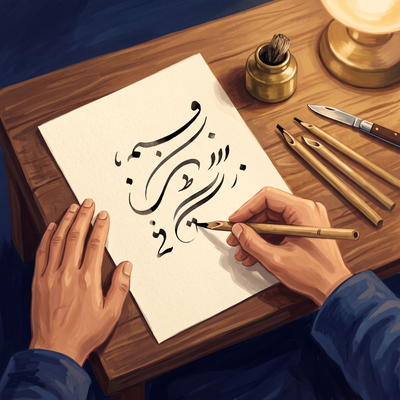
الخطّ العربي
Arabic Calligraphy
Key words
- الخطّ العربيArabic calligraphy
- الكتابةwriting
- الفنّart
- المساجدmosques
- القصورpalaces
- الحروفletters
- الكلمةthe word
- الخطّاطcalligrapher
- القلمreed pen
- القصبreed
- الحبرink
- المدادink (old word)
All 25 words
- النقطةdot
- الحركاتvowel marks
- الزخرفةornamentation
- الإجازةcalligraphy diploma
- التلميذstudent
- الأستاذmaster, teacher
- الصبرpatience
- الورقpaper
- الطباعةprinting
- توقيعsignature
- الوثائقdocuments
- التراثheritage
- مسابقاتcompetitions
في كثير من الثقافات تكون الكتابة وسيلة لنقل الكلام فقط، أما عند العرب فقد أصبحت فنًّا كاملًا. الخطّ العربي يزيّن المساجد والقصور والكتب والصحون، بل والعملات والطوابع أيضًا.
In many cultures writing is only a way of passing on words, but among the Arabs it became a complete art. Arabic calligraphy decorates mosques, palaces, books and plates, and even coins and stamps.
في هذه المقالة نتعرّف على تاريخ هذا الفن، وعلى أشهر أنواعه، وعلى الأدوات التي يستعملها الخطّاط، وعلى مكانه في حياة الناس اليوم.
In this article we get to know the history of this art, its most famous styles, the tools a calligrapher uses, and its place in people's lives today.
حروف تتّصل
Letters that join
تُكتب العربية من اليمين إلى اليسار، وفيها ثمانية وعشرون حرفًا. ومعظم الحروف تتّصل بما بعدها داخل الكلمة، فتبدو الكلمة كأنها خطّ واحد متّصل.
Arabic is written from right to left and has twenty-eight letters. Most letters join the letter that follows them inside a word, so a word looks like one continuous line.
ولهذا يتغيّر شكل الحرف حسب مكانه: في أول الكلمة، أو في وسطها، أو في آخرها، أو وحده. حرف العين مثلًا له أربعة أشكال مختلفة.
That is why the shape of a letter changes with its position: at the beginning of a word, in the middle, at the end, or standing alone. The letter ayn, for example, has four different shapes.
هذه المرونة هي سرّ جمال الخطّ العربي، فالخطّاط يستطيع أن يمدّ الحرف أو يرفعه أو يجمع الحروف فوق بعضها، فتصبح الكلمة صورة.
This flexibility is the secret of the beauty of Arabic calligraphy: the calligrapher can stretch a letter, raise it, or stack letters on top of each other, and the word becomes a picture.
من الكوفي إلى النسخ
From Kufic to Naskh
أقدم الخطوط العربية المشهورة هو «الخطّ الكوفي»، وقد نُسب إلى مدينة الكوفة في العراق. حروفه مستقيمة وزواياه حادّة، وقد كُتبت به المصاحف الأولى.
The oldest famous Arabic script is "Kufic", named after the city of Kufa in Iraq. Its letters are straight and its corners sharp, and the first copies of the Quran were written in it.
لكنّ الكوفي جميل وبطيء في الكتابة، فظهرت مع الوقت خطوط مستديرة أسهل وأسرع. ومن أهمّها «خطّ النسخ»، الذي سُمّي كذلك لأنّ النُّسّاخ كانوا ينسخون به الكتب.
But Kufic is beautiful and slow to write, so over time rounder, easier and faster scripts appeared. One of the most important is "Naskh", named so because scribes used it to copy (nasakha) books.
وما زال النسخ إلى اليوم أكثر الخطوط استعمالًا في الطباعة، فأغلب الكتب والصحف العربية تُطبع بخطوط مأخوذة منه.
To this day Naskh is the script used most in printing: most Arabic books and newspapers are printed in typefaces based on it.
ابن مُقلة والنقطة
Ibn Muqla and the dot
في القرن العاشر الميلادي عاش في بغداد وزير وخطّاط اسمه ابن مُقلة. وهو أول من وضع قواعد دقيقة لنِسَب الحروف.
In the tenth century a vizier and calligrapher named Ibn Muqla lived in Baghdad. He was the first to set precise rules for the proportions of the letters.
جعل ابن مقلة النقطة مقياسًا لكلّ شيء. والنقطة هنا هي المربّع الصغير الذي يرسمه رأس القلم على الورق. فطول الألف مثلًا عدد معيّن من النقاط، وعرض كلّ حرف كذلك.
Ibn Muqla made the dot the measure of everything. The dot here is the small square that the tip of the pen leaves on the paper. The height of the alif, for example, is a set number of dots, and so is the width of every letter.
وبعده جاء خطّاطون كبار حسّنوا هذه القواعد، مثل ابن البوّاب في بغداد، ثم ياقوت المستعصمي في القرن الثالث عشر.
After him came great calligraphers who refined these rules, such as Ibn al-Bawwab in Baghdad, and later Yaqut al-Musta'simi in the thirteenth century.
أشهر الخطوط
The best-known scripts
مع الزمن ظهرت خطوط كثيرة، لكلّ واحد منها شخصيته واستعماله:
Over time many scripts appeared, each with its own character and use:
الكوفي: حروف مستقيمة وزوايا، ويُستعمل اليوم كثيرًا في الزخرفة والشعارات.
Kufic: straight letters and angles, used a lot today in decoration and logos.
النسخ: واضح وسهل القراءة، وهو خطّ الكتب والمصاحف المطبوعة.
Naskh: clear and easy to read, the script of printed books and Qurans.
الثُّلث: كبير وفخم، تُكتب به العناوين وآيات القرآن على جدران المساجد.
Thuluth: large and grand, used for titles and Quranic verses on mosque walls.
الديواني: خطّ متموّج ظهر في دواوين الدولة العثمانية، وكانت تُكتب به الرسائل الرسمية.
Diwani: a flowing script that appeared in the chanceries of the Ottoman state, used for official letters.
الرُّقعة: بسيط وسريع، وهو الخطّ الذي يكتب به كثير من العرب بأيديهم كلّ يوم.
Ruqa: simple and fast, the script many Arabs use for everyday handwriting.
المغربي: خطّ المغرب والأندلس، حروفه مستديرة وواسعة.
Maghribi: the script of North Africa and al-Andalus, with round, wide letters.
القلم والحبر
Pen and ink
أداة الخطّاط التقليدية هي «القلم»، ويُصنع من القصب. يبري الخطّاط القلم بسكّين حادّة ويقطع رأسه قطعًا مائلًا، وعرض هذا الرأس يحدّد حجم الخطّ.
The calligrapher's traditional tool is the "qalam", made from reed. The calligrapher cuts the tip of the pen at a slant with a sharp knife, and the width of the tip sets the size of the writing.
أما الحبر فكان يُصنع قديمًا من السُّخام، أي الدخان الأسود، مع الصمغ العربي والماء. ولكلّ خطّاط أسراره في صنع حبر لامع لا يتغيّر لونه.
Ink used to be made from soot, that is black smoke, mixed with gum arabic and water. Every calligrapher had his own secrets for making a shiny ink that never changed colour.
ويكتب الخطّاط على ورق خاص يُطلى بمادة ناعمة ثم يُصقل بحجر أملس، حتى ينزلق عليه القلم بسهولة، ويمكن أن يُمحى الخطأ أحيانًا.
The calligrapher writes on special paper coated with a smooth layer and then polished with a smooth stone, so that the pen glides easily across it and a mistake can sometimes be wiped away.
النقاط والحركات
Dots and vowel marks
في الكتابة العربية الأولى لم تكن هناك نقاط على الحروف، فالباء والتاء والثاء مثلًا كانت تُكتب بالشكل نفسه. وكان القارئ يعرف الكلمة من السياق.
In the earliest Arabic writing there were no dots on the letters: ba, ta and tha, for example, were written with the same shape. The reader knew the word from the context.
ثم دخل كثير من غير العرب في الإسلام، وكثرت الأخطاء في القراءة. فوضع أبو الأسود الدؤلي في القرن السابع نقاطًا ملوّنة تدلّ على الحركات.
Then many non-Arabs became Muslims, and reading mistakes became more frequent. So in the seventh century Abu al-Aswad al-Du'ali added coloured dots to show the vowels.
وبعد ذلك وُضعت النقاط التي تفرّق بين الحروف المتشابهة، وفي القرن الثامن وضع الخليل بن أحمد الفراهيدي الحركات التي نعرفها اليوم: الفتحة والضمة والكسرة والشدّة والسكون.
Later the dots that tell similar letters apart were added, and in the eighth century al-Khalil ibn Ahmad al-Farahidi created the vowel marks we know today: fatha, damma, kasra, shadda and sukun.
الخطّ في العمارة
Calligraphy in architecture
لا تكاد تجد مسجدًا قديمًا أو قصرًا تاريخيًا في العالم الإسلامي بلا خطّ. فالكلمات تُنقش على الحجر، وتُرسم على البلاط الملوّن، وتُحفر في الخشب.
You will hardly find an old mosque or historic palace in the Islamic world without calligraphy. Words are carved into stone, painted on coloured tiles and cut into wood.
ولأنّ الفنّ الإسلامي الديني يتجنّب في الغالب رسم الإنسان والحيوان، صار الخطّ والزخرفة النباتية والهندسية أهمّ وسائل الجمال فيه.
And because religious Islamic art mostly avoids depicting people and animals, calligraphy, together with plant and geometric patterns, became its most important means of beauty.
وفي قصر الحمراء في غرناطة تتكرّر جملة واحدة على الجدران مئات المرات: «ولا غالب إلا الله»، وكانت شعار الأسرة التي حكمت المدينة.
In the Alhambra palace in Granada one sentence is repeated hundreds of times on the walls: "There is no victor but God". It was the motto of the dynasty that ruled the city.
الخطّاط وتلميذه
Master and pupil
تعلُّم الخطّ يحتاج إلى صبر طويل. يجلس التلميذ سنوات مع أستاذه، وينسخ الحروف المفردة ثم الكلمات ثم الجمل، مرّة بعد مرّة.
Learning calligraphy takes long patience. The pupil sits with his master for years and copies single letters, then words, then sentences, again and again.
وعندما يرى الأستاذ أنّ تلميذه أتقن الخطّ، يعطيه «إجازة»، وهي شهادة مكتوبة تسمح له أن يوقّع أعماله باسمه وأن يعلّم غيره.
When the master sees that his pupil has mastered the script, he gives him an "ijaza", a written certificate that allows him to sign his works with his own name and to teach others.
وهكذا انتقل الفنّ من جيل إلى جيل، وما زال كثير من الخطّاطين اليوم يذكرون سلسلة أساتذتهم حتى الخطّاطين القدماء.
In this way the art passed from generation to generation, and many calligraphers today can still name their chain of masters going back to the great calligraphers of the past.
الطُّغراء
The tughra
كان لكلّ سلطان عثماني «طُغراء»، وهي توقيع رسمي يُكتب فيه اسمه واسم أبيه ولقبه بخطّ متشابك جميل.
Every Ottoman sultan had a "tughra", an official signature in which his name, his father's name and his title were written in a beautiful interlaced script.
وكانت الطغراء توضع في أعلى الوثائق الرسمية والرسائل، وعلى النقود أيضًا، فيعرف الناس أنّ الأمر صادر عن السلطان نفسه.
The tughra was placed at the top of official documents and letters, and on coins too, so that people knew the order came from the sultan himself.
ولم يكن تقليدها سهلًا، لأنّ شكلها معقّد ولها قواعد دقيقة، فكانت تعمل عمل الختم الذي يحمي الوثيقة من التزوير.
It was not easy to copy, because its shape was complex and followed precise rules, so it worked like a seal that protected the document from forgery.
الحروف التي ترسم
Letters that draw
بعض الخطّاطين يرسمون بالحروف صورًا كاملة: طائرًا، أو سفينة، أو أسدًا، أو مسجدًا. ويُسمّى هذا النوع أحيانًا «الخطّ التصويري».
Some calligraphers draw whole pictures with letters: a bird, a ship, a lion or a mosque. This kind of work is sometimes called "pictorial calligraphy".
وفي فنّ آخر تُكتب الجملة مرّتين، مرّة عادية ومرّة معكوسة، فتبدو الكتابة متناظرة كأنها صورة في مرآة.
In another art, a sentence is written twice, once normally and once reversed, so that the writing looks symmetrical, like an image in a mirror.
ويحبّ الخطّاطون أيضًا أن يكتبوا الحِكَم والأمثال وأبيات الشعر في لوحات تُعلَّق في البيوت، كما تُعلَّق اللوحات المرسومة في ثقافات أخرى.
Calligraphers also love to write wise sayings, proverbs and lines of poetry on panels that are hung in homes, the way painted pictures are hung in other cultures.
الورّاقون والورق
Paper and the warraqs
في القرن الثامن الميلادي تعلّم العرب صناعة الورق من الصين عن طريق سمرقند، وفي أواخر ذلك القرن ظهرت في بغداد أولى مصانع الورق.
In the eighth century the Arabs learned to make paper from China by way of Samarkand, and towards the end of that century the first paper mills appeared in Baghdad.
وكان الورق أرخص من الرَّقّ والبردي، فكثرت الكتب، وظهرت في بغداد سوق كاملة للورّاقين، وهم الذين ينسخون الكتب ويبيعونها.
Paper was cheaper than parchment and papyrus, so books multiplied, and in Baghdad a whole market grew up for the "warraqs", the people who copied books and sold them.
وظلّ الكتاب العربي يُكتب باليد قرونًا طويلة، ولم تنتشر الطباعة بالحروف العربية في الشرق إلا في القرنين الثامن عشر والتاسع عشر. ولهذا بقي الخطّاط والناسخ زمنًا طويلًا من أهمّ الناس في عالم المعرفة.
Arabic books went on being written by hand for many centuries, and printing in Arabic letters only spread in the East in the eighteenth and nineteenth centuries. That is why for a long time calligraphers and copyists were among the most important people in the world of learning.
الخطّ اليوم
Calligraphy today
قد يظنّ البعض أنّ الحاسوب قتل الخطّ اليدوي، لكنّ الحقيقة غير ذلك. فما زالت هناك مدارس للخطّ ومسابقات دولية ومعارض في مدن كثيرة.
Some people may think the computer has killed handwriting, but the truth is different. There are still calligraphy schools, international competitions and exhibitions in many cities.
وفي سنة 2021 أدرجت اليونسكو الخطّ العربي في قائمة التراث الثقافي غير المادي للإنسانية، بعد طلب مشترك من ست عشرة دولة عربية.
In 2021 UNESCO added Arabic calligraphy to the list of the Intangible Cultural Heritage of Humanity, after a joint request from sixteen Arab countries.
كما ظهر فنّانون شباب يمزجون الخطّ بالرسم على الجدران في الشوارع، ويصمّمون خطوطًا رقمية جديدة للهواتف والشاشات.
Young artists have also appeared who mix calligraphy with street art on walls, and who design new digital typefaces for phones and screens.
وفي كثير من البلاد العربية يتعلّم التلاميذ في المدرسة خطَّي النسخ والرقعة، وتُقام لهم مسابقات في الخطّ الجميل، فيكبر كثير منهم وهم يحبّون هذا الفنّ.
In many Arab countries pupils learn Naskh and Ruqa at school, and competitions in fine handwriting are held for them, so many of them grow up loving this art.
كلمات الخطّ
Calligraphy words
هذه كلمات مهمّة في عالم الخطّ:
Here are some important words from the world of calligraphy:
الخطّاط: الفنان الذي يكتب الخطّ الجميل.
Al-khattat: the artist who writes beautiful script, the calligrapher.
القلم: أداة الكتابة، وتُصنع تقليديًا من القصب.
Al-qalam: the writing tool, traditionally made from reed, the pen.
المداد: اسم قديم للحبر.
Al-midad: an old word for ink.
النقطة: مقياس نِسَب الحروف.
Al-nuqta: the dot, the measure of the letters' proportions.
الإجازة: شهادة الأستاذ لتلميذه.
Al-ijaza: the master's certificate for his pupil.
الزخرفة: الرسوم التي تزيّن العمل الفني.
Al-zakhrafa: the patterns that decorate a work of art, ornament.
في النهاية
In the end
الخطّ العربي ليس مجرّد حروف، بل هو طريقة لرؤية الجمال في الكلمة نفسها. وفيه يلتقي الصبر والفنّ واللغة.
Arabic calligraphy is not just letters: it is a way of seeing beauty in the word itself. In it, patience, art and language meet.
وإذا أردت أن تبدأ، فجرّب أن تكتب اسمك بقلم عريض الرأس. ستكتشف بسرعة أنّ حرفًا واحدًا جميلًا قد يحتاج إلى ساعات من التدريب!
And if you want to begin, try writing your name with a broad-tipped pen. You will soon discover that a single beautiful letter can take hours of practice!
In the free app you can listen to this text read aloud and tap any word to see what it means.
From the blog
Learn Arabic arrives on 1 December
The app is almost ready: the Arabic alphabet from scratch, grammar, over 2,500 words with audio and classics such as Gibran's The Broken Wings in the original. Leave your email and we'll let you know the day it's out.
One email when the app is out. Nothing else.