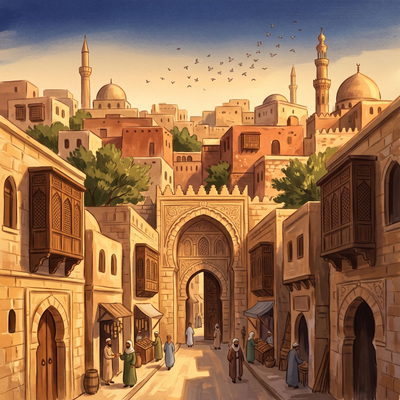
المدن العربية القديمة
Old Arab Cities
Key words
- السورcity wall
- الزقاقalley
- الفناءcourtyard
- المشربيةlattice window (mashrabiya)
- الخانcaravanserai
- الترميمrestoration
- أسواق مسقوفةcovered markets
- مئذنةminaret
- المسجد الجامعgreat mosque
- الأحياء السكنيةresidential quarters
- قلعةcitadel
- القوافلcaravans
All 25 words
- دكاكينshops
- حمّام عامّpublic bath
- الطينmud
- طوابقfloors (storeys)
- الزجاج الملوّنstained glass
- ناطحات سحابskyscrapers
- ساحةsquare
- نافورةfountain
- خصوصيةprivacy
- التراث العالميworld heritage
- السيّاحtourists
- تذكاراتsouvenirs
- الحرفيونcraftsmen
في قلب كثير من المدن العربية الحديثة، بين الأبراج والطرق السريعة، تختبئ مدينة أخرى أقدم منها بقرون: أزقّة ضيّقة متعرّجة، وأسواق مسقوفة، ومآذن، وبيوت تنغلق على نفسها حول فناء هادئ.
In the heart of many modern Arab cities, between the towers and the motorways, another city lies hidden, centuries older: narrow winding alleys, covered markets, minarets, and houses that close in on themselves around a quiet courtyard.
في هذه المقالة نتجوّل في بعض أشهر هذه المدن، من دمشق وحلب في الشام إلى القاهرة، ومن صنعاء وشبام في اليمن إلى فاس ومراكش في المغرب، ونحاول أن نفهم كيف بُنيت، ولماذا تبدو على هذا الشكل، وما الذي بقي منها اليوم.
In this article we wander through some of the most famous of these cities, from Damascus and Aleppo in the Levant to Cairo, and from Sanaa and Shibam in Yemen to Fez and Marrakesh in Morocco. We try to understand how they were built, why they look the way they do, and what is left of them today.
ما «المدينة القديمة»؟
What is an "old city"?
يسمّي الناس في المغرب العربي الجزء القديم من المدينة «المدينة»، وقد دخلت هذه الكلمة لغات أخرى، فصار السيّاح يقولون medina. وفي المشرق يقولون غالبًا «البلد القديمة» أو «المدينة العتيقة».
In the Maghreb, people call the old part of a city "al-madina", the city, and this word has entered other languages, so tourists now say "medina". In the Mashriq people usually say "al-balad al-qadima" or "al-madina al-atiqa", the old town.
وكانت المدينة القديمة عادة محاطة بسور له أبواب تُغلق في الليل، ولكلّ باب اسم، يدلّ أحيانًا على المدينة التي يخرج إليها الطريق، كباب اليمن في صنعاء.
The old city was usually surrounded by a wall with gates that were closed at night. Each gate had a name, which sometimes showed which city the road led to, like Bab al-Yaman, the Gate of Yemen, in Sanaa.
وفي وسط المدينة غالبًا يقوم المسجد الجامع، وحوله الأسواق، ثم تمتدّ الأحياء السكنية. ولكلّ حيّ شيخه ومسجده الصغير وفرنه وسبيل مائه، حتى كأنه قرية صغيرة داخل المدينة.
In the middle of the city there was usually the great mosque, with the markets around it, and then the residential quarters spread out. Each quarter had its own sheikh, its own small mosque, its own bakery and its own public fountain, as if it were a small village inside the city.
دمشق، المدينة التي لا تشيخ
Damascus, the city that never grows old
تُعدّ دمشق من أقدم المدن المأهولة بلا انقطاع في العالم، فقد سكنها الناس منذ آلاف السنين، وتعاقبت عليها حضارات كثيرة، من الآراميين إلى الرومان ثم العرب.
Damascus is considered one of the oldest continuously inhabited cities in the world. People have lived there for thousands of years, and many civilisations have followed one another there, from the Arameans to the Romans and then the Arabs.
وفي سنة 705 تقريبًا بدأ الخليفة الأموي الوليد بن عبد الملك بناء الجامع الأموي في مكان كنيسة قديمة، فصار من أعظم المساجد في العالم الإسلامي، وما زالت فسيفساؤه الذهبية تدهش الزوّار.
Around 705 the Umayyad caliph al-Walid ibn Abd al-Malik began building the Umayyad Mosque on the site of an old church. It became one of the greatest mosques in the Islamic world, and its golden mosaics still amaze visitors.
ويخترق المدينة القديمة شارع طويل يسمّيه الناس «الشارع المستقيم»، وهو شارع روماني قديم ورد ذكره حتى في العهد الجديد. وحول الجامع تمتدّ أسواق مسقوفة، أشهرها سوق الحميدية.
A long street crosses the old city which people call "the Straight Street". It is an old Roman street that is even mentioned in the New Testament. Around the mosque stretch covered markets, the most famous of which is Souq al-Hamidiyya.
حلب وقلعتها
Aleppo and its citadel
أما حلب، منافسة دمشق التاريخية، فيتوسّطها تلّ عالٍ تقوم عليه قلعة ضخمة تُعدّ من أقدم القلاع وأكبرها في العالم. ومن أعلاها يرى الزائر المدينة كلّها ممتدّة تحته.
Aleppo, Damascus's historic rival, has a high hill at its centre with a huge citadel on top, considered one of the oldest and largest castles in the world. From the top, visitors can see the whole city spread out beneath them.
واشتهرت حلب بأسواقها المسقوفة الطويلة، التي كانت من أكبر الأسواق التاريخية في العالم، وكانت محطّة مهمّة على طرق القوافل بين الشرق والغرب، ولهذا كثرت فيها الخانات.
Aleppo was famous for its long covered markets, which were among the largest historic markets in the world. It was an important stop on the caravan routes between East and West, which is why it had so many khans.
وقد تضرّرت المدينة القديمة كثيرًا في الحرب التي بدأت سنة 2011، واحترقت أجزاء من أسواقها. لكنّ أهلها بدؤوا يرمّمونها شيئًا فشيئًا، ويعيدون فتح دكاكينها واحدًا بعد الآخر.
The old city was badly damaged in the war that began in 2011, and parts of its markets burned. But its people have started to restore it little by little, reopening its shops one after another.
القاهرة، مدينة الألف مئذنة
Cairo, the city of a thousand minarets
أسّس الفاطميون مدينة القاهرة سنة 969، بجانب الفسطاط، وهي مدينة أقدم بناها العرب بعد دخولهم مصر. وبعد ذلك بسنوات قليلة بنوا الجامع الأزهر، الذي صار من أشهر مراكز العلم في العالم الإسلامي.
The Fatimids founded Cairo in 969, next to Fustat, an older city built by the Arabs after they came to Egypt. A few years later they built al-Azhar Mosque, which became one of the most famous centres of learning in the Islamic world.
وفي القرون التالية ملأ السلاطين والأمراء المدينة بالمساجد والمدارس والأسبلة والحمّامات، حتى سُمّيت «مدينة الألف مئذنة». ويمكن للزائر اليوم أن يمشي في شارع المعزّ فيرى في دقائق آثارًا من عصور مختلفة.
In the following centuries sultans and emirs filled the city with mosques, schools, public fountains and bathhouses, until it was called "the city of a thousand minarets". Today a visitor can walk along al-Muizz Street and see, in a few minutes, monuments from different ages.
وأدرجت اليونسكو «القاهرة التاريخية» في قائمة التراث العالمي سنة 1979. لكنّ هذه المدينة ليست متحفًا، بل يعيش فيها الناس ويعملون ويبيعون ويشترون، كما كانوا يفعلون منذ ألف سنة.
UNESCO added "Historic Cairo" to the World Heritage List in 1979. But this city is not a museum: people live, work, buy and sell in it, just as they have done for a thousand years.
صنعاء وشبام، مدن البيوت البرجية
Sanaa and Shibam, cities of tower houses
في اليمن نوع مختلف تمامًا من المدن. ففي صنعاء القديمة، التي سكنها الناس منذ أكثر من ألفين وخمسمئة سنة، ترتفع بيوت من عدّة طوابق، مبنية بالطين والآجرّ والحجر.
In Yemen there is a completely different kind of city. In old Sanaa, which has been inhabited for more than two thousand five hundred years, houses several storeys high rise up, built of mud, fired brick and stone.
وتُزيَّن واجهات هذه البيوت بخطوط بيضاء من الجصّ حول النوافذ، وفوق النوافذ «قمريّات» من الزجاج الملوّن، فإذا أضيئت البيوت في الليل بدت المدينة كأنها قطعة من الحلوى.
The façades of these houses are decorated with white lines of gypsum around the windows, and above the windows are "qamariyyat" of coloured glass. When the houses are lit up at night, the city looks like a piece of confectionery.
وفي وادي حضرموت تقع مدينة شبام، التي يسمّيها بعضهم «مانهاتن الصحراء»، لأنّ بيوتها الطينية العالية تتجمّع داخل سور واحد كأنها ناطحات سحاب. وقد بُنيت معظم بيوتها الحالية منذ القرن السادس عشر، وما زال الناس يرمّمونها بالطين كلّ بضع سنوات.
In the Hadramawt valley lies the town of Shibam, which some call "the Manhattan of the desert", because its tall mud houses are crowded together inside a single wall like skyscrapers. Most of its present houses were built from the sixteenth century on, and people still repair them with mud every few years.
فاس، متاهة العلم
Fez, a labyrinth of learning
أسّس إدريس الأول مدينة فاس في أواخر القرن الثامن، ثم وسّعها ابنه إدريس الثاني. وفيها سنة 859 أسّست امرأة اسمها فاطمة الفهرية جامع القرويين، الذي صار جامعة يقول عنها كثيرون إنها أقدم جامعة ما زالت تعمل في العالم.
Idris I founded the city of Fez at the end of the eighth century, and his son Idris II then enlarged it. There, in 859, a woman named Fatima al-Fihri founded the Qarawiyyin Mosque, which became a university that many say is the oldest university still operating in the world.
ومدينة فاس البالي من أكبر المناطق الحضرية في العالم التي لا تدخلها السيّارات، ففيها آلاف الأزقّة الضيّقة التي لا تمرّ فيها إلا الأقدام والحمير والعربات الصغيرة.
The old city, Fes el-Bali, is one of the largest urban areas in the world closed to cars. It has thousands of narrow alleys where only feet, donkeys and small carts can pass.
ومن أشهر معالمها دار الدباغة، حيث تُصبغ الجلود في أحواض حجرية ملوّنة منذ قرون، بالطريقة نفسها تقريبًا. ورائحة المكان قويّة، لذلك يعطي أصحاب الدكاكين الزوّار أحيانًا غصنًا من النعناع!
One of its most famous sights is the tannery, where leather has been dyed in coloured stone vats for centuries, in almost the same way. The smell is strong, so shopkeepers sometimes give visitors a sprig of mint!
مراكش، المدينة الحمراء
Marrakesh, the red city
أسّس المرابطون مدينة مراكش في القرن الحادي عشر، وسُمّيت «المدينة الحمراء» بسبب لون أسوارها وبيوتها المبنية بالطين الأحمر. وفوقها ترتفع مئذنة جامع الكتبية، التي بُنيت في القرن الثاني عشر.
The Almoravids founded Marrakesh in the eleventh century. It was called "the red city" because of the colour of its walls and houses, built of red earth. Above it rises the minaret of the Koutoubia Mosque, built in the twelfth century.
وقلب مراكش ساحة جامع الفنا، وهي ساحة كبيرة تتغيّر طوال اليوم: في الصباح باعة عصير البرتقال، وبعد الظهر الحكواتيون والموسيقيون، وفي المساء عشرات المطاعم الصغيرة التي يتصاعد منها الدخان.
The heart of Marrakesh is Jemaa el-Fna, a large square that changes all day long: in the morning orange-juice sellers, in the afternoon storytellers and musicians, and in the evening dozens of small food stalls sending up smoke.
وقد أعلنت اليونسكو سنة 2001 الحياة الشعبية في هذه الساحة، بقصصها وموسيقاها، من روائع التراث الشفهي للإنسانية، لأنها تحفظ فنّ الحكاية الذي كاد يختفي من مدن كثيرة.
In 2001 UNESCO proclaimed the popular life of this square, with its stories and music, a masterpiece of the oral heritage of humanity, because it keeps alive the art of storytelling, which has almost vanished from many cities.
بيت حول فناء
A house around a courtyard
إذا مشيت في زقاق من أزقّة المدينة القديمة، لن ترى من البيوت إلا جدرانًا عالية وأبوابًا خشبية. فالبيت التقليدي لا ينفتح على الشارع، بل ينفتح إلى الداخل، على فناء مكشوف للسماء.
If you walk down one of the alleys of an old city, you will see nothing of the houses but high walls and wooden doors. The traditional house does not open onto the street; it opens inwards, onto a courtyard open to the sky.
وفي وسط الفناء غالبًا نافورة أو بركة صغيرة، وحولها أشجار ليمون أو برتقال أو ياسمين. ويسمّي أهل دمشق هذا الفناء «أرض الديار»، ويسمّيه المغاربة «الرياض» إذا كانت فيه حديقة.
In the middle of the courtyard there is often a fountain or a small pool, surrounded by lemon or orange trees or jasmine. The people of Damascus call this courtyard "ard al-diyar", and Moroccans call it a "riad" when it has a garden.
وهذا التصميم ليس جميلًا فقط، بل هو ذكيّ أيضًا: فالفناء يحفظ خصوصية العائلة، ويجمع الهواء البارد في الليل، ويعطي الظلّ في النهار، فيبقى البيت لطيفًا في حرّ الصيف.
This design is not only beautiful but also clever: the courtyard protects the family's privacy, gathers cool air at night and gives shade during the day, so the house stays pleasant in the summer heat.
أزقّة ضيّقة ومشربيات
Narrow alleys and mashrabiyas
يظنّ بعض الزوّار أنّ الأزقّة الضيّقة المتعرّجة دليل على الفوضى، لكنّ لها أسبابًا عملية. فالشارع الضيّق يبقى في الظلّ معظم النهار، ويخفّف الرياح والغبار.
Some visitors think that the narrow winding alleys are a sign of disorder, but they have practical reasons. A narrow street stays in the shade most of the day, and it reduces wind and dust.
ومن أجمل عناصر العمارة القديمة المشربية، وهي نافذة بارزة مصنوعة من قطع خشبية صغيرة متشابكة. وهي تسمح للهواء والضوء بالدخول، وتسمح لمن في الداخل برؤية الشارع دون أن يراه أحد.
One of the most beautiful elements of the old architecture is the mashrabiya, a projecting window made of small interlocking pieces of wood. It lets air and light in, and lets the people inside see the street without being seen.
ويقال إنّ اسمها جاء من «الشُّرب»، لأنّ الناس كانوا يضعون فيها جرار الماء الفخارية لتبرد في الهواء. وما زالت المشربيات تزيّن بيوتًا كثيرة في القاهرة وجدّة وغيرهما.
It is said that its name comes from "shurb", drinking, because people used to put clay water jars in it to cool in the breeze. Mashrabiyas still decorate many houses in Cairo, Jeddah and other cities.
الحمّام والخان
The bathhouse and the khan
ولا تكتمل المدينة القديمة دون حمّام عامّ. فقد كان الحمّام مكانًا للنظافة، لكنه كان أيضًا مكانًا للقاء الأصدقاء والجيران، وتبادل الأخبار، والاستعداد للأعراس والأعياد.
No old city is complete without a public bathhouse, a hammam. The hammam was a place for keeping clean, but it was also a place to meet friends and neighbours, exchange news, and get ready for weddings and feasts.
أما الخان فهو مبنى كبير حول فناء، كان ينزل فيه التجّار مع بضائعهم ودوابّهم. ففي الطابق الأرضي المخازن والإسطبلات، وفي الطابق العلوي غرف النوم.
The khan is a large building around a courtyard, where merchants stayed with their goods and their animals. On the ground floor were storerooms and stables, and on the upper floor the bedrooms.
وكان الخان بالنسبة إلى التاجر فندقًا ومخزنًا وسوقًا في الوقت نفسه. وقد تحوّل كثير من الخانات اليوم إلى متاحف أو مطاعم أو مراكز ثقافية.
For a merchant, the khan was a hotel, a warehouse and a market all at once. Today many khans have become museums, restaurants or cultural centres.
المدن القديمة اليوم
The old cities today
أدرجت اليونسكو كثيرًا من هذه المدن في قائمة التراث العالمي، ويزورها كلّ سنة ملايين السيّاح. وهذا يجلب المال والعمل، لكنه يجلب أيضًا مشكلات جديدة.
UNESCO has added many of these cities to the World Heritage List, and millions of tourists visit them every year. This brings money and work, but it also brings new problems.
فكثير من العائلات تركت البيوت القديمة إلى شقق حديثة فيها مصاعد وموقف سيّارات، وصارت بعض البيوت فنادق صغيرة للسيّاح، وتحوّلت بعض الأسواق من دكاكين الحِرف إلى محلّات للتذكارات.
Many families have left the old houses for modern flats with lifts and parking. Some houses have become small hotels for tourists, and some markets have changed from craftsmen's workshops into souvenir shops.
ولذلك يعمل المهندسون والحرفيون وأهل الأحياء على ترميم البيوت بالمواد والطرق القديمة، وعلى إبقاء الحياة اليومية فيها، لأنّ المدينة القديمة تموت إذا صارت متحفًا بلا سكّان.
That is why engineers, craftsmen and local residents are working to restore the houses with the old materials and methods, and to keep everyday life going in them, because an old city dies if it becomes a museum without inhabitants.
كلمات المدينة القديمة
Words of the old city
هذه كلمات مهمّة من عالم المدن القديمة:
Here are some important words from the world of the old cities:
السور: الجدار الكبير الذي يحيط بالمدينة.
Al-sur: the city wall, the great wall that surrounds the city.
الزقاق: شارع ضيّق، وجمعه أزقّة.
Al-zuqaq: a narrow street, an alley; its plural is aziqqa.
الفناء: الساحة المكشوفة في وسط البيت.
Al-fina: the courtyard, the open space in the middle of the house.
المشربية: نافذة خشبية مشبّكة بارزة.
Al-mashrabiyya: a projecting wooden lattice window.
الخان: مبنى ينزل فيه التجّار مع بضائعهم.
Al-khan: a building where merchants stayed with their goods.
الترميم: إصلاح البناء القديم مع الحفاظ على شكله.
Al-tarmim: restoration, repairing an old building while keeping its form.
في النهاية
In the end
المدن العربية القديمة ليست حجارة جميلة فقط، بل هي طريقة كاملة في العيش: الجار قريب من جاره، والسوق على بعد خطوات، والمسجد والحمّام والفرن في الحيّ نفسه.
The old Arab cities are not just beautiful stones; they are a whole way of living: neighbour close to neighbour, the market a few steps away, the mosque, the bathhouse and the bakery in the same quarter.
وقد عاشت هذه المدن قرونًا طويلة، ورأت حروبًا وزلازل وأوبئة، ثم عادت إليها الحياة كلّ مرّة.
These cities have lived for many centuries. They have seen wars, earthquakes and epidemics, and each time life has come back to them.
فإذا زرت يومًا إحدى هذه المدن، فلا تكتفِ بالمعالم المشهورة. ادخل زقاقًا صغيرًا، واشرب الشاي عند بائع عجوز، واستمع إلى أصوات الحيّ، فهناك ستعرف روح المدينة الحقيقية.
So if one day you visit one of these cities, don't be content with the famous sights. Step into a small alley, drink tea with an old shopkeeper and listen to the sounds of the quarter, because that is where you will discover the city's true soul.
وتذكّر أنّ هذه الأزقّة نفسها مشى فيها قبلك تجّار وعلماء وشعراء ورحّالة منذ مئات السنين، وأنّ كلّ باب قديم تمرّ به يخفي وراءه قصّة عائلة عاشت هنا أجيالًا.
And remember that merchants, scholars, poets and travellers walked these same alleys before you hundreds of years ago, and that every old door you pass hides the story of a family that lived there for generations.
In the free app you can listen to this text read aloud and tap any word to see what it means.
From the blog
Learn Arabic arrives on 1 December
The app is almost ready: the Arabic alphabet from scratch, grammar, over 2,500 words with audio and classics such as Gibran's The Broken Wings in the original. Leave your email and we'll let you know the day it's out.
One email when the app is out. Nothing else.