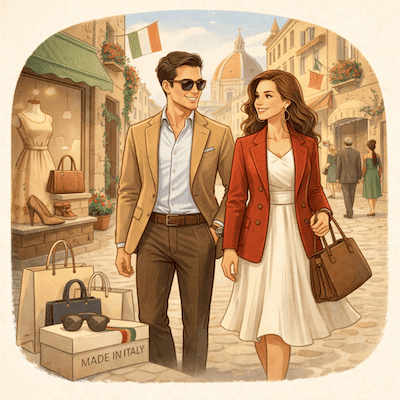
Fare bella figura
Fare Bella Figura: More than luxury
 Learn ItalianFree app with audio, quizzes and real books
Key words
- superficialesuperficial
- radicatorooted / deep-seated
- firmatidesigner (clothes) / branded
- copertinacover
- possibilitàability / possibilities
- pigiamapajamas
- trasandatascruffy / neglected / sloppy
- sforzoeffort
- specchiomirror
- educazionepoliteness / upbringing / education
- borghivillages / small towns
- corsomain street / avenue
All 25 words
- legamibonds / ties
- fatturaworkmanship / making
- sartotailor
- sfumaturenuances / shades
- sobriasober / understated / plain
- incubonightmare
- timorefear / dread
- decorodecorum / decency
- trasandatosloppy / untidy
- appesihanging / hung
- logoreworn-out / threadbare
- fondamentalefundamental / essential
- piacevolepleasant / enjoyable
In Italia l'aspetto esteriore conta, e non per pura vanità. Dietro c'è un'idea che gli italiani imparano fin da bambini e che regola molti rapporti sociali: fare "bella figura".
In Italy, outward appearance matters, and not out of pure vanity. Behind it lies an idea that Italians learn as children and that governs many social relationships: making a "bella figura", a good impression.
Non significa indossare abiti firmati o costosi. Fare bella figura vuol dire presentarsi bene e comportarsi bene davanti alla famiglia, ai vicini, ai colleghi: in una parola, davanti agli altri.
It does not mean wearing designer or expensive clothes. Making a bella figura means looking good and behaving well in front of your family, your neighbours, your colleagues: in a word, in front of other people.
Oltre il marchio: l'immagine come insieme
Beyond the Label: The Whole Picture
In inglese si dice che non bisogna giudicare un libro dalla copertina, e anche l'italiano ha il suo proverbio: "L'abito non fa il monaco". Nella vita di tutti i giorni, però, la copertina conta eccome.
In English they say you shouldn't judge a book by its cover, and Italian has its own proverb: "L'abito non fa il monaco", the habit does not make the monk. In everyday life, though, the cover matters a great deal.
Fare bella figura significa presentarsi al meglio delle proprie possibilità, che non sono uguali per tutti. È una forma di rispetto per se stessi, ma soprattutto per le persone che si incontrano.
Making a bella figura means presenting yourself as well as you can, and that is not the same for everyone. It is a form of respect for yourself, but above all for the people you meet.
L'abbigliamento come linguaggio
Clothing as a Language
La moda italiana non vive solo sulle passerelle di Milano: la si vede ogni giorno per strada. Molti italiani non uscirebbero mai in pigiama o con una tuta sformata, nemmeno per comprare il pane sotto casa.
Italian fashion does not live only on the catwalks of Milan: you see it every day in the street. Many Italians would never go out in pyjamas or a baggy tracksuit, not even to buy bread from the shop downstairs.
I vestiti sono un modo di comunicare. Chi si veste con cura per un appuntamento, anche informale, dice all'altro senza parole: "Per me sei importante, e mi sono preparato per te".
Clothes are a way of communicating. If you dress with care for a date, even a casual one, you are telling the other person without words: "You matter to me, and I got ready for you."
La sprezzatura: l'eleganza senza sforzo
Sprezzatura: Effortless Elegance
La parola "sprezzatura" non nasce nel mondo della moda. La usò per primo Baldassare Castiglione nel "Libro del Cortegiano", pubblicato nel 1528, per descrivere il perfetto uomo di corte: uno che fa le cose difficili come se fossero facilissime, senza mostrare fatica.
The word "sprezzatura" was not born in the fashion world. It was first used by Baldassare Castiglione in "The Book of the Courtier", published in 1528, to describe the perfect courtier: someone who does difficult things as if they were the easiest in the world, without showing any effort.
Oggi la parola si usa soprattutto per lo stile. L'eleganza italiana non deve sembrare rigida o studiata: la giacca slacciata, la sciarpa annodata in fretta, l'aria di chi si è vestito bene per istinto e non dopo un'ora davanti allo specchio.
Today the word is used mostly for style. Italian elegance must not look stiff or studied: the unbuttoned jacket, the scarf knotted in a hurry, the air of someone who dressed well by instinct rather than after an hour in front of the mirror.
Comportamento e galateo
Behaviour and Etiquette
La bella figura riguarda anche le buone maniere. In Italia le regole di comportamento si chiamano "galateo", dal titolo di un libro di Giovanni Della Casa pubblicato nel 1558. Rispondere con gentilezza e saper stare a tavola contano quanto un bel vestito.
A bella figura is also about good manners. In Italy the rules of etiquette are called "galateo", after the title of a book by Giovanni Della Casa published in 1558. Answering politely and knowing how to behave at the table count as much as a fine suit.
Al contrario, alzare la voce in pubblico, trattare male un cameriere o arrivare a una cena a mani vuote, senza una bottiglia di vino o un vassoio di pasticcini, sono esempi di "brutta figura". E una brutta figura non si dimentica in fretta.
On the other hand, raising your voice in public, being rude to a waiter or turning up to a dinner empty-handed, without a bottle of wine or a tray of pastries, are examples of a "brutta figura", a bad impression. And a bad impression is not quickly forgotten.
Il rito della passeggiata
The Ritual of the Passeggiata
Il palcoscenico della bella figura è la passeggiata del tardo pomeriggio o della domenica. In molte città e paesi, verso sera, la gente esce e percorre su e giù il corso principale; in alcune zone questa abitudine si chiama "struscio" o "fare le vasche".
The stage for the bella figura is the late-afternoon or Sunday passeggiata. In many towns and villages, towards evening, people come out and walk up and down the main street; in some areas this habit is called "struscio" or "fare le vasche", doing lengths.
Non si cammina per fare movimento, ma per vedere ed essere visti. Ci si ferma a salutare, si notano i vestiti nuovi, si commentano le novità del paese, e così i legami tra le persone restano vivi.
People don't walk for exercise, but to see and be seen. They stop to say hello, notice new clothes and talk over the local news, and that is how the ties between people stay alive.
L'artigianato e la qualità
Craftsmanship and Quality
Per molti italiani la qualità conta più della quantità: meglio una sola giacca ben fatta che dieci giacche di poco prezzo. Un buon paio di scarpe o un buon cappotto devono durare anni.
For many Italians, quality matters more than quantity: better one well-made jacket than ten cheap ones. A good pair of shoes or a good coat should last for years.
Da questa attenzione al dettaglio nasce il mito del "su misura". Molti hanno ancora un sarto o un calzolaio di fiducia, perché un abito che cade alla perfezione fa più bella figura di un abito costoso ma della taglia sbagliata.
This attention to detail gave rise to the myth of "su misura", made to measure. Many people still have a tailor or a shoemaker they trust, because a suit that fits perfectly makes a better impression than an expensive one in the wrong size.
Lo stile nelle diverse città
Style in Different Cities
Lo stile cambia da una città all'altra. A Milano, capitale della moda, l'eleganza è sobria e professionale, spesso in grigio, blu e nero. Qui, nel "quadrilatero della moda" intorno a via Montenapoleone, hanno sede le boutique dei grandi marchi.
Style changes from one city to another. In Milan, the capital of fashion, elegance is understated and professional, often in grey, blue and black. Here, in the "fashion quadrilateral" around Via Montenapoleone, the big brands have their boutiques.
A Napoli la tradizione sartoriale è famosa per le giacche morbide e leggere, adatte al clima caldo. Firenze ospita due volte all'anno Pitti Uomo, una delle fiere di moda maschile più importanti del mondo, dove i visitatori sfoggiano colori vivaci, cappelli e foulard.
In Naples the tailoring tradition is famous for soft, light jackets suited to the hot climate. Twice a year Florence hosts Pitti Uomo, one of the most important menswear fairs in the world, where visitors show off bright colours, hats and silk scarves.
La brutta figura: l'incubo sociale
The Brutta Figura: A Social Nightmare
La paura di fare brutta figura, o peggio una "figuraccia", è un freno potente. Spinge le persone a comportarsi bene e a mantenere un certo decoro in pubblico.
The fear of making a brutta figura, or worse a "figuraccia", a real fiasco, is a powerful brake. It pushes people to behave well and keep up a certain decorum in public.
Non è solo un imbarazzo personale. È la sensazione di aver deluso gli altri, o di aver mostrato poco autocontrollo o poco gusto. E a volte la brutta figura ricade su tutta la famiglia.
It is not just personal embarrassment. It is the feeling of having let others down, or of having shown too little self-control or too little taste. And sometimes the bad impression falls on the whole family.
Glossario dello stile
Style Glossary
Sartoriale: fatto da un sarto, su misura e con cura; sinonimo di alta qualità.
Sartoriale (tailored): made by a tailor, to measure and with care; a byword for high quality.
Trasandato: chi non cura il proprio aspetto; il contrario della bella figura.
Trasandato (scruffy): someone who doesn't look after their appearance; the opposite of a bella figura.
Sobrio: elegante ma discreto, senza eccessi.
Sobrio (understated): elegant but discreet, without excess.
Alla moda: chi segue le ultime tendenze.
Alla moda (fashionable): someone who follows the latest trends.
Un classico: un capo che non passa mai di moda, come il trench o il blazer blu.
Un classico (a classic): a garment that never goes out of fashion, like the trench coat or the navy blazer.
Il ruolo degli occhiali da sole
The Role of Sunglasses
Gli occhiali da sole sono forse l'accessorio più italiano di tutti: fanno parte dell'abbigliamento quanto la giacca o la borsa. In provincia di Belluno, ai piedi delle Dolomiti, c'è il più importante distretto italiano dell'occhiale; qui, ad Agordo, Leonardo Del Vecchio fondò nel 1961 Luxottica, oggi una delle maggiori aziende di occhiali del mondo.
Sunglasses may be the most Italian accessory of all: they are as much a part of an outfit as a jacket or a handbag. The province of Belluno, at the foot of the Dolomites, is home to Italy's most important eyewear district; it was here, in Agordo, that Leonardo Del Vecchio founded Luxottica in 1961, today one of the largest eyewear companies in the world.
Portarli sulla testa o appesi al colletto della camicia, anche quando il sole non c'è, è un gesto molto italiano. È proprio quel tocco di sprezzatura di cui si parlava prima.
Wearing them on your head or hooked onto your shirt collar, even when the sun isn't out, is a very Italian gesture. It is exactly that touch of sprezzatura mentioned earlier.
L'importanza delle scarpe
The Importance of Shoes
Si dice che per giudicare l'eleganza di un italiano bisogna guardargli i piedi. Le scarpe devono essere pulite e in buono stato; non a caso alcune delle calzature più pregiate del mondo si producono nelle Marche e lungo la Riviera del Brenta, in Veneto.
They say that to judge an Italian's elegance you have to look at their feet. Shoes must be clean and in good condition; it is no coincidence that some of the finest footwear in the world is made in the Marche and along the Riviera del Brenta in the Veneto.
Le scarpe da ginnastica sono accettate, anche in ufficio, purché siano pulite e abbinate al resto. Scarpe consumate o sporche, invece, sono il segnale più rapido di una brutta figura.
Trainers are accepted, even at the office, as long as they are clean and go with the rest of the outfit. Worn-out or dirty shoes, on the other hand, are the quickest sign of a brutta figura.
Conclusione
Conclusion
A uno straniero in Italia bastano poche regole per fare bella figura: vestirsi in modo curato, salutare quando entra in un negozio, non presentarsi a casa d'altri a mani vuote. Non serve spendere una fortuna.
A foreigner in Italy needs only a few rules to make a bella figura: dress neatly, say hello when you walk into a shop, and never turn up at someone's home empty-handed. There is no need to spend a fortune.
L'idea è così radicata che si sente anche nella lingua. Quando qualcuno sbaglia in pubblico si esclama "Che figura!", mentre a chi si è presentato benissimo si dice: "Hai fatto un figurone!".
The idea is so deeply rooted that you can hear it in the language too. When someone slips up in public, people exclaim "Che figura!", "How embarrassing!", while someone who made a great impression is told: "Hai fatto un figurone!", "You were a hit!"
In the free app you can listen to this text read aloud and tap any word to see what it means.