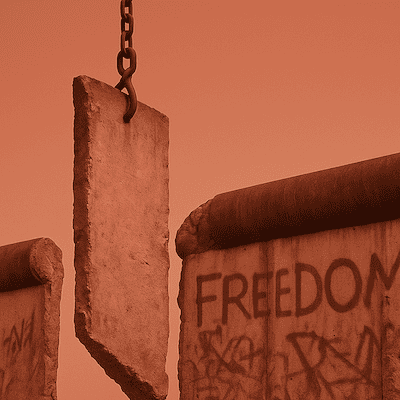
Der Fall der Berliner Mauer
The Fall of the Berlin Wall
 Learn GermanFree app with audio, quizzes and real books
Key words
- Mauerwall
- Fallfall
- Freiheitfreedom
- Wiedervereinigungreunification
- Teilungdivision
- DDRGDR (East Germany)
- BundesrepublikFederal Republic (West Germany)
- Besatzungszoneoccupation zone
- Protestprotest
- Demonstrationdemonstration
- Kontrollpunktcheckpoint
- Betonconcrete
All 26 words
- Stacheldrahtbarbed wire
- Wachturmwatchtower
- Autoritärauthoritarian
- Reisefreiheitfreedom of movement
- wirtschaftlicheconomic
- gesellschaftlichsocial
- Symbolsymbol
- Einheitunity
- Kulturculture
- Neubeginnnew beginning
- Museenmuseums
- Barrierebarrier
- Hoffnunghope
- Mutcourage
Am Abend des 9. November 1989 öffnete sich die Berliner Mauer. Gut 28 Jahre lang hatte sie Ost- und West-Berlin getrennt und den Alltag von Millionen Menschen bestimmt. Mit ihrem Fall begann das Ende der deutschen Teilung, die seit dem Zweiten Weltkrieg bestanden hatte.
On the evening of 9 November 1989, the Berlin Wall opened. For a good 28 years it had divided East and West Berlin and shaped the daily lives of millions of people. Its fall marked the beginning of the end of Germany's division, which had lasted since the Second World War.
Der Mauerfall hatte viele Ursachen: die Wirtschaftskrise in der DDR, die Reformen in der Sowjetunion und der wachsende Mut der Menschen in ganz Osteuropa. Bis heute steht der 9. November für Freiheit und für die Wiedervereinigung.
The fall of the Wall had many causes: the economic crisis in the GDR, the reforms in the Soviet Union and the growing courage of people across Eastern Europe. To this day, 9 November stands for freedom and for reunification.
Wie es zur Teilung kam
How the Division Came About
Nach dem Zweiten Weltkrieg teilten die Siegermächte Deutschland in vier Besatzungszonen auf. Bald stritten die USA, Großbritannien und Frankreich auf der einen Seite und die Sowjetunion auf der anderen um die Zukunft des Landes. 1949 entstanden schließlich zwei Staaten: im Mai die Bundesrepublik Deutschland (BRD) im Westen, im Oktober die Deutsche Demokratische Republik (DDR) im Osten.
After the Second World War, the victorious Allies divided Germany into four occupation zones. Soon the USA, Britain and France on one side and the Soviet Union on the other were arguing over the country's future. In 1949 two states finally emerged: in May the Federal Republic of Germany (FRG) in the west, in October the German Democratic Republic (GDR) in the east.
Die DDR war ein sozialistischer Staat, der eng an Moskau gebunden war. Reisen in den Westen waren kaum möglich, die Staatssicherheit überwachte die Bevölkerung, und viele Waren gab es nur nach langer Wartezeit. Bis 1961 verließen fast drei Millionen Menschen das Land, die meisten über West-Berlin, wo die Grenze noch offen war.
The GDR was a socialist state closely tied to Moscow. Travel to the West was almost impossible, the Stasi kept watch on the population, and many goods were available only after a long wait. By 1961 almost three million people had left the country, most of them via West Berlin, where the border was still open.
In der Nacht zum 13. August 1961 riegelten Soldaten und Polizisten die Grenze zu West-Berlin mit Stacheldraht ab, wenige Tage später entstanden die ersten Mauerteile aus Beton. Über Nacht waren Familien, Freunde und ganze Straßenzüge getrennt. Mit den Jahren wuchs daraus ein rund 155 Kilometer langes Sperrsystem mit Wachtürmen und einem breiten „Todesstreifen“. Mindestens 140 Menschen kamen an der Mauer ums Leben.
On the night of 12 to 13 August 1961, soldiers and police sealed off the border to West Berlin with barbed wire, and a few days later the first concrete sections of the Wall went up. Overnight, families, friends and entire streets were cut apart. Over the years this grew into a barrier system some 155 kilometres long, with watchtowers and a wide "death strip". At least 140 people lost their lives at the Wall.
Das Jahr 1989
The Year 1989
Ende der 1980er-Jahre geriet die DDR immer tiefer in die Krise. In der Sowjetunion setzte Michail Gorbatschow auf Reformen, und 1989 öffnete Ungarn seine Grenze nach Österreich: Tausende DDR-Bürger flohen auf diesem Weg in den Westen. In Leipzig gingen jeden Montag mehr Menschen auf die Straße. Am 9. Oktober riefen dort rund 70.000 Demonstranten: „Wir sind das Volk!“
In the late 1980s the GDR sank ever deeper into crisis. In the Soviet Union, Mikhail Gorbachev was pursuing reforms, and in 1989 Hungary opened its border with Austria: thousands of East Germans fled to the West that way. In Leipzig more people took to the streets every Monday. On 9 October some 70,000 demonstrators there chanted: "We are the people!"
Am Abend des 9. November stellte SED-Funktionär Günter Schabowski auf einer Pressekonferenz eine neue Reiseregelung vor. Auf die Frage, ab wann sie gelte, antwortete er etwas unsicher: „sofort, unverzüglich“. Noch in derselben Nacht drängten Tausende Ost-Berliner zu den Grenzübergängen. Gegen 23:30 Uhr öffneten die Grenzer an der Bornholmer Straße als Erste den Schlagbaum.
On the evening of 9 November, SED official Günter Schabowski presented new travel rules at a press conference. Asked when they would take effect, he answered somewhat uncertainly: "immediately, without delay." That same night, thousands of East Berliners crowded to the border crossings. At around 11:30 p.m. the guards at Bornholmer Straße were the first to raise the barrier.
Die Bilder dieser Nacht gingen um die Welt. Am Brandenburger Tor kletterten Menschen auf die Mauer, Fremde lagen sich in den Armen, viele weinten vor Glück. Das Wort des Abends war „Wahnsinn!“. In den folgenden Wochen schlugen die sogenannten „Mauerspechte“ mit Hammer und Meißel Stücke aus dem Beton und nahmen sie als Andenken mit.
The images from that night went around the world. At the Brandenburg Gate people climbed onto the Wall, strangers fell into each other's arms, and many wept for joy. The word of the evening was "Wahnsinn!" ("Madness!"). In the weeks that followed, the so-called "wall woodpeckers" chipped pieces out of the concrete with hammers and chisels and took them home as souvenirs.
Politische Folgen
Political Consequences
Nach dem Mauerfall ging es mit der DDR schnell zu Ende. Im März 1990 durften die Bürger zum ersten Mal frei wählen, und am 3. Oktober 1990 trat die DDR der Bundesrepublik bei. Seitdem feiert Deutschland diesen Tag als Tag der Deutschen Einheit. Der Mauerfall wurde außerdem zum Zeichen für das Ende des Kalten Krieges und für den Erfolg der demokratischen Bewegungen in Osteuropa.
After the fall of the Wall, the GDR quickly came to an end. In March 1990 its citizens were allowed to vote freely for the first time, and on 3 October 1990 the GDR joined the Federal Republic. Since then Germany has celebrated this date as the Day of German Unity. The fall of the Wall also became a symbol of the end of the Cold War and of the success of the democratic movements in Eastern Europe.
Die Revolution in der DDR verlief fast ohne Gewalt. Mit Kerzen und Sprechchören statt mit Waffen brachten Hunderttausende ein Regime zu Fall, das sich jahrzehntelang auf Polizei und Geheimdienst gestützt hatte. Deshalb spricht man in Deutschland oft von der „Friedlichen Revolution“.
The revolution in the GDR was almost entirely non-violent. With candles and chants instead of weapons, hundreds of thousands of people brought down a regime that had relied on the police and the secret service for decades. That is why Germans often call it the "Peaceful Revolution".
Alltag und Kultur
Everyday Life and Culture
Für viele Menschen änderte sich das Leben über Nacht. Getrennte Familien sahen sich wieder, Ostdeutsche konnten frei reisen und überall arbeiten, und jeder Besucher aus der DDR bekam im Westen 100 D-Mark Begrüßungsgeld. Leicht war das Zusammenwachsen trotzdem nicht: Viele Betriebe im Osten schlossen, und viele Menschen verloren ihre Arbeit.
For many people, life changed overnight. Separated families saw each other again, East Germans could travel freely and work anywhere, and every visitor from the GDR received 100 Deutschmarks of "welcome money" in the West. Even so, growing together was not easy: many businesses in the East closed, and many people lost their jobs.
Auch in der Kultur kamen Ost und West zusammen. Musiker, Schriftsteller und Filmemacher aus beiden Teilen Deutschlands arbeiteten nun gemeinsam. Der Film „Good Bye, Lenin!“ (2003) erzählt mit viel Humor vom Leben in dieser Zeit des Umbruchs.
East and West also came together in culture. Musicians, writers and filmmakers from both parts of Germany now worked together. The film "Good Bye, Lenin!" (2003) tells the story of life in this period of upheaval with plenty of humour.
Von der Mauer selbst ist heute nur wenig übrig. An der Spree steht die East Side Gallery, ein etwa 1,3 Kilometer langes Stück, das Künstler aus aller Welt 1990 bemalt haben. In der Bernauer Straße zeigt die Gedenkstätte Berliner Mauer, wie der Grenzstreifen aussah, und erinnert an die Todesopfer der Mauer.
Little of the Wall itself remains today. On the banks of the Spree stands the East Side Gallery, a stretch about 1.3 kilometres long that artists from all over the world painted in 1990. On Bernauer Straße, the Berlin Wall Memorial shows what the border strip looked like and commemorates those who died at the Wall.
Rückblick
Looking Back
Der 9. November 1989 gehört zu den Tagen, die in Deutschland kaum jemand vergisst, der sie erlebt hat. Viele wissen noch genau, wo sie die Nachricht gehört haben. Wer Deutsch lernt, begegnet diesem Datum immer wieder: in Schulbüchern, Filmen, Liedern und Gesprächen.
9 November 1989 is one of those days that hardly anyone in Germany who lived through it will forget. Many still remember exactly where they were when they heard the news. Anyone learning German comes across this date again and again: in textbooks, films, songs and conversations.
Heute ist Berlin eine Stadt ohne Mauer. Wo früher Grenzsoldaten patrouillierten, fahren heute Radfahrer auf dem Berliner Mauerweg, der rund 160 Kilometer um das frühere West-Berlin führt.
Today Berlin is a city without a wall. Where border soldiers once patrolled, cyclists now ride along the Berlin Wall Trail, which runs for about 160 kilometres around the former West Berlin.
In the free app you can listen to this text read aloud and tap any word to see what it means.