Feste in Deutschland
Festivals in Germany
 Learn GermanFree app with audio, quizzes and real books
Key words
- Festfestival
- Traditiontradition
- Kulturculture
- OktoberfestOktoberfest
- Karnevalcarnival
- Volksfestfolk festival
- Bierbeer
- Trachtentraditional costume
- Hochzeitwedding
- Besuchervisitor
- Musikmusic
- Tanzdance
All 25 words
- Kostümcostume
- Umzugparade
- Gemeinschaftcommunity
- Kulinarikculinary
- Spezialitätspecialty
- Atmosphäreatmosphere
- Handwerksmarktcraft market
- Dialektdialect
- Fünfte Jahreszeitfifth season
- Freiheitfreedom
- Humorhumor
- Kreativitätcreativity
- Lebensfreudejoy of life
In Deutschland wird gern gefeiert. Fast jede Stadt und viele Dörfer haben ein eigenes Fest, oft mit einer langen Geschichte. Am bekanntesten sind das Oktoberfest in München und der Karneval am Rhein, aber auch viele regionale Volksfeste ziehen jedes Jahr Besucher aus aller Welt an.
Germans love a good celebration. Almost every town and many villages have a festival of their own, often with a long history behind it. The best known are Oktoberfest in Munich and Carnival along the Rhine, but plenty of regional folk festivals also draw visitors from all over the world every year.
Musik, Essen und Trinken gehören überall dazu, oft auch Trachten oder Kostüme. Manche Feste dauern nur ein Wochenende, andere mehrere Wochen.
Music, food and drink are part of every one of them, and often traditional dress or costumes too. Some festivals last just a weekend, others several weeks.
Oktoberfest: Bier, Trachten und Tradition
Oktoberfest: Beer, Traditional Dress and Tradition
Das Oktoberfest in München gilt als größtes Volksfest der Welt. Es beginnt im September und endet Anfang Oktober. Seine Geschichte reicht bis 1810 zurück: Damals heiratete Kronprinz Ludwig, der spätere König Ludwig I., Prinzessin Therese von Sachsen-Hildburghausen. Zur Feier fand ein Pferderennen auf einer Wiese vor der Stadt statt, die seitdem Theresienwiese heißt. Deshalb sagen die Münchner bis heute einfach „die Wiesn“.
Munich's Oktoberfest is considered the largest folk festival in the world. It starts in September and ends in early October. Its history goes back to 1810, when Crown Prince Ludwig, later King Ludwig I, married Princess Therese of Saxe-Hildburghausen. To celebrate, a horse race was held on a meadow outside the city, which has been called the Theresienwiese ever since. That is why people in Munich still simply call the festival "die Wiesn", the meadow.
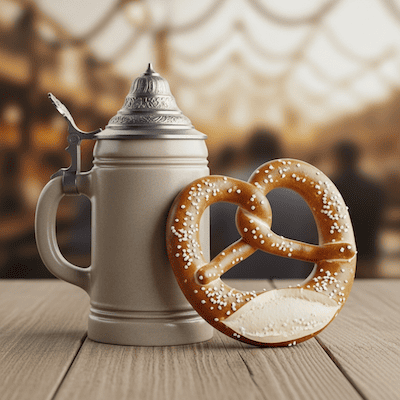
Jedes Jahr kommen rund sechs Millionen Gäste. Zum Auftakt zapft der Oberbürgermeister mittags das erste Fass an und ruft „O’zapft is!“. Das Bier gibt es in der Maß, einem Krug mit einem Liter. Dazu isst man Brezn, Hendl oder Schweinshaxe, und viele Besucher kommen in Dirndl oder Lederhose.
Around six million visitors come every year. To open the festival, the mayor taps the first keg at noon and calls out "O'zapft is!" ("It's tapped!"). Beer is served by the Maß, a one-litre mug. People eat pretzels, roast chicken or pork knuckle with it, and many visitors turn up in a dirndl or lederhosen.
Karneval: die fünfte Jahreszeit
Carnival: The Fifth Season
Im Rheinland nennt man den Karneval die „fünfte Jahreszeit“. Besonders ausgelassen feiert man in Köln, Düsseldorf und Mainz. Die Saison beginnt am 11. November um 11:11 Uhr, ihren Höhepunkt erreicht sie aber erst in den Tagen vor Aschermittwoch. Dann beginnt die Fastenzeit vor Ostern.
In the Rhineland, Carnival is called "the fifth season". The celebrations are especially wild in Cologne, Düsseldorf and Mainz. The season opens on 11 November at 11:11 a.m., but it only reaches its peak in the days before Ash Wednesday, which marks the start of Lent before Easter.
Am Rosenmontag ziehen große Umzüge mit Musikkapellen und geschmückten Wagen durch die Städte. Die Zuschauer am Straßenrand sind verkleidet, singen und fangen die Süßigkeiten, die von den Wagen geworfen werden. In Köln heißen sie „Kamelle“ und man ruft „Alaaf!“, in Düsseldorf und Mainz dagegen „Helau!“.
On Rose Monday, big parades with bands and decorated floats wind through the cities. The spectators lining the streets are in costume; they sing and catch the sweets thrown from the floats. In Cologne the sweets are called "Kamelle" and the cry is "Alaaf!", while in Düsseldorf and Mainz people shout "Helau!".
Zum Karneval gehört auch der Spott über die Mächtigen. Bei den Karnevalssitzungen halten Redner witzige Büttenreden über Politik und das Leben in der Stadt. Auf manchen Wagen der Umzüge sieht man Politiker als riesige Figuren aus Pappmaché. Selbst die bunten Uniformen der Karnevalsgarden haben eine Geschichte: Im 19. Jahrhundert machten sie sich über das preußische Militär lustig.
Mocking the powerful is part of Carnival too. At Carnival gala sessions, speakers give witty speeches about politics and life in the city. Some parade floats show politicians as huge papier-mâché figures. Even the colourful uniforms of the Carnival guards have a story: in the 19th century they were a way of poking fun at the Prussian military.
Regionale Volksfeste und Bräuche
Regional Folk Festivals and Customs
Neben Oktoberfest und Karneval gibt es unzählige regionale Feste. Das Cannstatter Volksfest in Stuttgart geht auf das Jahr 1818 zurück. König Wilhelm I. von Württemberg gründete es nach einer schweren Hungersnot als Landwirtschaftsfest. In Dresden wird jedes Jahr im Advent beim Stollenfest ein riesiger Christstollen durch die Altstadt gefahren. Er wiegt mehrere Tonnen und wird anschließend in Stücke geschnitten und verkauft.
Besides Oktoberfest and Carnival, there are countless regional festivals. The Cannstatter Volksfest in Stuttgart dates back to 1818. King Wilhelm I of Württemberg founded it as an agricultural fair after a severe famine. In Dresden, every year during Advent, a giant Christmas stollen is driven through the old town at the Stollen Festival. It weighs several tonnes and is then cut into pieces and sold.
Auf vielen Volksfesten gibt es Blasmusik, Tanz, Handwerkermärkte oder historische Umzüge. Oft hört man dort den Dialekt der Region und kann Gerichte probieren, die man anderswo kaum bekommt.
Many folk festivals have brass bands, dancing, craft markets or historical processions. You often hear the local dialect there and can try dishes that are hard to find anywhere else.
Musik ist bei fast jedem Fest dabei. Im Bierzelt spielt die Blaskapelle, und immer wieder stimmt das ganze Zelt „Ein Prosit der Gemütlichkeit“ an. Im Kölner Karneval singt man Lieder auf Kölsch, dem Dialekt der Stadt. Beim Schunkeln, wenn sich alle unterhaken und im Takt hin und her wiegen, kommt man schnell mit Fremden ins Gespräch.
Music is part of almost every festival. In the beer tent the brass band plays, and again and again the whole tent strikes up "Ein Prosit der Gemütlichkeit". At Cologne's Carnival people sing songs in Kölsch, the city's dialect. During Schunkeln, when everyone links arms and sways from side to side to the beat, it's easy to get talking to strangers.
Oktoberfest: München, Bierzelte, Trachten und bayerische Küche
Oktoberfest: Munich, beer tents, traditional dress and Bavarian food
Karneval: Köln, Düsseldorf und Mainz, Kostüme und Rosenmontagszüge
Carnival: Cologne, Düsseldorf and Mainz, costumes and Rose Monday parades
Cannstatter Volksfest: Stuttgart, seit 1818, Festzelte und Fahrgeschäfte
Cannstatter Volksfest: Stuttgart, since 1818, festival tents and rides
Dresdner Stollenfest: Sachsen, ein riesiger Stollen im Advent
Dresden Stollen Festival: Saxony, a giant stollen in Advent
Kulturelle Bedeutung
Cultural Significance
Hinter den meisten Festen stehen Vereine, Familien und Nachbarn, die monatelang planen. Karnevalsvereine bauen ihre Wagen oft schon im Herbst, Schützenvereine richten im Sommer ihre Schützenfeste aus. So bleiben Bräuche lebendig, die teilweise mehrere hundert Jahre alt sind.
Behind most festivals are clubs, families and neighbours who plan for months. Carnival clubs often start building their floats in the autumn, and marksmen's clubs hold their shooting festivals in summer. This keeps customs alive, some of which are several hundred years old.
Für Deutschlernende sind Feste eine gute Gelegenheit, die Sprache im echten Leben zu hören: in Liedern, im Dialekt und in festen Rufen wie „O’zapft is!“ oder „Alaaf!“. Wer nicht hinfahren kann, findet die Umzüge im Fernsehen oder im Internet.
For learners of German, festivals are a good chance to hear the language in real life: in songs, in dialect and in set calls like "O'zapft is!" or "Alaaf!". If you can't go in person, you can watch the parades on TV or online.
Fazit
Conclusion
Ob Wiesn in München, Straßenkarneval in Köln oder Stollenfest in Dresden: Jedes Fest zeigt eine andere Seite Deutschlands. Viele Bräuche sind über 200 Jahre alt, und trotzdem kommen jedes Jahr neue Lieder, Kostüme und Gäste dazu.
Whether it's the Wiesn in Munich, street Carnival in Cologne or the Stollen Festival in Dresden, each festival shows a different side of Germany. Many customs are over 200 years old, and yet new songs, costumes and visitors join in every year.
Wer einmal dabei war, kennt danach nicht nur Wörter wie Maß, Kamelle oder Schunkeln, sondern auch die Lieder, die man dort gemeinsam singt.
Once you've been, you'll know not just words like Maß, Kamelle and Schunkeln, but also the songs everyone sings together there.
In the free app you can listen to this text read aloud and tap any word to see what it means.